John Lyell, Eternity

Has it really been six years since we last heard from John Lyell? Well, it was worth the wait. His previous disc, Dimensions, has held a favored spot in my personal collection since it came out. His latest, Eternity, smoothly picks up where that left off, as Lyell crafts a fresh set of relaxed, spacey drifts woven through with easy melodies. Lyell’s signature is soft bell tones, like cosmic windchimes, that collide gently and playfully across a base of breathy pads. His layers tend to run quite deep, making these pieces ideal headphone listening. Although the disc is broken up into 10 tracks–and they’re actual tracks, not just breaks in a longer flow–Eternity has an uninterrupted feel as one piece glides into the next. To some degree this is due to a bit of sameness of sound, but that plays into the listening experience more than it detracts from it. Lyell modulates his tracks well. The lulling drift of “Vector Atmospheres” leads into the almost Eastern-sounding tones and (comparably) upbeat rhythm of “Star Seeker,” which quietly deposits the listener in the deep, lush flow of “Dreams of Orion.” This is one of the best tracks here. Lyell’s patient construction really shines through. It displaces time and just washes the listener in waves of synthesized calm. Even his most uptempo piece, “Pulse of Destiny,” has that soothing effect, largely thanks to the round tones Lyell favors. There are no edges here; just smooth curves and soft, polished surfaces. Eternity is a disc to leave on repeat. The easy and slight swaps in tempo, the cool consistency of tone, and the general feeling of spacey bliss is something you may not be able to get enough of. A very welcome return, and one of the most enjoyable discs I’ve heard this year.

Available from John Lyell’s web site.

Øystein Jørgensen, Imagine

Øystein Jørgensen sheds his Ambient Fabric identity for his latest release, Imagine, and offers up another set of well-executed spacemusic tracks. Once again Jørgensen takes the listener on a ride that systematically pares away the lighter trappings of the genre to bring them, by disc’s end, to a sort of dark-ambient-style dead space. On the glimmering-star side of things, the first five tracks, “Sound of Stars” through “Endless,” are filled with sweeping synth pads that reach out to the endless distances and all the requisite sonic drama that goes with it. “Looking Back in Time” is especially well-done in this regard, Jørgensen’s patient pacing of his spacey drones creating a true sense of vastness. With the track “Distant,” a slight sense of uncertainty slithers into the sound, beginning the movement toward the finality of the voyage. With “Event Horizon” things take a turn for the denser and darker. Jørgensen makes the change with ease and style, letting a lost-oxygen hiss command the first minute of the track before the sound begins to open up into a growing intensity of sound, our ship caught in the gravity well and picking up speed of its own accord. The sound gets louder, thicker, more abrasive, and then pushes us out the other side, into “Another Dimension.” This track nudges us into something of an isolationist zone, the sounds sparse and packing a minor industrial edge. Jørgensen makes it uncomfortable for us, and carries that feel into “Lost,” which simply fades with no distinct conclusion–the guideless and hopeless voyage going ever on in cold space. Imagine sticks to fairly familiar imagery in both its spacemusic side and its dark side, but Jørgensen shows that he can escort the through either area with engaging style.

Available from Auraltone.

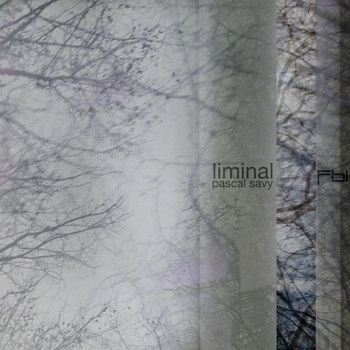
Pascal Savy, Liminal

Twenty minutes of quiet-but-deep ambient sculptures constructed in Savy’s signature minimalist style. I’ve always appreciated the delicacy of Savy’s approach, and there is a cleanness of sound that lets each tiny element shine through. The four pieces here are distinct in style, individual pictures in a small exhibition. “Falling Inward” drifts along, a light cloud of sound that rings with tiny chimes. “Reflective Shadow” is as dark as it gets here, lower-end tones passing overhead, pulling a slight sense of grimness behind them. “Transference” is built on a gently wavering drone that cast a hypnotic spell. “Lying/Drifting” revisits the chiming tones, pushed on electronic wind and an underscore of melancholy. A short but very pleasing offering from Savy, Liminal is both an excellent introduction to his work and a good addition to his growing canon.

Available at Bandcamp.

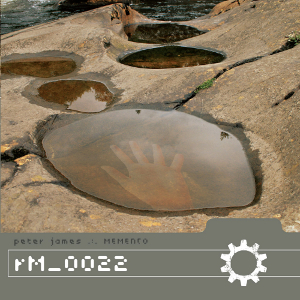
Peter James, Memento

Field recordings and soft-edged drones come together as the basis for the four pieces of Peter James’ stunning 2011 release, Memento. Beautiful in its sparsity, Memento gives equal weight to both elements and in doing so allows each to complement the other. The long tracks edge forward at a glacial pace, the drones shifting ever so slightly across time. The field recordings are simple and natural–birds chirp throughout “Everything Matters” and the hush of small waves crashing informs “Nothing Matters.” This disc is so elegantly simple and so honest that writing about it does a disservice to the listening experience. With each fresh listen I’m amazed (again) at how much feeling James manages to convey with so little sound. Part of it, perhaps, can be seen in the points where James lets the field recordings take over. The last three and a half minutes of “Everything Matters” is just the calm, reflective sound of a brook. The feel of the music fades and you’re left in this contemplative spot, as though you’d chosen to come sit by this stream and think. Brilliant. Bells chime softly in “Moments Within Each Moment,” lending an even more meditative sense to its hushed flow. I’m perhaps most taken with the final track, “Nothing Matters,” if only because I love the sound of the ocean, and James brings it very much to the forefront. Memento is a disc to leave running at low volume to let its innate calm pervade your space and change your atmosphere. One of the most engaging releases I’ve heard in a long time, and all the more incredible for how much impact James culls from so little. A must-hear.

Available from Relaxed Machinery.

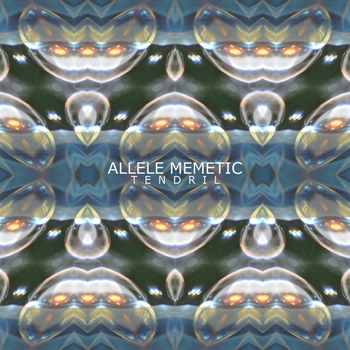
Allele Memetic, Tendril

This too-brief EP, clocking in at just under half an hour, makes the most of its time by laying out some intriguing electronica. Allele Memetic does a nice job of switching up the feel of the pieces. The bouncing happiness that is “Globes” is perhaps the best track here, a straightforward, infectious groove with a bpm rate set for comfortable cruising. “Larva” is one worth diving into headphones-first. A lot of small sounds are on the move here, a floaty organ track singing softly underneath. I also like the casual stride of “Membrane,” despite it getting a little complicated, sound-wise, toward the end. Unfortunately, the release ends with the disorderly tangle of “Tangram,” a track I could do without. For a quick dose of ear-catching tunes, spend a half hour with Tendril.

Available at Bandcamp.

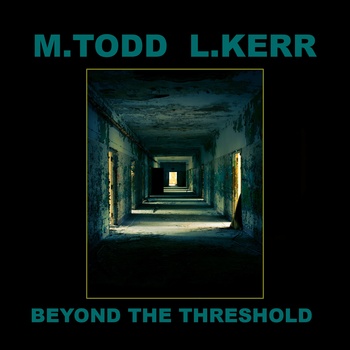
M. Todd & L. Kerr, Beyond the Threshold

There is minimalist, and then there is I don’t think anything’s happening. Unfortunately, Beyond the Threshold, from M. Todd and L Kerr, falls into that latter category. This half-hour-long disc offers up eight tracks of dark atmospheres that don’t do much more than squat in the background making fairly unpleasant sounds. The duo nail the dark part reasonably well, with some genre-requisite moans and industrial clamor pushed into the background, but the work here is so static that it doesn’t raise any reaction stronger than a shrug. Fans of this sort of thing–stripped down, bleak and a little creepy–should take as listen. As for me, I’ll take a pass.

Available from No Visible Scars.


Steve Roach, Groove Immersion & Back to Life

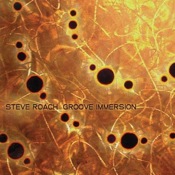
Available alone or as part of a limited-edition “2012 Boxed Set,” Steve Roach’s latest releases, Groove Immersion and Back to Life represent two distinct sides of Roach’s continued development of his signature sounds.

Groove Immersion takes its cue from the rhythmic elements Roach laced through Immersion:5 and expands on them with infinite-loop beats tapping out a hypnotic bit of code that goes straight to the brain. Roach places the beats over familiar, downward-spiraling curls of sound and analog-synth clicks and snarls, and the pairing creates a space of darkly meditative bliss. The beats persist for the first two of four sections, nearly a half-hour’s worth of clearing some mind-space, and then Roach drops them to let the listener course on the current of his shadowy musings for most of the third track. The beats pick up again for the closing section and deliver the listener back to the beginning in perfectly loop-worthy style. Groove Immersion has strong tribal overtones, the same shadowy shapes and lower-world atmospheres that run through spaces like Fever Dream and Nightbloom. What separates it is the potent and persistent medicine of the beat. This is a disc that just gets deeper the longer it loops.

By contrast, the two-disc Back to Life finds Roach returning to broader expanses, the “symphonic ambient” of Mystic Chords and Sacred Spaces and Dynamic Stillness. Although Roach slides a little rhythm into the track “Tranquility Base” on the first disc, Back to Life largely keeps to the formula of long, airy, criss-crossing pads matched in places with deep, low-end engine-rumbles. Roach modulates the density and intensity nicely, really building it up toward the end of the title track, the last on disc one, until the sounds are bold and thick and at their enveloping, calming best. Disc two is a single long-form piece, “The Mist of Perception.” Roach gives this hour over to very quiet flows, again lacing it with that airiness that speaks of vastness. A beautiful, meditation-ready piece of work that stretches time as it moves through zones of light and light shadow. This easily stands with Roach’s best soft long-form works.

Both discs available at the Steve Roach web site.

Known Rebel, Hollow

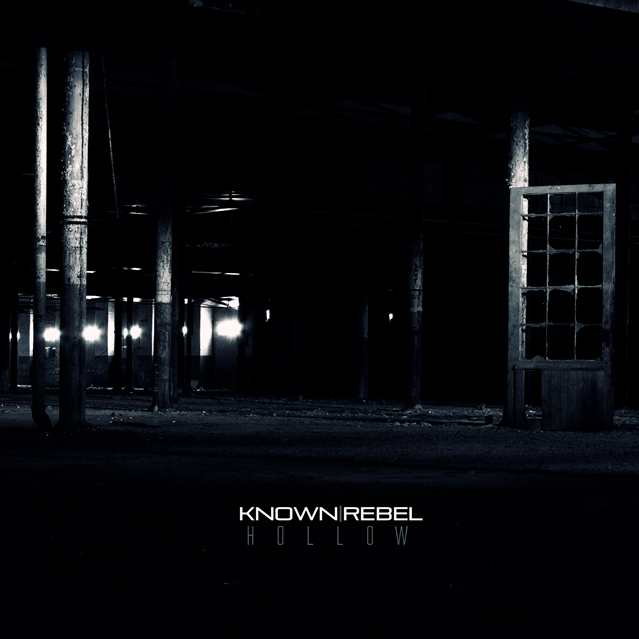
If it wasn’t for the wonder of the shuffle setting on an iPod, I might have been quick to dismiss Known Rebel’s debut CD, Hollow, as another round of by-the-numbers glitch. Coming into it in track-nominal order would have only reinforced the idea, since the starting track is a pretty straightforward bit of (as their page on the Tympanik web site says) “bedroom IDM.” But hold on–by the time you get to “Mechanical Sunset,” things have changed and Hollow pulls focus to its lounge-like, icily chilled side. Germán Escandell and Jaime Irles aren’t here to glitch you out of your socks, after all. They’re ready to switch styles, always keeping at least a light backdrop of manipulated noise and punched-out rhythms, but there’s occasionally more at work here. The track that sold me on a deeper listen is “Gathering of the Argonauts,” a low-bpm glide of IDM that’s strong on melody. “Smart” carries echoes of Deepfried Toguma as it eases along. Deep bass drum beats thud beneath a chiming, sequenced line; piano fills the space with  slow-played sadness. While there’s not a lot here that truly pitches aside the standards of glitch–in most cases, it’s just downplayed a bit–Hollow has a lot of very listenable moments. Individual tracks have more of an impact than a full-on track-by-track listen, which is often how I feel about this genre of music. Standing alone, their formula-based structure doesn’t wear out its welcome. The disc offers eight tracks and five remixes.

Available from Tympanik Audio.

Freq.Magnet, Nicked

Sound doesn’t stand a chance once Freq.Magnet gets his hands on it. It will be twisted, morphed, overlaid and overlayered and pulled, putty-like, in endless directions and permutations to create the deep, odd semi-ambient that is the signature of this side-project by one half of renowned ambient duo Austere. On Nicked, all of those sounds are guitar-based. Heavy looping and processing render them down into new tones which Freq. likens to Stars of the Lid and Windy & Carl. The disc is split into two “sides.” One takes simple, repeating three- or four-note patterns and drives them into each other to create dense holes of tone; the other leans toward “shoegaze sans vocals [and] short bursts of heavy guitar freak-out.” (See the one-minute burst of “Massive Riffage” for a fine example of the latter.) The flow from one side to the next, and from one feel to the next, is smooth. “Chuchotement de Quatre Notes” finds the guitar at its most recognizable, the crisp and simple scaling notes sent skyward against a windy wash of background sounds. It slides into “Pelates,” which reminds me of the Austere track “Morning Glory” with its plucked notes spinning off in echo, each new note adding to the growing cluster. The aforementioned “Massive Riffage” makes a cool, unexpected-yet-effective bridge between “Quiet Song #3,” which is like a slightly fuzzier version of “Chucotement…” and “Divebomb,” which begins a stretch of drone-based guitar musings. (Save for the 37-second sound clip from the old “Prisoner” TV show.)  This 35-minute stretch wends its way through distinct takes on the style. “Divebomb” spirals concentrically around itself, an expanding presence of sound. “Avoirdupois” is a soft ambient flow that gently grows in intensity, punctuated with intermittent string melodies that hearken back to the beginning of the disc. “Wallowsound,” the longest track, takes a somewhat harsher approach, its sounds roughened around the edges and deliberately grating. Wailing guitar loops rise up in the background to push the borders even further into the experimental. Something in its structure suggests a lost and wandering post-rock song that’s gotten caught up in the churn. And then there’s the final track… There may never be a cooler cover of The Who’s “Behind Blue Eyes” than the one that closes out this disc. Along with Portland-area band King Black Acid, Freq.Magnet lays down a thickly echoed, slowed-down and tripped-out take on this classic. (See if your ears, like mine, hone in on the sudden splashes of late-era Lennon/Beatles guitar sounds in the back.) Six minutes of pure cool self-indulgence. Nicked is a varied and enjoyable bit of playing with sound. There’s a lot to hear, so listen to it often.

Available from CD Baby.

Thought Guild, Third Voyage

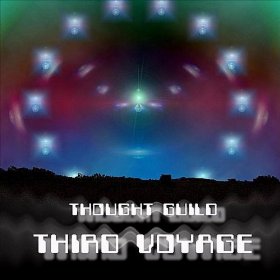
The  beauty of the final release from Thought Guild–Gregory Kyryluk, who also records as Alpha Wave Movement, and Christopher Cameron–is underscored by the sad reality that Cameron’s untimely death in 2011 is what closed the door on this superb electronic duo. But if a partnership must end, then let it end, for whatever reason, on a high note. Third Voyage is a very high note, indeed, a suite of vintage-inspired electronic music that alternately cruises quietly across the distances between stars and powers its way through scintillating sonic landscapes. Comparisons to the Usual Suspects will be made, and justifiably so. The influences are out in the open.  “Last Train to Lyon” books first-class passage on the Jarre Line; “Retropolis 2011” is packed with bursts of Tangerine flavor. But they’re done so well that these remembrances in sound just amplify the pleasure of listening to them. “Retropolis,” in fact, is one of my favorite tracks here, a charging, high-amplitude thrill ride straight out of Berlin. This is one of those tracks that you replay the moment it’s over just to enjoy going through it again. The last two tracks, “Titanium Ashram” and “Celestial Glossalalia,” blend for a soothing 13-minute drift. “Titanium Ashram” gurgles along on a frothy, liquid beat, long-wave pads opening and closing slowly over it. The watery touch of the rhythm is mind-soothing and, at the same time, a little playful. This piece never raises its voice much above a whisper, but you’ll hear what it’s saying. “Celestial Glossalalia” is a beautiful and touching piece of soft spacemusic. Drifting easily along on crossing pads and big, rich chords, this track simply takes you over as it paints vivid and vast images. There’s a touch melancholy in listening to the last note fade, knowing it is, in fact, the last note. A superb finish for Thought Guild, and a wonderful addition to any electronic music lover’s library.

Find it at Harmonic Resonance Recordings.