
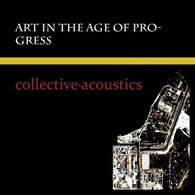
 Collective Acoustics return to gleefully smash together heaping helpings of jazz, electronica and experimental music. Art in the Age of Progress finds the core trio of George and Geoff Hazelrigg (keys and bass, respectively) and Eric Hastings (drums) pulling in extra sounds, including pedal steel guitar, trombone and sax, courtesy of talented friends. On this outing, the electronics are kept mostly at the periphery, a light-handed flavoring of extra interest laid over the group’s strong jazz-trio base. The classic three-piece set-up makes the perfect stepping-off point for CA’s explorations, and the pieces where it’s the strongest are some of my favorite tracks on the disc. The opener, “Follow That Kite,” kicks off with rapid-fire arpeggios up and down the keys while the rhythm section holds things steady. This is where your first taste of those small electronics touches comes in–a low buzz here, a twiddle there, just enough to catch your ear. It must be noted, though, that the electronic aspect is sometimes given a little more breathing room. “Resolution” (which features an original instrument called the buzzaphone, played by Matt Glassmeyer) has an almost sequencer-like feel at the outset, then breaks into a great electric piano riff. Speaking of which, I drop right into tracks like “Conflict” and “Carnegie Lake” with their funkified, 70’s electric jazz feel. On the sweet groove of “Carnegie,” George’s keys recall a plugged-in Corea or Miles’ electric-epoch Hancock. Listening (yet again) to “Conflict” also makes me need to note that Hastings’ drumming is a real standout on this disc. Ranging from strident to flair-filled, it anchors everything in the tradition of solid jazz. (Pick a good name from Blakey to Gadd; he’s in step.) It’s kept sharp and strong in the mix, from crisp snare snap to resonant whacks on the toms. It’s a pleasure to listen to his technique. Catch him flailing away in “Marianas Trench,” his hot-foot pace laying perfect counter to the Hazelrigg’s slow-descent blend of lazy bass and down-the-scale piano. If your tastes run on the jazz side of the street and you’ve got a bit of an adventurous soul, you need to catch a listen to Art in the Age of Progress. Expect to become a Collective Acoustics fan immediately thereafter.
Available from the Collective Acoustics web site.


 Hypnagogue Music Reviews