SourceCodeX, Rebirth

source_rebirthAfter two years of not recording anything, “the internal clouds began to part” for SourceCodeX (aka John Patterson) and out came Rebirth, a suite of healing music pieces. Created using microKorg and Akai Miniak synths, the music here is for the most part soft and slow, calm and meditative. Patterson finds places to darken up the proceedings somewhat, as on “Winter Night,” where the requisite cold-wind sounds issue out of his synths. That sound effect carries over into “Northern Lights,” at which point Patterson goes a bit overboard with it. Theme is one thing; hammering a theme is another. The core of Rebirth comes in a trio of longer pieces, “Daybreak on the Sea of Galilee,” “Clouds Parting Soon,” and the aforementioned “Winter Night.” They are all deep flows, “Clouds…” being the best of them. There is something very affecting in its bright, patient tone.

Rebirth is probably better enjoyed at a lower volume. I find that up close it sounds a bit thin. Patterson doesn’t layer a lot of sounds at any given time. Much of the work here seems to come down to play chord, hold chord, move to next chord. His core sound set doesn’t change up much, either, so while the tone is consistent, it sometimes begs for a shift in sound. Played softly, the warmth and quiet of Rebirth come through. Pull out the “darker” tracks and this would make a good backdrop for meditation or massage.

Available from CD Baby.

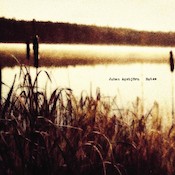
Johan Agebjörn, Notes

ageb_notesFeeling down? Rough day? No worries. Johan Agebjörn just showed up with a copy of Notes, and everything’s going to be all right—or at least seem that way for 45 minutes or so. Between slightly fluffy, sometimes jazz-tinged instrumental tracks and a handful of vocal offerings that range from shoegaze-y quiet to smoky lounge, Notes stuffs a lot of feel-good into just over 45 minutes. Some may have a small problem, as did I at first, getting through the sugar-glazed barrier that is the opening track, “The Right to Play,” but I came around to the thematically appropriate charm of its shiny little notes running up and down the keyboard. Just as a side note, my ears keep hearing the central riff as kind of day-glo revisitation of Iggy Pop’s “The Passenger.” (Though I must say, Johan—although it fits the title, the slide whistle is a bit much.) And unless my ears deceive me, and they may, that central riff finds its way into several of the tracks. I believe I hear it in the moody waltz of “The Boy Who Thought It Was A Good Idea To Cry” and later, slowed down, it re-emerges as the melody for “The Leftovers.” I quite like that track, with guest artist Loney, Dear sounding like a man talking to himself during a a walk in the rain. Agebjörn’s backdrop stays quiet, a combination of misty susurrus and a walking bass line, letting us focus on the rhythm and impact of the words. Agebjörn offers a particularly strong duo in the combination of “Will They Forgive Us” and his remix of Brain Machine’s “Alpha Beta Gamma.” The first is a nice blend of hurried sequencer lines and silky flute, with a thumping beat folded in. The mix of fast and slow works very well. Take a moment to admire how smoothly Agebjörn slips into “Alpha…,” the beat rising in force as cool electric piano notes lay down a jazzy lead. The toes, oh how they will tap.

As for the vocal tracks, which I don’t normally review, as I mentioned above, I very much dig the Loney, Dear collaboration. Sally Shapiro, with whom Agebjörn collaborates regularly in a project that bears her name, appears on two tracks to lend her high, elfin tones. Not my favorite moments on the release, but a fine addition. Canadian dream-pop band Young Galaxy bring the shoegaze element in the form of “You Passed Through.” Vocalist Catherine McCandless’ voice has a smoky ennui and mild sadness about it that works well on the track.

All in all, Notes is a nicely constructed, thoughtful album that’s easy to float through. Where it’s light, it’s very light. Where it wraps itself in a dreamy fog, it gets better. I can’t say for sure whether Agebjörn is playing with the idea of manipulating a central musical theme and seeing in how many directions he can take it, but there are moments that ring with a touch of sameness. Mind you, it works, but some might feel slighted at hearing the echoes. Still, an enjoyable release from Johan Agebjörn that you should hear.

Available from Paper Bag Records.


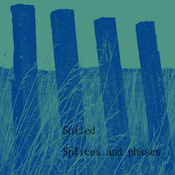
Soiled/Marcus H, Splices and Phases

soiled_spliceTo be quite honest, on my first listen to “Its Fear in the Amygdala,” the opening cut from Splices and Phrases, I winced. Here we go, I thought, time to try to find something to say about noise and more noise. And, let’s keep it honest here, there is a lot of that on this offering from Soiled, one of composer Marcus H’s identities, and it’s only going to appeal to listeners whose tastes run toward the quite challenging. It’s created from bits and moments, and revels in its often overwhelming coarseness of sound. Things grate against each other, interfere with each other, and yet—in a fair number of spots—come together quite surprisingly. I can’t say I understand what Soiled is getting at here, or what the underlying idea is, but I find myself, through repeat listens, getting quite pulled into certain moments and how they come about. Late in “Caustic Surplus of Robotic Smiles,” an almost simple and very engaging bit of minimalist techno is rescued from a gnarled cluster of sounds. It may have been there all along, it may be cast off sounds pulled out of the mass—whatever it is, the change up grabs your attention. “Creepy Crawling and Drifting” opens with a spoken word sample drowned in static, then proceeds to change its face several times. Musical phrases repeat as Soiled dirties up the atmosphere with jagged noise. Rhythmic elements grind their way up as three hits on a cymbal strike out over and over. “Footsteps” takes what sounds like an over-amped acoustic guitar, briefly mangles the sound, and then just lets it play itself out. (Granted, the track’s just two minutes long.) There’s something in the straight-up approach that, again, catches the attention largely by making you wonder what the hell it’s doing here.

Splices and Phases is quite content to punch you in the ears and then ask what you thought of it. Its appeal will be limited, but it can’t be denied that there is a lot of work going on. Noisy, distorted, disjointed work, but work nonetheless. Its appeal lies in how it can almost drive timid listeners off, but still cause enough of a Hmm reaction to perhaps get them to stick around for a little more. Experimental music fans should definitely tune in; others, approach with caution.

Available from Elm Lodge Records.

Second Culture, Thunder Conjuring Mind

second_thunderListening to Thunder Conjuring Mind is like having an acceptably trippy daydream, one where your mind kind of wanders and skips around quite unfettered. What you get here is a little bit like jam-band grooves, a little bit like found-sound art, a little bit like prog, and a lot like fun. Second Culture crunch 15 tracks into this release, with each landing around the five-minute-plus mark—just long enough to make a full and firm statement before changing channels. Transitions between tracks are smooth and leave the flow unbroken. I like the way the sequencer-fired opener, “Star Seed People,” melts into “Euphoricum Integer,” the sequencer slowly fading back from prominence but still maintaining a rhythm.  Things quiet down a bit before we’re suddenly popped into the heavy beats of “Tuning the Dream Door, Pt 1.” Classic spacemusic washes and a vocal drop round it out, ushering us into Amy Conger’s singing/repeating/reciting on “Sorting Sanctuary.” It’s a happy little tune… “The world will end/in 11 days/welcome the apocalypse/stroll right through/the detritus/in your very best shoes.” This thing gives off a heady 70s space rock vibe, a deep jam with poetry wedged into it. She comes back, heavily drenched in glorious reverb, on the title track. Zach Taylor (“for the first time ever, a proper drummer playing a drum kit,” says the web site) lays down aggressive lines as the vocal loops weave around one another in a very hypnotizing dance. “Glass Samurai” bounces and gurgles along, sounding like an alternate take for a Dr Who theme song. This one pings that part of me that thrives on good baselines. On top of that, there’s an 80s synth-pop touch to some of the keys here, so I’m pretty much all in on this one.

The more I listen to Thunder Conjuring Mind, the more I find to like about it. Keyth McGrew and company have hit a definitive groove on this. They’ve expanded their personnel and approach, and it seems like more people means more fun. That’s one thing that truly comes through here: these folks love being Second Culture. They’re ready to play, and push edges, and explore, and we get to dig the results. Plus, personally speaking, I have to admire any artist that notes “100 different variations of Thai Tom Ka soup (vegan)” among their influences for the album. (Along with The Cocteau Twins, Pete Namlook, and Yes, for starters.) Thunder Conjuring Mind is good for your head. It’ll also give your speakers a workout. You need to give this one a listen.

Available from Bandcamp.

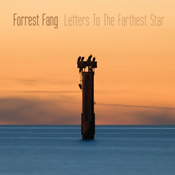
Forrest Fang, Letters to the Farthest Star

Scyye, From

scyye_fromScyye’s 18-minute EP From may be short, but it uses its time wisely, jammed full of catchy hooks and intriguing plunderphonic-style sound sources. This is one of those releases where a bag of cast-off sounds are transmuted into undeniable rhythms and an overall coolness. “CCTV” is a super-trippy groove built on a disorienting array of scattered electronic sound and what to my ears sounds like a surgically altered string lift from “I Am the Walrus.” (Not saying that’s the case, but have a listen for yourself.) “We Remain” is an augmented solo piano piece, where the reverberating tones, or a perfect mimicry thereof, blend into a drone-like quality in the background. This one drips with melancholy. “Nine” opens with scratchy effects and a muted voice sharing space with a slow melody. It’s just 90 seconds long, but it leaves its own emotional resonance.

From doesn’t take up much time, and is hopefully just a holdover as we wait for a longer offering. Between this release and last year’s Timegazing, Scyye is becoming an artist I look forward to hearing from. Go listen.

Available from Sparkwood Records.

Scott Lawlor, Neptune

lawlor_neptuneSpacemusic fans, please queue up in an orderly fashion to procure tickets for the voyage that is Scott Lawlor’s Neptune. Inspired by the distant planet and Holst’s classical paean to it on The Planets, Lawlor grabs hold of familiar spacemusic tropes, wraps them in drones, and gives his listeners a deep and image-filled ride. This is familiar territory, done well. The rushes of stellar wind are here, the choirs of celestial voice pads, the sense of passing through the vast stellar distances—all intact and used properly. Lawlor laces in a recurring motif of icy temple-bell chimes and marks passage with them very conservatively. When they ring out against his layered pads and drones, it’s a beautifully sharp call that really works. There’s a great trade off between stretches with softly administered melodic passages and those that just whisper and drone. The opening track, “The Mystical Blue World,” is the former. After setting us adrift, Lawlor lays in a slow-moving phrase that sounds just familiar enough to make me expect David Gilmour to slip in and fire off a riff. “Neptune’s Rings” goes the other way. Opening with scale-ascending bell chimes, it slowly melts into a lush, windy drift. Lawlor really lets his pads stretch to the far reaches here, and it’ll take conscious thought with it. Between this and its followup, “The Great Ocean,” we’re afforded over half an hour of the deepest material on the release. “…Ocean” makes up 20 of those minutes. It’s packed with drones that take their time rising up in intensity, and everything is underscored with a persistent whoosh that is equal parts wind and the far-off sound of the ocean. He manages to convey and excellent sense of drama throughout this piece, and really holds the listener’s attention for 20 minutes. “Wizard’s Eye” sounds reasonably similar, but arcs upward toward the end into higher-register pads. Here I find myself hearkening back to the lighter parts of Roach’s Magnificent Void. Overall, this is a disc that demands long-term looping.

Stepping into a genre that’s as trope-heavy and well-trodden as spacemusic can be a tricky proposition for an artist. There’s not a lot of new ground, so what you lay down needs to have a certain something that hooks the listener in. I can say that Neptune has such a hook. Have you heard it before? Sure, a bit. But if you love good spacemusic, this album follows the rules and lays out the sonic sights you love, and it does so very, very well. I like Lawlor’s patience in the way he layers his pads. There’s no hurry and, unlike a lot of spacemusic, there’s no need to build to some big celestial moment—you know, the ever-present supernova sound that births out into a big helping of choral pads. That’s not what this is; what this is is a spacey voyage you’ll take many times, finding yourself in the musical moment at different stages, always discovering a fresh side of it. Set aside the time, bust out the headphones, and head out, space cowboy.

Available from earthMANTRA.

Ovod, Between the Days

ovod_daysThe basic tracks for Ovod’s “Between the Days” were initially improvised late at night, and complemented in post-production with further instruments and textures. Ivan Lavrov takes off from a base conceit of using a singular sound, from helicopter blades to train wheels on tracks, to provide a “spine” for each piece. From there he dives into areas that run from hazy dreamscapes to shadowy corners, all the while providing an ample amount of detail to describe his ideas. Between the Days glides by pretty easily, but makes sure that the listener doesn’t drift off too far. While I’ve found that I don’t mind letting this album do its thing, and have in fact let it loop for several hours on several days, I’ve come to realize that it’s never managed to hit me on much more than a surface level. Which is strange, because it’s a well-made thing with something to say. Part of my issue may come from the way some tracks taper off at a point that feels almost arbitrary. “Night at the Port” and “Butterfly Day” disappear in musical mid-statement, as does the closing track. I’m sure Lavrov has his reasons and feels them to be complete, but for me as a listener it’s a “Huh?” moment. Setting the occasional iffy ending aside, there is a lot to like on this release. “Night at the Port” is loaded with a lot of different feelings and focal points. Distorted, metallic chords, deep background drones, and a keyboard melody bring an edgy air. But, again, we’re left alone with the keys in the last 30 seconds or so, and just when they feel like they might have established what they’ve shown up to say, they recede into the fog. “Afterglow,” with big guitar chords and effects from Alexander Tarakanov, is dark and a little menacing. Lavrov lands big piano chords at the open for an extra shot of drama. “Swamp Helicopters” is one of my preferred pieces here. It lurks in the shadows a bit, with guitar lines stepping forward in places to speak in short phrases. Late in the track Lavrov brings the distinctive thrum and whup whup sound of the copter blades into the mix and it acts like a subtle mix of drone and percussive element. Stick around for the 12-minute closer, “When Rails Are Not Alone.” With the slightly altering—but still consistent—click-clack of a passing train keeping a metronomic beat in the backdrop, Lavrov weaves guitar lines, long ambient pads, and electronic treatments into a mildly hypnotic collage.

Yes, this would appear to be a bit much detail for an album I’ve said only hits me on a surface level. But perhaps I am understating its effect because, to be honest, I have listened to this over and over, let it work its way into my system, and I can certainly point out where it excels. I wish I could more adequately describe why I’m not all in with this release, but…I just can’t. I can certainly tell you that you need to give it a listen, and I can say with equal certainty that I will look for more of Ovod’s work, having heard this. Do yourself a favor, if you like your work a bit on the experimental side: grab this and, as Lavrov suggests, listen to it some “evening in an armchair with disabled gadgets, a good pair of loudspeakers or headphones.” Again, don’t let my arbitrary and inexplicable hesitancy about this release keep you from checking it out.

Available at the Ovod website.

HODSON, Colours That Glow in the Dark

hodson_colourLet’s see…dub, glitch, chipset, spoken word and vocal drops, all of it kicked off from a sample from the movie Donnie Darko. (That took a bit of research to suss out.) That’s what you get jammed into 23 admittedly pretty intriguing minutes on Colours That Glow in the Dark from (James) Hodson. This is a pretty palatable little sound-snack. “Out to Pasture” is draped in thick bass and tons of dubby reverb, with an “Irie!” drop thrown in over and over for good measure. Might surprise you, then when he switches it up with the jangly indie-rock guitars and straightforward small-combo feel of “Pink & Blue.” If it wasn’t for a growling vocal drop and some effects late in the game, that is. “Somewhere Down in the West” is a tasty mash of chipset and dub driven by a high-speed rhythm. The sound here is dirty and harsh and aggressive, perfect for the style. Hodson throttles it up and down nicely—not really throwing drops in, but just altering its velocity. The final track, “WORDS,” shows us where the song titles have come from, or perhaps vice-versa. Nice bit of poetry, that. Good wordplay and smooth street rhythms. Colours That Glow in the Dark is a quick hit with a lot to offer. Worth getting ahold of.

Available from The Waveform Generator.

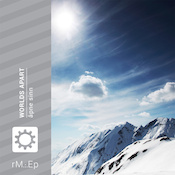
åpne sinn, Worlds Apart

apne_worldsSo here’s a bad thing that turned into a good thing. åpne sinn (aka Geoff Small) was hard at work on a full-length album, the followup to his excellent En Seier release. Months into recording, his computer decided it had other plans. As he notes on his page, “I had to ditch; throw out ACID, welcome in Ableton and pretty much start over. And this took a long time.” Luckily, Small was able to salvage the four tracks he presents on Worlds Apart, the first offering in Relaxed Machinery’s new line of EPs. Of the four, I very much like three, with the last only getting relegated because of the relative ambient strength of its mates. That one, “Slight Return,” is a light track, with vibraphone-like tones bouncing and popping over quiet pads. It’s got a playful feel, and I find myself trying to suss out the cadence and the math behind the way those tones collide. As for the other three… When Small offered this album up and I had my first listen to “Auspice,” I was less than halfway through that track when I knew I’d be immediately dropping it into a podcast episode. It has such potency, such an immersive atmosphere, that I had to share it. I liken this to his track “What Rough Beast” from En Seier in that it largely eschews musicality for a dose of pure viscera. Yes, it has its slowly intersecting and harmonious pads, but they’re carrying a minor-chord urgency and surrounded with hissing winds and lightly serrated textures. Darkly meditative, it has a hold-your-breath quality I can’t get enough of. For pure emotional content, “Seven Ways” absolutely shines. I know Geoff somewhat, and I think I have a good idea what this is about, and it’s beautiful. The song is clean and almost simple, its melody played out like well-chosen words. I love the use of a voice-like pad here; even softened around the edges, it has a rich human quality. If this track doesn’t stir a little something in your soul, please consult your metaphysician. The EP closes out with the title track. Here, Small folds in a sample of someone chanting in prayer in Istanbul—I recall being privy to this sample in his studio a while back. He has seamlessly folded it into his ambient structure, underlaying it with long, slowly shifting pads like he was hired as an accompanist. A very light touch of piano hit with some reverb slips in, a perfect touch of solidity in this ethereal track. You’ll feel your breathing slow to come in line with this one.

While I am sure that Small’s constructs have plenty of layers going on—he has a very good way with small sounds, no pun intended—what I find remarkable about Worlds Apart is how deceptively simple it sounds. By “simple” I mean clean and uncluttered and exuding an interesting patience from start to finish. Yes, it’s just 30 minutes, but that brevity serves to play up that sense of patience. He’s not trying to cram things in, he’s giving the pieces exactly the space they need to say what they need to say. In this release you get darkness, light, love, prayer, meditation, and bouncy things. What more can you really ask for? Although I’d never wish a catastrophic system failure on anyone, this particular meltdown resulted in a really enjoyable listen, so…hooray for that. I know that Small is back to work on his next release, so I am letting Worlds Apart serve as a great, loop-worthy placeholder while we wait.

Available from Bandcamp.