Crow’s Labyrinth: Travels

crows_travels Using just bass guitar and effects and recording almost everything in one take, Theo Tol, recording as Crow’s Labyrinth, turns out a mixed batch of more-or-less dark ambient on his new release, Travels. It’s an interesting concept that works for the most part. The disc starts fairly strong; “Frontier” and “Influx” focus on atmosphere and working with a fairly small set of sounds. It’s nicely grim, and the simplicity of the sound-set lets Tol create spaces with real depth. Particularly on “Influx,” there are places where the bass becomes an animalistic growl, something lurking in the dark with unpleasant intentions, and the tense feel Tol crafts plays into that. And then we come to the appropriately titled “Gibberish,” which quite frankly grates a bit. It sounds like Tol is playing a set of bedsprings, the wobbly sound venturing dangerously close to irritating. “Reverie” and “Strategem” move back into a darker space, but both feel a bit too static for their own good, their long stretches of repetition growing quickly stale. Travels goes out on a pair of good notes, the two best tracks here. The first is an older bass solo called “Below.” Over hissing, slightly metallic background sounds, Tol works his bass through ringing harmonics and a melodic anchor line. This quick 3-minute hit is nicely coherent among the rest of the pieces. The closer, “Heliograph,” builds on curls of processed sound that come off like reverse echoes, layered over long, quiet drones and slowly plucked bass notes. There’s a cool organic feel to it, a calming, liquid condition that pulls the listener in. The good outweighs the so-so on Travels in quality if not quantity. I admire that Tol challenged himself to create these pieces in one go. When he’s on, he’s most definitely on–and that would be the times when he shows more restraint and a better eye for structure. This is a disc that’s well worth looking into, but will definitely appeal more to people whose tastes run to the dark and experimental.

Available from the Crow’s Labyrinth web site.

3AM Tone: DDL Singles Part 2

As I noted in a December 2012 review of 3AM Tone’s work, what I’m reviewing here isn’t a single outing per se; rather, it’s an aggregation of monthly releases that the artist has been turning out since October 2012. They don’t exist as a collected thing but are individual downloads on the artist’s site, and the plan currently extends through October 2013. I’ve been given a file with some past, present and future releases for review. (For future reference, this isn’t something I do often.) 3AM Tone continues to dole out ambient drifts in something of a by-the-numbers style. Airy washes drift and cross, high ends reaching upward, anchored with grumbly low ends. My problem with it is that I found myself wanting it to do more, to go deeper, to take a turn that makes me pay closer attention. And it doesn’t. The pieces on their own are fair enough, good low-volume backdrop pieces, but it doesn’t feel like the artist is striving to do something bigger or more intricate. The depth of detail that I prefer in my ambient listening doesn’t make enough of an appearance to hold my interest. I wanted to like these pieces more than I did. The artist’s site has links to YouTube videos of the songs; I suggest you check them out to see if the work is to your taste.

Available from 3AM Tone’s web site.

Silencio: Floods

silenc_floodsGuitar textures, gritty post-rock and floaty ambient mix on the remastered re-release of Silencio’s very limited-edition (40 copies) 2010 CD, Floods. Julien Demoulin heads up a quartet that shift gears easily from the folksy, synth-augmented “Arale” to the raw garage-rock edge that graces the middle of “No Memories, No Ghosts” to the broad, experimental space of “Embarcadero” without a mis-step. “Again Again” is a favorite track for its use of a minimalist structure, slow pace and a repetitive bass line, all melting into a quietly hypnotic stretch. “The Lost Resort” is a melancholic post-rock piece, with slow-played chords glimmering in reverb over a lazily moving bass and guitar sighs. There’s a nice hesitancy to it, the space between notes played out to just the right length. This is an easy disc to drop into. The guitars are earthy and grounded against the dreamier wisps of the disc’s ambient elements, and everything is carefully balanced. A close listen turns up a lot of detail and texture, along with slight touches of field recordings that can come as a pleasant surprise once you’ve wandered deeply into the music. A great release from Silencio that’s been getting a lot of play here at Hypnagogue.

Available from Sound in Silence.


Northcape: Exploration and Ascent

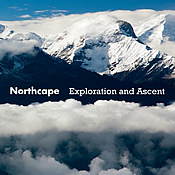
northc_exploNorthcape (aka Alastair Brown) returns with a smooth, easygoing blend of downtempo keys and glitch beats on the very listenable Exploration and Ascent. Although there are eleven tracks, it’s not long before Brown’s style melts into a good, uninterrupted flow and it simply feels like one continuous and lovely journey. There is the feeling of some sameness in work as the disc goes along, but it manages to come off as thematic rather than repetitious, and actually works toward helping you get lost in the music. Brown is good with the complex beats, but also nails down more amorphous flows like the start of “Potentilla”–which picks up its own beat later in the track while still singing its main melody softly in your head. Tracks like “Arrive Rutledge Col” might pull up some Boards of Canada memories. Many of the tracks here possess that certain warmth of tone, the slow bounce and lazy lope that plays so well against the crisp snap and hurry of the glitch beats. A personal favorite that falls into that category is “Meltwater,” a quick hit where the main sequencer line is high and a little shiny, a pleasant pulse over a humming pad and cool bass.  “Mackerel Sky” is pillow-soft, with typewriter-key percussion and an old-school-sounding sequencer run. Headphones are highly recommended to take in Brown’s excellent layering and his use of small sounds as perfect accents. This is a disc that deserves all the repeat play it will get.

Available from Sun Sea Sky.

AOMusic: Hokulea

aom_hokuReady for another round of super-uplifting world music from AOMusic? Hokulea delivers that once again, fueled by the brilliant and distinct voice of Miriam Stockley and lead instrumentalists Richard Gannaway and Jay Oliver. They’re aided by four choirs and another 11 musicians from around the world to empower this batch of energetic songs. There’s a certain similarity at work, with the jubilant tone and vocals that vary between actual lyrics–in Swahili, Indonesian, Hindi and “Polynesian”–and words invented more to catch a feeling than an actual meaning. But to that end, Hokulea becomes one big ongoing one-world party. There is variation, of course. Stockley’s silky voice opens “Kuimba” in a way that reminds me of Clodagh Simonds’ work with Mike Oldfield. Its softness contrasts with most of her contributions here, which border on soul-shakingly joyful. “Hokulea” is sung in English and begins with a sort of world-folk feel, helped along with Celtic flute. Speaking of the Celts, “Irie Grá Medley” is a jig for the new era, vibrant and catchy–and even works in a little hint of didgeridoo to spread the global love. (I do wish Gannaway & Co. had more clearly broken out who’s playing what on which tracks–proper credit is very due on this wonderful piece!) As with everything AOMusic does, Hokulea is a celebration of spirit and a call to a global one-ness. This is a message that is best heard at volume in a place where there’s room for dancing. Give in to the joy and enjoy Hokulea.

Available from the AOMusic web site.

Abandoned Asylum: Derelicts of Distant Hope

aband_derelThis line on the press release for Derelicts of Distant Hope, the debut from Polish dark ambient artist Abandoned Asylum, caught my eye: “With dark ambient, it’s not so much about reinventing the wheel (which isn’t so easy to do given the genre’s defining characteristics) as much as it is about setting the mood.” Well, I’m glad someone other than me said it, because it’s largely true across the board, and pretty much true for this release. The tone is grim and the sounds are dense. Big, swelling drones heavy on the bass end clash with industrial clamor. Nothing here really moves the needle from where it usually points, and the disc will likely only appeal to core dark ambient fans.

Available from Malignant Records.

Dan Pound: Spherical

pound_spher Dan Pound opens up tribal and mystical spaces on his new release, Spherical. For this outing, Pound pulls some of his sounds from an interesting source. While working on this disc, a now-replaced bit of studio equipment would sometimes play back tracks from another album Pound was working on, but at half speed. Recognizing the potential is these fresh rogue sounds, he worked them into Spherical. This, added to his usual arsenal of synths, guitars, flute, percussion and more, drives another deep and well-orchestrated excursion. Listeners with some ambient background will likely pick up distinct bits of the influence of Steve Roach in various parts of  Spherical. “Only A Memory” sounds like what would have happened had Roach thought to add understated beats to Structures from Silence. Pound’s pads have a tone that’s close to identical to that disc’s, but the slight sidestep he takes with the beats keeps him in his own territory. And the title track has its share of familiar echoes, from the curvy analog squibs to the rise-and-fall backing drone. Which, again, doesn’t detract from the quality of the thing. It’s still a deep groove in a nicely carved-out electronic space. Pound’s fully in his element when he takes the listener into tribal zones, beginning with “Lookout Point.” Native American flute vies with growling bass drones and ominous pads, a nice mix of organic and electronic. It conjures up (in my head, anyway) a wonderful visual sense, a sort of man against nature feel, the flute coursing in the face of an oncoming storm.  Then “At A Distance” keeps it going by ramping up the percussion with clattering sticks and throwing in dark, spiraling pads and hypnotic drones. You’ll happily lose your way in the middle of this piece, and the way it pares down toward the end, spreading into a wide vista, is superb. Pound uses this to carry into the calm swirls of “Through the Center,” the disc’s long showcase piece. (And, I admit, the start of this, with crow calls and long pads, put me in mind of part of Mystic Chords & Sacred Spaces–but only until the rest of the track swept me up.) Then, unexpectedly, acoustic guitar with a bit of  Spanish flair comes in, a grounding presence in the deepening space. Pound works in a bass pulse, its insistent repetition becoming a mind-salving element as he thickens and intensifies his layers. This track exemplifies why headphones are a must for this journey. As always, Pound pays laser-focused attention to his small sounds and they way they’re worked around your headspace, and that work demands equal attention from you. The acoustic guitar returns on the closing track, “Like Tears In Rain.” Here the guitar trades off with high, soaring pads in a cleansing New Age sort of mix that lifts the darker aspects away and brings the disc to a soft close.

Spherical is another great release from Pound, and one of his darker excursions in a while. He’s always been a solid tribal-ambient musician, and that’s the standout element on an overall strong set of pieces. Very much worth a close listen.

Available from Dan Pound’s web site.

Emmalee Crane: Crowd of Reeds

crane_crowdOn her latest release, Crowd of Reeds, Emmalee Crane offers up electro-acoustic chamber pieces that seamlessly blend new classical music with understated ambient supporting structures. The resultant sound is intimate and organic, very human and deeply affecting. Leaning heavily on rich string drones, comparisons could be drawn to an earthier Stars of the Lid, with the drones being grounded and given a lyrical lift by piano, brass, guitar and more. Sarah Conroy, J. Patrick Brookman, and Miles Fender assist, which gives the music even more of that small-combo chamber feel. Crane peppers her work with interesting touches, from clatters of sound to field recordings to vocal drop-ins, but the focus stays firmly on the music and its rich emotional content. Fender’s guitar work in “The Seventeenth Wheel” brings a twangy solidity into the midst of quiet drones and wavering sound-forms, later augmented with Conroy’s clarinet. Together, they create a meaningful voice. Crane’s piano on “Manitoba,” my favorite track here, has a definite heartbreaking quality to it. The structure sounds almost simple, and allows the repetitive song to truly drill down to an emotional core. Long-drawn strings melt into a drone on “The Summer Fell Silent,” a core-resonating bass sound with a signature raspy edge. As the strings layer and open into a more melodic space, all you can do is close your eyes and let this somber sonata wash across you. It leaves off beautifully at the end, teasing the listener with a need for just one more note that isn’t coming.

Crane packs 10 pieces into this 40-minute offering. Although short, the songs here are firmly filled and fully realized. The brevity seems to reinforce the chamber-music sense, the intimacy of a small recital. A superb release.

Avaiable at Emmalee Crane’s web site.

Hollan Holmes: Phase Shift

holmes_psHollan Holmes pays homage to astronaut Neil Armstrong on his new release, Phase Shift, and in doing so offers the best work of his short but increasingly impressive career. As with his previous discs, Holmes’ music varies between an analog sound that pings all the listening-pleasure centers in old-school fans, and  broad, far-reaching spacemusic excursions. In fact, the final two pieces, “Morphogenesis” and the title track, covering about 15 and 33 minutes respectively, are incredibly deep stellar flows, alternately calming and quietly dramatic. “Morphogenesis” lifts slowly out of silence to find its way to that place where all spacemusic goes at some point, the ever-popular angelic choral pads. Holmes does a great job of dialing them back to a sort of celestial whisper, a perfect accent to the misty borders and earthy bass drones of his larger drifts. “Phase Shift” is the more ethereal of the two but none the less substantial in sensation. Long undulating washes dissolve across time into a fog of surrounding sound; it’s simply a classic ambient feel, all slow evolution and crossing pads for deep and pleasing immersion. Holmes’ structure here is impeccable, giving a distant sense of melody within the flow. Prior to this long stretch, he opens with sharp and well-shaped sequencer lines in “A Precarious Trajectory” and “The Road to Perdition.” These are an analog lover’s joy ride, energetic and angular, the sounds bouncing and rebounding beautifully. Have your Tangerine Dream points of reference handy. “The Road to Perdition” is punctuated with mighty, fist-on-keys chords, big slams of sound  that pack some serious resonance. A great touch. Falling in the middle is  “Lost Memories.” It opens in a quiet space, its pads soft and gentle, and later takes on a light touch of sequencing. Again, Holmes elegantly folds in this aspect so that it grows organically into the piece and builds to a point of focus. Underneath it comes a repeating melodic phrase that feels a little pastoral. Holmes takes almost a full minute to strip the sounds back down and prepare the listener for the deep trip ahead.

It’s been an absolute pleasure to spend a lot of time dropping into Phase Shift. The deep end of it is remarkably so, a full-on brain massage edged with emotion. Its uptempo side is simply fun, not just for its nostalgic side but for the quality of the interlacing of lines as well. Holmes makes it sound effortless, and his sense of overall pacing creates a well-realized sonic through-line. Another superb offering from Hollan Holmes. If his name is not on your radar yet, check again. It needs to be.

Available from Hollan Holmes’ web site.

Stephen Savage: Future Memories

savage_futureIt’s interesting. Stephen Savage says that with Future Memories he wanted to create synthesizer-based spacemusic. If that’s the case, then this is the jazziest, least spacey spacemusic I’ve ever heard. He finds his way there by the time he reaches the track “Gravity”–and he manages to all the right memes with his big, sweeping pads and glittery sounds–but even that winds up with a jazz tint. And that’s okay, because Future Memories is a comfortable ride that finds its voice in its blend of jazz, laid-back New Age, and a hint of spacemusic. The jazz element is strongest, and Savage, whose credentials include stints with both Berklee College of Music and the New England Conservatory of Music, is clearly at home there. “Then There Is Here Now” sounds like what would happen if Steely Dan decided to go a bit more prog. Fagen-esque breaks and phrasing mark the spaces between tweaky arpeggios that scurry up and down the scales. Savage also unfurls some tasty guitar licks here (and throughout the disc) for extra zest. Michael O’Connell’s rock-solid drumming adds flair and power. “Hold That Thought” carries echoes of Lyle Mays in its crisp and lyrical piano. “Riding the Cusp” spills out filled with electro-jazz funk, its Return to Forever keys underscored by percussion from O’Connell.  This track will do your soul some good. Savage’s ambient-leaning pieces are equally well executed. “Ponder” and “Lux” float right along, with “Lux” adding in a little extra dramatic flair.

Firmly slotted in the New Age category, Future Memory‘s jazz pedigree makes it a nice wind-down disc, with the electronic edge bringing in a lot of dimension and room to play. Jazz fans will find themselves playing the name game as they go along, but Savage makes each piece his own and everything here is rock-solid. Very enjoyable.

Available at CD Baby