
 Because I first caught the electronic-music bug in the 70s and early 80s through artists such as Tangerine Dream, Jean-Michel Jarre and Kraftwerk, the truth of the matter is that any musician now doing sequencer-based, Berlin-style music (and doing it well) pings my nostalgia button and therefore has a bit of a thumb on the scale when it comes to a review. Chuck van Zyl is certainly a well-known name in this genre, a talented artist who keeps the old-school flame burning both as a member of Ministry of Inside Things and on his own. His newest release, Memory Space, hits all the right analog buttons (or knobs) as he lays down fluid, flute-like melodic contrails over precise and perfectly constructed sequencer runs. If you’re not into this largely retro style, Memory Space may hold marginal interest for you, or even seem limited. However, van Zyl mixes things up as best one can, given the base equation of a very angular, clockwork bottom end and the artist’s particular melodic style (which, let it be noted, I’d gladly listen to all day) and he does steer his musical musings from that classic framework and off into spaces that are darker and more experimental. In fact, the disc starts with the abstract piece, “Time,” where skeins of analog sounds spiral off into a whispering void as an ominous bell peals. van Zyl smoothly segues that into the crystalline arpeggios of “All Souls’ Day,” and as he lifts choral voices out of his gear, we find ourselves in that sonic sacred space, paying tribute to Froese and Schulze and all those who crafted the path. Between these two tracks, one gets an understanding of the balance at work on Memory Space. The centerpieces of the disc are three long tracks that give van Zyl the room to really stretch, explore and showcase his mastery and love of this style. “September Cemetery” is the first, and it helps to re-express the balance by opening with clouds of warm ambient chords and a bounding melodic line that puts me in mind of early Giles Reaves. (In fact, it just came to me that the echo I’m hearing is from Reaves’ Sacred Space.) “Marble Orchard Nocturne” lacks only Art Cohen’s guitar to make this a picture-perfect MoIT track. The energetic sequencer is a van Zyl signature, and his free-form playing absolutely soars here. Not to throw an endless stream of reference points at this disc, but this one puts me smack in the middle of Tangerine Dream’s Sorcerer soundtrack–an album that was absolutely influential on my appreciation of the Berlin style. Late in the track, van Zyl seamlessly downshifts to more vaporous drifts, and the effect is mesmerizing and soothing. “Stories in Stone” begins in an interesting space, with blocky notes stepping precisely, if not a bit mechanically, over choral voices. After a few minutes, van Zyl sends the whole thing flying, high and clear, and never looks back. This one is pure Chuck van Zyl–no comparisons are needed. In this I hear the playing that has made me an MoIT fan, the keyboard soul of the duo. The tracks between these longer pieces are not to be ignored, by the way; they’re equally rich in character, diverse and perfectly constructed, parts of this very effective whole.
Memory Space overflows with the sound of a musician who loves what he does, and loves where it came from. van Zyl’s sequencer work in unparalleled, a rock-solid geometric foundation, and the depth of his inspiration comes through in every note. For listeners like me, who either came to electronic music via these sharply modulated channels or those who like their music with a slight retro edge, Memory Space is a must-hear disc. And if you’re not familiar with the Berlin School, take a listen. Chuck van Zyl has crafted a superb primer on the subject.
Available from Synkronos Music.

 If there’s one thing I’ve learned through exposure to three CDs by J.C. Mendizabal–two as Kyron, one with Radio Free Clear Light–it’s that from the moment you start one of his works, the experience is going to be interesting at the very least, likely challenging, and ultimately rewarding. Perdurabo, his latest out under the Kyron moniker, plays with the possibilities of rhythm and repetition. The 12 tracks here all have a certain bounciness to them, a pattern set from the first track, “Suscipio,” which is also about the most user-friendly one here. A melodic phrase with a vibraphone/kalimba tone winds around and around itself while light glitchwork fills in the background. It’s catchy and appealing. With the concept in place, Mendizabal contorts and reconfigures his basic idea across the rest of the tracks; in doing so he makes us consider not just what we’re hearing but what we’ve already heard and how it relates. The tonal familiarity is there, but the new forms force us to re-think the concept. For example, a memory of the pattern eases out from under a scratchy electronic rasp in “Itineris,” but our ability to hold that memory is tempered by the arrival of new sounds and Mendizabal’s slow removal of that element. And so it goes, with the listener re-engaged by each new track but still trying to piece things together. Is the metallic, clanking percussion in “Fas” following the same pattern as the carrier-tone sounds in “Viator”? Are there echoes of that first track in the speedy, elastic glitch of “Tumulus”? It’s that odd sonic deja vu working its way into our heads again while, at the same time, Mendizabal’s smooth use of noise and glitch confronts us with the “is this music?” question. That’s part of the allure of Perdurabo–its ability to make us think, but in the same moment infect us with a touch of the beat. Mendizabal’s musical equation holds up quite nicely across repeat listens. Perdurabo is a Hypnagogue Highly Recommended CD.
 My initial impression of 16:9 is that it is two-thirds of a superb ambient disc, and one-third of a disc that simply tries too hard to be something else. When it’s on, it’s absolutely spot-on, and when it’s off, well, I hit the skip button. The first few tracks that Stuart Sweeney offers are captivating, floating ambient pieces that show hints of more structured concepts beneath. The opener, “Where the Shores Meet,” feels like a time-stretched adagio, the pads warm and calm. The title track is a hypnotic drone with a dense bass undertone that just carries the listener along. A gentle melody, more like a momentary phrase, peers out of the flow to snare your attention. “Impressions of a Golden Age” is blissfully ambient, a crush of gauzy near-white noise in looping waves creating a rhythm built of repetition. Crackling sounds just under the surface create texture and tension. Sweeney loses me, however, when he turns his hand to less ambient-oriented pieces–the ones that feel more like they’re ineffectively flexing a bit of neo-classical muscle. The pseudo-Asian rhythms of “Gold and Red,” the honking Glass-like minimalism of “A Time of Change,” the short tangle of overt drama in “Fantasia for a Storm”–when they’re held up against the earlier tracks where Sweeney really hits the mark, they just feel like they’re stretching too far and taking the listener (me , anyway) out of an otherwise seamless journey. That being said, the closing track, “Cherry Blossom Falls” is a purely romantic chamber piece where Sweeney’s melancholic piano pairs beautifully with strings by Pete Whitefield. Here, the classical-music heritage works as the piece pulls quiet, sad memories out of your head and heart.
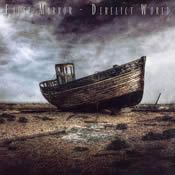 I may not be able to adequately articulate why False Mirror’s Derelict World has the profound effect on me that it does, nor may I be able to tell you why this dark ambient piece works for me when so many others of similar bent simply don’t. But here goes: Derelict World is a visceral, soul-penetrating bit of sound design woven through with long, mournful drones that wander through Tobias Hornberger’s thoroughly realized, barren and flood-ravaged landscapes like lost ghosts. Atmosphere is clearly of the utmost importance to Hornberger; it dominates the sound, from the watery burble running under “Afterrmath” to the slow, tortured creak of a ship’s boards on “The Sea of Oblivion.” Further insight comes from reading the disc’s liner notes where Hornberger discusses much of the sound sources, from whispers recorded at a monastery to the creak of a barn door to–quite serious here–the artist eating gelatin. His superb drone work almost seems to exist solely to support the imagery and to amplify the impact of the artist’s vision.
 Here’s a quick test for you. The album is called Music for Suicides; tracks include “I Could Jump Out a Window,” “And The City Shall Burn,” and “Raped in a Basement Apartment.” So what kind of music are we listening to here?
 Musicians find their way to ambient music along a variety of routes. Howard Ferré’s arrival here came via 25 years of doing sound design work for theater productions. It’s no surprise, then, that his debut CD, Journey’s End, works its way through a variety of scenes and moments, each with its own style and narrative. It’s a hard-to-pin-down disc that embraces spacey floats, so-cool jazz flavors and post-rock melodies with equal ease. For all the reach here, it’s a pleasure to say there aren’t any real misses. What’s more, Ferré lays out the work in an order that creates a sensible flow from airy to solid. The 9-minute opening track, “Before You,” is the most ambient piece here, the flows silken and wispy. Get to “Turning Point” and the surprise arrival of a downtempo beat is upstaged only by the late-track flair of a wailing guitar. This is my favorite track here, a soundtrack-worthy piece with a cool-striding attitude. Roll the credits as the hero turns his Corvette toward the sunset. “Stained Glass Reflection” practically has “insert lyrics here” written across its laid-back folk-rock pedigree. Cocktails are in order when Ferré turns on the Latin-jazz electric-piano vibe in “5 Years.” Smoky-sweet and sexy, neatly augmented with rolls of thunder, and just the right amount of showy. The title track brings the disc to a poignant close with a sentimental melody and a sometimes bold symphonic backdrop. The camera circles. Pulls back. Fades out. Journey’s End perfectly showcases the wide scope of Ferré’s musicianship–not just his instrumental range or ability to write songs in several styles, but to tell a story with each piece that’s complete and understandable. On top of that, it all quite nicely stands up to repeat listens. A great end-of-day disc and a superb debut from Howard Ferré. This Journey’s End is clearly just the beginning.
 Although the sonic traveler taking a ride on Ambient Fabric’s In Space will not be exploring particularly new worlds, they will certainly realize that their tour is in the hands of a very skilled pilot. Wending his narrative way through expansive galaxy-spanning drifts and a sense of the vastness of the cosmos, composer Øystein Jørgensen spins a tale in eight tracks of quality spacemusic. Thematically speaking, Jørgensen helms his craft perfectly. The voyage begins on the dark side of somewhere with the quavering pads of “Spaceship” coming across as tentative and mysterious. Light begins to fill the space in the next track, “Cosmos,” and there’s an actual sense of relief. From here In Space takes on an easier tone, perhaps best showcased in the calmness of “Sphere II.” But don’t get comfy. If the sparse, darkening stretches of “The Outer Limit” or the something’s-not-quite-right-here hesitance and subtle dissonance of “Beyond” don’t unsettle you slightly, just wait. Jørgensen culminates the voyage in the starless void of “Empty Darkness,” the longest track on the disc, the one he’s been setting you up for, a fantastically dramatic piece where deep metallic percussion rings out like an unknown something banging insistently against the hull while intermittent inhuman snarls tell us that We Are No Longer Alone. We’ve come too far, our craft is powered down and drifting, the radio is dead and our fate is left to be decided as the last note fades. A superb choice by the artist to leave the listener with a sense of “And then…..?” Headphone listening is required to capture Jørgensen’s excellently crafted depth of sound, down to the slightest flecks of sonic texture that bring a more dynamic life to a piece like this. A strong release from Ambient Fabric that hooked me more deeply with each listen.
 I may, in this review, use the phrase for me more often than usual. Because although I can certainly see how Clookai’s Spirits of the Faerie will likely have strong appeal among the spa/bookstore circle, for me as a listener it’s a trifle light. That being said, it’s also predictably pleasant, with Clookai’s excellent flute work sailing over keyboards, guitar and more from Chris Conway, who’s got his own impressive catalog of New Age work, both as musician and producer. (A role he takes on this disc as well.) A strong Celtic vibe runs through the disc as Clookai spins a spell to open a path to the Faerie realm. (That sounds even more precious coming from me.) Admittedly, the disc is very lyrical and even downright toe-tappy in spots. For me it’s more sugar than substance, and I kept finding myself wishing there was less of the windchimes and wordless, chant-ish vocals and more focus on Clookai’s flute. That’s where the grace and the heart stem from, but it has to wrangle its way out of the thematic trappings and its almost secondary role. A disc of Clookai’s solo New Age flute meanderings? Count me in when you get to that. For now, I leave Spirits of the Faerie to the New Age bookstore racks, where I am sure it will do well. As always, although the appeal for me is minimal and passing, folks more inclined to this type of airy, “magickal” work should follow the link below and have a listen to the samples.
 Strap on your glitch hat, we’re going for another jittery, funk-laden ride courtesy of Tympanik Audio and Poland’s CH District. Kicking off with dissonant bells chiming over twitchy electronic and thudding bass, Conclusion leads the listener along pretty familiar IDM paths. The beats are strong and club-worthy and the glitchwork is solid. While there’s not a lot here that rises above what you’d expect, a couple of tracks do stand out. “Burnout” gives off a very distinct Ultravox vibe; the halting rhythm and comparatively light glitch content catches my ear and makes me listen. It leads into the title track, which is pure dance-club gold. A pounding bass line tears its way through the room as layers of infectious sound grow and blend. CH District will manipulate your body movements with this one, especially when he drops in a great vocal sample (which I meant to ask about) that adds what to my ears is a little Middle Eastern flair. The closer, “Go Out,” pairs a bass line reminiscent of a New Order tune with ice-cool electronics, more melody than sound-spatter, for a nice result. All in all, Conclusion is a decent disc for glitch fans or those who need their daily dose of beats. And at just 42 minutes, it’s a quick fix with little wasted space.
 It’s not easy trying to keep up with Dan Pound’s prolific release schedule–I reviewed
  Hypnagogue Music Reviews