
 Over the last several years, Bruno Sanfilippo has been making a focused move toward establishing himself in contemporary or modern classical composition. With The Poet, I feel he has found his current apex, and is rapidly becoming a composer who, although perhaps noted as a “New Age” artist, is breaking well beyond the borders of that delineation. The Poet is minimalist chamber music, with Sanfilippo joined by cellist Julián Kancepolski and violinist Pere Bardagí. Each piece feels delicate and flawlessly sculpted, the kind of thing you want to gingerly hold up to the light and turn over and over to see every facet. To me, the work here is lightly glazed with just a touch of sadness that never crosses into a less desirable tone of melancholy. It’s pensive and true. The title track, the moving “Before Nightfall,” and”Silk Offering” all pull the listener into that introspective cocoon while also giving us a feel for the easy chemistry between the players, the balance of the instruments’ tones. Bardagí’s lines reach straight for the heart on “Before Nightfall,” and Kancepolski’s counterpoint helps drive it home. “Silk Offering” is a beautiful blend where Sanfilippo’s patient phrasing lays down a bed for the pleading voice of the violin and the more stringent tone of the cello to work out their conversation. The pace is slow, underscored with drama, and the piece is vivid. The more minimalist side of the work comes out later, with “Dead’s Hope” and “The Four Keys” both opening with repeating arpeggios that speak of the influence of Glass and Reich. “Dead’s Hope” is short, more like an exercise in building intensity. It reaches constantly upward, then simply stops. “The Four Keys” is a true showcase for the strings and the potency that can come from repetition. We hear the same phrases, yet they seem to rise up in meaning with each new pass. It seems like Sanfilippo wanted to roll out as many different approaches as practical on The Poet. “Iron Horse” goes strong on theme with Sanfilippo playing alone on what I assume from the sound is a prepared piano. Its notes have a metallic ring and resonance to them, and the piece jerks along like rusted machinery, its awkward pauses creating very strong mind’s-eye imagery. “The Book Without Words” seems to grow beyond the small trio feel in places, reaching for something more symphonic with tympani rolls and layers of strings. Sanfilippo’s music-box playing keeps it anchored in a glistening simplicity. And if you’d like your heart broken, the short solo piano piece “Abandoned Carousel” will do it for you in exactly two minutes. It’s the closing piece, and whether Sanfilippo meant to do this or not, it dovetails seamlessly back into the first piece. It is about as perfect a continuation of feeling as I’ve ever heard. So if it’s on purpose, bravo.
The Poet is an exquisitely beautiful set of works. While minimalist in compositional approach, the pieces here are full in ways that utterly belie that tag. The effect on the listener is maximal, certainly. These are pieces that land with emotional impact and demand focused attention. They may be delicate, but they are strong. Sanfilippo grows almost exponentially as a composer with each new release. The Poet is amazing, it is a must-hear, and it has become a personal favorite of mine. Listen to this now.
Available from Bandcamp.
 Multiplying waves of “willfully minimalist” electronics create the core of #002 Animai(i) from Nnord. Pulses, drones, and steadily building walls of noise represent “the breath of the Soul mourning the condition of living creatures enslaved by Man.” Given that, it should come as no surprise that there is a funereal quality running under everything here. It surfaces most notably in the dirge that plays out under the rising hum in “Beehive, the Old Queen is Dead.” Less patient or tolerant listeners may not take well to the way that hum grows into an aggressive buzz—despite being firmly within the parameters of the theme—but listen to the way its tone takes over for the dirge it swallowed. From there, the somber and somewhat surprising sound of a morose piano melody leads into the album’s denouement, “Rien n’est plus puissant qu’une idée dont l’heure est venue” (“
 As Phillip Wilkerson takes on the metaphor of rivers in his new release, I will strive to keep my review free of the obvious references—flowing, liquid, drifting currents, etc.—because, if you’ve listened to much of his work, these words always apply. In fact, it’s hard to say much about Waking Across the River that I haven’t said in previous reviews. I could start with “you need to get this,” because you do, and go from there. I could mention the deep, personal, emotional quality that runs through each track, but you’re going to feel that strongly from the opening moments. Although the majority of the album is dominated by long, drone-like pads in a classic rise-and-fall layout, Wilkerson opens in a very New Age kind of space with “And Then the Time Was Lifted,” firing off dramatic piano glissandi over string pads. He then lets his sounds quiet down and melt together into more straightforward ambient shapes. This is the format for two of the parts of Wilkerson’s four-section suite. “Kiss Her Once for Me” keeps its “solid” sounds in place for longer, playing out within a swirl of pads. Toward the end of the track, Wilkerson gives it a sequencer bounce for an easy analog feel. “The Last Day Here,” which comes between them, heads straight off into spacey, nebulous clouds of pad work. It’s something of a warm-up for the title track, which closes the suite. The first three are short although they feel pleasantly longer when you’re in them. The closer is a half-hour of pure drift, an absolute cloud of ambient deepness. While a slowly oscillating low end draws a long and steady line, mid-range tones curve and cross in the air. It’s all quite dream-like and enveloping, certainly a candidate to be looped on its own when it’s time to wind down and drift off. Let the comparisons to Steve Roach be drawn; this piece deserves to be held up to that standard, and does so more than favorably.
 Glitch gets melted down and smoothed out into a downtempo glide on SineRider’s Seconds Minutes. The touches and textures of glitch are all here, the snaps and taps and rapid-fire trills, but they’re encased in well-chilled grooves and soundscapes that often become quite large and deliciously dense. That’s one of the many things I enjoy about Seconds Minutes; Devin Powers carefully floats in continuous layers of sound without ever overloading his pieces. They become almost symphonic in size, with so much going on in your ears all at once, and all quite harmoniously. “Metric Time” follows this path, carrying distorted string sounds and crystalline keys toward that greater mass, ramping up the intensity and emotional content as it goes. Another soul-stirrer is the almost pastoral “I Saw the Sound.” With a post-rock ballad feel and a strong emotive thread throughout, it comes away as thoughtful and pensive—and, like everything here, the kind of piece you instantly want to listen to and feel again. The straightforward uptempo pieces on the album are also a joy to dive into. I like the crunchy bass and sparkling mid-range notes of “Finch.” Powers hits tempo shifts with ease, coming out of velocity to cruise for a minute before guiding it back up. “Winter Months” manages to have a sort of jaunty feel to it, catchy as hell, while still being pillow-soft. (And I am sure this is fully unintentional, by my ears pick up a hint of the ’80s song “Heaven” by Eurogliders in the four-note phrase that rolls through it. Just my old ears, I know…)
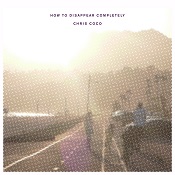 As relaxing and smooth as a well-made cocktail, the lightweight jazz and nuanced Caribbean flavors of Chris Coco’s How to Disappear Completely go down pretty easy. For me, however, some of this cocktail is a little overly sweet. So I like to take sips over time rather than throwing back the whole thing at once. The album opens with “Portmerion Tide Flow,” which wastes no time in massaging your temples with acoustic guitar, interesting electronic treatments, and silken vocals from Samantha Whates, whose voice I very much enjoy. (With one exception, noted below.) Later in the release, Coco funks up the joint with the simple but effective “Dreaming of Love.” This thing’s got more hooks than a fishing boat. From the unchanging vocal to the reverberated horn line—again, everything here is absolutely simply constructed—to the snappy percussion, this will bring you to your happy place. If you don’t have one, it will make you one. “It An Tells Ya” is a cool serving of classic chill/lounge flavors, a mid-tempo groove with plenty of bass and tiny textural elements, all set perfectly in place. It’s one of those songs you feel like you already know and don’t mind hearing over and over. The closing track, “Leave No Trace,” is incredibly lovely. It’s a slow, near-ambient piece with keys, strings, and guitar that bring in an acoustic base and give it a resonant, honest quality. I want to listen to this as the sun’s setting out over the water. It would be the perfect soundtrack. For all the tasty stuff, there are a couple of bits I don’t care for here. The endless dum dum dum vocals on “Sea of Green” get old fairly quickly. “Thee Internet” tries to work its way into a sort of Flora Purim semi-spoken space, but just feels forced. Take those out of the equation and put the rest into your dedicated chill-time playlist, and Chris Coco’s bright tones and flavors will absolutely lighten the mood. Fans of light, smooth jazz and lounge will want to give this a listen.
 I can always count on Al Gromer Khan to provide me with slinky, sultry, Middle Eastern-inspired grooves, and I get plenty of them, along with nice touches of jazz and more, on the excellent release Chakra Noir. There’s a great variety of styles at play here, all based around Khan’s signature sitar, keeping the album fresh and interesting the whole way through. We open in the dreamy, mystic space of “A Simple World with Flowers,” with smoky chants, light piano, and an ending that fades to wisps. Then Khan surprises us with that light jazz flair on “Degrees of Tenderness.” Listen to the shush of brushed drums, the rolling voice of the keys, and the slack-and-slide tone of the sitar. It has a definite small-combo feel, plus you get some chirping accent sounds that are either field recordings or a neat trick on strings. (Either way, nice touch.) The jazz vibe comes in again on “A Summer Tale,” mostly through the shuffle and snap of the drums. Again, Khan slows the pace down, keeps things quiet, and sets you gently rocking to his groove. “Rose of All My Days” adds a laid-back and turned-down beat to long pads and more of the gorgeous voice of the sitar for one of the most enveloping tracks on the album. The long pauses between sitar phrasings feels contemplative, like Khan is considering and formulating his next moment before playing. “Adya Shakti” moves into a folk-music space, leading with acoustic guitar over a very quiet backdrop. The sitar feels in spots like a slide guitar, a soulful tone drawn from the strings. It’s a short piece, but very engaging. “IM NU” sounds like Khan went for a walk with Enya to talk about music. Built around a clipped vocal sample and slowly paced chords, this is an ear-tickler of a track with an undeniable hook. It mostly loops back around on itself, with new elements laced in here and there. I like the track a lot, but feel like it could have been shorter for what it has to say.
 Recently I was listening to Boris Lelong’s The Green Planet, Act One on my daily commute. It was a rainy, mist-cloaked morning as I wove my way through wooded New England back roads, and I thought, well, this is appropriate. The shining tones and quiet ambient atmospheres seemed to match the late summer greens and the first hints of autumnal color. “Photosynthesis” and “Chlorophyll” provided me with 20 minutes of smooth, laid-back listening reminiscent of Roach’s Quiet Music. And had that been all The Green Planet had to offer, I would have been very content. Lelong is a superb ambient talent, skilled at layering his wavering pads and expertly manipulating the sounds, and there is plenty of that here. But then along comes “Oxygen” and now I’m treated to a slowly loping bass line and a playful melody. A nice change in the flow that got a bit of a smile out of me. Later, Lelong throws in another comparatively uptempo piece, the brightly sparkling “Expansion.” Sequencer lines peck and weave their way over one another at reasonable velocity. Small dabs of bass underscore the blend. Lelong also gives us some more dramatic moments—though there’s one I have a minor issue with. Not to drop additional Roach waypoints into the review, but to my ears, “Moss, Roots, Fern” owes a total debt of inspiration to Possible Planet. Small, skittering sounds scuttle back and forth over a hushed backdrop. I like what Lelong does here, but it comes off a little derivative. To his credit, he uses it to bridge into “Giant Lizards,” about the heaviest track on the album. Ponderous bass chords announce its arrival, a solid stomp and rattle. He uses the course of the track to move the great beast past as we watch, surrounded by a world of chitters and chirps, the forest alive around us.
 I have listened to a pretty fair amount of Ryan Huber’s music, and it continues to amaze me how much emotional content he is able to convey using extremely minimal constructs. His style isn’t for everyone; in one moment it will be raw and industrial, but stripped of its chrome and pretension, cut back to reveal the churning inner workings, dirty and greasy and pulsing and just a little dangerous. In another, it’s a sparse thing made up a a dust storm of tiny sounds, clicks of static and the rustle of artificial wind. In either case, it’s hypnotically engaging and thick with the kind of detail that makes you need to pay it close attention. Rule from Shadows depends mostly on the smaller-sound side of the equation, and listening to it is like watching delicate alien machinery go through its paces. Listen to the jittery clockwork that opens “Stem,” then stick with it as Huber pulls it in new directions, at one stage scraping it down to a thin hiss and the sputter of a tiny idling engine. Even then it’s got a pulse and an interlocked rhythm you can feel. A long stretch of the title track exists in this same space, a subliminal whisper of microsound crackle that’s about as next-to-nothing as you’re likely to listen to. The sounds begin to fill in, literally (aurally speaking) trickling into the flow, then get spread out to an incredibly quiet drone. The changeover is so smooth as to be almost imperceptible. It’s one of those things where you become aware, somewhat randomly, that the tone has shifted. But not all the offerings here are small. “Horaj” blasts into your head with a shout of static and a bold, meaty bass rhythm pulse. It’s like blocky, squared-off techno, bristling at the edges. There’s a twist in Rule from Shadows that comes with “Darker Path” and continues into the closer, “Maxwell.” The machine is switched off; the churning slows; the aggression subsides. We are left with the resonant hum, the aching quiet, the drift of hard industry winding down. Darkly ambient, these two tracks let Huber show his qualified hand at the controls of more meditative stuff. It’s not all bang and thud with him. Sometimes it’s beatless flows cut loose to ease away from the weight. Small sounds fleck the flow, keeping your attention drawn close. I do wish the two flowed together more smoothly. “Darker Path” fades, but cuts out a bit soon at the end. Melt them together, and it’s 15 very nice ambient minutes.
 Hypnagogue Music Reviews