
 I’m not going to suggest to you that either of these releases is particularly good. They’re both difficult, beyond-the-edge, clamorous pieces of noise that will be inaccessible to most listeners. What I will suggest is that, taken strictly in context of intention, they both manage what they set out to do. Melted Cassette’s The Real Sounds from Hell Recordings is a full-on case of anti-music assault and battery with intent to kill. It’s what you get when you run 80s hardcore punk through a coarse meat grinder while beating a cheap synthesizer to death with a baseball bat. Angry screaming with the mic cranked up over the top, mangled electro-sounds and the tacit understanding that this duo pretty much don’t give a shaved rat’s ass what you think. It’s driving, dirty, desperately energetic and rages on for thirty-four relentless minutes.
Cheezhead make a slightly more approachable go with Circumstantual Pestilence, but keep the listener at bay by never offering anything solid to latch onto. It’s got moments of plunderphonic intention, dropping spoken-word tidbits into an endlessly churning and randomized storm of sound, but the chaos of it all makes it a migraine waiting to happen. There are two places in which Cheezface manage to latch on for me. One was with (I can’t believe I’m typing this) “Let Them Eat Urinal Cake,” a comparatively low-key blend of industrial grind and an electro-beat that would do early Devo proud. The other is with the closing track, the longest here at six minutes, “Ultra Violence in the House of the Chord.” Almost inexplicably, these guys manage to carve out a slow-moving hiss of sound that frequently erupts into bursts of electronic frenzy. I had to check to make sure I hadn’t switched to an entirely different album. The comparative subtlety was totally unexpected; this is the most readily listenable stretch on the disc. Circumstantial Pestilence is a scant 24 minutes long, but if you’re not prepared for it, it’ll leave you wondering what the hell is happening. Which, you have to figure, is the intent. Consider that the source material is recordings made in truck stop bathrooms; you’re already six steps into experimental land at that point, you’ve already decided that you’re on a course of shock and awe, and there’s no going back.
I do have to say that I took more away from the Cheezface disc than Melted Cassettes. I’ve been exposed to a lot of experimental music in my time here, and while I can’t say I like what Cheezface are doing, I certainly appreciate how they’re coming at it. What seems random isn’t, for the most part; there’s too much thought showing behind the craziness. Same goes for Melted Cassettes, who, if I may be so bold as to suggest, are much more about the performance side of this and their stuff needs to be ingested more in the context of a live show. Those who can open their heads to a very experimental mindset should look into these. All others, I’ve just saved you the cost of ibuprofen.
Available from Mind Flare Media.
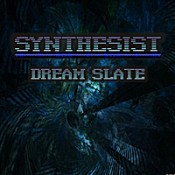 Recording as Synthesist, Christopher Pearre presents Dream Slate, a set of electronic works inspired by music he heard in a dream and infused with chakra-resonating tonal structures and Solfeggio Frequencies which, according to Pearre, “were believed to impart tremendous spiritual blessings when sung in harmony during religious masses.” High-level stuff, indeed. What comes of it is a mix of pieces that range from retro-feeling analog-style rides to deeper ambient delvings. Within that mix, it’s the simpler pieces that rise above their counterparts. While the opening track, “Ocean Sunrise” and the closer, “Soaring” are well-made songs, they stray a little too far into early-New-Age territory for me. “Ocean Sunrise,” in fact, reminded me of how much I liked Suzanne Ciani’s Seven Waves back in the day. When Pearre moves into a driftier space, the work shifts to a whole new level. There’s a calm and interesting stretch beginning with “Gong Song,” a smooth drone with flute, light percussion and, yes, the occasional gong. Nature sounds twitter and chirp on the background as Synthesist wraps your brain in dark silk and sings quietly to it. He keeps it going into “Soul Frequency,” lifting up waveforms and letting them slowly melt into resonant echoes that blend off into the distance. Truly one of the highlights of the disc. He hits it spot-on again in the soft, warm washes of “Heart Chakra.” Although it’s only five minutes long, it stretches time and would continue to work had Synthesist afforded it even more space. Again, this is not to downplay the other tracks here. “Star Fields” in a catchy piece that mixes a delicately pulsing beat with sweeping chords that would be right at home on any spacemusic track. “Sixth Chakra Suite” bumps right along with downtempo chill and a smoky attitude. For me, though, Dream Slate is at its best when Synthesist gives himself over to the flow. It’s a solid first release, and I look forward to hearing more from Synthesist.
 Jason Sloan’s new release, (s)END is a flowing electron mist that washes past packed with downtempo beats, mutated sounds and transmitted vocal samples that feel like they’re trying to tell us something. The overarching vibe of (s)END is one of sophisticated, unhurried cool and patient evolution that’s constantly on the move. There’s an interesting softness to the sound here, like Sloan is keeping it at a short distance to let us look at it more fully. The distance also lends a dream-like quality; it’s there but it’s not quite there, yet the sound is still distinctly affecting us. As a sound manipulator, Sloan likes to build thick layers, and it’s a pure pleasure to listen to him ease the elements into place. The opener, “warmANDfading_light,” is built on dovetailed repeating note motifs and long drone-ish chords. Light beats poke at the structure. Here’s where we get the first vocal sample, a woman’s voice repeating a series of numbers through a haze of radio static. It’s a meme that Sloan plays with across the six tracks, and through its repetition forms a cryptic narrative core for us to latch onto. The artist’s slick hand is best seen in the way he takes “statikAether,” a 90-second test-pattern of hissing drone, and spirals it directly into the chilled beat of “asFragile.as.” That’s another signature element in (s)END; when Sloan puts in a beat, it doesn’t change. While that might suggest that he’s risking sonic stagnation, it instead functions as a working pulse, a steadfast touch in a shifting space. It works. Sloan’s guitar lines shine through wherever they’re placed, but perhaps no more so than in the closer, “(a)SEND,” where he laces it with a tinny echo that rings as notes ricochet off to the distance. Density comes from police radio transmissions woven through the groove and a dramatic descending three-chord sequence backed by airy pads. The beat takes unforgiving hold. Late in the track, the voices return to join in reciting their particular number sequences like a prayer in cypher and the story within (s)END fades to completion.
 Lightphaser’s “new” release, Eternity, is actually a batch of remixes from his 2009 release, Flashback. Having not heard that, I can’t review by comparison. What I can offer is that right from the gates Lightphaser (aka Joseph Gogh) cranks out energetic, club-style EDM tracks that, for me, rapidly lose what luster they might have. Punchy electronic blips bounce and collide in a fairly predictable fashion and offer nothing new or groundbreaking. I’m four tracks in before something really catches my attention–which is to say, I don’t forward past it. “Falling Horizon” has a good 90s feel to it, an electro-pop beat that gets the toes tapping. It borders quite dangerously on becoming stagnant for its near lack of dynamics, but narrowly avoids that fate. The closer, “Deadlock,” is the only track that comes close to shunning the overarching coat every other track here wears. Slow-moving at first and reasonably dark throughout, it breaks into a complex sequencer groove that shifts gears to pass through an old-school-style, oscillating-waveform space and into a nice mix of modulations. For most of the disc, however, Eternity is a miss for me.
 It’s that practiced sound-evolution and captivating narrative flow that marks the two concerts captured on Erik Wøllo’s two-disc release, Silent Currents. Recorded in 2005 and 2007 at the WXPN studios during broadcasts of the Star’s End show and immediately following live shows at Philadelphia’s renowned The Gatherings concert series, Silent Currents benefits from Wøllo’s post-concert momentum and the kind of flowing creativity that hits when you’re still performing at around two in the morning. Wøllo builds his sets from pre-established/pre-programmed grooves and soundspaces, then augments them with improvised passages.
 Sometimes it seems to me that artists on the Auraltone label are intent on trying to weed out the musical weaklings among us with the way they start their discs. Cuts, from Dentist, is no exception. Lou DiBenedetto created much of the work here while wrestling through depression; it’s reflected in the raw dissonance, the anger that surges through big, overamped chords and the barbed walls of sound DiBenedetto keeps throwing up between himself and the listener. You’re being dared to look inside what he’s fighting, every day. And as unapproachable as that may sound, there is a sense of motion, of striving very slowly forward, that keeps the listener–the bold listener–in place. It’s not easy. If you can claw your way through the sonic briarpatch of “Skies,” you just wind up waist-deep in the psychic mud and sludge of “Stranger.” And it doesn’t ease up from there. This drone-based sound is thick and slow-moving and often feels over-modulated. It rubs against your skin and pulls at your brain, and you respond to it in a base, visceral way. Cuts falls just to the more listenable side of dark ambient. It’s not, in any definitive sense, isolationist ambient, though you get the sense it wants you to leave it alone. It’s emotionally dark, so it doesn’t get quite into the sort of grinding, screaming grimness of pure dark ambient. It pulls you in rather than pushing you away; it’s up to you whether you stick around for it. DiBenedetto relents a bit toward the end. “Columns” is built on a hornet’s nest drone, but the tone feels lighter than everything before it. The closer, “Stacks,” comes in with a very surprising flute-like note and light, rising swirls of sound, totally out of character with the rest of the disc but perfectly placed as a reward for the effort. (Worth noting it also shows that DiBenedetto can do more than lean angrily on a keyboard.) With this soul-washing final track, Cuts finally lets go. The question becomes, do you go back? I imagine many won’t unless their tastes run dark to begin with, but the initial voyage, hard as it gets, is worth the effort at least once.
 In just four notes, Steve Brand effectively sets the tone for his new release, Avatara. Within this one phrase at the beginning of the title track there is a sense of mystery, of revelations to come, of the curtain being pulled back as Brand opens his exploration of the persistence of the presence of the Avatar–the earthbound manifestation of deity–throughout cultures. For this portrait Brand chooses big, expansive synth pads that hang in the air and slowly fade for a classic ambient sound. At the same time there’s intimacy in the details. Brand is skilled at pulling the listener close to isolate the effect of small moments before releasing them back to see the bigger picture again. Brand’s timing is also impeccable; in “Morning Glory” he lets his drifts quiet to silence or near-silence, then suspends the moment before the next note, giving that stretch of time an air of contemplation and expectation. When that next note does arrive, it’s like an awaited, cleansing exhalation. Even when his constructs are at their biggest, they remain delicate to the touch. In the spacemusic-flavored track “Still Here (Breathing Space),” windchimes add an earthy accent to whispering electronic winds. The bold chords that form “Act of Creation” rear up to make themselves known, but then blend together readily on the way back down. There is power, and there is peace, side by side. Expertly, Brand revisits those first four mysterious notes in the closing track, “Avatara (Deathless),” and the listener understands that the story has come around to its conclusion. This also lets the disc seamlessly take hold of its own tail and begin again.
 Hypnagogue Music Reviews