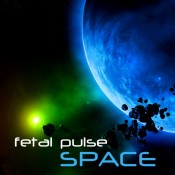
Fetal Pulse: Space

fetal_spaceOh, hi there, Space, you guilty pleasure, with your thumpy beats and high BPM. You don’t mind if I turn you up, do you? Good. I just want to dig into all this meaty bass and the cool retro thing you’ve got going on. (Come on, we both hear the little Dr Who theme song nod hiding in “Hyper Jump.”) You know what, Space? I’m going to take you out on the highway and drive like 90 mph with you kicking it old school, how about that? Because that’s what you make me want to do. You little acoustic dose of adrenalin, you.  And yeah, it’s okay by me if you want to chill a little bit here and there and get all spacey, like with “Deep Space,” but we know you’re at your best when the groove engines are pushed to maximum and we’re cruising at just under light speed. Yeah, like “Alien Nebula,” with its sexy curves and high-potency sequencer and that straight-out-of-the-club beat. Makes me think of turn-of-the-century goa, and that’s a mighty good thing. (What’s that? No, I don’t need a glow stick. I’m good.) Or how about that sci-fi spy movie soundtrack, “Landing Mission”? I’m all over its electro-pop feel. (Hey, is that an 808 laying down the bass?) And I have to ask, did you want to go just a little cheesy on “Interstellar Club”? Because I do like its 90s lounge vibe, even if it can border a little on self-parody. Hey, my toes are still tapping, so…points. Listen, Space, we may only have 40 minutes together at a time, but they’re a fun 40 minutes. Some folks may think you’re a little too retro for your own good, but like the man said–Mama, that’s where the fun is. You might not be something I’m going to listen to over and over, but if I put you in a shuffle, you are absolutely bringing both the fun and the funk. You tell that Fetal Pulse guy that he’s laid out tracks worth taking in. Then meet me in the car. We’ve got some speeding to do.

Available from the artist’s web site.
Chronotope Project: Event Horizon

chrono_eventFrom its very first notes, Chronotope Project’s Event Horizon shoots straight into my spacemusic pleasure centers and starts pinging them with glistening, rapid-fire sequencer underscored by soft pads. Which, if it stayed that way, would be more than okay by me. But that’s not composer Jeffrey Ericson Allen’s plan here. Listen carefully–beneath the spacey overtones of the opening track, “Unwinding the Dream,” there are natural sounds, birdsong and a trickling stream. This is a release that is out there and right here at the same moment, ambient grace balanced with electronic energy, acoustic elements arriving to open it up and unfold it into something even richer and more engaging. All in all, it is  a cool glide through comfortable territory and I am inclined to just let it keep going. As always, Allen goes deep with the details, making headphone listening a must. The flow is smooth as the composer slips us easily from the guitar-accented deep-space of “Akashic Love Songs”–the rich twang of nylon strings feeling so solid and real in the waking-dream environs–into the strong pulse and glitch feel of “Arecibo.” That track catches me straight out of the gates with its sheer presence, amplified by the quieter space I’ve just left, then pulls me in deeper into its rich and swirling background. Muted vocal drops, a ringing sound that comes and goes, mixed breaths of pads, all finding their way around the insistent setup of the glitchy core. And while it’s not my intention to go track-by-track here, the way this ushers us into the quietly burbling and clearly breathing flow of “No Birth, No Death” is absolutely perfect. This, I think, is what works best for me on this superb release. Allen is in complete control of the dynamics, and they feel perfectly thought out. The shifts are absolutely seamless. It’s not, “Wait, a minute ago we had beats and now we don’t,” it’s “I like this place you’ve taken me, and I hardly noticed you took me here.” That’s something I quite enjoy, and to me it’s a hallmark of a good artist. The tracks are distinct in style and stand very much on their own, yet they’re remarkably cohesive as a whole. There’s a lot to explore here, from the charming gurgle and hush of “Automatic Writing” (let’s see you try to not bob along with this one) to the starlight-spattered spacemusic perfection of the title track.

Event Horizon, in my opinion, is Allen’s best work as Chronotope Project to date and an absolute must-hear for spacemusic fans. Let it loop, and let it take you as far as you want to go. A wonderful release.

Available from Relaxed Machinery.

Ann Licater: Invitation from Within

licater_inviteMeditative healing music with strong Native American overtones await on the soothing new release from flutist Ann Licater. Her gentle arsenal for this outing includes Native American, alto, silver and Peruvian clay flutes, along with “many sound healing instruments.” She’s joined by several musicians, including Jeff Oster on trumpet, Peter Phippen on bass, and Ivar Lunde on piano, and together they craft a lush New Age ride. Fans of Native American flute will find much to like here. Licater weaves the feel into full instrumentals, like the opening track, “Angels on the Wind.” While Licater’s flute sings its song, a cool, shuffling beat works its way in. It’s a nice surprise, and a great offset to what your ear expects. Licater plays with the motif in spots, bending notes or ending long breaths with a sharp whistle. Lis Addison’s vocals bring a nice prayer-chant tone to the mix. But it’s hard to beat the gorgeous simplicity that comes from the pure connection between this artist and her flute; “Oneness” is a clean and simple meditation, a piece that dances like sunlight on water. This track is beautifully recorded, allowing space for the resonance of the flute’s rich tones to echo just lightly.

While I do enjoy Licater’s Native American-influenced work, on this release I find I am more fond of the pieces where she explores other vistas, free of the connotations that sound brings. The tone of the NA flute immediately puts me in mind of deep valleys and desert landscapes with circling hawks. On other tracks, my mind is allowed to go where it will, guided by Licater. The title track takes me to the middle of a quiet and very intimate gathering, a commingled conversation between Licater, Phippen and Lunde. I love the informal vibe that courses through “Luminous Awakening.” It feels like the players are carefully listening to each other in a playful call-and-response mode and building on their theme. Ringing tones from Kathleen Farrell’s crystal bowls add a nice touch against the deep, round sounds from Phippen’s bass. “Dream Journey” takes on a slightly jazzy tone, albeit a slow and graceful jazz, with more of Phippen’s bass (did I mention that I enjoy it?) and the crisp sound of steel tongue drum.

Although Invitation from Within clocks in at just over 45 minutes, it’s one of those time-stretching bits of work. Relaxing, unimposing, subtly guiding you to a calm and beautiful place, it’s one you’ll want to leave looping at the end of the day. It’s also one to listen to closely to take in the excellent interplay between musicians and the lush production work. A great release from Ann Licater. New Age fans need to add this to their collection.

Available from the artist’s web site.

Marcus Maeder: Topographic Sinusoidale

Are you an extremely patient listener? I mean extremely. Then you may have what it takes to make your way through Marcus Maeder’s beyond-minimalist piece, Topographic Sinusoidale. Here’s a tip: the first five minutes are not as silent as they appear if you’re not wearing headphones with the volume cranked up to full. There’s sound there, it’s just so incredibly quiet it’s more or less inaudible. And that’s pretty much what you get for 45 minutes. Near-silence with occasional surges of high drones. During the time I’ve had this in my queue, if I suddenly came across a long stretch where I thought maybe my music had stopped playing, it was actually this release. I have to confess that I just don’t get it. If you are patient to an infinite degree and very open to experimental music, have a listen. But, seriously, put on the headphones first.

Available from Domizil.

As If: Faraway Trees Standing Still

asif_farawayDreamy ambient meets cool dub influences on the new release from Denmark’s As If. Artist Kenneth Werner glides in and out of beat-fueled spaces and through long, calming stretches on Faraway Trees Standing Still. The whole ride eases by with you responding to it like a reflex. The beats, often nicely underplayed, make you move whether you like it or not; the mesmerizing ambient bits shut down your capacity for conscious thought and just let you drift along on the cool. And when they come together, it’s pretty much perfect. Which is where we find ourselves at the start, with “Dawn” arriving on with slow pads and bouncing , sequenced notes. It feels soft, and as comforting as that first morning stretch. That’s the overall tone of this release. It never really challenges you, which is fine. It wants you to kick back and drop into it, and you will. The draw here is the way Werner modulates the ride, both across the whole release and within individual tracks. “Distant Hill” is a prime example, a piece that takes its time meandering through a valley composed of soft pads, then percolates suddenly with a springy hit of the sequencer. It draws your attention, pulls you to the surface briefly, then fades back. And when Werner cranks up the dub side of the equation, it’s mighty tasty. “Forest Beyond,” once it has satisfied the equation of cool beats rising up out of misty pads, lays heavy on the echoes, fading reverb lines crossing over each other as they go.

From start to finish, Faraway Trees Standing Still is lush and cool, immersive and catchy. I like that it doesn’t raise its voice, that it’s content with its laid-back self even when the sequencer is gently upping the pulsing BPMs. No bumps, no breaks, just one very smooth groove. Definitely dive into this one.

Available from gterma.

Spiricom: Opening the Portal

spiricom_openI knew that I was digging Spiricom’s Opening the Portal before I got around to looking them up on the internet, but when I did, it became clear to me why I was enjoying it. One half of Spiricom is the very talented Steven K. Smith, whose work I have enjoyed in the past, whether under his own name, as A Signal in the Static, or as part of Dolmen with Jason Sloan. Pairing up here with guitarist Marc Cody, Smith handles synth guitars, keys, percussion and programming. Opening the Portal retains much of what I quite like in Smith’s work–raw and aggressive, grit-spattered post-rock with an attitude problem. Cody is the lead guitarist here, his work moving from the bright, shiny sounds of indie rock to metal-worthy, industrially crunchy guitar chords. Over that, Smith layers treatments and atmospheres to give us a perfect mix of the hooks and emotional content of the melodies and the gut-check rawness of the treatments. For example, the catchy song that’s sitting in the midst of “Another Way to Another World” is textbook post-rock with a melancholy tone, but it’s filtered through a dense gauze of distortion. It’s not that I find this a super-original approach; it just happens to be extremely well done here. I have to note that I quite like the first track, “After This World,” for the way it reminds me of  Suspended Memories (Steve Roach/Jorge Reyes/Suso Saiz), between the clacking percussion and the animalistic, drawn-out sighs of the guitar. There’s a hint of tribal hiding in there. The duo also drive home their theme well in several spots. The Spiricom of the title was an invention said to be able to communicate with the dead, built in part with the help of someone who had died 13 years before it was created. (No, seriously.) To that end, we get distant, ghostly wails haunting the background in “I Feel A Presence,” which is where the aggressive metal feel really kicks in to take the focus away from windy pads and a slow-picked melody (give it two minutes). Hear it again on “A View to the Other Side” as Smith grinds these sounds through severe distortion, amping up the anguish of the screams. It works very well.

There’s a lot to listen to packed into Opening the Portal‘s 38 minute running time. It’s a very visceral release and it stands up to repeat listens. Cody’s playing is superb whether he’s taking on a quiet and reflective melody or slashing across your face with razor chords. Great chemistry is at work here, and I hope to hear more from Spiricom.

Available from the Spiricom web site.

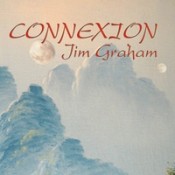
Jim Graham: Connexion

graham_connexWhen an artist’s own release page notes that the various songs on his album cover post-industrial, ethereal, sci-fi, and “whimsical circus” and the instruments include “egg slicer, kitchen whisk, [and] computer heat sink,” it’s a fair bet you’re in for a mixed bag. Such is the case with Jim Graham’s latest release, Connexion. There’s quite a bit of good stuff in these 11 tracks, the best of it falling somewhere between New Age and ambient. On the New Age side, take a listen to “Fire and Water.” While a repeating four-note arpeggio offers a firm base, Graham slowly builds sounds around it: an evolving melody on piano, lonely notes on bass speaking short phrases, and moments accented by the rasp of a bowed bass guitar. It packs a very pleasant honesty in its deceptively humble construction. Its followup, “Yes,” shines with an easy equation of flute over quiet chords. It’s charming and soothing. “Steel Dawn” straddles genres, opening like an ambient piece, with droning pads drawing near-straight lines against the thump of a drum. A sequenced rhythm establishes itself as the tone begins to brighten. In the last minute or so, the piece blossoms into a full-on song. I like the thematic transition here; the narrative is clear. “Chant”
is a nice take on tribal, with pulsing drums and breathy pads. Clattering chimes round out the atmosphere. “Northwind,” which Graham describes as “polar wind trance,” is the longest track, a nicely immersive bit of minimalist drone that’s easy to get lost in. Graham balances the cold feel of the wind-rush pads with bright tones and carves out a comfortable space.

Connexion is a pretty solid bit of work. Weaving its way through styles as it does could have resulted in a feeling of uncertain identity, but Graham handles the switches well. Some tracks feel weak by comparison to others, but all in all it’s a release I’ve enjoyed going back over.

Available from CD Baby.

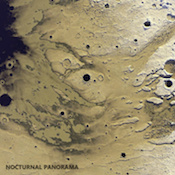
Michael Meara: Nocturnal Panorama

meara_noctDeep, dark and delicious, Michael Meara’s Nocturnal Panorama is a 47-minute excursion that demands you take the trip in headphones. Three mid-length drone pieces work to describe “Mars and other cosmic entities” and in doing so, take us on a bit of a trip inside ourselves as well. Perhaps it’s not fully accurate to call it “drone,” although much of the disc certainly dwells close to the border. The opener, “Chryse Planitia,” builds from the sharp pluck of bass strings and their resultant resonance, along with what sounds to my ears like volume-modulated guitar chords. So it’s more dynamic, in that sense, than its two companion pieces. Meara lets the resonant sounds stretch out into the backdrop, and the solid, sudden plucks hit the mark as perfect punctuation. The other two tracks delve more firmly into drone territory. The anchoring sounds are gone; there is just the drift through shadowy spaces. But even at that, Meara’s sounds are more in the ambient vein than they are true drone. Unlike drone, where time is extremely stretched, and the music equally so to the point of apparent near-stasis, these pieces have more of the slow but noticeable movement of ambient, the grace of breath. As the label notes, these are guided tours through certain landscapes. As such, they possess a stronger dynamic aspect, an aural descriptiveness that comes through quite clearly. “Cepheid Variable” brings in a vocal pad, low male voices that offer a sense of some grimly sacred chant. It continues and completes the movement toward–but again never quite fully crossing into–drone. It’s the recognizable, metaphorically physical aspects tucked into the music that keep it just to the ambient side of true drone. Where we tend to respond to drone on a more subconscious level, this music keeps us below the surface but within reaching distance. It is a place between, and this is exactly where Nocturnal Panorama needs to be. It is where it truly succeeds. This is a very deep voyage that needs to be taken often.

Available from Aural Films.

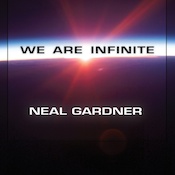
Neal Gardner: We Are Infinite

gard_infinI was listening to Neal Gardner’s We Are Infinite in my day-job office, as I tend to do with review material, and a coworker who stopped into my office said, “Is that classical music?” I said no, but realized afterward that what I could have said was, “Sort of…at the moment.” There is a certain classical influence at play in some of the music here, but there is also electronic minimalism, hints of lounge, and spacemusic influences. The album changes faces several times, and each new look is equally attractive. The approaches can be sparse, as with “Horizon on the Shore Eternal,” with its forlorn piano melody picking its way slowly across intermittent and intriguing slow tides of wayward sound. Or as with “Requiem,” where Gardner drops hammer-heavy, funereal chords on the listener while string pads soften the background. Weighty and sad, yet beautiful. (And here’s part of where that classical tone comes in.) But they can be uptempo and playful as well, like the tenuous pizzicato that forms the base of “Memories Fade, Dreams Recursive,” over which Gardner lays another pleasantly simple piano melody. Breaks and drops change up the pace, accenting the feel and the flow. They can be hushed as the flow is steered briefly out to space with the title track. Textbook spacemusic touches filter in here, starshine pads tracing horizon-to-horizon arcs. Whatever mode he enters, Gardner hits it spot-on. We Are Infinite retains a nice emotional depth and connection to the listener through its shifts. You never doubt that you’re in good and capable musical hands. The change-ups make sense and keep things fresh and interesting. Gardner’s piano playing is fantastic and it’s a real pleasure when it takes the lead. The good news is, everything else is as well done. A great release that deserves all the repeat play it’s going to get.

Available from Bandcamp.

Transcend With Time: When Emotions Fade

twt_emtionsOn his sixth release, Transcend With Time (aka Mark Mendieta) blends New Age music with themes of  “isolation, frustration & despair.” While the results aren’t quite as sad as that may sound, When Emotions Fade does pack its share of melancholy, but its contemporary instrumental framework, tempered with a bit of post-rock in places, is solid and pleasant to listen to. Mendieta is equally adept on guitar and keys, so the disc switches focus easily. The piano takes the front on the touching ballad “Somber Rains,” supported by string pads. I love the tone of the piece, rich with a sense of longing, but I could have done without the rain sound the start. It’s not a bad thing, so much, but the way it cuts out suddenly doesn’t sit well with me. Aside from that, Mendieta’s playing pulls me right in. The guitar is at its best in the spotlight on the post-rock-flavored pieces. “Dreary Conclusions” has a bit of a shoegaze overtone, minor chords and a slightly dragging beat that stirs up some sympathy. “The Disappearance” sounds like it could break into a Metallica song at any moment. It’s got that metal-ballad finger-picked run-up going on. It’s the post-rock pieces that work best for me on When Emotions Fade. They feel more honest and they’re downright catchy. Speaking of which, the slight jazz flair of the Spanish guitar in “When Mystery Arises” is perhaps the most hook-laden thing here–and may also be the one piece that belies the whole isolation, etc., theme. How can you be in despair when you’re snapping your fingers to such a funky time signature?

When Emotions Fade opens a bit too lightly for me, but soon blossoms into a listen that’s worth repeat visits. Superb musicianship, an honest feel, and a very fine blend of styles pave the way.

Available from Bandcamp.