Everyday Dust: Somnium

everyday_somniA quick 20-minute shot of textured drones that eventually blossom out into beats. Three of the four tracks here take up the first 11 minutes. There’s a lot to listen to, plenty of small sounds piled onto each other in shifting landscapes. “Bound in a Nutshell” makes a  good transition between light and shadow, actually feeling a bit uplifting in spots. Overall, though, these short tracks feel like they’re clearing a space for the nine-minute “Mantra,” which ups the ante and the interest. With a light tapping beat that picks up from the start, this piece swirls itself into a hypnotic spiral of reverberating notes accented by the deep layers around it. Rumbling bass notes at the very end are a nice visceral touch.

Somnium is brief but engaging, and leaves me wanting to explore more of the artist’s music.

Available from Sparkwood Records.

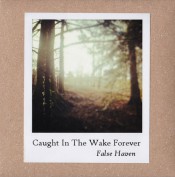
Caught in the Wake Forever: False Haven

caught_falseOn this short outing, Caught in the Wake Forever (aka Fraser McGowan) guides his listeners through ethereal post-rock spaces and edge-of-ambient washes lightly coated in melancholy. This is rich electro-acoustic work, with slowly picked guitar lines and delicate piano melodies, also played with thoughtful deliberation and a potent dose of emotion. Listen to “A Morning Without Decay,” where the piano speaks softly over a perfectly understated stream of electronic washes. “At Least You Had My Cigarettes” takes something of the reverse approach; McGowan lays down a twist of electronic sound first, then lightly layers in meandering guitar. It’s got a still-awake-just-before-dawn feel about it. “Castle Semple Loch” is the fullest song here in terms of instrumentation, opening with a dulcimer-like sound that keeps pace throughout the piece, then adding bass and acoustic guitar. There’s a nice dreaminess to it, and just a hint of New Age-style romance. McGowan steps over into beatless territory with the wavering tones of “Black Nectar,” a piece that grabs a slightly rhythmic element from its own oscillation. Near-static noises burbles quietly beneath. It works very well and makes an interesting break in the flow.

False Haven eases through its 28 minutes without a bump. The blend of interesting electronics and heartfelt melodies plays out nicely. It’s a pleasure to listen to, and absolutely demands repeat plays. Find it and enjoy.

Available from Sound in Silence.

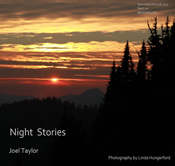
Joel Taylor: Night Stories

taylor_nightThanks to Joel Taylor and the Spectropol label, I know now what “xenharmonic” means. Taylor offers nine tracks on Night Stories, largely influenced by the sound, style, and non-traditional tuning of the Indonesian gamelan. This may be a difficult hurdle for casual listeners, but I don’t feel that Taylor is interested in casual listeners. The initial sensation, as presented in the opener, “Forest Creatures and Their Plans,” is a collection of jumbling, clattering, off-key notes–but it’s just that the “standard” sound of a scale is so ingrained in us as listeners that the apparent atonality (it isn’t) jars us. Yet across the course of the nine tracks on Night Stories, as ear and mind attune to this revision of our understanding, uncertainty bends toward acceptance. Taylor moves between active, clattering tracks and softer, near-ambient drifts as he goes, and there is a hearable through-line as he recalls and reworks elements of his musical phrasings. The sharp, hurrying, harpsichord-sounding notes of “Forest Creatures” are restated in fresh form with “Inner Melody 1,” which follows it. It feels like Taylor introducing us to his variations, and the disc provides from there. I like how the jarring tones at the start are bookended by the soft piano of “Lullabye” as the release closes, and listening again (when my head could take it in), I could hear the overall logical progression at play. Which is not to say this is an easy take–not at all. Between start and finish you’ll wander through “Twilight’s Shadow Play,” where hissing washes pair with gamelan tones; the shadowy, dissonance-tinted minimalism of “Lunar Transformation,” which is, once you settle in, pleasantly deep; and the intertwining flutes and rasping breaths in “Night Birds,” which may test your patience.

Night Stories is not for everyone. Taylor plays it all wonderfully, quite in tune, pun intended, with the intricacies of the xenharmonic model. The music here does what good art should: it challenges us to rethink what we believe we know, or what we have been told, about the way music works. But music is an endlessly malleable thing, bent by mathematics in countless ways and constantly being renewed. That’s what happens on Night Stories, and if you can set aside your notions for 45 minutes, Joel Taylor would like to show you something.

Available from Spectropol.

Mark Harris: The Angry Child

harris_angryAs other excellent reviewers before me have done in regards to this album, I could tell you about musician Mark Harris’ approach to creating the six tracks here, the process, the things it’s meant to evoke. Instead, I think I’ll say: listen to this. Sure, it’s nice to delve into the whys and wherefores of good music and sure, knowing a composer’s mindset can theoretically bring a deeper understanding of the work, but….listen to this. Make time, sit down, put on phones, shut up, and listen. This is dream-deep ambient, a perfect commingling of light with just the slightest touch of shadow that’s more a musical counterpoint than an emotive element–although still quite that. Harris’ spaces feel large but intimate. His drifting constructs slowly describe their vistas in detail, with acoustic elements dropping in softly to add an anchoring moment. (Or, in the case of the closing track, “Running Forward_to the Object of One’s Affection,” taking the lead. The slow, elegant piano here goes straight to the soul.) The artist creates his tones in improvisational sessions using generative synthesis and found sounds, then brings them together in the actual compositions. The result here is a perfect ambient release, silken yet substantial, thoughtful and emotional. Deep listens reap superb rewards, and this album should be allowed to loop for as long as you need to sit quietly and reflect.  Easily one of the best releases I’ve heard this year.

Available from n5MD.

Paragaté: Pattern of Light

parag_patternTom DePlonty, one half of the duo Paragaté, told me via e-mail that he and musical co-conspirator Tim Risher had always thought about doing an album of “drum-driven stuff” and this is “us just going ahead and doing it.” But when these experimental gentlemen get their hands on  that concept, what you end up with is something that feels like a subversion of the club-music paradigm. There are catchy beats and the study thump of the bass drum, but in the style of this always adventurous duo, there is also a lot of extraneous-yet-essential sound happening all around it. Many of the tracks here are cousins to straight-up glitch, things stitched together out of rapid-fire mini-sounds. “Crash License,” for example, which has something in its core sound that makes it feel like a devious remix of the oddball 80s tune “Warm Leatherette” by The Normal. Catchy and frenetic, it hurries by at a dizzying pace. “Batteries Not Included” wanders into plunderphonic territory, wrangling and mangling vocal samples over chittering, poppy sounds and a beat that immediately hones in on your toes and gets themn tapping. “Generation of the Thoroughly Smug” chugs and bounces along and even tosses in a little drop for good measure. Paragaté offer up 11 tracks over Pattern of Light‘s 45 minutes, and while the conceit can run a trifle thin during a straight listen, it’s a great release to have shuffled in. I don’t feel like it ranges as far as most of DePlonty and Risher’s releases, but it’s been a go-to feel-good listen for me since I got it. Well worth checking out.

Available from Camerata.

Timothy Wenzel: River Serene

wenz_riverIf good instrumental music is intended to paint a scene within the listener’s mind, then Timothy Wenzel’s River Serene is most definitely good instrumental music. In 12 pieces spread over a scant 49 minutes, Wenzel presents tone poems based around the themes of water, love, light and dreams. Each theme is represented by three pieces, and the mood overall is soft and reflective. Wenzel’s piano is the star of the show here, but it’s surrounded by a superb electro-acoustic supporting cast. Harps and flutes, strings and drums, all come together to tell the stories. I have promised myself I’d try to step around the term “New Age” going forward in favor of the term “contemporary instrumental,” but River Serene slots easily into that sleeve. Crisp and romantic, quietly paced, and packed with musical optimism. This is music you’ve heard before, but it’s all quite beautifully made. The title track, which comes in early on, is something of a soul-cleanser. Piano and pizzicato harp notes blossom out into full orchestration, with flute coursing high above. The sound imagery here is perfect, the mood encapsulated in the notes. Wenzel’s piano swells in big, neo-classical fashion, packing shades of Richard Clayderman, on “A Midnight Rose.” (A little roll of the tympani adds drama.) There is something going on in “A Twilight Pause” that resonates in me as a listener, and I cannot adequately describe what it is. Soft string pads wash beneath the piano as it takes a slow walk–perhaps that’s it; there’s a slight sense of melancholy here, of a departure being made. Sax-like synth sounds wail a melody with just a hint of 80s flair. The moody tone carries into “Night Train,” which also picks up a little bit of a syncopated groove as it winds toward its close.

River Serene is going to be a big winner with New Age fans. It’s firmly rooted in that style. It’s light without being wispy, a lovely end-of-day album. Wenzel is getting better with each new release. Keep an ear on him. (A new release is slated for December ’14.)

Available from the artist’s web site.

Marsen Jules: Beautyfear

jules_beautyAptly titled, Marsen Jules’ Beautyfear is a release with two distinct tones. On the beauty side, there are luscious, warm pads drifting in classically cloud-like fashion. On the fear side there are shadowy, edge-of-industrial constructs and dark chords. And while for this listener the lighter, warmer side sounds and feels stronger than its counterpart, Beautyfear overall is a solid hour of music and sensation. Jules opts to intertwine the two sides of his equation rather than making any sort of light-to-dark shift, or vice versa, and I can’t fully decide how I feel about that. On one hand, it would be interesting to hear that shift made slowly, gliding from the higher side down into the grit. On the other, the release as it stands moves you dynamically in and out of these spaces, making sure you’re not just lolling off into sedated-listener land. The heavier pieces can pack a pleasing punch. “Beautyfear II” (the pieces are just numbered) comes in a series of almost bestial metallic snarls, big hammer-falls of sound punching down over a hushed and haunted drone base. “VI” follows a similar path, with swells of moody pads, but the air is more suspenseful, the bass end thicker and more menacing. “XI” paces itself off with a strident military cadence that’s loaded with drama. This one is soundtrack-worthy–but the film would need to be shot in stark black and white. But, again, I find myself more engaged with the quiet side of Beautyfear. I get readily lost in the purely gentle, almost minimal flow of “VIII.” Here, the sounds glide into and off of one another and Jules makes excellent use of the not-quite-silent moments between pads, that space between breaths. It flows into “IX,” which is a big, airy and panoramic thing built on long-held chords crafted in sonic silk. The string-like sounds in “IV” feel almost romantic, and their tone is classic ambient. The movement on this track has a liquid sense as the layers shift and roll. The harmonies at play are beautiful.

Beautyfear is a very deep release that loops with perfect ease. The light-and-dark dynamic plays out well, and Jules is obviously well-versed in both sides of his style. Individual pieces are relatively short, with the longest clocking in at just over seven minutes, but the transition between tracks is smooth and there’s no tactile break to the flow. Put it on, let it play, enjoy.

Available from Oktaf.

Autistici: Attaching Softness

autis_attachMicrosounds, found sounds, and sound manipulation form the basis for Autistici’s Attaching Softness. Ranging from soft, warm flows to well-calculated tangles of glitch, this release revels in its sonic textures. It needs to be listened to closely to get the most out of musician David Newman’s machinations. Between the use of tiny sounds and the way he nudges things around in your head, there’s constantly a good amount to take in and a carefully crafted dynamic. Newman sets up an interesting dichotomy; his constructs can be quite mesmerizing, particularly when you’re well into the middle of the 22-minute title track, but his judicious use of sounds that clatter and rattle suddenly in the midst of it work to keep the listener focused. You’re lulled but aware. (Like me, you may also be lulled but slightly annoyed when the crying baby comes in…) In contrast, Newman’s collaboration with Calika, “Blue Stern Sister,” is a playful piece built on delightfully sloppy drumming and a groovy little bass line. Let it bounce pleasantly around in your noggin like it’s trying to find its shape and being quite content not to. Attaching Softness comes in under an hour, with the title track and the drone-and-clatter closer, “Meditation on Distance,” accounting for 32 minutes of it, but even the short pieces pack their own meaningful depth and distinct character. There is no wasted sound here, no matter how minuscule, and it’s all infused with a very moving quality. Intimate and interesting, it’s a release I find myself peering more deeply into each time I listen.

Available from Audiobulb.

Peter DiPhillips: The Great Famine

diphil_famineIt is understandable if you quail slightly at the idea of listening to a release titled The Great Famine. I know I did. Aside from thinking I was in for yet another round of oppressive dark ambient, a musical musing on the Irish Potato Famine of the mid-1800s hardly seemed like something I wanted to take in. That I have now listened to The Great Famine a number of times, quite willingly, speaks to how well composer Peter DiPhillips handles his subject matter, opting for a deeply impressionistic approach that carries the weight of the story without crushing the listener. I feel that although the DiPhillips recognizes that the story he is telling is a tragedy, he also recognizes that within that tragedy there is strength and there is hope and there is change. This is not a dark ambient album focusing on the horrifying aspects of the famine; this is an album that seeks to tell the story of the Irish people during this black time and how they found it within themselves to carry forward. Not to say there isn’t darkness here. There is, draped over the landscape in varying shades. It’s a tint of despair and sadness that, not to overstate this, carefully pervades the proceedings without overwhelming them. Dissonance and seemingly intrusive elements throughout the release help to carry the feel of something being wrong. After the comparative ambient ease of “Hedge Schools,” the uncertainty begins to creep in on “Hunting Orange Men.” In its sharp, sudden chords and the way in which apparently random elements trip through the moment, we come to understand that something is out of joint. You hear it again in “King Magnus Returns.” These two tracks share a guitar element, just a strum of chords, like a repeating motif. “King Magnus Returns” also gets some of its unease from the clatter of chimes. For a purer sense that all is not well, head straight to “Hill of Screams.” This almost indescribable track creaks, squeals, moan ands wobbles its way through, hitting every nerve as it goes. For visceral response, it doesn’t get much more effective than this. I love it and hate it in equal measure. But there is balance here, as any good story requires. “Hope Across the Pond” lightens the mood just slightly, though there are still strands of deep shadow laying across it. “Coffin Ships,” despite the grim name given to those often barely seaworthy vessels that sailed the treacherous waters away from home and off to the new world, is a smooth, pad-driven flow. It’s still sad, laced with dirge-like choral voices, but its comparative still surface ends the release on a thoughtful, meditative note.

So it’s no surprise that The Great Famine is not an easy thing to sit through, but DiPhillips’ work is deep and complex and he clearly has a lot personally invested in telling this story. It doesn’t blink at giving you the creeps here and there, and it fully intends to make you feel its story—and it does. Well worth the initial effort to take this one in.

Available from the Free Music Archive.

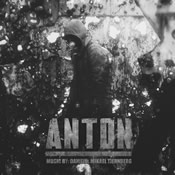
Daniel & Mikael Tjernberg: Anton

tjern_antonInspired by the script for an indie science fiction film, Anton by brothers Daniel and Mikael Tjernberg is not the sort of release I’d normally sit down and listen to. This is not to say it isn’t good. The problem is that too often I feel like I need to have the visuals that go along with it to really get it. The brothers hit their thematic landmarks without question. The opener, “The Hunt,” is drum-driven and proceeds at a galloping pace, chased along on dramatic strings. Maybe, without the accompanying visual context, too dramatic for a casual listen. “Postapocalyptic Landscape” strolls along on a slightly jerky jazz feel and you can see the accompanying tracking shot from some character’s perspective. (You know, the kind that then switches to a face-on shot of the character walking, and then back.) “Hero” builds on swelling, bold strings ready to blow the wind through anyone’s hair. Anton is a little too bombastic for me, and the mix of styles, while probably nicely tied into the feel of the film, wanders a bit much. Still, it’s worth a listen. The Tjernbergs are excellent composers and musicians. This is a case of something just not being my style.

Available from Waerloga.