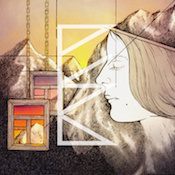
Second Culture, Thunder Conjuring Mind

second_thunderListening to Thunder Conjuring Mind is like having an acceptably trippy daydream, one where your mind kind of wanders and skips around quite unfettered. What you get here is a little bit like jam-band grooves, a little bit like found-sound art, a little bit like prog, and a lot like fun. Second Culture crunch 15 tracks into this release, with each landing around the five-minute-plus mark—just long enough to make a full and firm statement before changing channels. Transitions between tracks are smooth and leave the flow unbroken. I like the way the sequencer-fired opener, “Star Seed People,” melts into “Euphoricum Integer,” the sequencer slowly fading back from prominence but still maintaining a rhythm.  Things quiet down a bit before we’re suddenly popped into the heavy beats of “Tuning the Dream Door, Pt 1.” Classic spacemusic washes and a vocal drop round it out, ushering us into Amy Conger’s singing/repeating/reciting on “Sorting Sanctuary.” It’s a happy little tune… “The world will end/in 11 days/welcome the apocalypse/stroll right through/the detritus/in your very best shoes.” This thing gives off a heady 70s space rock vibe, a deep jam with poetry wedged into it. She comes back, heavily drenched in glorious reverb, on the title track. Zach Taylor (“for the first time ever, a proper drummer playing a drum kit,” says the web site) lays down aggressive lines as the vocal loops weave around one another in a very hypnotizing dance. “Glass Samurai” bounces and gurgles along, sounding like an alternate take for a Dr Who theme song. This one pings that part of me that thrives on good baselines. On top of that, there’s an 80s synth-pop touch to some of the keys here, so I’m pretty much all in on this one.

The more I listen to Thunder Conjuring Mind, the more I find to like about it. Keyth McGrew and company have hit a definitive groove on this. They’ve expanded their personnel and approach, and it seems like more people means more fun. That’s one thing that truly comes through here: these folks love being Second Culture. They’re ready to play, and push edges, and explore, and we get to dig the results. Plus, personally speaking, I have to admire any artist that notes “100 different variations of Thai Tom Ka soup (vegan)” among their influences for the album. (Along with The Cocteau Twins, Pete Namlook, and Yes, for starters.) Thunder Conjuring Mind is good for your head. It’ll also give your speakers a workout. You need to give this one a listen.

Available from Bandcamp.
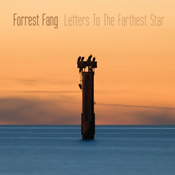
Forrest Fang, Letters to the Farthest Star

Scyye, From

scyye_fromScyye’s 18-minute EP From may be short, but it uses its time wisely, jammed full of catchy hooks and intriguing plunderphonic-style sound sources. This is one of those releases where a bag of cast-off sounds are transmuted into undeniable rhythms and an overall coolness. “CCTV” is a super-trippy groove built on a disorienting array of scattered electronic sound and what to my ears sounds like a surgically altered string lift from “I Am the Walrus.” (Not saying that’s the case, but have a listen for yourself.) “We Remain” is an augmented solo piano piece, where the reverberating tones, or a perfect mimicry thereof, blend into a drone-like quality in the background. This one drips with melancholy. “Nine” opens with scratchy effects and a muted voice sharing space with a slow melody. It’s just 90 seconds long, but it leaves its own emotional resonance.

From doesn’t take up much time, and is hopefully just a holdover as we wait for a longer offering. Between this release and last year’s Timegazing, Scyye is becoming an artist I look forward to hearing from. Go listen.

Available from Sparkwood Records.

Scott Lawlor, Neptune

lawlor_neptuneSpacemusic fans, please queue up in an orderly fashion to procure tickets for the voyage that is Scott Lawlor’s Neptune. Inspired by the distant planet and Holst’s classical paean to it on The Planets, Lawlor grabs hold of familiar spacemusic tropes, wraps them in drones, and gives his listeners a deep and image-filled ride. This is familiar territory, done well. The rushes of stellar wind are here, the choirs of celestial voice pads, the sense of passing through the vast stellar distances—all intact and used properly. Lawlor laces in a recurring motif of icy temple-bell chimes and marks passage with them very conservatively. When they ring out against his layered pads and drones, it’s a beautifully sharp call that really works. There’s a great trade off between stretches with softly administered melodic passages and those that just whisper and drone. The opening track, “The Mystical Blue World,” is the former. After setting us adrift, Lawlor lays in a slow-moving phrase that sounds just familiar enough to make me expect David Gilmour to slip in and fire off a riff. “Neptune’s Rings” goes the other way. Opening with scale-ascending bell chimes, it slowly melts into a lush, windy drift. Lawlor really lets his pads stretch to the far reaches here, and it’ll take conscious thought with it. Between this and its followup, “The Great Ocean,” we’re afforded over half an hour of the deepest material on the release. “…Ocean” makes up 20 of those minutes. It’s packed with drones that take their time rising up in intensity, and everything is underscored with a persistent whoosh that is equal parts wind and the far-off sound of the ocean. He manages to convey and excellent sense of drama throughout this piece, and really holds the listener’s attention for 20 minutes. “Wizard’s Eye” sounds reasonably similar, but arcs upward toward the end into higher-register pads. Here I find myself hearkening back to the lighter parts of Roach’s Magnificent Void. Overall, this is a disc that demands long-term looping.

Stepping into a genre that’s as trope-heavy and well-trodden as spacemusic can be a tricky proposition for an artist. There’s not a lot of new ground, so what you lay down needs to have a certain something that hooks the listener in. I can say that Neptune has such a hook. Have you heard it before? Sure, a bit. But if you love good spacemusic, this album follows the rules and lays out the sonic sights you love, and it does so very, very well. I like Lawlor’s patience in the way he layers his pads. There’s no hurry and, unlike a lot of spacemusic, there’s no need to build to some big celestial moment—you know, the ever-present supernova sound that births out into a big helping of choral pads. That’s not what this is; what this is is a spacey voyage you’ll take many times, finding yourself in the musical moment at different stages, always discovering a fresh side of it. Set aside the time, bust out the headphones, and head out, space cowboy.

Available from earthMANTRA.

Ovod, Between the Days

ovod_daysThe basic tracks for Ovod’s “Between the Days” were initially improvised late at night, and complemented in post-production with further instruments and textures. Ivan Lavrov takes off from a base conceit of using a singular sound, from helicopter blades to train wheels on tracks, to provide a “spine” for each piece. From there he dives into areas that run from hazy dreamscapes to shadowy corners, all the while providing an ample amount of detail to describe his ideas. Between the Days glides by pretty easily, but makes sure that the listener doesn’t drift off too far. While I’ve found that I don’t mind letting this album do its thing, and have in fact let it loop for several hours on several days, I’ve come to realize that it’s never managed to hit me on much more than a surface level. Which is strange, because it’s a well-made thing with something to say. Part of my issue may come from the way some tracks taper off at a point that feels almost arbitrary. “Night at the Port” and “Butterfly Day” disappear in musical mid-statement, as does the closing track. I’m sure Lavrov has his reasons and feels them to be complete, but for me as a listener it’s a “Huh?” moment. Setting the occasional iffy ending aside, there is a lot to like on this release. “Night at the Port” is loaded with a lot of different feelings and focal points. Distorted, metallic chords, deep background drones, and a keyboard melody bring an edgy air. But, again, we’re left alone with the keys in the last 30 seconds or so, and just when they feel like they might have established what they’ve shown up to say, they recede into the fog. “Afterglow,” with big guitar chords and effects from Alexander Tarakanov, is dark and a little menacing. Lavrov lands big piano chords at the open for an extra shot of drama. “Swamp Helicopters” is one of my preferred pieces here. It lurks in the shadows a bit, with guitar lines stepping forward in places to speak in short phrases. Late in the track Lavrov brings the distinctive thrum and whup whup sound of the copter blades into the mix and it acts like a subtle mix of drone and percussive element. Stick around for the 12-minute closer, “When Rails Are Not Alone.” With the slightly altering—but still consistent—click-clack of a passing train keeping a metronomic beat in the backdrop, Lavrov weaves guitar lines, long ambient pads, and electronic treatments into a mildly hypnotic collage.

Yes, this would appear to be a bit much detail for an album I’ve said only hits me on a surface level. But perhaps I am understating its effect because, to be honest, I have listened to this over and over, let it work its way into my system, and I can certainly point out where it excels. I wish I could more adequately describe why I’m not all in with this release, but…I just can’t. I can certainly tell you that you need to give it a listen, and I can say with equal certainty that I will look for more of Ovod’s work, having heard this. Do yourself a favor, if you like your work a bit on the experimental side: grab this and, as Lavrov suggests, listen to it some “evening in an armchair with disabled gadgets, a good pair of loudspeakers or headphones.” Again, don’t let my arbitrary and inexplicable hesitancy about this release keep you from checking it out.

Available at the Ovod website.

HODSON, Colours That Glow in the Dark

hodson_colourLet’s see…dub, glitch, chipset, spoken word and vocal drops, all of it kicked off from a sample from the movie Donnie Darko. (That took a bit of research to suss out.) That’s what you get jammed into 23 admittedly pretty intriguing minutes on Colours That Glow in the Dark from (James) Hodson. This is a pretty palatable little sound-snack. “Out to Pasture” is draped in thick bass and tons of dubby reverb, with an “Irie!” drop thrown in over and over for good measure. Might surprise you, then when he switches it up with the jangly indie-rock guitars and straightforward small-combo feel of “Pink & Blue.” If it wasn’t for a growling vocal drop and some effects late in the game, that is. “Somewhere Down in the West” is a tasty mash of chipset and dub driven by a high-speed rhythm. The sound here is dirty and harsh and aggressive, perfect for the style. Hodson throttles it up and down nicely—not really throwing drops in, but just altering its velocity. The final track, “WORDS,” shows us where the song titles have come from, or perhaps vice-versa. Nice bit of poetry, that. Good wordplay and smooth street rhythms. Colours That Glow in the Dark is a quick hit with a lot to offer. Worth getting ahold of.

Available from The Waveform Generator.

åpne sinn, Worlds Apart

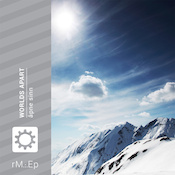
apne_worldsSo here’s a bad thing that turned into a good thing. åpne sinn (aka Geoff Small) was hard at work on a full-length album, the followup to his excellent En Seier release. Months into recording, his computer decided it had other plans. As he notes on his page, “I had to ditch; throw out ACID, welcome in Ableton and pretty much start over. And this took a long time.” Luckily, Small was able to salvage the four tracks he presents on Worlds Apart, the first offering in Relaxed Machinery’s new line of EPs. Of the four, I very much like three, with the last only getting relegated because of the relative ambient strength of its mates. That one, “Slight Return,” is a light track, with vibraphone-like tones bouncing and popping over quiet pads. It’s got a playful feel, and I find myself trying to suss out the cadence and the math behind the way those tones collide. As for the other three… When Small offered this album up and I had my first listen to “Auspice,” I was less than halfway through that track when I knew I’d be immediately dropping it into a podcast episode. It has such potency, such an immersive atmosphere, that I had to share it. I liken this to his track “What Rough Beast” from En Seier in that it largely eschews musicality for a dose of pure viscera. Yes, it has its slowly intersecting and harmonious pads, but they’re carrying a minor-chord urgency and surrounded with hissing winds and lightly serrated textures. Darkly meditative, it has a hold-your-breath quality I can’t get enough of. For pure emotional content, “Seven Ways” absolutely shines. I know Geoff somewhat, and I think I have a good idea what this is about, and it’s beautiful. The song is clean and almost simple, its melody played out like well-chosen words. I love the use of a voice-like pad here; even softened around the edges, it has a rich human quality. If this track doesn’t stir a little something in your soul, please consult your metaphysician. The EP closes out with the title track. Here, Small folds in a sample of someone chanting in prayer in Istanbul—I recall being privy to this sample in his studio a while back. He has seamlessly folded it into his ambient structure, underlaying it with long, slowly shifting pads like he was hired as an accompanist. A very light touch of piano hit with some reverb slips in, a perfect touch of solidity in this ethereal track. You’ll feel your breathing slow to come in line with this one.

While I am sure that Small’s constructs have plenty of layers going on—he has a very good way with small sounds, no pun intended—what I find remarkable about Worlds Apart is how deceptively simple it sounds. By “simple” I mean clean and uncluttered and exuding an interesting patience from start to finish. Yes, it’s just 30 minutes, but that brevity serves to play up that sense of patience. He’s not trying to cram things in, he’s giving the pieces exactly the space they need to say what they need to say. In this release you get darkness, light, love, prayer, meditation, and bouncy things. What more can you really ask for? Although I’d never wish a catastrophic system failure on anyone, this particular meltdown resulted in a really enjoyable listen, so…hooray for that. I know that Small is back to work on his next release, so I am letting Worlds Apart serve as a great, loop-worthy placeholder while we wait.

Available from Bandcamp.


Roy Mattson, Endless River

matts_endless

I have said it before, but it bears repeating: Roy Mattson is an ambient artist you need to be listening to, and Endless River is a very good place to start. Hovering quietly between classic ambient and spacemusic, this release shows several facets in its 90-minute run time, all of them engaging and well-executed. The sparkly, chipset-influenced tones bouncing around the first track, “Setting Out,” for example, are only distantly related to the still, wind-nudged chimes of “Confluence,” and they both come from a different place than the very atmospheric, almost dark environs of “Down River.” This latter track borders on creepy in spots, courtesy of the creaking and moaning of old boards and a growling bass drone. I am reminded of the excellent album Sextant by Brannan Lane and Ashera. “Water Maze” is a standout track; bright tones with a hint of shimmer are backed with perfectly underplayed water effects and twists of sound with an analog-synth feel. All of this plays out across long pads dialed well into the backdrop. It’s a nice, calming ride. Its kindred spirit comes later on “Navigating the Flow.” A charming sequencer line adds a touch of rhythm, the water sounds feature more prominently without being intrusive, and Mattson brings in lush flute melodies to make it all soar. Worth noting that Mattson has loaded Endless River with organic sounds—bamboo flutes, shakers, stones, seed pods, conch shell trumpet, and more—but it’s typically laced in very subtly. On “Stone Clouds” the organics get their place up front, but again, it’s done with a restrained hand and the effect is pretty much perfect.

Mattson is a new name in the ambient realm. He only began releasing music, as far as I can tell, about a year ago. That means that right now is a great time to start listening to him. With Endless River I hear an artist who has paid close attention to the masters of the craft who’ve inspired him but who is also ready to chart his own sonic course. Get on board now.

Available from Bandcamp.

Bruno Sanfilippo, Inside Life

sanfil_insideIf you are not familiar with the term “ambient chamber music,” let this be album your primer. Acoustic instruments, an up-close and intimate feel, airy construction, potent emotion and unobtrusive electronic treatments. All of it is here on Inside Life, the latest from Bruno Sanfilippo. Over the last several years, Sanfilippo has been nudging himself in this direction, obtaining a bit of distance from his ambient/electronic background and showcasing himself as a masterful pianist and contemporary composer. Through his Piano Textures series and on his last release, the amazing ClarOscuro, he has cemented his reputation in this space. What makes Inside Life so very effective is its apparent simplicity. All tracks feature just Sanfilippo on piano and Julian Kancepolski on cello. Sanfilippo handles electronic augmentation, and does so with a very light hand. Underneath the dramatic and moving duet of “Freezing Point,” he adds a crackling band of static. It’s barely there, somewhere between a distant sound of sleet and the comfortably familiar scratch of old vinyl. It only truly makes itself known in the pauses. On “Camille,” a tribute to composer Camille Saint-Saens, the background is gently haunted by Mariel Aguilar singing a waking-dream aria. It is the sound of memory, or perhaps, in this instance, of the residual influence of its subject. Listen carefully to take in a long drone with the feel of a church organ working through the piece. On this track, too, there is a metallic rattling–again, very subtle–that almost makes this feel like a piece for prepared piano. Like there’s something in the belly, which is probably not the case, but the effect is intriguing. He is alone on “The Place Where Dying Crows,” a piece filled with a sort of stilted cadence and uneasy edge. Long pauses filled with resonance, odd and mildly startling thumps, the sense of a mind trying to work something through–the idea that something is not quite right comes not just from the title, but it permeates the atmosphere on this track. A buzzing drone underscores it, and Sanfilippo ends it with three discordant notes. A very affecting piece. Kancepolski’s support is invaluable here, both for its aching beauty and for heightening the feel of this being a personal performance by an intimate duo. His work on “Camille” is particularly perfect, and he lends soaring lines and a downplayed, repeating bass foundation of pizzicato notes on the title track.

This is a seamless album, with no distinct line between acoustic and organic. It is just a singular, incredible whole, flawlessly balanced and soul-piercingly beautiful. Listen with the lights down low and let it just wash over you. Magnificent.

Available from ad21 Music.

Alio Die & Parallel Worlds, Elusive Metaphor

alio_elusiv

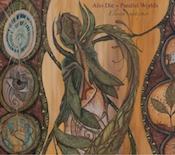
Listening to Elusive Metaphor feels a bit like being told a secret, or like getting a clandestine glimpse at some sort of shadowy ritual. Alio Die (aka Stefano Musso) and Parallel Worlds (aka Bakis Sirros) combine their respective approaches, melding long, deep drones with crackling, technical analog electronics in this hour-long voyage. Balance plays a vital role here. Each composer distinctly steps forward in spots, but never completely owns the moment. Sirros’ work powers “The Dispersed Expectance,” filling your ears with buzzes, hisses, chirps and warbles. On “Roundabout Mirages,” he lays in round metallic tones in a rhythmic clatter. In both cases, his sounds are bolstered from below by Musso’s soft ambient beds. Musso leads the way on the opening track, “Unspoken Shapes,” a piece that grabs a deeper sense of mystery and the aforementioned ritual thanks to prayer-like vocals from India Czajkowska. As this release takes the listener deeper, we hit upon the long stretch of “Dissolved Heaven” and “Fragile Imagery.” For me, this is absolutely the sweet spot of Elusive Metaphor. In Musso’s drones on “Dissolved Heaven” I hear echoes of Steve Roach’s Early Man, but lighter on the tribalism. Field recordings play out in the backdrop, the gentlest taps of percussion mark time, and there is a wonderful slow-motion sensibility to it all. Even without the aural reference to one of my favorite ambient albums of all time, I’d still find this to be a splendid, relaxing piece. Toward the end the harmonies edge lightly toward dissonance, or at least an edgier tone. It’s a nice dynamic that works especially well as the sounds dwindle down and give way to the warm cocoon at the beginning of “Fragile Imagery.” This classic ambient piece simply sighs its way along, content to help you relax.

I was tempted to go back and re-listen to Circo Divino, the first collaboration between these artists, to compare it to this. I was quite taken with that first album, but I think any sort of comparison would do a disservice to this one. It certainly stands on its own and represents a new step in the direction Sirros and Musso are taking their partnership. It’s not a giant step, but it certainly moves them toward a less rhythmic space. (I re-read my review.) Elusive Metaphor is deep and lush, showing a fine confluence of light and shadow. From acoustic sources to analog synths, everything comes together smoothly. This is a must-loop album, and please have your headphones on to take in all the small, integral sounds. An excellent offering from Alio Die and Parallel Worlds.

Available from Hic Sunt Leones.