
 Call me shallow, but first impressions count with me. (I know I’ve mentioned this in past reviews.) So when I open a disc from an experimental collective called PAS and it turns out that PAS stands for “Post-Abortion Stress”… I think I can be somewhat forgiven if I burned the disc into iTunes with more than a touch of trepidation. Despite reading in the press release that the term refers to those who “have been aborted by society,” the material on the disc (I refrain from the word “music” here for reasons noted below) reinforced the idea that trepidation was warranted. Pure Energy Output Sessions is, as noted in the release, “music from the fringes of perception . . . [not] defined by any particular conventions or viewpoints.” Which is to say, anything goes once PAS gets started, guided by their mission of free self-expression. The work here is more sound sculpture than music per se, and it is, by and large, aggressive sound sculpture, dynamic and tending toward assault. As such, it will challenge the taste and, perhaps, tolerance of most listeners. Pure Energy, by design, is a disc solely for the unbiased, wide-open, art-focused mind that can embrace a very abstract, unfettered approach–and I’m honestly not sure, having listened, if that’s me. Sample PAS and decide if it’s you.
Available from CD Baby.

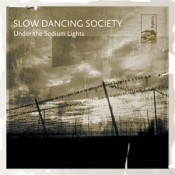 On his latest album, Under the Sodium Lights, Slow Dancing Society (aka Drew Sullivan) comes through nicely once again with his signature mix of processed guitar washes and slow, melancholic melodies. The tracks melt together in your head, but if it’s due to a sameness of sound, then I have to say it’s a pleasing sameness. What works best here is that Sullivan’s straightforward playing has a real crispness to it, a strength and clarity that doesn’t just ease the playing over his reverent, almost church-organ-esque washes–it makes it pop. I also love the sound of Sullivan’s laid-back, country-bred slide guitar work and the shot of unexpected spice it brings to the sound.
 The old show biz adage is, always leave them wanting more. With this offering on Malignant Records, Johan Aernus ends his 15-year run as Wolfskin–and he goes out on what, for a realm as downbeat, minimalist and chokingly cloistered as dark ambient, could be considered a high note. I only came across Wolfskin last year when Malignant sent me the re-release of O Ajuntar das Sombras and I’m not the most dedicated dark ambient fan, but there is a un-nameable quality to Aernus’ shadow-thick work that appeals to me. And it’s certainly here on Stonegates of Silence. With Anders Peterson, aka Last Industrial Estate, at his side, Aernus skillfully guides us through an expanse of fog, fear and unpleasant sensations. It’s suitably relentless, rumbling like the turn of a massive grinding wheel, washed through with echoes of oncoming storms and whispers that hint at the truth of an inescapable hell. Grim and isolationist, it’s not an easy listen–but then, if you like dark ambient, that’s not what you’re looking for in the first place. Wolfskin departs with his legacy intact.
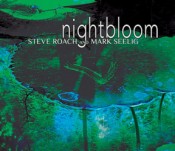 If the titular plant of the new collaboration between ambient icon Steve Roach and spirit-singer Mark Seelig were real, it would give off a lotus-like, drowse-inducing scent and have long, velvet-coated tendrils which would wrap around anyone lucky enough to succumb to its essence and pull them into the Lower World.
 If you’ve half an hour to kill, you might consider popping on Toaster’s Vacations to help pass the time–but be ready for a mixed bag. This five-song, 25-minute jaunt whips through a nice, bass-fueled downtempo groove (“I Think Everyone Has Gone”), an interesting jumble of rhythmically stitched-together noise (“Speaker’s Valise”), a gently hurried yet robotic sequenced joyride with glitchy percussive touches (“Drunk, Walk to Lake”), a mildly identity-challenged piece that shifts tone and tempo a few times (“Panties”) and an aggressive assault of electro-noise (“Practice Firing at the Clouds”). “Everyone” and “Drunk” are the standout tracks here, if only because they feel the most well-thought-out and listenable. I think this is where Toaster’s work is strongest. The noisier, more experimental tracks leave me shrugging and wondering why I don’t get it.
 My first hit of–sorry, my first listen to The Smokering’s laid-back-cool trip-hop offering, Mellow Majestic, immediately put me in mind of the great lounge-based stuff flowing out of the Waveform label in the last decade. Which was good enough on its own, but when the ride began to show signs of being under the influence of late-80s jazz-inspired dance/rap acts like US3, DNA and Digable Planets, and had the smooth and smoky aftertaste of pure 70’s funk, I settled right in.
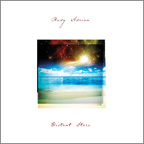 Having enjoyed Rudy Adrian’s MoonWater when I reviewed it a couple years back, I was pleased when his newest, Distant Stars, showed up in my mailbox. I burned it into iTunes, got it onto the ‘pod, sat down to listen…and then waited. Waited for it to be more than it is. Because while Distant Stars is a decent interpretation of a standard-issue spacemusic disc, it’s only that: a standard-issue spacemusic disc. It’s light and slow-moving, powered by long pads with the requisite rushes of sonic wind and glittering star-twinkle, but it never seems to aspire to anything deeper or more complex and offers nothing that truly sets it apart. From an ambient standpoint, Distant Stars does hit the mark fairly well. I’d suggest it works better as a quiet background loop than as a focused listen. Adrian is good at crafting emotive flows. Those are certainly here but somehow they lack weight or the sort impact that stops you in your tracks and makes you listen, which is perhaps what I kept waiting for. There’s nothing that I can particularly call out on Distant Stars as objectionable, disruptive or bumpy, and I can’t give a more distinct description of what’s lacking for me other than to say this disc is just there. I like Adrian’s music, but Distant Stars is something of a miss for me.
 I have a winter tradition. When the first snow comes–and I mean the first real snow, not just some pre-winter flurry–I uncork a bottle of good red wine, usually a Syrah, then sit by my back window in the dark and watch the snow quietly blanket my world. It’s my way of paying tribute to the cycle of the seasons and welcoming the dying time. And now I have a soundtrack for my tradition: Altus’ lovely and melancholic Black Trees Among Amber Skies.
 Hypnagogue Music Reviews