Steve Brand, Children of Alcyone

I have drifted my way through the four pieces in Steve Brand’s new release, Children of Alcyone, four times now–and by that I mean the recent now, in the past few hours, letting the thing loop quietly through my space, shaping the air, and quite content to have it do so. Children… is a straightforward ambient disc, designed for this sort of quiet, repeated and almost inattentive listening–but, as can be said for most good ambient discs, offering a lot of depth and interest to the focused listener. The content here is crafted in familiar, deep-sigh synth pads rolling in slow waveforms toward the horizon. Shifts in tone rise up infrequently to pull attention back to the music. (Again, as good ambient music does.) Brand shows equal strength in developing calming flows, as in the first two tracks, “Golden Cloud” and lush, 22-minute “Light Age,” and tenser, more dramatic musical scenes, evidenced by “Outside the Grid of Time,” which can at times be almost discomforting in its edginess. With the fourth track, “Into the Central Sun,” Brand folds in sparse percussion for a low-level, unobtrusive tribal feel. In handling all these sides of his ambient self, Brand effectively creates a sense of narrative, movement and completion of thought. Outside of the opener, which comes in just under nine minutes, these are long, patient tracks. There is movement within each, with Brand exploring and developing their distinct personalities and themes with a certain hand. This is my second exposure to Brand’s music, and my appreciation for the quality of his work grows, not just with each new CD, but with each listen.

Children of Alcyone is a Hypnagogue Highly Recommended CD.

Available from Hypnos.


Har, Obscura

In the opening/title track of ambient guitarist Har’s release, Obscura, a repeated shimmering melody carries the quite-familiar feel of the start of any number of “classic” 80s hair-metal ballads. It works to establish that the majority of the sounds here come from guitar, Chapman stick, and eight-string bass (tabla and field recordings round out the list), played by someone who obviously knows his way around the strings. It’s also just about the last you’ll hear from an unprocessed, recognizable guitar on this excellent, atmospheric disc. Most of Obscura is crafted in filtered guitar that emerges as patient, rise-and-fall pads, as in the smooth, warm 13-minute flow of “Blue Searchlight.” I like the way this plays against the more solid guitar feel of the title track, giving us two distinct sides of Har’s style. Another emerges later in the disc–his dark side. With “Amelia,” Har unleashes some grim, dissonant washes and sinister-whisper sound-bites, then deconstructs it all to the point where it takes on the consistency of a fading memory. He carries the feel through the electro-windswept, abstract landscape of “The Neon Depths” before turning back toward the light for his closer, “The Forever Sleep (Teddy’s Song),” a touching and beautifully played tribute to a beloved pet that has passed on.

Har effectively uses sparse and subtle percussive elements on a couple of tracks to lift Obscura out of the pure-drone realm. But by and large it’s a beatless piece of work with Har choreographing the graceful interplay of his textures, forms and ideas. Each track stands perfectly on its own, while also acting as the well-thought-out parts of the larger whole. And that’s what makes Obscura a disc worth returning to for repeat listens, and a Hypnagogue Highly Recommended CD.

Available from Har’s web site.


Synoiz, Ambients

The debut CD from darkwave artist Synoiz offers up 14 tracks that range from New Age-y to dark ambient, with at least one stop that echoes 80s synthpop (“Getting Safer”). It’s all workable stuff, if a bit stiff-handed and starchy. There’s nothing here that has made me really sit up and take notice across several listens, nothing that demands to be heard. The one standout track for me is “Cooper,” a subtle, moody piece that lolls through its three minutes on a bass-driven melody and cool mechanical backdrop.
Samples are available at Synoiz’s web site.


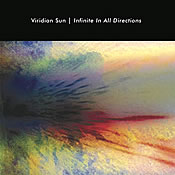
Viridian Sun, Infinite in All Directions

Recorded live using just guitars, voice, percussion and looping and processing tools, Viridian Sun’s Infinite in All Directions is a nicely varied wash of drones and textures, a disc that can challenge the ear one moment and deeply engage the mind the next–often in the same track.

Mike Griffin, head of Hypnos Records, and collaborator David Tollefson coax an array of noises from their instruments as they go, building moments and movements in dependent, largely minimalistic layers, always with the sense that they are waiting for the next correct place to assail and mutate the sound. Vaporous guitar washes discover sudden-but-fleeting moments of solidity, the actual, recognizable sound of a guitar, unfiltered, coming in like a beacon in the sonic mist. And this mist is dense, often quite deep and, across the breadth of the disc, dark. There is an intensity to Viridian Sun, an edginess of feeling, which is where the more challenging aspect of it comes from. As you’re being wrapped in sounds that can range from feedback to static in points, if they can be defined at all, there is a sense of this piece, this moment, being inescapable–an understanding that no, this is not easy and yes, you are expected to see your own way through to the other side and then keep going.

Infinite in All Directions will set better with listeners who like their stuff dense, abstract and droning, with heavy doses of darkness and experimentation. Griffin and Tollefson have crafted a constantly moving, beatless and expressive space that welcomes only the committed listener. But the rewards are worth the time and effort it takes to fully dive into this disc.

Available from Hypnos Records.


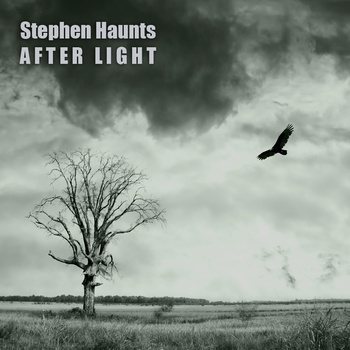
Stephen Haunts, After Light

Stephen Haunts has recorded for a number of years under the moniker Creature, turning out interesting music combining IDM structures with otherworldly circuit-bent sounds. Stepping out under his own name with After Light, Haunts has put together a challenging disc that is black-hole dark and borderline industrial. Sub-bass drones, manipulated field recordings and noise are brought together to affect the listener physically. On the back of his case, Haunts describes the music as “frightening.” Truth be told, it almost scared me off.

I like Stephen’s work and I find his adept hand at sound creation quite fascinating, but I struggled to get into After Light. And it’s not a case of thinking, “Well, this doesn’t sound like Creature.” It’s perhaps overly dense for me, and some of the soundwork pulls me out. There’s an effect late in “A Lonely Storm” that, quite frankly, sounds like Haunts has unleashed a demonic cow. I was working my way through the track, getting to understand it and liking it and–boom. Demon cow, and I’m pulled out of the flow, wondering what that was.

From a dark ambient standpoint, After Light is in the right vicinity. It’s low in register throughout, veritably snarling its way through its six tracks. It’s as grim as you can handle,  absolutely unwavering in its darkness and it definitely has the physical impact Haunts is looking to create. A lot of thought has clearly gone into the sources brought in, and Haunts manages and layers them well.  But as always, this is one listener’s opinion, and someone more inclined to noise manipulation and classic-style industrial may see more here than I do.  If that’s you, I definitely recommend going to Haunts’ web site for a listen.

Available from Haunted House Records.

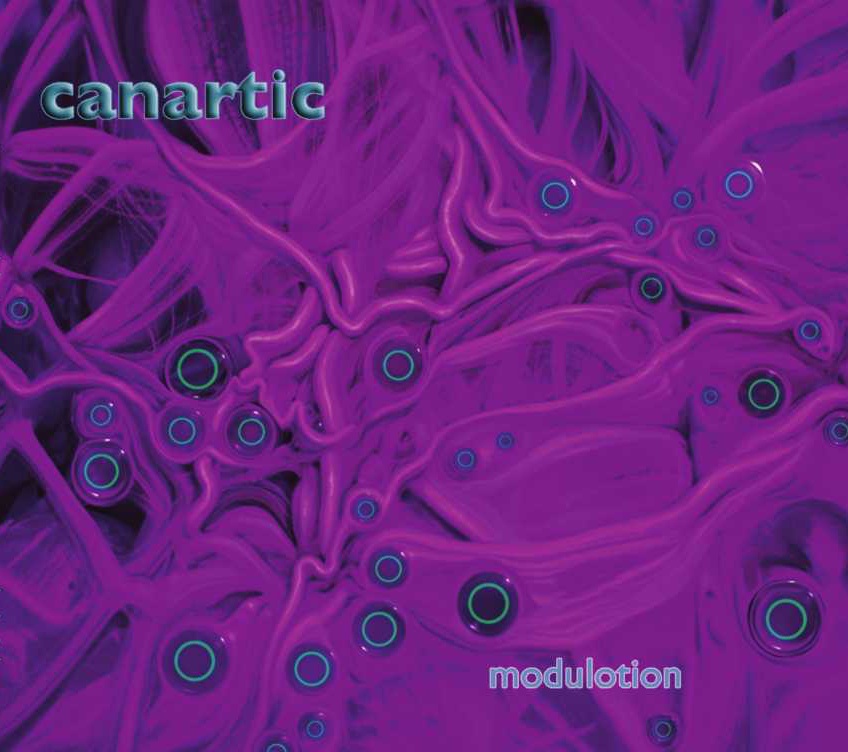
Canartic, Modulotion

I’ve always been a sucker for good bass guitar in any genre, and when I need a fix I can now reach for Canartic’s groovy-bass-thick new offering, Modulotion. Canartic is in full funky bloom here with their signature mashup of echo-loaded psychedelia, trippy dub and blissed-out guitar licks. And, of course, that bass.

One of the things I really enjoy about Canartic is how their sound owes as much to Motown as it does to Montego Bay. Randall Peterson’s guitar playing smacks sweetly of classic smooth R&B with a delicious funk frosting. The slow-played chords that lace their way through the smoke-filled space of “Pod Bai” are a fine example, lazy and seductive and familiar. Peterson gets quite jazzy in the center section of “Hueman,” and his playing there makes me stop whatever I’m doing to just be there with him. (There’s a sound bite in there saying, “Fabulous,” and I must agree.) Add reggae rhythms and cohort Jon Coats’ trippy soundwork backdrops and you’ve got a unique, infectious mix that just carries you along–and you’re happy to go. Dive into “Cleveland (Buzz)” for a tasty shot of Canartic at work…and play. That’s another thing. There’s a joy here, the sound of two guys working off each other’s leads and vibes, genuinely enjoying the creative process in motion.

While Modulotion is a solid CD all around, the duo really hit their stride in “Aux 1,” a dense froth of deep dub guitar and echoes, well-managed crunches of noise and frenetic guitar. It’s got a sense of wild abandon steered with a loose hand on the reins, and it’s simply fantastic.

I know from experience that listening to Canartic can leave you feeling a little high. So get your head ready and light up some Modulotion. It’s a Hypnagogue Highly Recommended CD.

Available from Dank Disk.


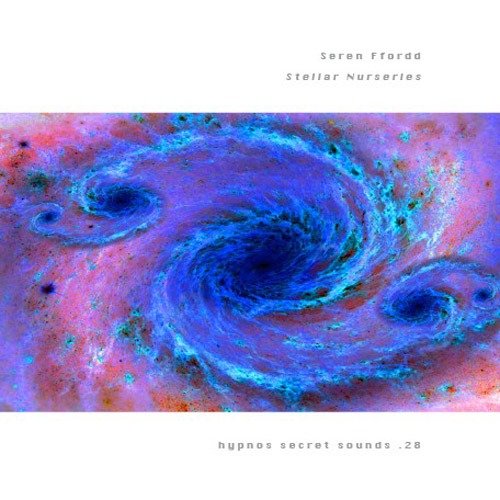
Seren Fford, Stellar Nurseries

This is not a CD for beginners. To be blunt, and I mean this well, part of Seren Fford’s 61-minute work, Stellar Nurseries, could be held up as an example of why people who aren’t into drone or dark ambient, or ambient music at all, tend to instantly dislike it. At the very least, the less adventurous listeners out there may not make it through the first half.

Fford divides his piece into four movements, but gives over the first 28 minutes to a dense, foggy, grit-laden drone that just hammers away at you. It doesn’t seem, if you’re not used to this kind of music, that much is happening. But it is. If you’re one of those people who are a bit more attuned to, or have at least been exposed to, what dark and drone music is all about, this first movement is actually fairly astounding. It genuinely impacts the listener on an emotional level and a physical level. It is relentless. The shifts are minimal and far between. It’s white noise, amplified and given a sawblade texture, designed to break you apart and take forcible hold of you. It is the quality of spending half an hour caught in the stellar-wind rush of a birthing star.

Given the title of the disc, one has to imagine that’s what Fford is trying to impart to us. Because after that charge of sound the rest of Stellar Nurseries brightens and lightens and we’re given long, high synth pads and flowy spacemusic constructs. It’s a relief. This is Fford’s solar genesis story we’re bearing witness to, and it’s quite nicely told.

Give in to the first half of this disc, and do so with the sound turned up. You need to feel what Fford is doing to truly appreciate it. After that, just drift and watch this new galaxy come together.

Available from Hypnos Secret Sounds.

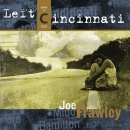
Joe Frawley, Left Cincinnati

It’s like this: your mind is a movie screen, and Joe Frawley is the projector.

In his sound-collage work, Left Cincinnati, Frawley creates a jump-cut-filled story–or scattered parts of a story, shuffled and re-ordered–centering around a young woman/women. On his web site, Frawley discusses how he uses sound bites to create the sense of a narrative without imposing an actual story on the listener. The details of the thing, we fill in by ourselves based solely on what we hear. And we hear not just snippets of monologue, but isolated sounds–breaths, sighs, half-words, moans. In using several different voices and sources Frawley gives us leeway to either create a single woman in our heads as the focal point, or see her, in her various voices, as a shifting, universal everywoman.

Left Cincinnati is a flickering, kinetoscopic tour, taken at a brisk walk, through a gallery of other people’s memories, images flashed on walls with barely enough time for you to look, but with enough time to make their impression. Muscially, the disc is purposefully sparse. Frawley leads with an echo-heavy upright piano sound, standing in for the disc’s overarching sense of melancholy. By and large, the music here is quiet and gently played, which lets it fold seamlessly into Frawley’s larger intent to place those memories in our heads.

I have often said that what makes a good movie is if you can go back and watch it with the sound down, just to look at what’s being done visually, and you still consider it as good. I keep going back to Left Cincinnati to have another minds-eye look at the visuals Frawley has stacked up. I consistently find something new. I admire how he has constructed the piece, how it flows and engages in a shifting number of ways. There’s an inherent beauty to its quirkiness that’s hard to describe. The emotional impact, however, is undeniable.

Even if you’re not into experimental work–and I’m not a huge fan of it–Joe Frawley’s Left Cincinatti is a Hypnagogue Highly Recommended CD.

Available at Joe Frawley Music.

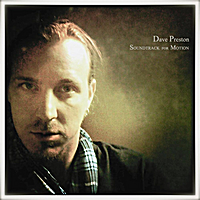
Dave Preston, Soundtrack for Motion

The real beauty of a Dave Preston CD is in the way that polished, calm, ambient guitar inventions wrap effortlessly around a folk-rock sensibility that quite often shines through the shimmer. The borderline between his two styles is so narrow, singer/songwriter Matt Morris, with whom Preston has toured, took the tune “Be-Joy” from Preston’s first CD and re-crafted it into a beautiful ballad called “Just Before the Morning.”

The same is likely to happen with one or more tracks from Preston’s latest, Soundtrack for Motion. Melodic pieces like “The Blood in Your Veins” and the heartbreaking “Feeling God Has Left You” (with ethereal violin work by Sam Gathman) seem ready-made to have lyrics just slotted into them–but they also succeed quite nicely on their own, lacking for nothing. Preston can also hang a whispery guitar drone in the air, as he does with “Flashing Emergency Lights,” a nice bit of build/sustain/fade and  “I’m Sorry,” a textured wash like intense but musical static. There’s also a fairly experimental track, “Spinning Away from the Earth,” featuring fellow Denverite Mingo, whose work I also quite like. This one sometime seems like it’s the outsider in the group, falling just shy of fitting in, but after a few listens I grew to like it more.

A pair of highlight tracks drive home the fact that Preston is, first and foremost, a top-notch guitarist. (He has played with, among others, Charlie Sexton, Tab Benoit, Justin Timberlake and Paula Cole.) “A Giant Leap of Faith” is the “big” track on Soundtrack…, with Preston building the thing in increasing layers, a wordless prayer-wail vocal coursing over it. In structure it reminds me of “Be-Alive,” my favorite track from his first disc. And then there’s “Sweet Sound of Escape,” a high-energy piece where Preston flails away at his axe (or axes) while showing what sounds like a bit of influence from U2’s Edge.  This one leaves me breathless.

I said in my review of his first disc, Be, that I was waiting to hear more from Dave Preston. In Soundtrack for Motion he has created a work that was very well worth the wait. It is a Hypnagogue Highly Recommended CD.

Available from CD Baby.

Phaenon, His Master’s Voice

Many dark ambient CDs look to take their listeners by force, launching a grim, grinding gnash of an assault, tearing open a psychic wound and ripping a response straight out of their chest. On his new release, His Master’s Voice, the artist called Phaenon takes a far more insidious approach . After the first few raspy, sharp-edged minutes of the opening track, “His Master’s Voice, Part 1: Neutrino Radiation,” the heavily layered sounds begin to resonate cautiously, the frequency slowly matching the listener’s own, pulling them in until the two achieve a sort of sonic symbiosis that lasts for the rest of the disc. Having established that resonance, Phaenon takes his sounds and digs into and dredges out the darkest corners of the mind, loosening what’s there and holding it up for the listener to see. It’s as effective as any good dark ambient work, but in this listener’s opinion, the difference and the improved listenability is in the approach, the subtlety of sound involved. It elevates the experience by not fully alienating the listener. It’s an isolationist work, but it’s understandably isolationist.

His Master’s Voice is built around hesitantly shifting greyscale drones, thick, solid and weighty. The majority of sounds rise up from the lowest end of the scale, all the better to resonate you with, and Phaenon easily shifts from wall-of-sound density to well-thought-out sparcity.There are only four tracks here, the shortest clocking in at over 12 minutes, so there is plenty of time to cut yourself adrift and just be in Phaenon’s textures and constructs.

Kudos also have to go out to cover artist Eric Lacombe. His dark style, which reminds me a lot of artist/comic book illustrator Dave McKean, fits the tone of this disc perfectly. Disturbing, but imbued with a strange beauty from which you can’t look away.

Available from Malignant Records.