
 Representing the best of 22 years of collaborative efforts between four artists led by Tim Risher, Gnosis ranges from easy ambient constructs to folksy meanderings to complex experiments in sound. The idea of each piece is to improvise within the framework of a set of rules: a group of chords or a shifting rhythm, for example. The result is usually something tightly interwoven and redolent of a quite workable chemistry between musicians. Even when things go a touch left-field, as with “Hello,” the oldest track here (dating from 1987), it’s not entirely objectionable. That being said, however, Gnosis is at its best when the work builds around simplicity and depth of sound. “Aubade,” with Risher and Ted Stanley working a bowed piano while Tom DePlonty offers a piano meditation, takes its time forming itself in long chords, a bit of abrasive texture and a clockwork rhythm. There’s a similar quality to “Liquid Sifting,” a 2010 track from Risher and Charles Baker–that slightly hesitant rhythm, an almost uncertain (but charmingly so) pacing. There’s an element here to Risher’s melody that reminds me of a Gary Burton piece, the name of which I can’t recall. The highlight here is “Cork on the Waves,” a 10-minute track with a tone-poem quality that takes added character from a spoken-word element by DePlonty that eases in and out. (I chose this track to open my podcast #39.)
I’m always intrigued by the chemistry between artists, particularly in this sub-genre where solo acts are the norm. Gnosis stands as a tribute to the enduring shared passions of Mssrs. Risher, DePlonty, Baker and Stanley, and offers a lot of good listening. Here’s hoping we don’t have to wait another 22 years for the next disc from Paragaté.
Available from Auraltone Music.

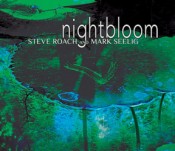 If the titular plant of the new collaboration between ambient icon Steve Roach and spirit-singer Mark Seelig were real, it would give off a lotus-like, drowse-inducing scent and have long, velvet-coated tendrils which would wrap around anyone lucky enough to succumb to its essence and pull them into the Lower World.
 If you’ve half an hour to kill, you might consider popping on Toaster’s Vacations to help pass the time–but be ready for a mixed bag. This five-song, 25-minute jaunt whips through a nice, bass-fueled downtempo groove (“I Think Everyone Has Gone”), an interesting jumble of rhythmically stitched-together noise (“Speaker’s Valise”), a gently hurried yet robotic sequenced joyride with glitchy percussive touches (“Drunk, Walk to Lake”), a mildly identity-challenged piece that shifts tone and tempo a few times (“Panties”) and an aggressive assault of electro-noise (“Practice Firing at the Clouds”). “Everyone” and “Drunk” are the standout tracks here, if only because they feel the most well-thought-out and listenable. I think this is where Toaster’s work is strongest. The noisier, more experimental tracks leave me shrugging and wondering why I don’t get it.
 My first hit of–sorry, my first listen to The Smokering’s laid-back-cool trip-hop offering, Mellow Majestic, immediately put me in mind of the great lounge-based stuff flowing out of the Waveform label in the last decade. Which was good enough on its own, but when the ride began to show signs of being under the influence of late-80s jazz-inspired dance/rap acts like US3, DNA and Digable Planets, and had the smooth and smoky aftertaste of pure 70’s funk, I settled right in.
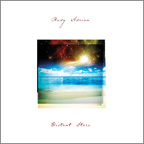 Having enjoyed Rudy Adrian’s MoonWater when I reviewed it a couple years back, I was pleased when his newest, Distant Stars, showed up in my mailbox. I burned it into iTunes, got it onto the ‘pod, sat down to listen…and then waited. Waited for it to be more than it is. Because while Distant Stars is a decent interpretation of a standard-issue spacemusic disc, it’s only that: a standard-issue spacemusic disc. It’s light and slow-moving, powered by long pads with the requisite rushes of sonic wind and glittering star-twinkle, but it never seems to aspire to anything deeper or more complex and offers nothing that truly sets it apart. From an ambient standpoint, Distant Stars does hit the mark fairly well. I’d suggest it works better as a quiet background loop than as a focused listen. Adrian is good at crafting emotive flows. Those are certainly here but somehow they lack weight or the sort impact that stops you in your tracks and makes you listen, which is perhaps what I kept waiting for. There’s nothing that I can particularly call out on Distant Stars as objectionable, disruptive or bumpy, and I can’t give a more distinct description of what’s lacking for me other than to say this disc is just there. I like Adrian’s music, but Distant Stars is something of a miss for me.
 I have a winter tradition. When the first snow comes–and I mean the first real snow, not just some pre-winter flurry–I uncork a bottle of good red wine, usually a Syrah, then sit by my back window in the dark and watch the snow quietly blanket my world. It’s my way of paying tribute to the cycle of the seasons and welcoming the dying time. And now I have a soundtrack for my tradition: Altus’ lovely and melancholic Black Trees Among Amber Skies.
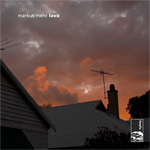 No sound is safe from Markus Mehr on his new release, Lava. Each one is subjected to an array of sonic surgeries that slice, pull, invert, roughen and deconstruct them even as Mehr reconfigures them into abstract structures. The yawning waveforms that open the first track, “Agenda,” stand as about the least molested sounds here–and about four minutes into what seems like it’s going to be a fairly standard ambient/drone work, Mehr starts manipulating the sounds and things proceed to get more interesting by degrees.
 There is a scene in the movie Amadeus where the King complains that he did not like one of Mozart’s pieces because it had “too many notes.” Mozart wisely advises the King that if his majesty would simply point out which notes he objects to, Mozart will have them removed.
 Hypnagogue Music Reviews