
 My feelings run a bit lukewarm when it comes to Vlad Nedelin’s Postante, a workable mix of noise over ambient structures. But it’s not an album I’ve enjoyed delving into deeply. As a rule, the less noisy and subtler, the better I like it. “Nothing Disappears” stalks along on a blend of high chords and slow melody, and lacks any noticeable noise element. It’s got a bit of a spy movie vibe to it, and a nice air of drama and mystery. There’s a story at play in “Yet to Be Told,” and it plays out with a sort of old-school sensibility. A militaristic drum line (Nedelin is a jazz drummer) snaps along in the background, and the tempo is mechanical and strident. It took a couple of listens to warm up to the atmospheric sparseness of “An Isle,” but this strange mash of wind, perhaps very distant waves, and the noises of someone moving through a space—all this accompanied by a very dialed-back, droning mix of pads—becomes quite attention-getting. At the least, it forms a strong sense of scene, a field recording with a light dusting of music. It pushes us out into “Through the Tunnel,” which is again fairly minimal, but packed with velocity. Nedelin lays in robotic analog synth sounds and bends the piece off in sort of a science-fiction direction. The click and clatter of the percussion drives this one forward. “Temporary Residence” hearkens back to the mysterious tones of “Nothing Disappears,” with a rhythm that bounces along over eerie vocal pads. It does get slightly repetitious, but, again, moves away from the noisier side of things. I sometimes call out pieces like this for not giving themselves enough time to develop, but this one could have said its piece more briefly. (And the thematic sounds at the end quite simply don’t help.)
Postante does offer up some decent atmospheres, but relies too heavily on the noise for my taste. The pieces are brief enough that the problem spots pass quickly. While this one is not entirely for me, those with more experimental tastes will probably find more to dig into.
Available from CD Baby.
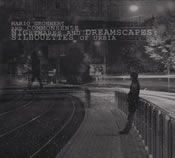 So there’s this place, and something quite bad has happened there. Like, extinction-level bad. It’s a broken world, dying, maybe dead without fully realizing it, certainly haunted, and the empty streets are covered in remnant ash. It’s through this shadowed waste that CommonSen5e (Mason Metcalf) and Mario Grönnert would like to escort you on Nightmares and Dreamscapes: Silhouettes of Urbia. While some might classify this as dark ambient—and parts of it very much are—I think the term “gloom ambient” is more apt. This place they describe exists in a forced twilight that’s both physical and metaphorical. It can be uncomfortable, but there you are so you might as well look around at the details. And since the album opens with 22 minutes of the thick sonic surroundings of “Breathing in the Ash,” you don’t have much choice. There’s no easing you in here. Scene opens and there you are, alone in this decaying place, lungs taking in the sadness that coats everything. It’s got a sharp, industrial edge in spots, sometimes finding its way toward an abrasive brightness of sound. Metcalf and Grönnert show patient hands in moving us through the scene. The images shift imperceptibly and organically, with a quiet sense of despair our constant companion. There are many small sounds and moments, so headphones and attentive listening are an absolute must. The last couple of minutes all but whisper yet still manage to carry a hold-your-breath tension. “Sky Full of Crows” and “Station 17” pile on the darkness, haunted atmospheres, and grimmer apocalyptic edge. What makes this album work for me is that while it doles out its share of depressing weight and tone, it has a narrative arc that begins to turn at its mid-point. Piano appears quite unexpectedly in “Journeys Calling,” a spot of light or hope—or at least something shiny in the murk and miasma for us to try to get to. The keyboard tones change but persist in “Through Midnight Fallen Lands,” taking on a harp-like feel against easy pads. With its final two pieces, the album spins it narrative fully toward a more optimistic sheen, though it’s optimism through a haze. “The World Rewinded” offers a sense of industry starting up and moving forward, of this darkened world wobbling back to its feet. A pulsing metallic beat and throaty bass pads energize the scene, and again it’s the piano that winds a thread of hope through the murk. It all brings this story to a satisfying close, and makes the journey overall very satisfying. A dark-but-not-too-dark piece of work that has kept me engaged for many listens — and which offers much more to hear than I first thought it would. Check this one out.
 Prior to starting any Altus album, I make sure I have nothing else I need to do, because I know that all I am going to do is listen to Altus and maybe do a bit of introspection. Innerspace keeps that tradition alive by easing out over an hour of slow, sometimes somber, often broad ambient constructs that get inside your head, quietly sever your consciousness’ connections to your body, and take you quite far away. On one of my first review listens, I looped it for about five hours. I listened to it, examined it, let it become background, lived within it, napped to it… It was a very good five hours. Innerspace is signature Altus, meaning that it doesn’t use a lot of velocity or motion, but rather focuses on the slow drawing out of an emotional thread across a series of calm vistas. So your mind stays focused on the tidal rise and fall of the layers while you sit back and let your feelings find their way to the surface. A beautiful sense of yearning comes through, to my ears, on “Vast Yet Insignificant.” Pads like very long strings pull this one along, and as one fades I find myself waiting for the next. This is one of those “this is why I listen to ambient” pieces, and on one listen it occurred to me that I’d love to hear this done by an actual string ensemble. I think it would be fantastic. “Reflection” takes the ever-popular choral pads, draws them out and immerses them under the surface of bright, warm drones that curve gently upward like a prayer. I hear sacred music undertones rise as the piece goes along its meditative way. Lest I lead you to believe that it’s nothing but quiet drifty things on this album—although that’s the main focus—I love the simple bass pulse, a single note, that taps out the passage of time on “A Universe Within the Atom.” By the time this track lands, we’ve been adrift on warm, melancholy-tinted seas for more than 20 minutes—and blissfully so—and this unassuming note changes the timbre of the journey without really doing much. For this artist, it’s a momentary change of brushes on the same vast canvas. (He even sneaks in a distant drum beat.) Complete immersion comes in the closing piece, the 21-minute “Innerspace Outermind.” For an inward-looking piece, it’s got spacemusic cred dripping off it from the outset. Greeted by thick, warm pads brushed with high tones and tethered by a rich low end, the listener is instantly pulled far down into the sound. Unhurried, the elements shift and meld and expand as the real world just keeps getting farther away. The rise and fade of the bass chords are like intermittent swimmer’s strokes that come solely to take you along on these warm currents. If you ever find yourself in need of a perfect 20-minute meditation break, here’s your soundtrack.
 It pays to be patient when listening to fade, the first solo release in several years from ambient scene veteran Dr. Mike Metlay. Each of the six songs here build themselves architecturally while you listen. Humble, sometimes odd, beginnings scale upward and hit an “a-ha” point as the purpose of Metlay’s musical madness becomes clear. And when these pieces reach full potential, it’s quite simply fantastic. While it’s not unusual for electronic music to be built this way, on fade it’s done for an interesting reason—which I’ll get to later. On my many review listens, the thought that comes to me is that hearing these songs get pieced together is like watching Metlay lay down clear sheets with each variable of the equation written on it. Bit by bit, a new element gets layered and never obscures all the structural considerations below it. Outside of the short opening piece, “Fade to White (Glimpse),” each song on fade has ample time to evolve—from 10 to just over 14 minutes. “Fade to Silver” is a glacial, almost minimalist piece that builds off a repeating set of three-note phrases. Around those phrases, Metlay floats small sounds and elements like points of illumination against the bigger, foggy backdrop. The whole thing spins into a gently hypnotic wash of sounds, and your mind is massaged into submission by those repeating, unwavering phrases. The lowest note in those phrases delivers a solid, bone-felt resonance. My love of this album was cemented with “Fade to Purple.” Calling to mind the churn and flow of Tangerine Dream, this is one of the pieces that begins with a bit of a “Huh?” Synth hand claps pace out a stumbling rhythm over a drum heavy on reverb. More percussion eases in, followed by a music-box melody. On my initial listen, this was where I started to doubt, quite honestly. Then, as these elements began lacing themselves together and the familiar Berlin School flute sound walked in, I got it. A-ha. And when a chopped vocal snippet gets tossed into this intricate lattice, it manages to get even cooler. For pure cool, the award has to go to “Fade to Gold,” a track that has been played at maximum volume in my car many, many times. Springy, analog-style bass sequencer lays the foundation over big, industrial drum crashes. A backbeat slides in, and another vocal snip, this time with kind of a world-music edge, pushes the intensity even higher—and the damn thing isn’t even half over. Synth phrases in layers, a raw guitar sound, a tick-tock sequencer hitting the high end…it just keeps getting bigger, more intense, more involved. And when it ends with one big percussive crash…ecstasy, I tell you. Electro-music lover ecstasy.
 If I could, I think I would lightly rearrange the order of songs on Ann Licater’s lovely new album, Beyond the Waves. With Licater’s flawless flute work front and center, surrounded by small, intimate accompanying combos, the album develops a vibe that’s laid-back and calming while also drawing vivid imagery. For me, less is more on Beyond the Waves. In my imaginary song lineup, the album would open with the beautiful solo sounds of “Sunrise Blessing.” At just two minutes, it’s bright and inspiring, showcases Licater’s fluid, soaring style, and would set the tone very nicely. “Blossoms Falling” spins quietly out like a flute haiku, accompanied by guitar from Dan Ferguson and bass from Peter Phippen. I like the way the accompaniment takes small steps, laying down bits of phrasing that play out across time as the flute flies ahead. “Island Garden” pairs the flute with acoustic guitar and light taps of hand percussion, courtesy of David DiLullo on Peruvian cajon, in a smooth, upbeat dance. The piece that follows, “Sailing On Moonlight,” is a graceful duet with piano from Ferguson, softly underscored with more of Phippen’s bass. If the track listing was up to me, I’d end my “less is more” section with the stunningly soulful “Song of the Willows.” It’s flute, wind chime tones, and nothing else. Just this wonderful, Eastern-inspired song where the flute leaps and spins, each note rising in vibrant color to paint the air.At this stage of the review I am going to admit to you how much I have revised and revisited my opinion of the two opening tracks on this album. Initially I did not care for “Rhythm of the Stars.” It struck me as too filled with New Age-ness, maybe even a little too bright and dancing when compared with the subtler pieces that come later. But the more I listened to it and the deeper I looked into it, the more it grew on me. Ferguson’s acoustic winds a thread of melancholy through the piece, stepping back when the vibe turns brighter. Phippen catches a jazz glide on bass, and DiLullo’s djembe work anchors it all. I hear echoes of the Windham Hill combo Nightnoise in the song. I also like the folksy, honest tones of “Halcyon Morning,” but again feel the need to note that I like it less than the rest of the pieces. Ferguson handles both piano and guitar here, while Phippen keeps the beat on conga. A touch of synth strings lend the background a sophisticated feel.
 I have a bit of a soft spot for electro-acoustic music. There is something in the coming together of the earthy truthfulness of an acoustic instrument and the sharper edge and g0-anywhere possibility of synths and other electronic noisemakers. Take this combo and throw in an overarching air of classical chamber music and you will understand why I quite enjoy Gut + Voltage from the duo Domingues and Kane. Amy Domingues’ viola da gamba and Dennis Kane’s keyboard, guitar, and electronics work are the tools in this delicious alchemy, a mix that moves from formality to fire without blinking. I like how the electro-acoustic tone is set in the opening moments of “The Hunted Hare, Pt. 1,” as the duo let a quiet, warm electric hum hang in the air before Domingues begins constructing the melody. Kane’s piano offers a high counterpoint, and the slow dance is joined. Then comes the point where they hook me: a drop, pizzicato notes on the viola, and organ chords fresh out of a prog-rock break. Way to get my attention. This motif of building to a break and switching gears plays out several times across the album, always done well. Passion enters the equation at the outset of “Black Shuck” as Rodrigues ripsaws raspy notes from her viola and loops them into layers. There’s a sort of indie rock feel to the melody that dissipates as Kane enters with silken keys, and the piece quiets a bit. Cue the mid-track shift as piano takes the lead and the strings smooth to soft, high notes. There’s more power at play in “Evergreen,” which comes in on Kane’s flamenco-flair guitar. Brace yourself—a big, lightly distorted power chord announces a shift in form and a rise in energy. It morphs into a sort of folk dance piece with the guitar and viola trading phrases. There are also compratively simpler moments here, less augmented. On “Je Ne Fais Plus” Kane lays out a flute melody on keys as Domingues plucks through a bass complement. It is slow, quiet, and gentle. Her (I believe) unaccompanied reading of Carl Freidrich Abel’s solo piece, WKO 205, is emotive, passionate, and fluid. A classical piece left to its own voice, it is a pleasure to just be surrounded by. “Lament No. 7” is perhaps my favorite showcase of Domingues and Kane’s chemistry. Raindrop arpeggio on piano meets long sighs from the viola to craft an atmosphere that’s melancholic but still bright. A solo passage from Domingues in the break will find a direct path to your heart.
 Allow me first to confess my love of Radium 88’s signature sound. On their website they say—and I love this—that they wanted to “make music that sounds the way William Gibson reads.” Sum it up thus: sad piano melodies, doses of doppler, electronic backdrops, house beats where they’re needed, and the heartache-laden voice of Jema Davies telling us stories. Put these together in manners that vary really only slightly, toss in some raw guitar now and then, and off we go. The Loneliness of the Long Distance Space Traveler serves up fourteen helpings of this sound and style, and I have to say that while I enjoy the whole ride, it really stands out for me when Tim Thwaites busts out that guitar and starts cranking. He hits it first on “Who Will Save Us From The Waves,” when a big crunch of distortion-heavy axe roars up out of a sequencer line. It wails like a banshee with a microphone and the sound just envelops everything. He dials it back after its solo, its held notes more easily underscoring Davies’ voice. On “Renunciation Blues” we’re greeted with the syncopated bop of a reggae keyboard line before Thwaites walks in his sharp, rock-attitude guitar lines. There’s a nicely orchestrated tempo shift later that ushers in some bad-ass slide work. Thwaites absolutely rips it up briefly, creating a “What was that?” moment that may have you going back for an immediate repeat listen. It wails again in “The Girl Who Outshined the Void,” playing off thick bass and multiple sequencer lines drawing a crosshatch over the sound. On both “The Lost World of Tomorrow” and “This Too Shall Pass,” it goes heavy on the tremolo, cutting wavy lines in the air like shutters. But it’s not all about the aggressive axe work here. As always, there are passages of quiet reflection that ride more directly on Davies’ fluid choral recitations. “Heavy Water, Falling Stones” is a longer piece (most of their work is pop-length) with a pastoral quality at its outset. It dials up into an easy groove with string pads, plenty of dopplering, and another great guitar solo that has a big alt-rock feel to it, although it’s set off into the background for a nice balancing touch. “Nocturne 7” is where classically influenced piano meets muted electronics in a genuinely beautiful mix.
 One thing to know about Leaving Richmond is that its prinicpal, Jordan Pier, has been killing it lately in getting his music picked up for various television and commercial projects. That’s because his work is bright, catchy, cool, and memorable. It’s shiny post-rock with energy to spare, and it’s in full view on The Antique Heart. If you don’t find yourself reaching for the volume knob and doing a little chair-dancing in the high-speed, glitchy glow of “The Electronic Afterlife,” consult a physician. This undeniable groove lifts up out of a lounge-ready drum loop and cool chords. As Pier laces in a faster beat, he matches it with quick guitar riffs, then offsets it further with slower, silky lines. The pace shifts, with a nice drop midway. A nice adrenaline injection. Its velocity carries into “Freezing Light,” a minimal electronic piece built around stretching pads and an insistently pulsing beat. It also makes for an interesting style interruption, steering us away from the more straight-up post rock.The Western gallop of “Waiting for Another Heartbeat” is just charming, and the perfect foil for a backdrop of small-combo strings. A repeating guitar phrase anchors it, and a bridge of simple chords breaks it up neatly. “You Will Be Safe Here” catches my ear by having part of its melody include a four-note phrase that sounds like Ultravox’s “Reap the Wild Wind.” Beyond that, its easy, shuffling lounge beat, deep layers, and crisp guitar lines just walk coolly forward, and I gladly follow. The title track enters on a downtempo keyboard pulse and some techno-style textures. Swelling strings, guitar, and bounce-around-your-head chime tones round it out. Add a mid-track drop, and you’ve got another round of joy.
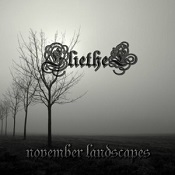 In a brief, 20 minute outing, Eliethel (aka Evangelina Alexaki) lays down fog-washed, waking-dream scenarios just a touch left of center. Eerie in places, and slightly challenging throughout, the five tracks on November Landscapes offer a lot to listen to. With her tenet of “weaving dreams into sounds,” Alexaki plays with the melding of disparate elements, the way odd intrusions find their way into the otherwise coherent narratives of your subconscious night-wanderings. The title track cuts snippets of a deeply drawn breath over music-box-like keys. The dense fog of “Penelope” is almost disconcerting, the kind of dream where you can’t figure out where you are, but you’re pretty sure it’s not good. An eerie melody and a forest of small sounds round out the nicely disjointed scene. “Flamenco Boy” courses along on a vocal like Sufi chanting, then morphs into a blend of that and flamenco guitar. It’s exotic and potent, and again filled with small atmospheric sounds. “The White Wall of Valletta” pairs more of the music-box melody with trap/glitch percussion and switches tempo in spots to throw you delightfully off. It’s an energetic way to bring you out of the deeper dream of November Landscapes. A succinct offering that should leave you looking for more.
 Hypnagogue Music Reviews