Warszawa: Kinetica

warsz_kineticaI worry sometimes that I don’t put enough personal emphasis on the headier philosophical aspects of the music I listen to. According to the PR blurb on the Carbon 12 Records site, “Warszawa explores alternative views of cultural and technical periods in art and sciences. […] Kinetica is a soundtrack to the exploits of the East in respect to technological advancements.” And here I was, just sort of grooving to it. In this 36-minute aural snack, Warszawa launches rapid-fire, dance-music beats and glitchy textures wrapped in a lightly old-school feel. There’s a nice angular edge to the music that calls earlier EM to mind. (The label also says there’s an electronic body music [EBM] influence at play. You’ll catch that at its strongest in the “Gulag Lockdown Mix” of “Interkosmos.” It’s a big, aggressive, pulsing nod to the 90s.) There are basically four tracks and two remixes here, all thoroughly shot through with hooks and nicely crafted. From the playful tones and thumping bass drum of “Dscnt” to the spacemusic-turned-spacegroove of “Wostock,” Kinetica is an infectious, if brief, ride. Save the philosophy for after you’ve enjoyed Kinetica a few times. First, just turn up the volume.
Available from Carbon 12 Records.

dreamSTATE vs. Heiki: The North Shore

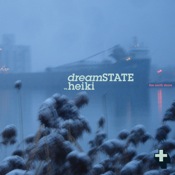
WebYou have to love it when a semi-plan comes together. As part of preparations for the kickoff of dreamSTATE’s Drone Cycle 2012 shows, the Toronto-based duo and sound artist Heiki Silaste droned their way through a couple improvised sets “in deep-winter mode.” Listening to the prep sessions later, Silaste declared that he wanted to mix part of it (along with Kris Helstrom), while  Scott M2 of dreamSTATE took on the other rehearsal sessions as well as the Drone Cycle concert itself. What you the listener get out of all this is the cold, deep, and enveloping drone-space environs of The North Shore. The centerpiece of the disc is the 40-minute “Ice Flow,” a shifting epic of drone curving its way in and out of shadow, including short stretches of upward-arcing pads that wind their way out of some quite-deep sonic caverns. There is, to mix phrases somewhat, a great patient dynamic at work. Moments are created out of raw material that change the timbre of the voyage without losing its constant edge. Stretches of time melt away as these artists cull fresh sounds out of their gear and ease the thing along. Subtle beats, whining curls of electronic spatter, and whisper-hiss breezes form the atmosphere. “Ice Flow” alone is reason enough to get this disc. The other three tracks each have their own distinct character while dovetailing perfectly into the overall feel. “Snow Drifting” begins with big, comparatively soft ambient pads, edging toward a less comfortable space as the piece nears its end. “Expedition” picks up that darkening feel; a low-end drone stretches time across a sparse landscape of sound. Choral pads and rising wind fill in the details. The closing track, “Winter Light,” rises up out of “Ice Flow” with a growl, then eases off its rough texture to reveal, in title-appropriate fashion, a slightly brighter and calmer character. There’s a nice balance of warm and cold here, the latter brought in with that persistent low-range drone, the former in the high tones.

This is a great batch of minimalist, immersive drone, and you’re going to get lost in it. It’s a fantastic headphone listen, giving the subtler details more substance. The mix of mesmerizing drone and underpinnings of uncertainty and shadow works very well. You can relax with this disc, but you’re always aware of the edges. The way each piece evolves carries the feel of the organic movement of an improvised piece, with no mis-steps to impede the flow. Let this one loop for hours.

Available from Paper + Sound.

Michele Ippolito: Drifting in Dreams

ippol_dreamsWhat an appropriate title. The hour it takes to glide through Michele Ippolito’s third release, Drifting in Dreams, goes by with you embraced in a warm haze of equal parts New Age and spacemusic with a lovely hint of classical. Ippolito layers in soft synth washes, harp, flute, and more to load her songs with strong emotional content and breath-slowing calm. If anything, Ippolito’s music exists closer to the spacemusic side, but with a bit of restraint. Her scenes are more intimate and immediate; she’s not guiding us to the farthest reaches, but inviting us to turn inward. Yet the work has that deep dreaminess, that sense of the voyage. Her style has the potency of a Constance Demby, but without relying on the celestial trappings. “Ship Ahoy” takes us as far as any starfaring synth track, and carries a waft of aching melancholy that cuts through the misty wall of sound around it. It’s a very touching piece. “Reaching for the Stars” starts off feeling a little sweet, but soon melts into another reflective set of washes. Keyboard notes twinkle in the background. There’s a lot to like here. “Mystical Forest” takes a repeating phrase on keyboard and intertwines it through long pads and breathy flute tones. Ippolito makes excellent use of subdued percussion on “Midnight Moonlight Trance,” building in a bit of mystery and tension, along with just a touch of the tribal. The beat nicely breaks up the long flows on either side of it. “Across Still Waters” is another flute-led piece that courses along on warm synth pads. This is one that’s quite easy to get lost in as Ippolito whispers her story in your ears. There are a few points on the disc that get almost too standard-meme New Age-y for my tastes, but Ippolito never veers too far toward the sugary side of the equation. The depth of emotion and the slow, sure pace keep things strong. The work is solid throughout.

Drifting in Dreams is very much an end-of-day, low-volume kind of disc. There’s no way to deny its simple, subliminal call for you to relax. It has a definite grace and allure, and it stands up nicely to a close listen. A strong release for New Age fans that will also appeal to anyone who just enjoys good, quiet music aimed at helping you unwind.

Available from CD Baby.


Leaving Richmond: The Bird and The Submarine

leaving_birdI’ll say it up front: this album is fun. Leaving Richmond’s The Bird and The Submarine is poppy, upbeat, unabashedly bright and shiny, and just plain fun to listen to. Yes, this disc sits at the furthest edge of the big field of what Hypnagogue Reviews normally covers–it’s like a pop-punk band peeked over the fence and said, “Hey, we got rid of our lyrics…can we come over?” Everything else is post-rock intact and it’s nice to have them here. Jordan Pier and Adam Sanborne form the duo and crank out seven feel good cuts that are ready for primetime (their work has appeared on Cartoon Network’s Adult Swim). “New Machinery” comes across like Ennio Morricone Goes Surfing, twangy cowboy guitars catching a West Coast groove. “I’ll Find Meaning, Just Not Today” is my favorite track here, a big dose of pure indie joy, a shot of musical adrenalin. (And it’s..here it comes again…FUN.) I love the slammed-out chords at the bridge. This is like riding with the top down all summer. “The Aftermath Never Adds Up” opens with a folksy acoustic feel, ramps up with gritty, sliding chords to something bordering on anthemic, drops back out–then comes back at it again even stronger. The seven songs here breeze by in less than half an hour. It’s an appetizer at best, but it’s frigging tasty as hell and it should leave you wanting more. It’s got the familiarity of modern rock, the infectious energy of good pop, and all the hooks it needs to reel you in. Keep an ear open for Leaving Richmond.

Available from the Leaving Richmond Tumblr site.

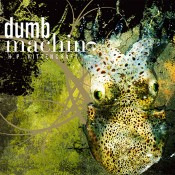
Dumb Machine: H.P. Kittencraft

4PAN1TFor the record: If you’re going to come at me with an album with titles like “Fuck” and “Fucked Up Shit,” make damn sure you’re armed with something more to show me than your unresolved anger issues, Trent Reznor worship, and a need to appear “edgy.” Luckily, Laird Sheldahl, recording as Dumb Machine, just manages to shoulder his way past my song-title-based preconceptions with the industrial crush of H.P. Kittencraft. There’s anger aplenty to be had, turned into churning and relentless edge-of-noise soundwalls, along with IDM-like soundbites ground into the flow. And although you do get a distinct whiff of NiN (Sheldahl’s label, Carbon 12, also throws out a Swans mention, and I can see that), you also get hook-packed, dark dance grooves and a massive hammerfall of sound. (Please be advised that physical damage may result from getting in the way of the 12-ton guitar chords punching their way through “Fuck,” and that the listener may suffer whiplash as a result of uncontrollable headbanging.) H.P. Kittencraft is only 45 minutes long, but Sheldahl loads it tightly and doesn’t give the listener much relief until he’s done. This is energetic, vicious, and potent industrial. You have to like it hard to like what’s here, or at least be willing to take a punch. Brace yourself. It’s worth it.

Available from Carbon 12 Records.

Steven Halpern: Deep Alpha

halpern_alphaWhen I first dove into the New Age music world back in the mid- to late-80s, Steven Halpern was a personal favorite. Like any good crystal-wielding listener, I had my copy of Chakra Suite and I often let Halpern’s signature stair-climbing scales on his Rhodes Mark 7 electric piano work their harmonic magic on aligning my energies. His song “Radiance,” which I believe originated on his album Jonah’s Journey, and was later reworked for another release, still resonates with me emotionally. Even so, as my tastes segued out of the New Age space, I sort of lost track of Halpern. I re-upped a digital copy of Chakra Suite a few years back, mostly for nostalgic purposes, but it had been a long time since I listened to his music. So it was a pleasant surprise when his latest–and Grammy-nominated–release, Deep Alpha, showed up at my door and showed me, at first listen, that I was still a pretty solid Halpern appreciator. Between the pure-sinewave tones of the Rhodes and a bit of aural engineering, Deep Alpha quickly accomplishes its mind-massaging mission, as stated in the disc’s full title, Deep Alpha: Brainwave Entrainment for Meditation and Healing. Halpern is assisted by oboe from Paul McCandless, who also lent his graceful sounds to Peter Kater’s recent disc, Light Body, fretless bass legend Michael Manring, and one of my favorite touches, a sample of tambura drone from Warren Kahn. McCandless is featured on the opening track, his woodwind singing over those familiar, glittering keyboard runs and an undercurrent of synth. Manring and Kahn drop into the mix on Part 3, the hum of the tambura entwined with the background washes as the keys and bass swap phrases with a hint of jazzy intent. This is one of the things I quite enjoy about Deep Alpha; it has its very New Age-y, healing-music core, but the music often rises above what the framework might suggest. Folks who roll their eyes at the hint of such a modality will miss out on the number of good, fairly straightforward compositions here. The healing aspect is going on around the music regardless. Halpern also switches things up and takes on a more ambient stance in some tracks. Part 5, for example, is five minutes of salving drift. Part 8 is another, focused on Manring’s bass, buoyed by curling synth lines and more long, soft washes. Part 11 builds from Kahn’s tambura again, with angel-choir pads singing backup. These shifts in approach help to keep the sound of the Rhodes from wearing thin; when it re-appears after a more ambient stretch, its clear, ringing tone is a refreshing wake-up call. The disc closes out with the traditionally New Age, always-soothing sounds of the ocean. Each time I’ve gone through a full listen I have come away very much relaxed, my head a little clearer, and ready to hear it again. A great release that fulfills its mission statement with grace and  beauty.

Available from Steven Halpern’s web site.

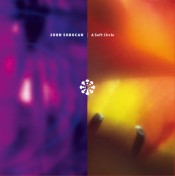
John Sobocan: A Soft Circle

soboc_circleAdhering closely to Eno’s ideal of ambient music, John Sobocan’s new release, A Soft Circle, is an astounding work of understated grace. Played quietly in the background, the disc is a subtle thing, never raising its voice but patiently waiting for your attention. Passages arise like wayward thoughts and then melt back into the distance. But close up, the layers of Sobocan’s work are revealed. In among the dreamy flows and sighing phrases there is depth and texture–even the occasional rough edge and passing darkness. The mix begins immediately. At a distance, the opening track “Free” is a set of stretched, languidly yawning pads, warm and immersive. In headphones, however, you’ll more clearly notice a background sound, somewhere between muted buzzsaw whir and a power chord, cutting across the sound. Field recordings work their way into the blend as well; crickets chirp behind the quickly undulating waveforms of “Silence,” and “Leaves On A Forest Floor” is filled with birdsong and the hush of a flowing rill, placed over shadowy chords and pads. A distant roll of thunder can be heard in places. While the latter track’s pedigree may seem to stem from some old, regrettable “atmospheres” kind of work meant to lull you to sleep with recorded rainstorms, the subtlety of the music behind it elevates the sense and quality by several levels. “The Path” is a deep envelope of sound–once again, in a non-focused listen it’s simply soothing. Get in close and you’ll hear much more texture, ripples of sound, a whisper of wind. There’s a slight sense of unease curled around “Ohms”–the clock-chime tones that form the body edge toward a hint of dissonance; roughened, downward-arcing spirals lace through the background; wayward tones wander in, and laze back out. “Rove” opens with a sharp electronic buzz and fluttering, helicopter-like sounds. Although the sound itself is a bit disruptive–especially coming out of the charm of “A Boat”–Sobocan modulates it into a hypnotic waveform and lets it hiss its way into your head. This is what I quite like about A Soft Circle; Sobocan keeps offering new modes that move the attentive listener through these unique zones, and does it while maintaining that top layer of Eno-esque simplicity. Back away from a well-packed track like “Rove” and it softens to a rumor. A Soft Circle is likely to get a number of repeat listens. You’ll want to go back and compare the low-volume, remote listen to the deep, focused listen more than once. And it stands up to the scrutiny. A great disc from John Sobocan.

Available from Databloem.

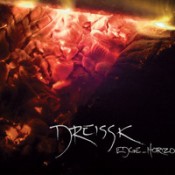
Dreissk: Edge_Horizon

dreissk_edgeThe place where the hooks and melodic aspects of post-rock get matched with industrial’s weight and force of impact, with the whole thing wrapped in some near-dark ambient and dusted with glitch, is the exact spot you’re in when listening to Dreissk’s engaging second release, “Edge_Horizon.” Kevin Patzelt takes his listeners on a well-modulated ride that can range from the piston-driving punch of “The Rising Tide,” which has the heft of Nine Inch Nails squared off against calm electronica, to the soulful, dramatic piano in “Through,” which also features glitch and electronic artist Anklebiter. This is a disc with several well-made faces. The dark, driving pulse of “Arc” begs to be turned up. This is a great pairing of the industrial side with an underlying work that falls somewhere between a Berlin School style and a big, cinematic Vangelis piece (whom Patzelt cites as an influence). When this track finally lets go of you, you may find that you’ve been holding your breath a little. “What Awaits” gives you pounding drums over long ambient pads, and “Waning Light” takes those spacemusic-worthy pads and wraps them around echoing guitar and percussion that starts off subtle and then grows. Throughout Edge_Horizon there’s a very nice dirtiness of sound,a gritty distortion forming a frame around the more straightforward sounds. The whole thing is shot through with a genuinely potent visceral feel–this stuff digs in and takes control. And in your ears, it’s big–deep, varied and packing a really sense of dimension. A great release from Dreissk.

Available from N5MD.

Fescal: Two Winter Poems

fescal_twpAlthough this mini-disc release is only two tracks and just over 20 minutes long, Korea-based composer Fescal fills it with vividly detailed drones. The tracks are inspired by a pair of Alexandr Pushkin poems. “Winter Morning” arrives with a base drone formed out of a processed organ chord (with, quite honestly, a touch of the bagpipe to it) and a drifty vocal loop. At times they pair nicely; at others they feel almost in conflict, and this creates an interesting dynamic as the piece moves along. “Winter Evening” comes across as the warmer and lighter of the two, and is easier to connect with. There’s a simpler grace to it and a more distinct harmony of elements. The contrast is pleasing. Two Winter Poems is a work of very straight-up drone; its shifts arrive lazily and make just enough difference to nudge itself into a place that’s just subtly different. Changes in tone and texture slide in under the radar before making themselves noticeable. The movement, or lack thereof, is appropriately hypnotic, yet a focused listen reveals a fair amount of work going on. There are points where the sound rises in tone to border on a near-feedback squeal, but it never crosses the line into being an unpleasant noise. For the quick hit this release is, that one slight shrug for me as a listener doesn’t detract from an interesting ride.

Kudos also to Fescal for committing to a unique bit of packaging. Each of the limited-edition physical discs comes with an illustration by artist Mark Coates, a small plastic bag containing bush twigs from which Korean traditional tea can be made (I haven’t made mine yet, but I will), a small photo of a statue of Pushkin and an old small age-old folk page booklet, plus some unique “extra whatchamacallits” thrown in for good measure. (Mine had candy and shiny metallic leafs.) This all comes in a small, well-made box, and truly adds a personal touch.

Available from Fescal’s web site.

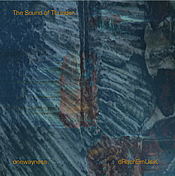
Onewayness and dRachEmUsiK: The Sound of Thunder

oneway_thunderThings are going to get a little heady when you delve into The Sound of Thunder, the new collaboration from Onewayness and dRachEmUsiK. How can they not, when the four long drone-based pieces here draw inspiration from T.S. Eliot’s “The Wasteland” and are crafted to reflect four virtues of the Hindu texts, the Upanishads–Charity, Mercy, Desire, and Peace. The artists note that “the movements are intended to represent the conflict and resolution between these virtues and the ‘undesirable’ qualities that they are meant to keep in check.” What flows from this starting point is a hypnotic blend of warbling electronics, textured drones, spoken word (from “Wasteland”), and “lowercase” minimalism–the use of small, amplified sound samples blended with spaces of quiet. Three of the four pieces begin on the challenging side of things. Dark and raspy hums of grinding electronics, dissonance, uncomfortable, croaking vocal samples–each track brings its own. And in time, each smooths out to become something new and lighter, having found that point of resolution. This is an hour-long voyage that wastes no time getting into your head. “In Charity” opens with wavering tremolo chords that quickly render into a hypnotic wave. There’s lowercase aspect here in the background, in the form of manipulated percussion sounds–they go off like tiny explosions. It’s fairly grim and challenging at the outset, but it’s so dynamic and has such presence that it holds the attention. But make no mistake, you get through the first few minutes. This track’s resolution comes with a chant-like line of sound for a slightly sacred edge as it draws to a close. The transition is excellent, and the way in which it releases the tension coming out of the darker sections is something you actively feel. This track also drops in the first “Datta. Dayadhvam. Damyata. Shantih. Shantih. Shantih.” from “Wasteland,” which will recur through the disc.  “In Mercy,” which has the aforementioned dissonance and the creepy vocal sample looping through its strangled utterances over and over, holds on tightly to its disturbing aspects as a glitchy beat begins to work itself into the mix. The transition is hard-fought in this track, but eventually gives way to softer pads, a melodic line, and a light rhythm.  “In Desire” takes the listener straight into the lowercase end of things. Here an electric piano drops single notes over snippets of processed voice, electronic crackles, and random noise. I like the solid recognizability of the piano against the more fleeting, abstract elements. Long pauses and hanging notes drive home an emotional core. It’s like being half-awake and not sure which side you’d rather be on. The phrase “strange beauty” would be fully applicable here. The transition here is perhaps my favorite, arriving on a percolating sequencer line loading in a little touch of lightness and energy. Also great that the electric piano doesn’t change its approach. It just keeps flicking out those single notes. The final track is the longest, and the one that subverts the standard equation. “In Peace” begins with big ambient pads, surprisingly soothing, and includes a fairly lengthy spoken passage from the “What the Thunder Said” section of the poem. (I must admit that listening to this disc and doing a bit of research brought me back to read “The Wasteland”–something I’ve undertaken in the past but not gotten through.) This track simply courses quietly along, taking the listener deeper into its calm motion. In places, bassy rumbles stir the flow. In the final minutes, I feel I must warn you, the narrating voice again returns to chant, “Datta…Shantih, Shantih, Shantih,” the arrival of which, lost as I was in the depths of this excellent piece, pretty much scared the shanti out of me.

I’ve said a lot about this disc, more than I usually do, and that’s because there’s so much going on. These are depths to be plumbed in close listens. There’s a lot happening and a ton of feeling lacing through the mix. Onewayness and dRachEmUsiK (aka Adam Holquist and Charles Shriner) expertly manage this tenuous juggling act well, effecting the balance between easy and difficult listening. The Sound of Thunder is a disc you need to go into with an open mind. Do so, and it will likely win you over quickly.

Available from the Onewayness web site.