Kerani, Arctic Sunrise

kerani_arcticOh, Kerani, when I listen to your new album, Arctic Sunrise, I can just see you standing at your keys with the wind blowing through your hair as the camera slowly circles around you. The mix of neo-classical influences and sweeping electronics, rife with the dynamics of drama…here’s a by-the-book New Age album, as big as they come, a concept album, if you will, inspired by icy landscapes and Inuit legend. Don’t get me wrong–if you like this kind of thing, it’s all here. Kerani’s piano playing is superb (I mean it) and so full of emotion it just about spills over. Bold string pads swell in full orchestration. There’s a whispered recitation, of course, and a joyful dance of a song–“Aurora Sky,” which is quite a bit of fun.

Arctic Sunrise isn’t the kind of album I’d be inclined to listen to if I wasn’t reviewing, but I will say that fans of Vangelis or Yanni and their ilk will probably dig this. Because you’ve heard it before. I can appreciate the talent at work here, but it wears on me in short order and doesn’t mix up the formula enough for me to want to get through it. New Age fans, please go have a listen and judge for yourselves.

Available at CD Baby.

Melorman, Out in a Field

melo_fieldSomeone fetch me a cocktail. Something frosty to sip while I chill out to Out in a Field from Melorman. Antonis Haniotakis is back with 40 minutes of melodic electronica, nicely fleshed out with bits of glitch. “Apricot Fields” sets the tone with a laid-back feel and cool reverse-echo notes that rise and snap off. High, chime-like notes give it a delicate luster, and big doses of reverb thicken up the sound nicely. From there, while there are no big deviations from the form, Out in a Field retains its low-energy vibe and works its way into your system. This is a sway-with-it, bob-your-head piece of work. (When you get to “Watercircle,” you’ll fully understand, bass thumps and all.) “Toy” comes at you with a kind of stripped-back feel to it, a light collection of minimal sound-sets that patiently repeat, more partly dovetailed than layered, with a great touch of texture. I like the way this one stays quiet. Haniotakis gives a nice nod to his homeland of Greece with a shot of Mediterranean flair in the breaks on “Tell Me More Stories.” (Is that a bouzouki I hear? Or something akin to it…) The beat here is absolutely thick with hooks, and you’ve got to check out the detail sounds lurking in the back. Nice touch.

Out in a Field is a quick hit that works best for me when it’s laced into a mix of other similar stuff. There’s not a lot to differentiate it in the glitch/melodic electronica realm, but for what it is, it’s very well done and a pleasure to dig into.

Available from Sun Sea Sky.

Steve Brand & Roy Mattson, Meltstream

brandmat_meltListening to Meltstream should accomplish two things: solidify Steve Brand as a vital name in the current ambient canon, and introduce you to new talent Roy Mattson. (Having listened, I immediately headed off to Mattson’s site to check out his solo work, and I suggest you do so, too.) The duo’s chemistry first bubbled up during a 2007 sound workshop hosted by Steve Roach, and Meltstream is the initial culmination of the work that began there. All in all, it is a lush and gorgeous drift packed with big ambient vistas, wisely utilized field recordings, and skillful organic touches. As it gently makes its way through an hour, Meltstream never feels the need to raise its voice above a confident and confiding whisper. There are times when things get so quiet, I have actually stopped to check if I’d set my player’s volume too low. This, obviously, makes it an excellent open-air listen as it drifts mistily through your space, just another element in the atmosphere; in headphones it becomes a very personal, meditative thing. It’s quite easy to get carried off in these rich flows, but do try to pay attention to the small touches these gents have laced through the work–the dry, hint-of-tribal rattle of shakers, the sharp call of the ocarina, the easy harmonies created by the intersecting pads. The long, quiet space created by “Leeward Shadows” and the title track will give you a solid half-hour of introspective time. “Leeward” shifts, briefly and appropriately, into the darkest stretch of the album. Discordant pads and the metallic clatter of wind-blown chimes give an eerie air. “Meltstream” just wants you to relax in its warmth. This is some fantastic melodic ambient, with the kind of wide-screen sense I love. It opens up feeling big and deep, then glides down to a gentle current of sound.

Meltstream is one of those releases where I struggle to find words good enough to describe it. I was already a fan of Brand’s work, and this collaboration deepens the appreciation. Mattson is someone you should keep an ear on, and this album certainly makes a great starting point. I look forward to more moments of chemistry from Brand and Mattson. In the meantime, I think I’ll loop this for just a couple more hours before moving on. Get this.

Available from Relaxed Machinery.

Steve Roach, The Delicate Forever

roach_tdfIt is tempting to have this review simply read: Set to repeat. Press play. Because, really, there you go. With its roots in the original Structures from Silence and its pulse taken from the remastering sessions for that album’s 30th anniversary, The Delicate Forever is one of those Steve Roach works that’s designed to augment the space around you or open the space within you, depending on how you choose to listen. Each of the five pieces is marked by its own texture. In the title track, sounds like frozen droplets of ice ping, rattle and reverberate off the soft drones. The drones themselves, throughout the album, have a lightly rasping feel, moving in a familiar inhale/exhale wave. “The Well Spring” is characterized by an appropriately burbling sequencer line. It feels energetic (and charming) coming out of the pleasantly long ride of the opener. “Perfect Sky” drifts along on a sound like some ethereal pipe organ, its complex lines wrestling gently in mid-air. The tones here are sharper than anywhere else on the album, imparting something like an edge of mystery to the journey. “Where Mysteries Sleep” and the closing track, “HearAfter,” get an extra dose of reverb for more depth and dimension and a spacier, dreamier sound. “HearAfter,” in particular, heads straight into the kind of deeper zones Roach has explored on long-form compositions such as “Piece of Infinity” from Mystic Chords & Sacred Spaces. A nice touch here is to bring those “icy” sounds from the start of the album back into play. This does two things: lets your heavily sound-sedated brain know we’re drawing to a close, and lays out a seamless transition point as you loop into the next lap of listening.

So here is another episode of Music to Live In from an ambient master. If you fall into The Delicate Forever, and I believe you will, it’s also worth checking out The Delicate Beyond, a full-length (i.e., 74 minute) version of the title track. This whole stretch of music from Roach, inspired by the remastering of Structures…, has been superb. It has its feet in the past but exists quite fully in who the artist is now. This is the kind of music that first pulled into Roach’s orbit, and it makes me glad I’ve stayed here. Set to repeat. Press play. Simple as that.

Available from Steve Roach’s web site.

Disturbed Earth, Black Picnic

disturb_picnicI have always admired artists who are willing to challenge themselves and take themselves out of their own comfort zone. I admire them even more when it works well. Case in point, Disturbed Earth (aka Dean Richards) switching things up for Black Picnic, the first in a series of releases that will offer “all ‘one take’ live playing through two Vox Pathfinder 10-watt amps, lots of pedals and recorded with Core-Sound binaural mics.” The output is fairly surprise-free ambient, but its depth and warmth, its excursions into and back out of shadowy spaces, its calm hand, and the fact that what you hear is pretty much what came straight out Richards’ guitar make this something worth giving time over to. Long pads are coaxed out of the strings and pulled across the air. They’re ghostly, for the most part, lovely ephemeral things that rise, exhale, and fade. This is at its absolute apex in the 35-minute centerpiece of the release, “Passionate.” Richards, alone with his guitar, carves out what is, for all intents and purposes, a textbook spacemusic piece. It’s got that sense of vastness and dimension, of the slow-moving grace of stars, the hush of being adrift. Mid-track there is a nice shift from warm and lightly glittering landscapes to a colder, darker zone. Choral pads slip into the far background. As a listener, this is the kind of passage that pulls me–acceptably so–up into the moment to take it in fully. With expert ease, Richards guides it back down toward the warmer spaces, and the voyage carries on. Overall, it’s a pleasure to listen to the way each new form or phrase comes up melds with the one before it to create a new moment. There are distinct harmonies and touches of mildly harsh clashes, the latter adding a lot of texture. The opening track, “Boutique,” hovers near darkness in spots, with Richards perhaps scratching at his strings to create raspy counterpoints to the pads. “Finality” is an absolute cocoon of a piece, a sonic blanket you may never want to roll out of. This track’s voice never rises above a sleepy whisper, but the scene it describes is just as full and far-reaching as anything else on the disc. Set your meditation timer for 10 minutes and use this.

If Black Picnic is the first step in a new direction for Disturbed Earth, it is very much a step in the right direction. I’ve enjoyed it as a low-volume loop, but I also quite like it up close and intimate in headphones. Considering that it’s one guy and one guitar, there’s a whole lot of small detail to take in as you’re lulled into a quieter state of mind. I’m looking forward to what’s next, but in the meantime I will continue to enjoy Black Picnic.

Available from Bandcamp.

Matt Borghi & Michael Teager, Shades of Bending Light

borgh_shadesKudos to Matt Borghi and Michael Teager. Having locked down their “jambient” style of blending processed guitar sounds with sax and flute on two excellent releases (Convocation and the live recording Awaken the Electric Air), they opted to change it up a bit on their third release, Shades of Bending Light. The shift is slight, but it’s both noticeable and effective. In essence, it was time to bring Matt and his guitar out of the mist a little and up the jazz ante a touch. I spoke with Matt at their show at the Gatherings in Philadelphia in October 2014, where he was kind enough to hand me a copy of the album, and he explained that Shades… is an edited presentation of three fruitful hours of he and Michael just jamming away. The sections he pulled out to present are like a lesson in musical chemistry, filled with sinewy lines curling around one another, everything coated in warm washes, thoughtful moments of pause that suddenly burst into riff-based life before settling back down to an easy calm. In some tracks, like “Daisy Chain,” Borghi’s work is right at the forefront, picking complex lines over the washes, bending the neck to wring a little more emphasis out of the notes. There’s a great improv feel to it that lets us take the ride with him as he finds the next right step. “Weird Minor” finds him laying crisp angles constructed of sharply plucked notes, almost like a koto, over the fluid figures coming from the sax. Listen for the way Borghi mixes these down to make them take a mildly wayward little stroll back and forth in your ears. In other places, his playing can be subtle, like the repeating up-and-down, two-note bass line that runs under Teager (sounding for all the world like he’s playing an out-take from Dark Side of the Moon) on the title track. Or the dialed-down noodling that flits and flutters in the background of “Joyce’s Fanfare,” where it takes on a textural role. While Borghi has come forward on Shades…, Teager stays right where he’s been from the start, up front and flying, coursing easily from smooth and sensual lines to fiery jazz licks. Once again, this duo deals up some serious listening. It’s a perfect end-of-day disc, here to help take the edge off. Slip on the headphones to take in the excellent detail work.

The third time is yet another charm for Borghi and Teager. Shades of Bending Light has managed to improve on what was already pretty amazing.

Available from the Borghi|Teager site.

dRachEmUsiK & Onewayness, Immeasurable

drach_immeasBuddhist thought gets an electro-acoustic soundtrack on Immeasurable, the recent collaboration between dRachEmUsiK & Onewayness (Charles Shriner and Adam Holquist). Kicking off (a little abruptly) with a rich, throaty drone on the shruti box and lacing in guitar, Immeasurable sets its base and then melts into a sonically guided meditation that eases between cool beats and long drifts. Shriner opens the proceedings with a recitation on Mettā, advising on how to radiate “Loving Kindness” (the title, as well as the concept) in six directions. Chimes ring, drones rise, and this rhythmic track unfolds. It’s the most openly dynamic piece, a hit of energy before things hush down a bit. You are allowed to groove a while prior to meditation, it seems–and gladly so. Immeasurable‘s tracks grow progressively longer, ranging from just short of 9 minutes to just over 15. All in all, it’s just 46 minutes total, but what a very deep 46 minutes it is, and with a whole lot to listen to. Analog synths add crackling, popping textures to the flows. It’s especially effective in my favorite track, “Joy,” where it’s kicked up with just the right amount of dubby echo to give it an irresistible rhythmic groove. Anchored with a thick bass drone, this track will take you elsewhere for a little while. There’s some sort of manipulated vocal drop in there as well, a repeating guttural exhalation, that manages to up the cool factor by another notch. “Compassion” stretches out lazily, its long drone base supporting a drawn-out melody on strings (or perhaps manipulated piano) flecked with analog twitterings. A real brain-massager. Speaking of which, in listening to this release I have often found myself suddenly becoming aware that I am somewhere in the midst of the soft, breathy drones of the final track, “Equanimity,” with no recollection of how I got there. Shriner and Holquist stretch this one out into a classic ambient style, a quiet tide of rise-and-fall in a slow-motion dynamic. This is Immeasurable at its deepest, and it’s lush and gorgeous. As it draws to the end, the shruti-box drone rises out of the mist, returning to close the circle. A very nice touch that helps define this as a guided meditation of sorts. Shiner’s recitation from a Buddhist prayer brings you back around for the final moments.

I was surprised, but only slightly, to notice at one point that I had listened to Immeasurable more than 30 times. Time flies when you’re being brought deep inside your head, it seems. Each trip into this release has been excellent. The balance between beats and drifts is absolutely perfect. There is a ton of small detail work at play, which I love, giving the attentive listener something to really dig into. This is certainly something you’ll want to loop. It just keeps getting better. Do not miss this release.

Available at Bandcamp.

Darshan Ambient, Songs from the Deep Field

darsh_songsI need to start this review by saying that Songs from the Deep Field is the first Darshan Ambient that I have not been immediately smitten with. Typically, from the first track I am all-in with Michael Allison’s work. Albums such as Dream in Blue and Little Things have been on my personal favorites list since the first listen. And while Songs from the Deep Field has grown on through repeat listens, there were a couple of hurdles for me as a listener. Let me get that out of the way before I dig into the fact that there’s plenty of good stuff here. My problem, in brief, lies with the spots where it feels–to me, let’s be clear–like Allison is trying to reach out and add something to the work, to make a bigger and more dramatic sound, only to have it come off feeling like one thing too many has been added. In some cases, it turns out to be an initial jolt. The bravura string pads that open the title track and “Heaven in a Wildflower” hit like a punch of pomp. (You will become well acquainted with this sound by the time you’re done listening. It recurs.) On the title track, although the strings run throughout, the focus is pulled off them by a signature guitar sound, which has a nice, laid-back feel to it, and an overall feel that is, for lack of a better way of putting, more like the Darshan Ambient I’m used to. On “Heaven…” the strings form the basis for what eventually turns into a set of layered and interlaced repeated phrases with a Reich-like quality to them. It takes a few minutes, but my sense that the sound is too artificially dramatic fades as I dig into the way Allison has woven these subsets of sound together. Another partial miss for me is “You Will Never Be Alone.” This one opens as a beautiful work built on piano, long, warm string pads that are a familiar Allison sound, and soft chords. Mid-way through, however, he opts to bring in an almost hymn-like song using an operatic voice sample. It takes the piece to a very different spot, fades out and then comes back once more. Without that element, I like the piece. With it, it just feels interrupted.

Having said all that, the majority of Songs… gives me the solid, cinematic, soulful Darshan Ambient I enjoy. Sure, it took me by surprise when “Star Born” launched out of a foggy ambient drift to explode with a techno-esque burst of rhythm, but then when Allison drops in the aforementioned signature guitar sound, it took on a fresh level of cool. And I may not be used to him heading into Deep Forest-style territory, but when it slides into the soft landscape of “Cluster,” it’s very much a win. A classic world-music-inspired feel, drums and all. I reach for the volume and crank this one up. “Micro Life” is a playful samba where floating pads meet that guitar to create a vibe that’s cocktail-cool. On the softer side of things, “Blue Lotus” nudges its way just over the border of ambient by blending feather-light piano with long, misty washes. A truly gorgeous piece of work. That same feel shows up again on “Grey Sea,” adding in a touch of warm melancholy. There’s something of a lullaby quality to it, the piano speaking in a very quiet voice over the chords.

I may very well be overthinking the aspects of Songs from the Deep Field that I’m suggesting are iffy. When you get right down to it, it most likely comes down to personal opinions and listening foibles. But one of the things that has always struck me about Darshan Ambient’s work is the incredible level of honesty that’s conveyed. Like this stuff comes straight out of the soul and into the tracks. What I hear in some of the work here just lacks that honesty–to my ear. I always give kudos to artists who move themselves in new directions and challenge themselves. Here, the direction just didn’t ring true for me. But, again, we’re talking about less than half the tracks. As always, a new Darshan Ambient album is worth checking out. Mileage is certainly going to vary on this one, or at the very least, your mileage may vary from mine. Check it out, form your own opinion.

Available from Spotted Peccary.

Altus, Excursion 3

altus_exc3Altus has pulled off quite an alchemical trick with Excursion 3, creating pieces that are lighter than air while still nicely weighted with emotion. Over the course of these three mid-length pieces (10, 20, and 30 minutes, respectively), musician Mike Carss maintains a quiet yet meaningful voice, and guides us on a journey that begins melodically and melts down into a silken ambient space. “Journey’s End” opens the trip with a lullaby-ish quality courtesy of a gently swaying rhythm and a repeating phrase on chime-like tones over an ambient pad backdrop. A softly persistent chordal pulse on keys adds to the depth. It’s lovely and charming and works perfectly to relax you for the rest of the hour. “Gathering the Moments” is the most straightforwardly melodic piece here. Piano takes the lead. Carss’ playing pulls in a light touch of drama, the space between notes played out perfectly. The notes glitter brightly against a hushed curtain of synth. I like that Carss does not overload this track. It has a well-thought-out sparseness to it, a wideness for lack of a better term, that lets focus more firmly on what is here. And what is here, we connect with very directly because of it. By the time you reach “Silver Shores,” the longest track, you are fully immersed in this quiet space, and Carss gently holds you there for half an hour. This is a classic ambient piece, full of pads that rise, fall and shift, packed with hints of starlight and a cadence that controls your breathing. If you happen to be looking for a soundtrack for a 30-minute meditation, look no further. Slowly and gently, this track brings Excursion 3 to a close. When I listen, I typically spend the next few minutes in silence after it finishes, letting the effect of this wonderful release fade as I slowly resurface. And then I want to head back in again.

Excursion 3 is a remarkably beautiful album, and very affecting. Dedicated headphone listening is highly recommended. This is a release you will want to be completely alone with. An incredible effort from Altus, and a true must-hear.

Available from Earth Mantra.

Byron Metcalf & Mark Seelig, Intention

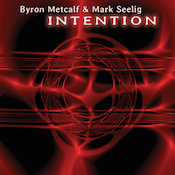
metcalf_intentEven if I take my tribal-ambient-loving thumb off the scale, Intention would still be one of the most potent pieces of medicine music I’ve ever heard. Consider what’s here: deep, soul-shaking shamanic drumming from Byron Metcalf; overtone throat signing and bansuri flute from Mark Seelig; and a double-pronged didgeridoo attack from Rob Thomas of Inlakesh and Dashmesh Khalsa, who has worked on previous Metcalf outings, including Dream Tracker. If there was such a thing as a tribal-ambient supergroup, this would be a mighty fine start. As always, Metcalf wastes no time in bringing the listener in. The title track is a 22-minute voyage that crawls quietly into your head and takes up residence. Each element then slips into place. The frame drum thumps, Seelig’s dual-toned exhalations craft the atmosphere, the whispering song of the flute calms, and the smoky curl of the didgeridoos gives us ground. The rhythm takes hold within the first few minutes, bringing your breathing in line. The mix of didg and voice create a drone-like through-line that settles and focuses your mind so that you’re ready to give over to the journey. This blend creates the perfect ongoing equation on Intention, and the effect is heightened and deepened by Metcalf’s excellent sense of pacing. The five pieces here build in intensity and energy, then slide down into a brief cool-off zone. You’ll feel it firmly at the end of “Surrender” when almost all sound drops out except for the flute. For me, there is an almost tactile snap as I am set momentarily adrift. The best part is knowing that it’s about to start up again. When there is energy on Intention, there is plenty of it to spare. I love the juxtaposition of Metcalf’s frenetic drumming in “Focus” against the slithering drones and soft flute. Another aspect of the equation is creating moments where where all the elements are in play and the mix is deep and we are lost within it, and we are suddenly dropped into a few moments where the sound is pared way back. There’s a killer passage around the 5:40 mark of “Encounter” where we are left alone with the drum, big and hard-struck and pure, before an absolute bestial snarl of didg pushes in. Say hi to your inner animal for me when this one lands. When these drop-away moments come, we feel the release, and then we feel the music reclaiming hold and building back up again, and the transitions are expertly navigated and incredibly powerful. What’s amazing is that everything happening here is acoustic. On past outings, such as Wachuma’s Wave, Metcalf has called Steve Roach in to carve out some electronic beds to accompany the sound. Not here. This is nothing but hands and and breath in action. The magic of post-production brings us rich layering and a maximized sound, but there’s nothing here that’s not man-made and straight from the source. The flow is unbroken for over an hour, with each piece smoothly dovetailing into the next. It’s like power meditation.

Tribal ambient has long been the absolute bulls-eye of my listening soul, and over the years Byron Metcalf has hit that mark with every album. Intention, however, strikes deeper and more truly than ever. There is a very special alchemy at work here and ancient medicine and it knows right where our souls reside. Metcalf has pulled together an unmatchable blend of sounds and sensations and the result is pure shamanic honesty. Cleansing, energizing, and just downright fantastic to listen to. This is Metcalf at his undeniable best. Come take your medicine.

Available from Projekt.