Beyond Sensory Experience: Faint

bse_faintNormally when I get things from the Cyclic Law label I brace myself for another experience that’s dense, dark and ominous. Faint, the new release from Beyond Sensory Experience, is not like that–at first, anyway. It certainly gets there in spots, but for the most part it’s more of a sort of hazy, dream-washed meandering in a sadly reflective state of mind. A “life glimpsed through gauzy veil” quality hangs over everything, established right off the bat as a woman’s voice, half-awake or perhaps just half-aware, slurs through a three-count in waltz time for a lone piano to take up, equally drowsy in its unchanging repetition. The use of voice samples figures into the mix in several places on Faint, dialed back to the texture of a partial memory and thickened with echo. There’s a slightly voyeuristic feel to it when you find yourself listening closer to make out the words although maybe you’re not supposed to. On “Respect,” “Yearning,” “Blank” and, especially, “Stale,” this aspect is particularly strong. The urgent, almost desperate tone of the voice in “Stale,” in fact, gets downright unsettling. The fact that it’s paired off with a slow funeral march on echoing piano just augments it. There are also a lot of pause points on Faint, gaps between notes filled with resonant sound and expectation. Artists Drakhon and K. Meizter respect the potency of the pause enough to make the most of its emotional weight, and are extremely precise with details. There are no wasted sounds. And when the duo decide to drop the dark-ambient hammer on the proceedings, they drop it hard. It comes like an industrial press in the middle of “Stumble,” an effectively jarring moment as thunderous blows punch into a bed of droning pads. Nice juxtaposition.

Listening to Faint is like being part of a shared bad dream, one that you wake up from still feeling the uncertainty and concern. It works its darkness into the listener patiently but distinctly, and the richness of the sound makes you want to head back in and listen again. This is not off-putting dark ambient, but it still offers a fair challenge to the faint of ear. Definitely worth a listen.

Available from Cyclic Law.
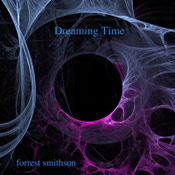
Forrest Smithson: Dreaming Time

smiths_dreamYou can probably guess from title of this release what its overall tone is, and for the most of the first of its four tracks, you’d be right. While Forrest Smithson never strays too far from the standard equation of setting slowly arcing pads off to drift against and through one another, he wisely infuses some of his passages with understated sequenced beats, field recordings and richer textures for a fuller ambient experience. All in all, it’s a calm and meditative hour, and each of the tracks is of sufficient length on their own to allow you to slip in and get lost. Headphone listening makes the most of Smithson’s attention to detail, but it’s a nice open-air listen as well, and loops easily. It’s not long before you’re deep in the sounds of Part I, the longest of the suite, floating along on the ambient structures. The change in this piece is handled with perfect subtlety; a quiet shuffling sound leaks in at the periphery and resolves itself into a rhythm. Smithson keeps it dialed back so that it remains an effective texture, something that reaches you without intruding on the flow. So there’s Dreaming Time‘s allure, a well-executed and never heavy-handed manipulation of tone and texture. Part II kicks off in a spacemusic sort of zone, with a light, hand-percussion-style rhythm already in play. It finds its way into a section where a cool sequencer riff imparts a classic electronic touch over a pad structure. Again, the new feel eases, makes itself at home in your head, and then you’re back to just chilling with the flow. Part III shifts the feel somewhat by showing up with a suspenseful tone and its share of shadowy imagery. It’s heightened by Smithson’s use of a creepy, sing-song arpeggio running up and down over the proceedings–not to mention the sudden, cutting caw of crows. Perhaps this is where our dreams get a mite uncomfortable, but we’re still deep in it. Part IV begins by carrying the resonant unease, with ringing temple bells and choral pads leading us back the way we came. Light breaks slowly, birds chirp, there are children’s voices, and we come around to the classic ambient space where we began. I’m not crazy about the voice recordings here; I feel that they pull focus a bit, but it’s a very minor quibble since they don’t last long. What does work is the feel of a fully formed journey coming to a close. Smithson makes each piece here its own entity but there is a nice tonal through-line that connects one to the next. Ambient fans will find a lot to like here.

Available from the artist’s web site.

303 Committee: Conquest

Grey-saturated minimalism and the cutting unease of darkness are the order of the day on Conquest, the new release from 303 Committee. Through the course of 43 minutes of noisy drone, artist Ryan Huber continually drops the weight on his listener, pressing down into the psyche. There are only brief respites, and I’m counting the space between tracks. There’s hopelessness here in droves–just the beginning of “Damascene” is enough to make you question your own existence. As always, Huber is all about texture and density. The sounds here pulse and grate (hello, beginning of “Adironam”) and gnaw (“Proselyte,” with its unpleasantly insectile murmurings) and rip and just keep closing in on you. Certainly not light listening. It will take an appreciation of deep noise, raw minimalism and sonic viscera to enjoy Conquest. 303 Committee takes no prisoners.

Note: Not sure how to get ahold of this release. The 303 Committee Bandcamp page says it’s not set up yet, though it’s there. Inam Records has a link on Discogs, but I’m not comfortable linking to an open marketplace like that. Google away if you’re interested.

Matt Kwid: Passive Listener

kwid_passiveOn his blog, Matt Kwid advises us that “Blaster Master,” the first track on Passive Listener, was created on his phone. Pretty ballsy way to begin, if you ask me. Using the highly regarded digital audio workstation Caustic, Kwid powers his way into your ears with full-on chipset attitude and a boppy bit of retro charm. Just when you figure that’s what you’re in for, hello, when did we drop into a Pink Floyd break? Get used to it. While Passive Listener retains a strong retro feel for most of its run, Kwid throws intriguing curveballs into the mix. It’s why the release has become one of my preferred downtime listens during the time when I’ve been waiting for its official turn to be reviewed. I’d be shuffling my queue, a catchy piece would come on and when I checked it, it was another Matt Kwid song. Honestly, there are points where it sounds like someone got a 1980s synthesizer for their birthday and wanted to try it out, but it’s also infused with the kind of unbridled joy and sense of discovery that gift would bring, and it all just works. “Waiting Room” is a shot of robotic jazz with its own stiff geometric charm. The programmed drums get a little repetitive for me, and I can only take so much of that particular tinny sound anyway, but crisp electric piano riffs and half-second vocal barks take my mind off it. “Drift” starts off sounding like it’s going to break out into a Jan Hammer theme song, morphs halfway through into something sounding like an out-take from Bowie’s “Space Oddity,” but wins you over along the way with its meaty bass melody and nostalgic appeal. All in six minutes. Then in comes the star: “Mekanism” reaches out to you through an opiate haze, between liberal use of whammy bar and sound processing. As a rhythm track that sounds for all the world like the demo mode on an old Casio keyboard thumps and clinks its way patiently along, Kwid lays in a spacey sequencer line and then drops in big doses of quivering tremolo guitar goodness. I love this track for its drunken wobble and its glossy, slack-guitar-style chords just shining up above everything. “Omission” closes the disc with more guitar taking the lead, this time dousing you in soul-soaked blues riffs.

Passive Listener is just five tracks and 44 minutes long, but it certainly does what it should: it makes me want more from Matt Kwid. The retro feel and the halting approach may put some off. Even I have to admit that sometimes it sounds like a talented amateur is at the helm. But every track here is strong, fully able to catch your ear. Plus, Kwid quietly slides in a sort of evolution in the flow. We slowly move from basic electronics to jazz hints to guitar, and each new track feels like it begins with an echo of its predecessor. I can leave this on loop, and have, and it keeps me listening. Give it a try, then wait for more from Matt Kwid.

Available from the artist’s web site.

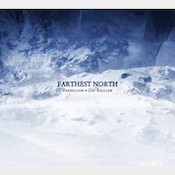
Parhelion & Zak Keiller: Farthest North

parh_farthestIt is cold and dark, this place we’re being taken in Farthest North, the new collaboration from Parhelion and Zak Keiller. As the duo “[focus] on the stark, cold immensity and volatility of a place located at the ends of the world,” we are rimed with the standard memes of isolationist ambient. Cutting electronic winds, deep bass grumbles, and a well-crafted, adequately morose sense of being quite alone take the forefront. This is us dying a relatively slow but placid death in this wasted tundra, looking out over the coarsely angled, inescapable landscape around us while at the same time finding ourselves taken in by its stark and dangerous beauty. We ares guided through the threatening depths and ominous rumble of “Perfect Desolation,” which surprises us near its end with a sudden, if brief, brightening of tone before it fades into a hiss of wind. We are exposed to the alien sounds of “Smokey God,” where bass pads rise and fall like the sleeping breath of some forgotten entity and cavernous echoes surround us. It’s not all doom, gloom, and an icy fate. The brief “Abode of Light” comes in more like a standard ambient track, its tone brighter and softer. It flows into “Opal Sky,” giving us a glimmer of hope with glistening guitar lines, the light sparkle of sunlight on the snow. But listen to the way a bass drone insists itself upon the scene before the tone turns darker once again. The piece is a nice break in the flow, and effective both for its lightening aspect and its subsequent return to the shadows. The title track is the longest tour on the release at just over 10 minutes, and it passes slowly through both light and shadow, impending peril and now-you-can-exhale relief. Farthest North runs a scant 45 minutes, but its enveloping nature draws out that time. Beatless but loaded with imagery, it’s a release that’s easy to fall into. Fans of darker, borderline isolationist ambient will fare better with Farthest North, but it’s well worth listening to if you like your ambient with real visceral appeal.

Available from Cyclic Law.

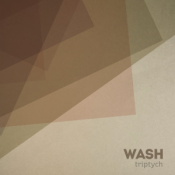
WASH: Triptych

wash_trypIt’s not unusual to pair music with spoken word performance, but in my experience it’s been fairly rare in the ambient music genre. Not being a huge fan of performance poetry, I headed into Tryptich, the release from the sound collaborative called WASH, with a bit of hesitation. Unwarranted. This isn’t bombastic, shout-at-the-mic poetry backed with music. Rather, these three tracks are long walks taken through evolving landscapes with a tour guide prone to flights of interesting language. While I won’t go so far as to critique the poetry itself, poet Scott Bywater’s voice packs a sort of bemused world-weariness as he looks around him, and the rhythm of his words plays nicely into the music around it. Each piece contains a number of short poems (included in a PDF booklet with your download). In places, Bywater repeats phrases over and over, self-looping to intensify a verbal moment. As a writer, I respect a lot of his wordplay. He knows his stuff. The music varies appropriately by piece. On “Phnom Penh/Earth,” there is a blend of field recordings, from nature sounds to the chatter of a living city, deep electronic textures and fittingly sluggish jazz guitar. Warren Daly, Alex Leonard, and Hal Fx craft the soundscape to nicely capture the feel of “the sublime heat of Cambodia’s capital city.” The dynamics shift and flow with the words, showing how the musicians and poet, as the press materials note, “[interact] piece by piece to weave ideas in and out and around, maintaining high degree of improvisation and flexibility within a disciplined structure…” As we shift to “The Art of Travel/Fire Through the Air,” the tone changes to an industrial chug and huff, mechanical and urgent but played against drifting washes as we “drift across Europe.” This piece gear-changes into a sequencer-driven pulse, adding a nice retro feel and keeping the rhythmic sense of perhaps seeing Europe by rail. A ways in, there’s a great passage built on ripping good guitar lines. It’s brief, but the energy of it does a great job of stirring the pot.”The Art of Living/Water” grabs a shimmering guitar line to establish its thematic face, rippling echoes like the flash of sunlight on a pond. Light percussion slides in to lend an understated post-rock feel. Each piece on Triptych is a long, immersive experience unto itself, clocking in at 26, 32, and 29 minutes respectively, and each is time well spent. The blend of music and words is seamless. Neither interrupts the other; the symbiosis shows perfect harmony.

Triptych took a small amount of getting used to, but only because it’s such a rare kind of thing to come across my threshold. (And no, I’m not looking to delve more deeply into spoken word, but thank you.) Having delved into it over and over, its beauty–both lyrical and musical–grew on me and the release revealed itself as a thor0ughly engaging, extremely intelligent suite of pieces that exude confidence and truly pull the listener in. You need to give this a try.

Available from Invisible Agent.


Steve Brand: Over-Soul

brand_oversoulUsing a nine-minute track from a 2011 release as a starting point, Steve Brand expands on the idea beautifully with the three long pieces that form Over-Soul. This is a very big bit of work, a broad and cosmically panoramic thing that also manages to be as personal and spiritual as an epiphany. As Brand gently layers long pads over, through, or alongside each other and kneads their surfaces with texture, the listener cannot help but ease into a very quiet space.  There’s a slight rite of passage to go through first, however, as the opening track, “The Wise Silence,” sets about balancing shadow and light over its 21-minute run. Brand brings us in with a dark, rising tone that turns to a growling breath rich in low-end tones. It’s reasonably ominous, which makes the shift toward lighter sounds that much more potent. The shift comes and goes as the piece goes on, pulling the listener deeper into the flow. It’s remarkable what Brand achieves with what feels like a fairly slight sound-set. The layers here are not overly deep, but they’re fully effective–you feel the weight of the shadows around you, and you feel the relief of shifting away from them. “The Collective Heart” moves into a realm that is equal parts spacemusic and pure ambient, where the windy hiss of washes and high pads arrive to regulate your breathing. Brand does an expert job of handling the transition between these tracks. The calm that “The Collective Heart” eventually gives us doesn’t come immediately; it unfolds slowly from out of the darker landscape of its predecessor. There’s a nice minimal feel at play here, a cool sparseness of movement that brings its own power. Brand plays a bit with dissonance here, but lightly so, underscoring stretches with what sounds like the modified sound of a temple bowl. The ringing sound draws the attention just slightly toward it as it comes and goes. With “Unity” we are moved into a meditative space, soft and largely free of shadow. The tone here is higher overall, and hopeful, bring the proceedings to a cleansing close.

Over-Soul truly is a release that you need to make time to simply dive into. It will pull you into itself, as I said, regardless of how much attention you think you’re giving it. But this music draws out something intensely personal. It touches the listener very deeply. It is quite stirring while managing to be deceptively simple in structure. Brand’s music always carries a very honest, human feel. It’s in tune with you just as much as you are with it. While it’s his music, in listening it becomes very much yours. Set aside the time and pay close attention to the lush emotional content of Over-Soul.

Available from Pioneer Light.

Diamat: Being Is The Sum Of Appearing

diamat_beingOn their debut release, Being Is The Sum Of Appearing, Diamat work within the familiar framework of mixing melodic electronica and glitch. The trio of Attilio Bruzzone (Port-Royal), Andrea Zangrandi and Christos Garmpidakis (Dergar) turn out eight texture-rich tracks, expertly shifting tempos along the way and hitting the spot equally well whether fast or slow. While it’s not earth-shakingly new, it is solid, repeat-worthy listening. The quieter side of the equation runs heavy on emotion–melancholy, longing, and ache often peer out of the structures, and they’re quite beautiful. “Heliotrope,” which is one of the quieter pieces here, thrives on these kinds of sounds. After a two-minute vignette of light pads and a vocal sample immersed in a wash of white sound, the atmosphere shifts to let gentle pads and a softly bouncing sequencer line take the front. On a release that’s more about the higher BPMs, it’s a well-thought-out break in the flow. The glitch aspect is handled nicely, complex patterns underscored with the insistent dull thud of bass drum. If I had one off thing to say about this release, it’s that I felt like I could use quite a bit less of the thump. In places it works absolutely fine; but when I listen to “Zralocik,” for example, it feels obtrusive–I want to hear more of what’s going on beyond it. (My aged ears keep picking up a faint hint of New Order in the background.) For me, this album, which begins establishing its likability with the first few tracks, really hits its stride in the stretch beginning with the two parts of “Misunderstood,” “Shane Vendrell,” and “Painkillers.” The first slides in quietly, layering in elements, its base, repeating melody slowly rising up to take the lead. And then come the drums, big and potent and perfect, to take it in a fresh direction. Part Two slows the pace and settles into a lounge-like space…for a while. It’s a pleasure to listen to this gently ramp up–you can feel the switch coming on, and it’s a smooth transition. “Shane Vendrell” is where the straight-up club thump of the drum works for me. Here we’re getting a blend of textbook techno over ghostly vocals that chant like a mantra, all curling into a hypnotic swirl. “Painkillers” opens keeping a similar cadence, but slowly dissolves, letting its components fall away to reveal its underlying simple grace.

Being Is The Sum Of Appearing is a pleasantly groovy little ride. Its path may take it through quite-familiar territory, but the landscape of the thing is worth paying attention to. I really like having this in a shuffle, where the thuds and the glitch are spread out and come as a more welcome arrival rather than more of the same. Check this out for sure.

Available from n5md.