
 Droning ruminations on organ and guitar carve out a deep space just under an hour long on Wastelanders’ second release, Cosmic Despair. Despite the names of both artist and disc, the work isn’t dense and dark and disturbing. Rather, Dean Costello coaxes out slow-moving, pensive soundscapes with a slightly dark tone that lightens over time. There are no harsh edges or blasts of grit here, just big, cloudy masses of thought turned to sound and set to drift waywardly through your head. A solid low end ties the listener back to the ground. Costello opens the set with the thick, bass-laden, hang-in-the-air organ chords of “The Beginning,” then shifts, abruptly but effectively, to their airy, higher counterparts for “Abstraction.” There’s a wonderful sense of patience at work; these sounds arc gently and hold their space as they fade. The title track rides on beautiful, gently wavering waveforms, the tone suggesting melancholy without falling fully into it. This feel of patience weaves through all these tracks, and is particularly effective on the two longest, “Expanding Mental Universe” and “The Crossing.” “Expanding…” is built on a sort of Morse Code-style set of notes, soft beeps that leave their trail in a light echo, the remnant sounds interacting through their individual fades. Costello gives it a sense of room-depth; the tones feel like they’re bouncing off distant walls. The sound has that sort of hollowness that comes from large spaces. The tones eventually grind upward into the roughest stretch of the disc, an over-amped, distorted crush of guitar sound. The dichotomy works as the softer tones continue beneath and the rough sounds take charge. This is as close to dark ambient as Cosmic Despair gets. In “The Crossing,” he takes the intriguing route of playing a very straightforward and improvisation-sounding guitar line over light synth washes. It creates an in-the-moment feel, the playing occasionally seeming hesitant as Costello picks his way through. Tapping percussion helps mark time and brings a little more depth as well. Again, there are points where Costello cranks up the distortion but pushes the easier side through, expecting you to follow, then brings the disc overall to a soft close on his drones.
Cosmic Despair came as a pleasant surprise to me, and I think this can be seen as a problem for the artist when it comes to pushing the piece out to the listening world. Nothing about the way this disc is presented, from names to packaging to disc art, accurately conveys what’s going on here musically. The superficial expectation–and first impressions do count–is of the cloying noise and assaultive sonic behaviors of dark ambient. Instead, what awaits is well-designed, drone-based movement through textured, shadowy spaces that for the most part aren’t all that dark, emerging into an interesting, lighter but still captivating zone.
Available at Glorious Wasteland.
 When I see that I have something new from Black Note Music, I get ready for an interesting sonic ride. This is the realm of Mr. JC Mendizabal, sometimes known as Kyron, sometimes wearing his Radio Free Clear Light outfit, and always packing a full-on arsenal of micro-sounds to juggle, customize and alchemize into a fresh set of stunning tunes. The backstory on Other Things That Happened involves three immortal beings creating life from their heartbeats and breath electronic pulses; the songs here, the story goes, are “12 vessels carrying the seeds of alien life into your nervous system.” And, let me point out, taking it over. I’ve used the term “infectious” before, but Other Things That Happened genuinely takes relentless hold from the first beat. Hit the smoky groove, trippy soundbite and four-note bass foundation of “Pipio” and see if you stand even a chance of resisting. What Mendizabal is offering up this time through is a pack of clear dub influences wrapped around and jammed through constructs made of pieces of sound and rendered moments. The bass that runs along the low end is thick and rumbly, the way I like it. His percussion of choice is dub’s best friend, the single sharp rap on the snare, sweetened with that light touch of echo. It’s everywhere, but I particularly like the way it cuts through the haze on “Flaminis.” Unidentifiable snippets of speech are a favorite tool of Mendizabal’s, and they’re here, too. The opening track, “Anhelavi,” is built around a clip like an uncertain utterance cut short; “Aurae” blends a quiet mumble and another utterance and grinds them against a snappy, grab-hold-of-youir-brain beat. On “Circumvolo,” he takes the tempo down, lays in some quiet atmospheric sounds/field recordings, gives it a bouncing beat and a very cool vibraphone-sounding melodic line. Track upon track Mendizabal finds new ways to use his sounds, but never relents on the deep grooves that absolutely energize the flow. To listen to Other Things That Happened is to come away feeling a little uplifted, but with your mind still trying to come to terms with the flood of simple sounds that make up this very good release. Mendizabal continues his streak of pleasing his listeners with intriguing and unique soundcrafting.
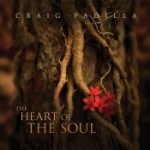 Craig Padilla finds the perfect balancing point between spacey electronics and heartfelt New Age piano (with an extra dash of romance) on his superb new solo release, The Heart of the Soul. The disc opens sitting squarely at the border of poppy late-80s electronic music with the infectious, dancing rhythm and into-the-cosmos breadth of “You Were Here.” If Padilla had stayed with this feel, good though it is, the disc might have soon worn out its welcome. But the moment the rich piano of “Sense of Wonder” arrives, so too comes the understanding that this is not another retro paean. Choral pads sing angelic counterpoint, but Padilla makes sure this sweet ballad’s story is told mostly by the keys–even when the piece shifts and grabs a bit of uptempo verve. Here, too, is where you get the first strong dose of the emotion that underlies the whole disc. Padilla has said in interviews that this disc comes out of a place of major personal change and fulfillment. The music here resonates the way only a soul-level connection can. (All music is personal, yes; but sometimes the depth of the source is even more obvious and affecting.) The title track shows it, too, a piano melody that would stand quite nicely on its own but which gladly pairs off with synth strings and more choral pads. “Lost in You” follows suit, with the added sparkle of a glittering sequencer line and the sudden appearance of a nice laid-back beat. One of the many strengths on The Heart of the Soul is that Padilla has not moved too far away from his spacemusic roots. It’s down-shifted a bit, taking its assigned place behind the piano and crafting backdrops for the melodic elements to play off, but it’s fully effective. Here and there Padilla pulls it to the front, as in the excellent long track “Midnight Encounter.” Tasty sequencer lines weave back and forth, energizing the moment, and rushes of electronic wind blow through and leave a nice analog chill in their wake. This one amps up the power and finds a nice stride as Padilla increases the density of his layers.
 Do yourself a favor, and before you listen to NMTRv1 from the collective called The Nothing Machine, go to their web site and dive into the backstory. Kudos to these folks for crafting their own very cool and detailed mythology around the release. As far as the music goes, this is an hour-long deep dive into minimalist noisescapes, where rough-edged drones scrape across a wasteland scoured to the bone by sound. There’s a lot of vastness and emptiness at play, and a suggestion of something sinister pulling at the edges of reality. After all, these are the sounds required to stem the effects of the telomeric shortening that affected the technicians when the actual Nothing Machine managed to tear a hole in reality. You don’t get “nice” out an industrial accident like that, after all. This stretch of the disc is very good isolationist ambient, the textures held back enough to pack them with unpleasant emotional impact, a distinctly creepy feeling that pervades you even as the hypnotic dronework burrows a sinkhole in your ability to form conscious thought. At the halfway point a repeating beat drops in out of nowhere to mark a change of direction. A great touch that saves the disc from being a one-note work. Electronic skitterings run around the edges of the sound. (Which, to my ears, borders–in an interesting way–on being tribal.) NMTRv1 changes faces a few times before it’s through, going from sparse electronic pulses to near-silence to grinding stacks of conflicting noise. Every new redirect is handled with expert-technician cool, and each recalibration of the Machine gives you a new dimension to try to push through. Fans of dark ambient will want to fire up this machine immediately; others should approach with caution. NMTRv1 is capable of distorting reality. The effects can be surprisingly mentally liberating.
 If you’re looking for something charming and relaxing to listen to, look no further than multi-instrumentalist Mark Bruland’s new release, BEEing Human. Across 18 short tracks, Bruland provides warmth and kind smiles in pieces that clearly reflect his love for music and the life around him. (His liner notes offer the inspiration behind each track, which range from his daughter, who was diagnosed with a rare condition called Opsoclonus-Myoclonus Syndrome, to..well, honeybees.) His music stretches over a broad range without feeling stretched. “Suite Honey Bee” is a straightforward New Age piano piece accented with swelling synth strings. The piano is crisp and clear, a gentle ballet for bees going flower to flower. “ELK and Little G” also showcases Bruland’s piano, and is so touching that it makes me want an album of nothing but piano from him. But, as they say, wait–there’s more. “An Afternoon with Steve” takes folksy acoustic guitar and pairs it with clarinet over quiet synth chords. A great laid-back feel. “A Cool Breeze for Louise” strides into view with a jazzy little attitude for itself and proceeds to sing its story. There’s a nice little sax break in here that should make you smile. Speaking of which, if “My Laughing Heart” doesn’t cheer you up, you may already be dead. The sweet laughter of a Bruland’s daughter ushers in an optimistic, uplifting piece with guitar, piano, congas, and some tasty bass. Just pure fun. Bruland wanders toward ambient territory with “Alexander’s Grove,” where soft synth notes sigh and hush, laying down a base for more heartfelt piano. (There’s a touch of Suzanne Ciani-esque romance in here.) I have to say that there are a couple of tracks here that pile on a little too much sugary cuteness for me, but they’re the exception on such a strong release. While the punny-though-charming title gave me pause when I first went to listen to BEEing Human, I am enough repeat listens into it–and quite gladly so–to say that Bruland has hooked me. His talent and his heart make for a superb listen.
 Hypnagogue Music Reviews