
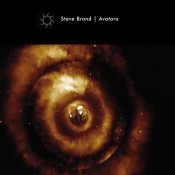
 In just four notes, Steve Brand effectively sets the tone for his new release, Avatara. Within this one phrase at the beginning of the title track there is a sense of mystery, of revelations to come, of the curtain being pulled back as Brand opens his exploration of the persistence of the presence of the Avatar–the earthbound manifestation of deity–throughout cultures. For this portrait Brand chooses big, expansive synth pads that hang in the air and slowly fade for a classic ambient sound. At the same time there’s intimacy in the details. Brand is skilled at pulling the listener close to isolate the effect of small moments before releasing them back to see the bigger picture again. Brand’s timing is also impeccable; in “Morning Glory” he lets his drifts quiet to silence or near-silence, then suspends the moment before the next note, giving that stretch of time an air of contemplation and expectation. When that next note does arrive, it’s like an awaited, cleansing exhalation. Even when his constructs are at their biggest, they remain delicate to the touch. In the spacemusic-flavored track “Still Here (Breathing Space),” windchimes add an earthy accent to whispering electronic winds. The bold chords that form “Act of Creation” rear up to make themselves known, but then blend together readily on the way back down. There is power, and there is peace, side by side. Expertly, Brand revisits those first four mysterious notes in the closing track, “Avatara (Deathless),” and the listener understands that the story has come around to its conclusion. This also lets the disc seamlessly take hold of its own tail and begin again.
Avatara is a deeply immersive disc, a warm and vast blanket of meditative sound that’s a pleasure in which to find yourself enveloped. Repeat listening is a must, and the piece is ideal for low-volume play.
Available from Hypnos.
 Spacey ambient drones and depth of sound make Seconds Before Awakening’s Seven a piece of headphone-required listening. It’s the latest entry in an ongoing project designed to create off-to-sleep ambient based on a formula that Seconds Before Awakening has developed. I stole this explanation from him off his last.fm page: “…each track…was created using a mathematical formula depending on the length of the track and how many notes were played divided by the key the song (each key I gave a certain number).” His personal research into sleep cycles also informs the music. Overall, the tone is warm and the feel is liquid. These unobtrusive waves of tone just wash forward, pick up tiny hints of shadow in spots, and circle quietly back around to begin again. Nothing groundbreaking here, just solid ambient. But hearing it and knowing that there are six previous experiments to dive into, I know I’ll be listening to more Seconds Before Awakening soon.
 I can tell you, with some degree of certainty, that I have just listened to Dissolved’s Snowy Psychoplasmics. What I cannot tell you, with any degree of certainty, is what I just listened to. This wild ride of random sound, glitch beats, audio samples and more can be a bit like watching TV while holding down the “change channel” button on the remote. Spoken word, PA announcements, folks songs sung straight up, children singing
 Built on field recordings made during trips to Indonesia and Southeast Asia, Penjaga Insaf’s new release, Sama Sadja, almost immediately takes on a mantle that is dark, ritualistic and redolent of old magicks. The duo of Henry Emich and Ingo Sauerbrey escort their listeners through foreign and, at times, unnerving landscapes. The atmospheres are humid and swarming with sound, hypnotically dense but always packing a moment of sonic surprise to jar you, in the best possible way, out of your mental lull. This is a disc you become part of. The field recordings make up the bulk of the music here, with Emich and Sauerbrey sagely augmenting them with quiet, droning spaces that serve to perfectly amplify the rising sensations. Listen to “Pulang,” where the pair let a tribal chant take the lead to create a sort of sacred space, the two adjusting levels and background sounds, mixing moments together to turn the whole into a ceremony that’s a bit dark and yet uplifting to the spirit.
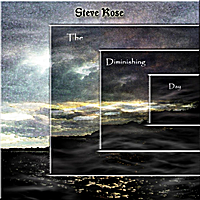 Steve Rose’s sophomore outing, The Diminishing Day, can be split into two categories by motif. One half is sequencer-based, with cool and angular lines paired off floating melodies and glistening processed guitar; the other is made from long stretches of droning sound that border dangerously on stagnation at times. Clearly, I find the more melodic pieces to be the stronger tracks here. These are the first three tracks, and they’re quite good. “Somehow Different (Part I)” is a perfect mix of those diaphanous guitar chords, trilling sequencer runs and hushed backdrop electronics. It’s a calm, fluid track that eases you in and has a lot to show you. Rose boldly hammers in with piano at the outset of “Infinite Regress,” laying out and layering melodic segments that he then stretches out across time, letting them all fade downward. Here, the sequencer runs play perfectly off the drifty pads and flute-like songs. This is a beautifully pulled-together piece. “Those Who Remain” benefits from its geometric nature; Rose slowly peels sad notes off this block of sound and lets them float away. The base stays simple and perfectly repetitive, letting the listener focus on the feeling of the song that’s developing. Again Rose plays with time here, increasing the interval of the melody as the piece goes along. So while the essence of the thing remains the same, it possesses a sort of decaying dynamic. From here, however, The Diminishing Day begins to diminish for me. The title track takes almost three minutes to show any sort of shift, and overall feels like it’s too dependent on it own somewhat forced drama. Several minutes into “Guitar Abstraction #4,” I got restless; I wanted it to do something. And it wasn’t. The thematic gurgling sound behind “Tidal Pool” seemed to overstay its welcome; it could have been subtler. These last three pieces feel almost like Rose gave them more time than they needed, like the ideas were all there but they were pulled too far to sustain themselves. That being said, I could gladly listen to the first have of the disc over and over. (And I have.) Rose is a rapidly developing talent with a lot to say, and ambient fans should keep an eye on him. The Diminishing Day is definitely worth an exploratory listen.
 Hypnagogue Music Reviews