Sun Sea Sky Productions is a relatively new label, about 40 releases old, that has been churning out a stream of interesting, well-made IDM-style CDs with a sometimes softer, more thoughtful edge. Among these are Boy Is Fiction, whose excellent Broadcasts in Colour I reviewed on the old site in June, and these two releases, Boc Scadet’s Temporary Oceans and Northcape’s Captured from Static. Based on these three releases, Sun Sea Sky has become a label that I’ll be watching and awaiting releases from.
There are similarities of style between Captured from Static and Temporary Oceans. They’re both packed with richly melodic tracks built around looping beats, doses of glitch and soundswipes, all infused with an air of downtempo calm. In fact, I put them both into a single playlist and hit shuffle, just to see if I could tell one from the other. I did pretty well, and what became clear in comparison, working through those touches of sameness, was this:
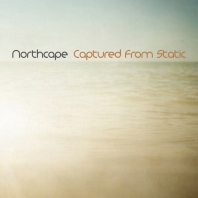
 Northcape’s Captured from Static is, by and large, the silkier of the two. It’s an expensive blue cocktail of music, a little exotic in spots, perfectly mixed and served cool, infused with a flavor that makes you just have to say “Nice” every now and again. Alastair Brown builds his tunes with the deft touch of a good bartender (to keep the metaphor–ahem–flowing), adding the right elements at the right times to constantly improve a piece as it moves forward. The electronic edges here are softly rounded and sensuous. It feels at times like the sounds here have been carefully muted or sanded down for a better sense of calm. It all goes along with ease. And if the opening track, “Doesn’t Feel Like A Long Way” isn’t an immediate enough hook into Northcape’s sound for you (and it should be), then by the time you reach the elegant, eloquent and downright sexy beat-and-flow of “Grove Park,” the deal should pretty much be sealed. Brown takes a smoky lounge piece, rides the tempo up and down and gives it a little extra bite with some raspy electronics for texture. Brown shows his excellent sonic/impressionistic skills with “Shinkansen to Kyoto.” I had to Google “shinkansen” to see if the image in my head was correct–and it was. A sense of motion, a landscape moving by quickly, an intermittent metallic rhythm…I think you’ll get it, too. It’s well done. “First Day in a New Town” brings an infectious, radio-ready beat and a little extra sugar in the mix. There’s a lot to like on Captured… and there’s enough differentiation, track-to-track, to avoid the feeling of repetition that can plague this style.
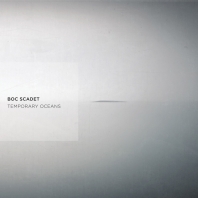
 If we keep the bar/refreshment analogy going to compare these discs, Boc Scadet’s Temporary Oceans is the funky drink the bartender whips up and hands to you on the house saying, “I just thought of this. Try it!” You do, and it’s good, but it’s definitely sharper and tangier than that blue drink–and you know you’ll immediately have another of the same. Lawrence Grover culls found sounds to mix in with retro-tinged synth melodies, and exhibits a steady hand at adding depth and interest to his tracks. His constructs are somewhat more angular and mechnically precise than Brown’s, but certainly no less intriguing. I like Grover’s blend of styles here and the way he moves from one track to the next. For example, going from the laid-back zero-G float of “Sentry” to the uptempo pleasure of my favorite piece, “Seaem,” with its cool-walking bassline, rich, easy melody and a drum loop that puts me in mind of a Deepfried Toguma track. The closer, “Lumen,” is the musical version of slowly dimming the lights to close the place down, with one last look over your shoulder. A synth like a softly played concertina lends a wistful folkiness to it. Deep listening pays off on Temporary Oceans; Grover excels in adding little touches that catch and delight your ear. It’s a pleasure to wander through it to find out what he’s going to do next. After just a few tracks you know that whatever it is, it’s going to be interesting.
Both of these Sun Sea Sky discs have been in strong rotation at the Home o’Hypnagogue since they arrived, as has the disc from labelmate Boy Is Fiction, and I imagine all will likely stay there. So far it seems I can’t get enough of any of them. I look forward to more new music from all of them, as well as from Sun Sea Sky.

 The duo known as Cyberchump has always had a certain chameleon-like sense of identity. They’ve dabbled in IDM with thick beats, they’ve quieted things down to a meditative flow, they’ve strapped on guitars to revel in their prog-rock roots. After years of inventive reinvention, Jim Skeel and Mark G.E. had a chance to let someone else figure out who Cyberchump is, so they naturally took it. They handed tracks from their first two albums over to “laptop tweaker” Janzyk, and the result is ReGrooved, a club-friendly, funk-laden joyride that neatly (and wisely) retains at its core the smart synth-and-guitar blend that is signature Cyberchump.


 Hypnagogue Music Reviews