Phillip Wilkerson, Interplay

In Phillip Wilkerson’s bio, he mentions that he spent several years experimenting with various types of synthesizers, sound modules, virtual instruments and guitars before he ever starting noodling around with creating ambient music. That diverse and focused experimentation helps to explain the way in which Wilkerson’s sound consistently evolves with each release, retaining elements from the direction of previous works while distinctly turning to a new heading.

Wilkerson’s latest is the very gentle and graceful EP, Interplay. The five tracks here present a thoughtful story told in a near-whisper. The sounds evoke spaces both inner and outer, deep and far. There is nothing here but easy, soothing beauty.

At times it seems that Wilkerson’s main instrument on Interplay is nuance–and he plays it beautifully. You’ll sense it at work in the subtle heartbeat pulse that calmly counts its way through the misty drift of “Markings” and the way a bass-note melody explains itself one unhurried syllable at a time in “Certainty.” In each track Wilkerson’s silken synth constructs veritably float through your head. The overall feeling hovers somewhere between the voyaging drifts of classic spacemusic and a perfect soundtrack for simply watching clouds cross the sky. I invariably find myself putting this disc on repeat play because once through its 50-minute length simply isn’t enough to fully appreciate it.

Lush, calming and beautifully introspective, Interplay is a Hypnagogue Highly Recommended CD.

Find it at Phillip Wilkerson’s web site.


Polyphasic, The Map is Not the Territory

Given the artists’ stated intent to create “…sort of a fake science-fiction movie soundtrack,” it may be unfortunately appropriate that I find myself often fast-forwarding through the low points of Polyphasic’s The Map is Not the Territory to get to the good parts.

The problem, largely, is that the pieces here tend to come off as too mechanical and angular for my tastes, too strictly programmed to be more naturally engaging. The disc has an old, laboratorial sound to it, like early electronic recordings designed to show ordinary folk what synthesizers could do. Let me balance that out by noting that I enjoy (and have recently enjoyed) discs that have an old-school feel to them, but smoothed with a modern edge. Jeffrey Koepper, Moebius and Ministry of Inside Things come quickly to mind. There is a difference to the feel of the thing made new and, when you get down to it, the ponderous thing itself. Several tracks into The Map... I find myself wanting something that feels like someone’s got their hands on the keys.

When Polyphasic go for a more minimal, drone-based approach, the work captures my attention more. The stretch that runs from “8F” through “What I Really Like Is Music” is the best section of the disc. In “8F,” thick, distorted chords pound out an almost military cadence as pads wash over them. Across the course of the piece, the higher points of the sound come down, soften and take on a calmer tone. “What I Really Like…” issues forth as a white-sound wind with hints of texture buried in the flow and develops from there, never striving for more than minimal change–and it works. “Zerzassenquez” has a simliar brain-softening effect.

Listeners more into unvarnished electronic music than I might find more to love here. And since you can download the CD for five bucks at Bandcamp, it’s at least worth your time to check out samples.

Find it here.

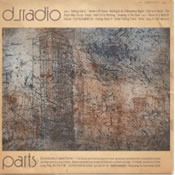
D_Rradio, Parts

I need to begin with an odd analogy. Imagine you’re at a nice party, one of those catered gigs where waiters walk through the crowd with trays of appetizers. You take one as a waiter goes by, and it’s really quite good. In fact, you’d like another. But you can’t find that waiter anywhere, so you opt to reach for another appetizer, and it’s good, too. And that waiter disappears as well. This keeps happening all night. And while the appetizers are nice, you find yourself wondering if there’s going to be an entree at some point in the evening, because you imagine it would be pretty good, given the appetizers.

That’s the sum of my experience with Parts, the new release from D_Rradio.  There are 19 tracks on this very listenable CD. The longest runs 3:28; the shortest whips by in just 29 seconds. The whole of the thing is over in under 40 minutes. It’s a stream of good musical appetizers that, while making me want more, often disappoints in the way they come and go so quickly.

The length, or lack thereof in most cases, would not be an issue if I didn’t like the music. But there’s the problem: I do, for the most part, and several of the better tracks on Parts gather up their sounds and leave just as I’m getting into them. “Better Left Alone,” a melancholic reflection with a feel like slowed-down jazz, is just finding its expressive voice and seems to be approaching a turning point–and then it fades out.  The same goes for the 1:08-long “End of A Wild Life.” It slips in on light strings, sounds like it’s gearing up to have something to say…and then cuts off the conversation, practically in mid-chord, and departs. The super-short tracks, whatever the intent was, become almost ignorable for their brevity.

I get what’s being attempted, thematically. Parts is made of parts and not all parts are complete. But since when they are complete they’re well worth listening to, it makes the seemingly semi-formed ones a bit disappointing. Despite the thematic intent.

There are fully realized, satisfying pieces here. “Midnight on a Moonless Night,” the longest track, sighs and drones its way through a foggy sound-mist. “Ruins of A Wall of Sound” is, even for a short track, a stunning piece of romantically tinged ambient. Warm, lush strings worthy of good chamber music glide in a slow dance around each other. There’s a gorgeous near-sadness to it.

Parts is well worth a listen. D_Rradio show talent and intelligence in every track, no matter how brief. I look forward to more from them.

Available from Distraction Records.


Jonathan Badger, Unsung Stories from Lily’s Days as a Solar Astronaut

Jonathan BadgerI’ve been meaning to review this disc for several months now, but my computer doesn’t recognize it when I put it in, so it hasn’t made its way onto my iPod, and my car CD player would get a few tracks into it and freak out. And then I, of course, would forget that I have it. Which has been unfortunate, because when I have been able to listen to it, either by swiping my son’s now-unused CD player or remembering to bring it to work, where my Mac is much more accommodating, I’ve been fascinated by it.

Aside from having one of the best titles in recent memory, Jonathan Badger’s Unsung Stories from Lily’s Days as a Solar Astronaut is a challenging but ultimately rewarding disc that slams together an avant-rock mindset equipped with weapons-grade guitar bursts, an intriguing electronic setup and a compositional sensibility that’s largely improvisation-based. Badger has developed a system that augments his live guitar structures with laptop-selected sound samples and loops triggered not just by what he’s playing, but how it’s being played. Mellotron tape loops are also controlled by the guitar’s MIDI output.

It’s easy to overlook the electronic side of things, however, when the first angry, feral guitar chords of “The Vessel Megalo” rip the air wide open in front of you and drums slam out an angry backbeat. At that point it feels almost like it’s going to be a straightforward, hard instrumental CD. That’s one of the draws of Unsung Stories… for me: the way Badger manages to maintain the structural familiarity of that rock feel while crashing it at speed into the forward-thinking subversion of a compositional approach unfettered by convention.

Throughout the disc, Badger uses that subversion to unseat the comfort we take in a melody by twisting and roughening it. It makes us stop listening passively and start looking actively at what’s being done so that we can try to understand. Listen to the way an established rhythm breaks down, regroups and rebuilds over and over in “Beat 1” as fingerboarded guitar squares off against a chipset-like riff that mimics it. Or the way Badger takes the almost-baroque simplicity of a piano and flute duet in “His Face Like Glass to the Touch” and drops in a wayward fuzzy guitar, disjointed snipped vocal samples and a battery of processing and filtering changes, forcing the basic tune to continually work to return to its original state. “Surface” is about the most straight-up track here, boasting a guitar riff that fell out of a Sergio Leone western, but even here Badger runs a serratred electric wire around and through it to try to draw focus away while at the same time requiring the listener to focus more. In each track, while the intent of the thing remains, its appearance is in near-constant flux, bending toward unrecognizability and thus our perception of and understanding of it changes as well.

At time the higher concepts at work in Unsung Stories… can leave me a little cold–or just feeling like I don’t get it. For example, I get lost in the piano tangle in “The Insight That Comes From Repeated Time Dilations” (which, by the way, is a great title) and find myself moving on. But it’s the exception rather than the rule. Badger’s complexity makes me want to listen deeper to more fully take in the experience.

The packaging of this disc is also worth calling out. The inside of the case is strewn with what appear to be random old clippings from books and newspapers. Look at them carefully, though–the text on each pertains in some way to the titular Lily and her days as…well, you get it. It’s an interesting way to add a depth of narrative that goes beyond the music. It serves to invest you a bit more in the concept. Well done.

When you’re ready to think about your music, listen to Unsung Stories from Lily’s Days As A Solar Astronaut. The reward is very much worth the effort.

Available from Jonathan Badger’s web site or MT6 Records.

Yen Pox, Blood Music

I would not be the one to best tell you what separates a good dark ambient/isolationist ambient CD from a bad one or what makes a certain CD a “classic” in the sub-genre. It’s never been an area that warrants strong focus from me as a listener.  So I have to take Malignant Records’ word for it when they tell me that Yen Pox’s 1995 cassette recording, Blood Music, is a “benchmark” album in dark ambient.

What I can tell you, however, is that with the CD reissue of Blood Music, I have found myself immersed in, if not engulfed by, the sheer density and depth of this music. I’d go so far as to say that in focused listens for this review, there are times when I’ve gotten absolutely lost. The sounds here range from thick and heavy to sparse and, for lack of a better word, patient–the patience of waiting for something to occur. Something most likely unfortunate. A gripping darkness obviously rolls through everything here, and it’s appropriately relentless.  Shifts in urgency act almost like beats, taking hold of your attention as the tension changes, pulling you closer, daring you to stare, fully conscious, into this wailing abyss of sound. Then it lets you go, lets you fall back, your head full of what you’ve seen there. And it’s not pretty.

I don’t know what Yen Pox have been doing in the 15 years since they created Blood Music (my Google searches haven’t turned up much), but I would be interested to hear what they would be capable of creating with updated technology at their disposal. That’s my takeaway from listening to Blood Music–it’s dark ambient that makes me actually want to hear more of it.

Available from Malignant Records.

Carl Sagan’s Ghost, Colonial Spa

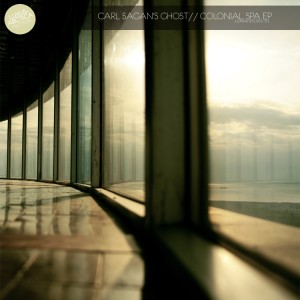
Carl Sagan's Ghost, Colonial SpaTalk about an appropriate title. The half hour or so it takes to listen to the most recent release from Carl Sagan’s Ghost, Colonial Spa, is likely to be one of the most laid-back and soothing stretches of time you’ll spend. This is space-lounge cool at its finest, a gravity-free mind-massage while beat-pulse engines ease you into orbit around a planet made of 100 percent chill. And, of course, someone hands you a complimentary and suitably spacey cocktail in the middle of it all.

Well-meant metaphor aside, Colonial Spa is, for a relatively short offering, a real pleasure to get lost in. Daniel Davis pulls together his several downtempo grooves, folds in subtle hints of dub, smooths it all out with soft washes and airy pads and carefully places effectively infectious rhythms, all without a bump or harsh edge to be found. Everything moves with the grace of Davis’ conceptual “low-orbiting satellite spacestation where beings from around the galaxy gather to relax, trade, and converse” spinning quietly in space. He smartly leads many of the tracks here with sounds that have a round, soft feel: the muted vibraphone-like tones that bounce around “Meccahnomad” and the pizzicato-esque backdrop and repeating three-note phrase in “A Place to Kill Some Time” are solid examples. Crisp microtonal sounds flecked throughout the mix add texture and secondary percussive elements, and Davis’ own attention to the depth of his sounds brings a richness to the already soothing character of his tracks.

I know that I’ll be booking more–and more frequent–flights to Colonial Spa. It’s a relaxing place and you can’t beat the view, especially from the spinward side. Join me there sometime. First icy Jovian cocktail’s on me. Colonial Spa is a Hypnagogue Highly Recommended CD.

Available from the Carl Sagan’s Ghost web site.


Cyberchump, ReGrooved

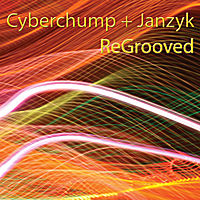
Cyberchump & Janzyk, ReGroovedThe duo known as Cyberchump has always had a certain chameleon-like sense of identity. They’ve dabbled in IDM with thick beats, they’ve quieted things down to a meditative flow, they’ve strapped on guitars to revel in their prog-rock roots. After years of inventive reinvention, Jim Skeel and Mark G.E. had a chance to let someone else figure out who Cyberchump is, so they naturally took it. They handed tracks from their first two albums over to “laptop tweaker” Janzyk, and the result is ReGrooved, a club-friendly, funk-laden joyride that neatly (and wisely) retains at its core the smart synth-and-guitar blend that is signature Cyberchump.

The source albums came before my initial introduction to Cyberchump (2004’s Scientists in the Trees) so I can’t cogently comment on what Janzyk did re: the originals. What I can say is that it’s an early Saturday morning as I write this review and three tracks in it’s all I can do not to get up and start dancing around the kitchen. This is potent stuff, beat-wise, and packed with lots of extra ear candy that make it a pleasure to drop into. Highlights for me include the smoky, sort of John Klemmer-ish sax that writhes through the bass-thick “Space is the Case,” and the punchy dancefloor attack of “Love Offering.” By contrast, Janzyk slows things down with “Dreams Groove,” a sparse track that rides largely on a cool backbeat and occasional chordbursts of guitar. This one takes its time, doesn’t cram in any excess sound, and comes off as one of the slickest tracks here. ReGrooved is a disc that really shines in a shuffle, pulling an immediate energy into any flow. It’s just plain fun to listen to, track after track, and quite nicely put together. In outsourcing their latest incarnation, the lads of Cyberchump chose wisely.

Available from the Cyberchump web site.

Pascal Savy, The Silent Watcher

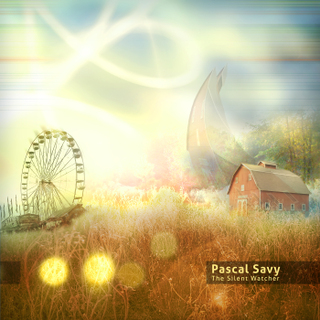
Pascal Savy, The Silent WatcherLike much of ambient music, there is a filmic quality to Pascal Savy’s new release, The Silent Watcher. But rather than presenting a panoramic view of some sonic landscape, Savy works in extreme, intimate close-up, pulling tight focus to capture the intricate workings of things. Gears turn and interlock with stop-motion precision. Ice crystals climb the length of a blade of grass. An insect’s leg moves on sand. All of it rendered in exquisite slow motion, the ordinary turned alien, a moment pulled toward the horizon and held there.

Savy’s abstract concepts stem from sounds he’s captured from a variety of sources. The ticking of clocks, a rusty bike wheel spinning, field recordings…each bent, filtered and manipulated before being tucked with careful finesse into droning backdrops. There is also an air of sadness throughout, the recollections of things cast off, our attempts to recapture moments reduced by time and distance to imperfect memories. And yet, for all that melancholy, The Silent Watcher is never overly heavy or imposing. Savy manages to make it oddly soothing while maintaining both the emotional feel and the sonic intricacy.

Allow yourself to be guided through Savy’s musings on The Silent Watcher. It’s a trip you’ll be taking more than once. The Silent Watcher is a Hypnagogue Highly Recommended CD.

Available from AudioMoves.

Northcape, Captured from Static & Boc Scadet, Temporary Oceans

Sun Sea Sky Productions is a relatively new label, about 40 releases old, that has been churning out a stream of interesting, well-made IDM-style CDs with a sometimes softer, more thoughtful edge. Among these are Boy Is Fiction, whose excellent Broadcasts in Colour I reviewed on the old site in June, and these two releases, Boc Scadet’s Temporary Oceans and Northcape’s Captured from Static. Based on these three releases, Sun Sea Sky has become a label that I’ll be watching and awaiting releases from.

There are similarities of style between Captured from Static and Temporary Oceans. They’re both packed with richly melodic tracks built around looping beats, doses of glitch and soundswipes, all infused with an air of downtempo calm. In fact, I put them both into a single playlist and hit shuffle, just to see if I could tell one from the other. I did pretty well, and what became clear in comparison, working through those touches of sameness, was this:
Northcape, Captured from StaticNorthcape’s Captured from Static is, by and large, the silkier of the two. It’s an expensive blue cocktail of music, a little exotic in spots, perfectly mixed and served cool, infused with a flavor that makes you just have to say “Nice” every now and again. Alastair Brown builds his tunes with the deft touch of a good bartender (to keep the metaphor–ahem–flowing), adding the right elements at the right times to constantly improve a piece as it moves forward. The electronic edges here are softly rounded and sensuous. It feels at times like the sounds here have been carefully muted or sanded down for a better sense of calm. It all goes along with ease. And if the opening track, “Doesn’t Feel Like A Long Way” isn’t an immediate enough hook into Northcape’s sound for you (and it should be), then by the time you reach the elegant, eloquent and downright sexy beat-and-flow of “Grove Park,” the deal should pretty much be sealed. Brown takes a smoky lounge piece, rides the tempo up and down and gives it a little extra bite with some raspy electronics for texture. Brown shows his excellent sonic/impressionistic skills with “Shinkansen to Kyoto.” I had to Google “shinkansen” to see if the image in my head was correct–and it was. A sense of motion, a landscape moving by quickly, an intermittent metallic rhythm…I think you’ll get it, too. It’s well done. “First Day in a New Town” brings an infectious, radio-ready beat and a little extra sugar in the mix. There’s a lot to like on Captured… and there’s enough differentiation, track-to-track, to avoid the feeling of repetition that can plague this style.

Boc Scadet, Temporary OceansIf we keep the bar/refreshment analogy going to compare these discs, Boc Scadet’s Temporary Oceans is the funky drink the bartender whips up and hands to you on the house saying, “I just thought of this. Try it!” You do, and it’s good, but it’s definitely sharper and tangier than that blue drink–and you know you’ll immediately have another of the same. Lawrence Grover culls found sounds to mix in with retro-tinged synth melodies, and exhibits a steady hand at adding depth and interest to his tracks. His constructs are somewhat more angular and mechnically precise than Brown’s, but certainly no less intriguing. I like Grover’s blend of styles here and the way he moves from one track to the next. For example, going from the laid-back zero-G float of “Sentry” to the uptempo pleasure of my favorite piece, “Seaem,” with its cool-walking bassline, rich, easy melody and a drum loop that puts me in mind of a Deepfried Toguma track. The closer, “Lumen,” is the musical version of slowly dimming the lights to close the place down, with one last look over your shoulder. A synth like a softly played concertina lends a wistful folkiness to it. Deep listening pays off on Temporary Oceans; Grover excels in adding little touches that catch and delight your ear. It’s a pleasure to wander through it to find out what he’s going to do next. After just a few tracks you know that whatever it is, it’s going to be interesting.

Both of these Sun Sea Sky discs have been in strong rotation at the Home o’Hypnagogue since they arrived, as has the disc from labelmate Boy Is Fiction, and I imagine all will likely stay there. So far it seems I can’t get enough of any of them. I look forward to more new music from all of them, as well as from Sun Sea Sky.

Juta Takahashi, Hymn

Juta Takahashi, Hymn

Juta Takahashi’s seventh release, Hymn, is a quiet offering of three long-form drifts in a classic ambient/spacemusic style.These tracks are built on familiar, sighing synth pads that rise, twist around each other intimately for a few moments, then part ways to grab hold of a new sigh lifting itself into view. In this manner the listener is taken aside, mentally massaged to calmness and left to float. While the layers here never seem to run particularly deep, they are always handled with grace and a good sense of timing. Nothing feels like it lags too long, nor do Takahashi’s expressions leave too quickly. There is an enjoyable balance at work. Hymn is, I feel, a better low-volume CD than something that you need to get deeply into. The strength here is the quietness, not the complexity. Treated as a classically defined ambient album and left to sonically augment a space rather than impose itself on it, Hymn simply glimmers .Add this one to your favorite spacemusic playlist and enjoy the ride.

Available at CD Baby

.