
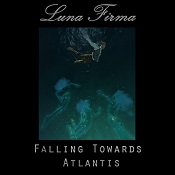
 The debut release from Luna Firma, the duo of Kuutana and Eric “the” Taylor, is a graceful, narrative-driven album filled with small sounds and vivid aural imagery. There is plenty of thematic set dressing here, from the sounds of waves and seagulls to distant howls of wolves, but for the most part it’s underplayed. For me, that’s a plus. I don’t mind that kind of stuff, but it’s very easy to get too heavy-handed with it. Kuutana and Taylor ease it into a place where you know it’s present, but it never gets in the way of simply enjoying the music. (Although for me, admittedly, those seagulls come mighty close.) “Between Me and the Sea” sets the scene with wave sounds and shimmering tones, then brings in piano to open the vista. The backdrop is both fluid and dreamlike, and a nice dose of echo gives it dimension. As I said, I could do without the gulls that fly past later, but only for the way they interfere with what is otherwise a comfortable flow. “Light Source” starts with slow pads and a jumble of kalimba-like tones, then gives itself over to keys backed with swirling string sounds, a bit of harp, and a swirl of arpeggios. Again, the duo lead the listener into a misty and calming edge-of-dreams space. “Open Night Air” offers a bit of surprise. It begins in soft ambient territory, with whisper-soft pads over night sounds. Then, around its mid-point, it grabs a shot of tribal tonality with solid drumming and a striding, bass-led melody. This is also where you get your wolves, howling in the distance. Again, not overdone, and a nice, subtle touch in what becomes an intense piece. That intensity plays really well against the more laid-back feel of what’s come before. The centerpiece of the album is the final track, the 32-minute saga “Approaching Atlantis.” As a melodic piece of this length should, it moves through a couple of scene changes. Rising out of a watery wash of pads (hello, seagull), it shifts into an oddly mechanical, clanking tangle of sounds that, quite honestly, I am at a loss to describe. I find it odd, but it passes and deposits us back in a quieter current that uses a lot of small sounds to create a full atmosphere. It passes into a space of pads and bell tones, minimal yet in constant, liquid motion. By its last few minutes, it’s been stripped back to a murmuring crinkle of white noise, long pads, and light atmospheric touches. It’s an excellent piece that not only bookends the album, but stands very well on its own. There’s one notable mis-step here—I mean, other than the gulls. An odd sound, like you just lost at a video game, gets thrown into “As Of Yet Unknown.” I was listening once in my office, and had to take off my headphones to make sure it wasn’t someone else’s computer I was hearing. Tore me right out of the moment…and it gets repeated. An iffy choice that acts like a big bump in the flow.
I’ve listened to Falling Toward Atlantis a good number of times, and I’ve lost track of how many times I’ve lost track of time while listening. The work glides past, always quite touching and affecting, but quietly so. It’s a very soothing album, even with the passing primal snarl of “Open Night Air,” and it’s certainly a candidate for long, looping sessions. Kuutana and Taylor have created a very special album here. They have recently released a follow-up album, and I’m looking forward to hearing what they do next.
Available from Bandcamp.
 My confession: This review is quite late in coming because Robert Slap caught me on a day where my professed—and untoward—bias against the use of overt New Age tropes was turned to high. I saw the word “Atlantis” and the Papyrus font, and I thought, here we go again. So I nudged it over to the no-thanks pile. Fast forward to me putting together a recent podcast episode, shuffling the music in my library, and this quite good, if obviously New Age, track comes on, and it’s Robert Slap. So here’s the review. Yes, Atlantis Trilogy: Brave New World, the final installment in Slap’s story of the lost kingdom, has its very, very New Age moments and does wander a bit into too-sweet or too-melodramatic territories for me, but there’s also some very good work here. Slap has spent his life in the music industry and worked as a backing player for a lot of musicians, so he’s got his chops. In fact, it was the guitar work on “Healing Temple” that brought me around for a fresh listen. Outside of the 12-minute opening track, “Crystal Chamber,” the steps in this journey run just four to six minutes, so Slap offers up a change of scene quite often. “Crystal Chamber” is heavy on flute and pads, with a steady sequencer line running beneath it. Although most of the flute work skews toward a Native American or Andean feel, Slap throws a few jazzy trills into the mix for fun, which also helps keep this track from getting static. There’s a fair amount of world influence throughout the album. The crisp, warbling plucks of Eastern strings fill “Wizard’s Journey” with charm, but the piece almost loses me at its mid-point. It rears up at what I’m sure is a narratively appropriate moment, like some point of arrival or discovery, and delivers a symphonic burst that’s just too overdone for me. I feel like Slap could have eased from one section of this solid track to the next without the bombast. It’s minor compared to the title track, which is so loaded with it from the start that I simply don’t enjoy it. Again, from a theme standpoint, it probably works fine. It’s meant to be big and dramatic. For me as a listener, it’s just too much of both. I prefer the pieces that leave the drama behind. “Voices From the Past” is a striding, cool tune filled with bright, round tones almost like kalimba or dulcimer, laid out in separate, complementary sequencer lines. Light hand percussion, synth vocal pads, and more flute round the piece out. Something in it puts me in mind of Shadowfax’s “New Electric India.” The biggest draw for me is the piece that pulled me back in, “Healing Temple.” It slips in on a bass drone and echoing, crystalline tones. Acoustic guitar and flute take the forefront; the flute here is snakey and lithe. Midway through, Slap lays down a guitar solo against a slow-moving backdrop of pads and sharp percussion. I honestly wish more of this style of playing had found its way into the mix.
 What I am used to from Jason Sloan is sound experiments that blend various audio sources with vocal snips, edgy and complex collages tinged with subtle rhythms. What I am not used to from Jason Sloan, but could get very used to based on his new album, Haven, is sequencer-driven, velocity-plus-drift, Berlin School homage grooves that demand and reward a lot of volume. Haven is a sheer delight for analog junkies like me, whose pulses frequently fall into a step-and-repeat motif. I received this album from Jason when I saw him perform in Philadelphia in September 2016. It was the first thing I played on my ride home to Boston…and I played it five times in a row. With three mid-length tracks and one sonic palate cleanser as an epilogue, it clocks in at just over 45 minutes, and every moment is superb. The three longer tracks lay out along a similar path, opening with big, warm drifting chords, slowly allowing a sequencer line to come in and share the space, and then easing back into the drifts to close. “Aleppo” kicks off the album with string pads and piano accents. The sound drapes beautifully, with a mildly mournful tone, and the gently pulsing piano notes give a hint of the sequencer touches to come. When they arrive, it’s on that strident 1-2-3-4 line, down toward the bass end but not low, and their clean, angular energy folds itself smoothly into the flow. “Egress” follows, entering on a hiss of chilly electro-wind. Once it gets going, this track, which was commissioned by the Star’s End radio show, is the one that most strongly pings my Tangerine Dream recognition centers. I am instantly reminded of my favorite parts of Sorcerer; there’s that same sense of tension in the springy, metallic tone of the sequencers, and Sloan works the electronic atmosphere into an underplayed urgency. When this piece downshifts late in the track and brings back the wind sound and its atmosphere, the sense of release is quite real. Starry arpeggios back-light the scene. Throughout the track, he makes the choice to lay some kind of muting over every element —nothing really raises its voice, and everything takes on a hushed, misty feel. Top speed is reached on “Hegira,” which wastes no time in cranking up criss-crossing sequencer lines. Were there a need to put an aural pin in the map for reference, it would be early, Traveler-era Steve Roach, complete with pulsing analog chug and swells of high, symphonic pads. The title track is a fairly straightforward melodic piece, washed through with string sounds that hearken back to the opening tones in “Aleppo” and bringing the piece to a thoughtful close. Across the album, the transition between tracks is flawless, making Haven a focused straight-through listen.
 In a suite of 14 short sonic sketches, Salvatore Passaro lays out impressionistic work run through a series of distorting filters that coarsens its edges and scours it in texture. This is by no means a happy album. It’s draped in an almost constant grey fog of equal parts resignation and quiet angst, but it’s tempered by intriguing construction and plentiful attention to the impact of small sounds. Its emotional center feels very true and affecting, and each piece in its own way draws the listener in. For me, Passaro gets better as he gets quieter. “Dream” and “Memory” flow together to create an ambient-like atmosphere. “Dream” melts field recordings into a breathy wash and strips itself down to a point where it’s little more than a slow draw of bowed strings and a light breeze blowing coolly across the landscape. “Memory” opens with night sounds, piano, and curls of string instruments. Vocal pads ease in, and the piece moves like a gentle pan across the evening sky. Listen closely to catch all the movement going on, the layers Passaro threads through each other. The closing track, “Sinestesia” is a well-executed drone piece that from the first note sets out to soothe your mind. Even here Passaro stays with those lightly roughened textures. They work on this track to create a wavering feel that just makes everything that much more hypnotic. In other tracks, Passaro reaches for some classical influence, easy ballads or etudes, and subjects them to the same filters and treatments. The transmuted, chime-like keyboard sounds of “It Is” play against a background treatment with an Eastern feel. “A Light” surrounds the piano with a rush of sounds, a spinning wind that threatens to overwhelm it yet never does. One of my favorite tracks here is the trippy “Circular,” which loops in some indistinct vocal drops, packed with echo, over different keys—piano and electric piano—and some kind of wonderfully distorted and amorphous warble of sound that rolls through.
 If you’ve been feeling the need for some smooth glitch, come give a listen to Da Mear from Czech artist Blochemy. Heavy on percussion, the tracks here skew toward the downtempo side of things, with a lounge-honed attitude. Chime tones and vibrato-packed electric piano make plenty of appearances. It’s a workable blend, fairly standard in the way it’s presented and without too much variation, track to track. This is why I prefer Da Mear tucked into a shuffle. Everything here is pretty good, it just feels repetitious as a full-on listen. I like the softness of “Mife,” where the glitch gets dialed back, and the lazy yawns of the drum-driven “Voem”—that’s a nice spot where ambient and glitch live together comfortably.
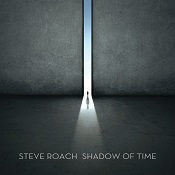 Two of my initial ports of entry into a lifelong appreciation of Steve Roach, and drifting ambient music in general, was the combination of Structures from Silence and Quiet Music. They were my first forays away from more energetic electronic music and the too-shiny-for-me charm of New Age. Here was music I could fall into and feel how it was affecting me. Roach notes that Shadow of Time is something of a spiritual successor to the same concepts behind Structures from Silence, and I hear that in the rise and fall cadence, but the pads and chords on this album feel much more present; authoritative and solid, rather than the more gossamer constructs of its predecessor. The 38-minute title track kicks off the album with a subtle sense of majesty. The pads are like a series of muted, slow-moving clarion calls woven with a rich low end, the two coming together in a strong, resonant blend. Roach infuses a time-stretched melody across this track. It constantly has a hands-on-keys feel, Roach picking the spots where the next chord needs to begin its swell and where it needs to ebb. Its voice is assured and forward, yet still soft and warm. “Night Ascends” distinctly—and appropriately—moves away from the gentler tones of Structures… to raise distinct echoes of more shadowy Roach work such as “A Piece of Infinity” from Mystic Chords and Sacred Spaces. It draws on the same general amorphous, beat-free lineage as the rest of the album, but its sense of anticipation and slightly eerie chord pairings distinguish it from the other two tracks. It offers occasional glimmers of bright tones, like moonlight coming through clouds. The final track, “Cloud of Knowing,” is a comparatively mere 12 minutes long, but it is the piece closest to the Structures… ideal. The pads stretch out to a vanishing point, whispering as they go, calming and warm. As the piece reaches its end, Roach almost imperceptibly extends the pauses between pads, and the piece dissolves to become part of your breath.
 Roach’s other foray into the deep end, This Place to Be, arrives as a single long track that runs exceptionally deep. Of the two releases, this one cleaves more closely to the hushed, dream-ready rise and fall of Structures…, an hour-plus of turning inward and getting quiet. This is the whispered voice of the ether, the careful rendering of the sound between silences, the motion of sleeping breath turned to music. This is the stuff you put on a low-volume loop and just live within. As is always the case, Roach floats his lines through passages of light and shadow, but no shift in tone disrupts the smoothness and depth of the flow. An up-close listen reveals plenty of texture, interplay, and harmony. This piece is absolutely perfect for sleep or meditation—or just to exist alongside you as you go through wherever you happen to be.
 There can be a fine line between a style element and an overused go-to. With a lot of the post-rock I’ve been hearing lately, that go-to seems to be laying down a quiet, melody-driven tune, waiting until you’re near the end, then kicking in the distortion and ramming out chords for a minute or two. Over and over. How the Other Half Live and Die from the trio Cold, Cold Heart doesn’t overdo this, but it’s done enough to figure in to my review of this quite solid album. Robert Manning, Chris Daniel, and Adrian Jones pull together a very listenable blend of folk influences and straight-up post-rock in an electro-acoustic framework. What I didn’t realize until I was reading up on the release is that, by design, it’s also percussion-free. That surprised me, as it certainly has strong rhythms, tempo shifts, and energy where it counts. It’s easy to glide through the songs here and never be aware of that omission. From the start, this album is warm and welcoming. “Hannah” sets the tone with slow-picked guitar, shining piano melodies, vocal pads, and the first few hints of that roughened edge that will show up throughout. The follow-up track, “Wolf Eyes, You’re Staring” is where they first really hit that quiet-to-slamming motif, and while I don’t mind it, on some listens I find myself wondering if I’d like it more had they just let it keep its deep-in-thought simplicity. The rough stuff only lasts for 40 seconds, so…why? I feel like the shift works better in the heartbreaking poetry of “An Elegy (For Martha).” It’s less raw than in “Wolf Eyes,” and layered through the song like emotion coming to the surface. Against a string backdrop and the easy interlacing of guitars and piano, it arrives with more meaningful impact—rather than just impact. It works well in “Mountain,” too, the distortion pushed in waves over a very ambient-style wash. Rising piano toward the end of the track adds a nice touch of drama, and when the roughness falls away to leave us with just piano and guitar, the effect is cleansing. That’s perhaps the best use of the quiet-to-rough concept on the album.
 Erik Wøllo and Byron Metcalf first began talking about collaborating when they met at Steve Roach’s Soundquest Fest in 2010. Now they soar into 2016 with Earth Luminous, offering deep soundwork based around a rhythm scheme sketched out in tight sequencer angles complemented with tribal-ambient potency, all of it lifted into flight by the graceful sighs of Wøllo’s signature ambient guitar style. The blend of electronic and acoustic, and of velocity and glide, make this an extremely pleasant ride. Metcalf’s always trance-inducing percussion plays out in the broad, muscular resonance of the frame drum, the crisp snap of clay pot, and the hiss of shakers. It is always present, but never too forcefully so, not taking control but regulating the pulse. The chemistry is delightful. And there’s a fair variety of approaches in the mix, helping keep things moving even if neither artist strays too much from familiar territory. “Far Wanderer” is pure Berlin School pleasure, with its insistent sequencer pulse holding down the line for Wøllo’s long guitar draws. It’s got a nice mid-range velocity, just fast enough to envigorate. The dry hiss of Metcalf’s shakers get right to work on your head as they establish the rhythm, backed with the assertive thump of the frame drum. The pulsing energy of “Light and Ground” feels so familiar, if I didn’t know any better, I’d swear Steve Roach walked in and sat down to jam. Opening with crunchy analog bass signals and broadening out on warm, stretchy chords and Metcalf’s array of hypnotics, it achieves escape velocity pretty quickly. As the shakers massage your frontal lobe, the guitar regulates your breathing to achieve a full-on “let’s leave our body” groove. Great track. “Distant Future” is an interesting, almost minimal piece where Wøllo lays out odd spiral chirps of sound against the drums. It’s unlike anything else on the album, and it feels like watching a curling cloud of fireflies flitting around. A slow-moving, pulsing melody rises like dawn in the background, coming on almost imperceptibly and insinuating itself into the flow. A standout pleasure here is “Diomedea,” which flawlessly blends a chugging, churning drum line with vapor trail guitar lines from Wøllo. There’s a nice world music vibe as it goes along, upbeat and clear.
 The list of tags on the Bandcamp page for Lee Kajko’s The Space Hermit say it best: experimental metal post-rock ambient chillout hip-hop noise. That, and maybe song titles like “Wandering of the Flying Dead Fluffy Elephants” and “Flute of the Aqua Monkey Kid” will tell you a lot of what you need to know. What it doesn’t tell you is how well Kajko pulls off this kitchen-sink mish-mash of influences. Is it for everyone? Oh, hell, no. Sometimes it’s barely for me, although the more I’ve listened, the more I’ve found to enjoy. You may base your decision on the first track, the previously mentioned “Wandering…” It opens with an odd, howling, presumably elephantine noise, which gives way to a few minutes of quite lovely finger-picked guitar and soft ambient yawns. Then, absolutely out of nowhere, it erupts into a slugfest of hard-hitting doom-metal chords launched directly into your face. It seems random, and may be the moment that puts some folks off, but listen—it’s almost the same figure as the finger-picking, just much, much heavier. And all this is packed into four and a half minutes. Then, as diverse as that track may be, Kajko keeps mutating his approach. “The Teleport Man” features a number of well-executed sound manipulations, from cut-and-splice glitch moments to sudden drastic slowings of the sound. It’s never overdone, and plays off the laid-back guitar line that runs through the piece. “A Bridge Into the Unknown” is every good indie post-rock song you’ve ever enjoyed, with some ambient vocal pads thrown over the top. It’s a mite repetitious, but its upbeat energy catches me. “Blind Pilgrimage” is where Kajko really cuts loose. Giving himself 10 minutes to stretch, he comes at us with some dubstep influences firmly linked with the grind and viscera of metal. The guitars here are huge, just huge, and they keep coming in wave after densely distorted post-rock wave. By very stark contrast, the closing track, “ホームレス” (“Homeless,” per Google Translate), is a total ambient piece, 10-plus minutes of whispering, soothing soundscapes in a drawn-out melody.
 Written & Unsent is an album for people who enjoy solo piano, an aching sense of longing, sudden outpourings of emotion, and simple beauty. Outside of a brief thematic sound clip of someone scribbling a note—which we must assume was something heartfelt—there is nothing here but Mathew Roth and his keys and his thoughts. And here’s something worth noting: if you can bring me to the verge of tears with your first track, you’ve got me fairly well locked in. There is something in “An Outline of Rain” that goes straight to my core. While it’s in there dredging up whatever repressed memories it can, it’s also making me think of George Winston at his most emotive, and pointing toward Roth’s classical influences. He doesn’t let up as he moves into “This Delicate Entanglement.” The piece shifts from slow, gentle lines to an almost pounding round of heavy chords, a flare that rises toward anger, but burns itself out. And in that release, things settle back into quiet melody. I’m not sure if Roth meant for me to hear echoes of the X-Files theme in a flourish in the middle of “Step,” but in this spiraling storm of arpeggios, it jumps out at me. Prior to that, it catches my ear with a bouncing rhythm and impressively technical flourishes that keep a playful air. There’s almost a ragtime vibe to the song that juxtaposes nicely with the more somber undertone that comes with it. “Steeped As If Silence Were Water” is a romantic piece, bright and optimistic. It lives largely on the higher end of the keyboard and dances its way through its brief say.
 Hypnagogue Music Reviews