 It’s been three years since the last release from Numina (aka Jesse Sola), and he returns with a pair of CDs that absolutely shine with his signature sound of dramatic, pensive drifts and edge-of-darkness overtones. Subterranean Landscapes and Dawn of Obscurity differ somewhat in tone, with the former spending much more time lurching around in the murk and gloom, but both are filled with strong and vivid sonic descriptors, breath-slowing pacing and moving emotional cores.
Subterranean Landscape sounds exactly as it should, given the name: thick low-end grumbles, a tectonic grind of sound, miasmic banks of synth pads, and impressive chords rising like gargantuan stalagmites. The space created has real depth to it, a sense of the sound layers echoing through some massive cavern. These are the sort of big, off-to-the-horizon vistas Numina has built his sound around, and he fills them with slow-moving activity. We are being shown around down here, and the sights are inspiring. Sola modulates the ride beautifully, able to take the listener from the dramatic flair of “A Deep Sense” into the shadow-thickened, meditative flow of “Fluid Red” without breaking stride. Toward the end of the disc, he points the listener back toward the surface, the feel of the music growing somewhat airier, less claustrophobic, and brighter. “Underneath the Silent Storm” leads the move on choral pads and skyward twists of electronic sound. “Resurrection of the Stone Giant” amplifies that lighter sense and finishes the climb up from the depths. This hour-long ride will transport you to the scenes inside Sola’s head–and they’re quite magnificent.
Dawn of Obscurity is the lighter of the pair tonally, but certainly the darker emotionally. Where Subterranean felt like a guided tour of a particular space, Dawn is more of a soundtrack for introspection. Sola never lets his music’s mood descend into grim moroseness, however. There’s a feeling of resignation, of unexpressed sadness finding voice, pads rising and falling like sighs yet trying to muster a forgotten inner strength. Again Sola uses those reaching, upward-coursing pads to urge the listener toward hope, and chanting, choral voices echo back in a prayer of possibility. The spatial aspect runs strong in spots, particularly in the remarkable “Faces Remain”; between those voices and the depth of field Sola creates, the mind can’t help but put the listener in the narthex of some empty and ancient church, watching the sound ascend in colors to the vaulted ceiling. Overall, the sound design here is rich and full, with new sounds in constant birth even as older ones fade softly to the backdrop. Sola runs together six long tracks here to create a single, complete and truly stunning ambient suite. If the purpose of music is to evoke an emotional response in the listener, then Dawn of Obscurity easily sets a standard for ambient. The closing track alone, the 23-minute “Withdrawn,” is a perfect, breathtaking example and easily stands as one of my favorite Numina tracks.
Subterranean Landscapes and Dawn of Obscurity mark the very welcome return of a growing ambient master to the field. They’re strong, visual discs that will quite certainly end up on repeat play. They hold up to close scrutiny and are perfect low-volume meditations. While I’m taken by them both, I must say that Dawn of Obscurity stands out enough to be a Hypnagogue Highly Recommended CD. (But you need to hear both.)
Available from Numina’s web site.

 I was a couple of hours into looping Chris Conway’s elegant suite of ambient drifts, Guiding Light, before I realized I’d been listening to it for a couple of hours. Then again, it’s subtitled “Music for Meditation,” so no surprise there. Conway’s music is soft and light, an easy flow of arcing synth pads blended with guitar, zither, Irish whistles and more, coming together in a classic New Age/healing music style. While it’s good of Conway to list these instruments in his liner notes, by and large they’re not distinct as instruments; they’re stretched and smoothed to textures and sensations of sound defining his theme of a journey toward the light. The base for the music was laid down in an inspired 55-minute improvisation on keys which Conway went back over to embellish and further texture with his additional instruments. Although Conway has his tracks broken out into 11 offerings, this is a seamless disc that moves easily through its 55 minutes, never giving you a reason to come up for air. As promised, this is music for meditation–deep meditation. In fact, you may go so deep you lose track of time. I know I did. This disc loops perfectly, quieting and warming the space around you and truly bringing a sense of calm. A gorgeous and engaging offering from Chris Conway.
 With steam-engine hisses and the begrudging grind and squeal of well-rusted gears, Grindlestone’s Tone escorts listeners along a path of dark industrial ambient. Taking sound sources ranging from “normal” instruments to field recordings of construction equipment and an MRI, the duo of Douglas Erickson and Don Falcone churn their way noisily through spaces that are minimal in structure but abrasively textured. While Tone never quite reaches the level of brain-crushing density common to the usual dark ambient, it’s definitely cloaked in thick shadows and makes a good run at alienating the listener. However, you’re kept in place by pulses of rhythm, sighing drones washing through the background and enough space between elements to make you want to hear what else is going on in there and where you’re going next. In “Pictures We Almost Take,” a repeating five-note rise and fall acts an an anchor in a sea of pulsing electronics and scraping sounds before Erickson and Falcone briefly clean out the space with wavering synth tones–and then let those five notes whisper at you from under the flow. It’s not gone, and it’s still watching you. “Once There Was Only” is the smoothest track, a quite-ambient flow of pads that, coming later in the disc after you’ve been trained to wait for a harshness of sound, spools out a line of expectancy for you to follow. Sounds that lift above the droning wash make you jump just a bit–because that may be the moment where it all turns. And then, brilliantly, it just doesn’t. This is where Tone finds its core: the rasp and snarl of the industrial tones in most tracks mix with drones and moments of phrasing to leave a distant emotional sense in their wake, and that sense can carry over as the disc moves forward. These two musicians know their way around sound manipulation; they’ve been at it, in various guises, for a number of years. Grindlestone is just one expression of their output. At times bordering on inaccessible but capable of suddenly turning up a moment that fully captures the listener, Tone will be better received by fans of abstract expression and grim soundscapes. But even if that’s not your usual taste, I guarantee that if you take the time to listen to it once, it won’t be the only time you listen. Give Tone a chance to take hold.
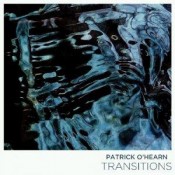 Because it is my policy not to review music I buy for myself, I have never had a chance to write about Patrick O’Hearn. Which is a shame, because I enjoyed his work back in the Private Music days, before losing track of him for a number of years, only rediscovering his superb and gentle art when I bought Beautiful World and Slow Time. But, again, it hadn’t been sent for review, so I didn’t write about them. (They’re excellent discs. Go find them.) Which made me all the more pleased when Transitions arrived in my mailbox and I could finally review some Patrick O’Hearn.
 It seems that when you bring two experimental music collectives together, it’s not just a matter of doubling the amount of experimental. Rather, it’s an exponential growth with endless possible outcomes. Brooklyn-based sound and video aritsts PAS traveled to Toruń, Poland for a music festival and there hooked up with two members of Poland’s HATI. When the festival was canceled due to a national tragedy, the teams took the studio, christened themselves P.H.A.S.T.I., and churned out The Stages of Sleep.
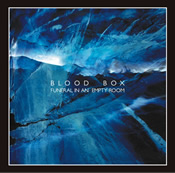 Although Funeral in An Empty Room adheres largely to what one would expect in a dark ambient work, and although at times in my own listening experiences I bordered heavily on a “yes, yes, let’s get on with it” mindset, I also found that I couldn’t stop listening. Perhaps it’s the effect of having Michael JV Hensley at the helm; this former member of well-known dark ambient group Yen Pox clearly knows his way around the dynamics of getting grim. Funeral is a well-modulated bit of darkness. Hensley knows when and how to thin out the density of his barbed and scraping sonic walls in order to make the next round of buildup that much more effective. That way, the disc shifts from lengthy stretches of soul-crushing weight to brief and, at times, almost beautiful reprieves. When Hensley eases off to give you breathing room, his dirge-like pads exhibit real grace and feel melodic and reverent. (Hey, it’s a funeral after all.)
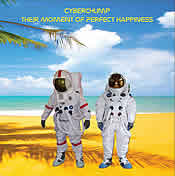 The gentlemen of Cyberchump know that your musical mood tends to fluctuate. That’s why their new release, Their Moment of Perfect Happiness, gives you two discs–one for those times when you need it uptempo and loud and another for your darker, more contemplative moments. The first disc, the upbeat one, is also for those of you who, like me, are suckers for a sexy, thick and chunky dose of window-rattling bass. With heavy dub influence entwined with ripping prog-rock guitar, this disc wastes no time in getting its funk on. “Every1” wah-wahs its way into your face and gets you moving while guitarist Jim Skeel unleashes a stinging swarm of notes. From there, he and Mark G.E. refuse to relinquish their hold. “Learning to Breathe,” which is so pleasantly trippy it should be called “Learning to Inhale,” offers harmonics pinging over a reggae bass line amid a butterfly stampede of electronics. And really, how can you miss with a track called “Interstellar Dub Station Freakout”? This one solidifies the duo’s dub cred, complete with scratchy guitar, a beat you can’t refuse and perfectly executed drops where the sudden silence just echoes through your head. The lads pull a nice tonal switch with “In Tension,” curving the flow into a Middle Eastern groove. Familiar territory for them, it must be said, and they hit it neatly here.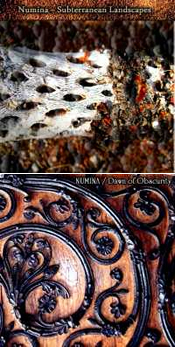
 When a press release drops terms like “granular synthesis” and “mathematical analysis” to reference how music is made and the artist talks about “cellular automaton” and “visual complexity,” it’s a fair bet that the reviewer’s not in for a simple listen. Guy Birkin’s software-and-theory-driven Symmetry-Breaking is such a CD and, as predicted, can be a trifle dense to get into. Paradoxically, once you find your way in, it’s easy to get taken away in the underlying harmonics. Much of the work here comes off with a raw, almost unfiltered sound and feeling. You can almost hear the numbers at work as they pull found and instrument sounds into semi-specific shapes. At other times Birkin’s higher math solves for x in cool, accessible flows. “Bass Loop b3” resonates with a rich low-end twang and an organic rasp of the string laid over a trickle of swirling electronics. “Gravity’s Rainbow” is a quiet ambient piece that Birkin’s software ripples, folds and deconstructs; as we listen the sounds get smaller and sparser, but our own calm inner response to it remains and is rewarded when Birkin lets the numbers ease the pieces back to wholeness. “Bramble” is a pastoral keyboard piece that speaks its story as pads and electronic passages walk through the background. These stand in effective counterpoint to more challenging pieces like the opener, “Fourier-Gabor,” where Birkin grinds sounds against one another and lets the underlying protocol rend them down into a crackling, static statement, or the near-white-noise wall created in “Ice Cloud Ten.” Even here, under the washed-through sound, a semblance of chord progression can be heard. The density at work in “Sneinton Elements” makes “Ice Cloud” seem lightweight by comparison, and feels like a field recording of the titular neighborhood, stretched, manipulated and coursed through with a long drone.
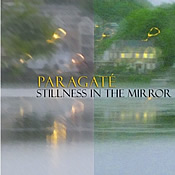 If you’re not thinking while you listen to Paragaté’s new release, Stillness in the Mirror, then chances are you’re not actually listening. Doing so in a Paragaté release is not a passive activity; it’s just not designed that way. The music here is improvised, following a specific set of rules like a particular chord structure and/or changing rhythms. From that stepping-off point, the pieces that develop vary drastically in approach, each one its own study in structure and concept, each one demanding an attentive listen. On the one hand you have a piece like “Lord of Stones,” which will have you wondering how many pianos you’re hearing or if you’re hearing one that’s overdubbed or if it’s just the way the sounds are placed spatially. Whichever it is, the sounds build as patterns cross and weave. The tempo is up and the mix borders delightfully on chaotic until it’s reined back to the point where it sounds simply like a rich New Age piano piece–but still with that ear-defying layering. On another hand there’s the dusky drones and grumbling textures of “Still Day.” Field recordings whisper in the background; a crunch of leaves, perhaps, and a trickle of water. But it’s all quite ominous, coiled around the thickness of the drone. Roughly midway through the tone shifts; it begins with a short stretch of near-silence that shows Paragaté know the importance of a pause. For a minute we’re left with just the field recordings, nothing but atmosphere. The drone returns, lightened but still bolstered on the low end. And on another hand there’s the final track, “Dreaming,” the longest offering on the disc, a piece that starts out like a standard ambient piece before Paragaté begin dissecting and shifting the sound images. The feel stays soft while an array of sounds populate the background. Multiple thoughts blend and shift. While Stillness in the Mirror largely holds my attention, for me as a listener there are a couple of missteps. I think it’s part of my evolving aural relationship with Paragaté. They fascinate me for several tracks before putting me in a place where I feel like I just don’t get it. Here, the first of those moments comes with the clamorous opening notes of “Tafelmusik.” The piece never feels like it untangles itself enough for me to find a way to latch onto it. Then there’s “To One in Bedlam,” where the titular poem by Ernest Dowson is haltingly recited over a glacial drone accented by piano. For me it suffers from the heavily echoed reading of the verse in a tone that sounds more like the voiceover for the intro of a sword & sorcery movie. For the most part, however, Stillness in the Mirror does what it should; it makes me think about what I’m listening to, challenges my musical perceptions, but also allows me to simply take it in and enjoy what Paragaté have created.
 Inspired by the true story of a criminally neglected child left living in squalor, Rasalhague’s isolationist dark ambient work, Rage Inside the Window, takes its listener down into snarling, oppressive and despair-choked spaces. This disc puts its hand on your throat from the start and forces you to stare into its unpleasant subject matter. There’s a dense piling-on of grim emotion that soaks through every track. Even if you weren’t aware of the origin of the music, the fear, hatred and raw anger would still make themselves known. Places where the thickness of the music scales back feel like the respite between bouts of sobbing, that point where you’re sure you can’t hurt or cry or mourn anymore–and then you do, and worse. The beauty of it, for lack of a better word, is that Rage never totally alienates. Rasalhague wants you there, wants you to be in that space, wants you to see and understand it, and to do so modulates the darkness quite skillfully. He knows there’s a line to cross and he manages to skirt it perfectly. There are times when you won’t want to keep going–I would suggest you’ll hit it in the closing moments of “Mother Is the Disaster”–but you will. This is compelling dark ambient that moves through its story in a completely realized arc, to the point of lightening and opening the tone just slightly in the closing track, “Taming the Feral Child.” If you listen to Rage Inside the Window once, you may not necessarily want to go back through it. However, having heard it you will not easily shake its effects on your soul.
 Hypnagogue Music Reviews