
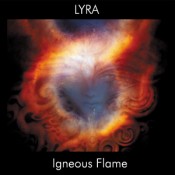
 For his latest release, Igneous Flame (aka Pete Kelly) opted to put aside the tools he’d gotten used to using to create his typically airy, richly layered ambient music and look for new ways to achieve his sound. Lyra started life as a guitar ambient disc in the style of David Sylvain but, as good Art often does, soon steered itself off in different and more individualized directions. The result was that Kelley split the work into two discs–one being synth-based and the other more rooted in guitar. The two share the warmth and depth typical of most Igneous Flame discs. Low drones form a base over which Kelly floats vaporous pads, long and prone to slow fades, sometimes giving themselves over to a big buildup that swells before evaporating. In among the drifts Kelly, as always, weaves emotional and narrative threads. Take a track like “Translucence,” which eases along, shifting tone before passing through a rushing wash of sound, a sort of sonic nexus, a portal that gives way to a new expression. There’s excellent motion at work here, and it packs its share of drama. “Brilliantine” shows off the same sort of shifts across its 10-minute span but keeps itself quiet through the changes. “Crystalline” adds some extra dimension with the solidity of quiet piano that appears in the last minute or so, rising like crystal in the midst of another gauzy flow. The only mis-step for me on disc 1 comes in the middle of “Auric,” where Kelly wallops a stretch of calm with a gong. A big gong. I’m just warning you in case you’ve got a heart condition. It must be said, though, that “Auric” does build to that moment, with almost orchestral swells pushing through in points, and Kelly moves from there to a spiraling whirl before easing back, so some leeway has to be given from a thematic perspective. But oh, that gong… It’s the only disruptive moment in an otherwise delightfully meditative flow.
By comparison, disc 2 comes away almost as if Kelly wanted to give us more of what worked in disc 1, but then ground the whole thing with the earthy waypoints provided by his laid-back guitar style. It’s an evolution of the first disc that shows how one more element can change ambient. I like that Kelly doesn’t make this just an ambient disc with guitar overlay, however. The guitar picks its spots and only comes in where it’s needed, where it neatly augments the moment. Its first real appearance happens more than halfway through the first track, a light and high bit of phrasing with a touch of a folksy twang that drops into Kelly’s signature flow. The title track features flickerings of acoustic guitar, butterfly storms of notes scattered across its face. It’s truly a blend of ethereal and corporeal, the dreamy and the distinct, and Kelly meshes the two sides of the equation perfectly, again and again. Listen to “Spark,” where at points Kelly pulls everything back to a point of near-silence, absolute wisps of sound from both sides–his lightest drones, the gentlest touch on the strings–and makes stunning use of the resultant negative space. You find yourself holding your breath and waiting for the next moment to be created.
Lyra is not an easy disc to write about; like many excellent works, a simple listen will do more for your understanding than anything I can try to say here. What needs to be said is that Igneous Flame is continuing to advance and improve, challenging himself with every new disc while managing to maintain a signature feel to his music.
Kudos also go to Kati Astraeir for yet another stunning cover.
If you’re interested in Kelly’s process and/or gear used in making Lyra, he jotted it all down in blog form for you.
Available from Lumina Sounds.
 The Time Traveler is Paulina Cassidy’s second CD, and my first introduction to her work. May I just say, I’m glad I caught up to her early because this is someone I think I’m going to want to listen to going forward. Although this disc skims by in under 35 minutes, the voyage holds time at bay, thanks to Cassidy’s otherworldly, wordless vocals and a blend of styles that range from neo-classical (“The Faceless Clock,” “The Here and Now”) to the hauntingly abstract (“Dimensonal Shift” and the 56-second “Quantus”) and several points in between. I was honestly surprised to note how short the disc was. Then again, I’ve had it looping to take in the depth of Cassidy’s music. The changing styles, even on so short a piece, keep Time Traveler fresh and Cassidy is obviously at home with her musical shapeshifting. She curves the Enigma-esque title track seductively around the listener, infusing it with a light Middle Eastern feel, a pulsing bass and her sensual whisper. She changes to a clean, crisp Windham Hill style for “The Here and Now,” a simple and lovely New Age instrumental on piano and strings. The opener, “The Facelss Clock,” is rife with drama and tension. Plucked strings leap over string sounds as Cassidy lays down a gorgeous caoine like a romantic ghost song. That same feel works through the closer, “Tea With the Dream Ghost.” Silky, echoing faerie chants spin through the background against long-drawn string pads and muted piano. There’s a beautiful fragility to the all vocal work here; it seems spun out in a very fragile, glassy thread, sound coming through like refracted light. The Time Traveler is a wonderfully dynamic set of pieces, and Cassidy is a genuine talent to be watched.
 Larry Kucharz is a minimalist composer perhaps best known for his “Ambient Washes” series, where a tonal “color” is explored in a stripped-down way that focuses the music on what he calls the “uncluttered melodic or rhythmic structures.” But Kucharz also dabbles in the dancier side of things, playing in the fields of techno and EDM. This is where we find him on his 2011 release, Unit IA42, and the offerings here are a bit of a mixed bag. I have to say that, having listened to a fair amount of Kucharz’s work, I find the washes more to my liking. But there are definitely ear-catching pieces on Unit IA42, and the strongest of them are the initial four pieces, his “Binary Suite,” offered as an example of his symphonic electronica. In fact, there’s a distinct switch that comes after this quartet of movements; the latter pieces feel somehow less sophisticated, or perhaps just thinner in content. The first four tracks align with the chill side of things, soft at the edges but laced through with sharp sequencer lines. “Life IA42” shifts from a slow-breath meter to a hurried walk measured in low notes. The suite closes nicely with “Binary Funeral IA42,” my favorite track here. A low end like a pizzicato cello anchors sweetly singing string sounds. Wave-washes of whitish noise rise intermittently and a simple clicking rhythm marks time. It’s laid back and yet fairly deep. I have said I have issues with the latter part of the disc, but it’s not without its own moments. “U302 Remix 42” carries a surprising amount of impact, given its very sparse elements. It has an early electronic feel, with an insistent–make that unchanging–bass-drum meter and grumbling, repeating four-note low end. Snaps of early analog percussion form the remainder of the sounds, moving in absolute, circular structure. Despite what seems like a recipe for static music, there’s a definite dynamic and Kucharz’s equation keeps you held there. I was surprised to look at my iPod mid-song and realize that it’s almost 10 minutes long. Welcome to your trance state, Mr. Hypnagogue. He catches me again with the frantic jazz piano feel that drives “Juke It 42,” although it could do without the processed voice chanting “Juke it!” “Ambient Dance 42” offers up a catchy mix of drum rushes punctuating sparse club-like electronic phrases. My only problem with Unit IA42 is that it feels like it grows too thin toward the end of the disc, with the last two cuts coming in to somewhat save it. It may just be that the ultra-repetitive, heard-it-before mathematics of techno wear out their welcome for me. I often feel the same way with glitch-based electronica. It’s a weighted scale, really. Looking at it as experiments with the forms and standards of electronic dance music, I get Unit IA42. As a listener, however, I find myself accepting about half and hurrying past the other half. Going back to what I said before, Kucharz’s Washes CDs are a better point of entry into this superb composer’s musical mindset.
 In his first solo release since 2007, Brian Parnham puts forth an array of visions that, while tending more toward sources dark and tribal, also work their way into classic electronic-music forms to make for a very complete whole. See None, Hear None, Speak None comes off as a well-modulated tour through Parnham’s musical headspaces. The movement, from the drum-driven openers through wider ambient vistas and back, flows smoothly. Kicking off with the title track, Parnham first hits the listener with an almost downbeat feel. Ringing metallic notes meet string pads and round-toned percussion in a cool blend. But any thoughts of this being that sort of listen (which, considering the quality of the track, would not be a bad thing at all) get tribally drummed out at the start of “Head in the Sand.” This track and its followup, “Suspended Plumes,” are the most heavily tribal pieces here, and they make for a mind-bending stretch. “Head…” is energetic and forceful, a very potent calling fueled by absolutely thundering percussion. A sound like ringing glass and distant snarls of didgeridoo scrape across the backdrop, all underscored by a fast sequenced line. “Suspended Plumes” drops the pace and curls immediately into a thick, humid and slightly menacing space reminiscent of Roach and Metcalf’s Serpent’s Lair. Considering Parnham’s past working associations with Roach, the influence is not at all unexpected–it’s merely a continuation of chemistry. The drums are even more central here, and Parnham plays with their sound, curving and warping the shapes. He deftly melts this track into “Eroding Shore” which, as he mentions on his site, he sees as something of a reprise to a track from Roach’s Magnificent Void. The homage is right there in the big, bold pads that rumble on the low end and a sense of spacey vastness. This is the first beatless track on the disc and it leaves no question that Parnham can handle this type of flow, too. There’s an interesting stretch that begins with the track “Half Full.” This and the two tracks that follow are very short; the longest is a shade over two minutes. They come off like vignettes of dense, building sound, brief experiments forming a tenuous bridge to the latter half of the disc. “Half Full” coils up a coarse, rippling pad that squelches into the insectile, analog tangles and slightly more open space of “Tipping Point,” and then “Half Empty” roars in, sounding for all the world like big sonic buzzsaw tearing open the flimsy fabric of reality. This is just a big, savage, gut-check rip of sound at the edge of noise, and I love it. What makes this passage even more effective is the way Parnham uses them, along with a few cracks of electro-thunder, to guide us into “Business As Usual,” which has not only a lighter tone, but surprises with the appearance of a guitar. There’s an old-school familiarity about the tone of it that evokes the feel of a blend of Nine Inch Nails and Jarre. The low end is very Reznor; the high side is pure European electronica; the whole thing is three minutes that grabs and holds the attention. The retro grooves continue in the big and bouncy “While We’re Here,” which is simply a sequencer-lover’s joyride. (Need more? Forward to “Enjoy the Ride.” Which I guarantee you will.) From there Parnham works back down into darker abstract spaces with the centerpiece of the disc, “1111.” Fluid pads ebb through as didgeridoo lines rasp and slither across the space. This is a very deep track, energized by low-key percussion pulses and more of that skittering analog. One of the best standalone tracks I’ve heard in a while for pure immersion. Didge lovers (like myself) get their payoff in “Earth Mourning,” as the breathy primal tones curl around metallic clatters and an atmosphere of distinct unease. This is a very claustrophobic track, constantly and uncomfortably closing in until Parnham nudges it open with upward-moving pads. This is perhaps the most narrative track here, and Parnham plays equally well in the dark and the light. See None winds it way to the quiet finality of “Last Breath.” A meditative flow marked with a heartbeat pulses that, without a hint of morbidity, slow over time. It brings this superbly made ride to a calm close. If you like Brian Parnham, See None, Hear None, Speak None is a disc well worth the five-year wait. If you haven’t been familiar with him until now, this is an amazing place to start.
 Edge-of-dusk drones built out of samples from old vinyl records and loops from mellotron, piano and more skulk their way through the bleak landscape of Gramophone Transmissions, the second release from Canadian artist Broken Harbour (aka Blake Gibson). The inside cover notes that “headphones and closed eyes provide the ideal listening environment for this recording.” I’d have to agree. As Gibson moves from slightly melodic–or perhaps melody-assisted is the right word–to sparse, near-isolationist drone-spaces, you’ll want to take in as much as you can. Atmosphere and sonic texture are in full force here, dragging visceral reactions from you. In the opening track, “Drift,” mournful string sounds rasp a funereal cadence as light piano notes sprinkle across the frame. It’s about as light as the disc gets before Gibson starts to spiral down to bleaker zones. The two parts of the “The Ballad of Dave Bowman” make sure you understand that we’re done with anything but drone. The first is a stripped-down soundfield crackling with the static of a wayward transmission; the second builds off a drone with a pipe-organ feel, a steady, mildly swirling wash of sound that seems to pick up intensity as it curls around you. They’re both chock full of activity compared to “Titan.” This is probably the starkest track on the disc. It reaches a very minimal point where the pads thin out and weaken and stretches of near-silence, where just a vinyl crackle fills the space, take over. The emptiness of it is quite affecting. Here, like nowhere else on the disc, Gibson conveys the sense that you are quite alone in this place. In “Dark Clouds Gathering in the West” Gibson hangs a pall of sound, a wavering expanse of pure grey, then layers it with eerie vocal wails. This track just gets more unsettling as it moves along–and there’s 12 minutes of it to get through. Gibson moves firmly into dark ambient territory with “Maelstrom (The Descent).” Here he just industrially grinds his way into your skull for over 15 minutes, overwhelming you with the sheer density of sound. It’s actually a fairly dynamic piece; for all its skull-corroding abrasiveness, it’s also got a fair degree of motion, albeit tectonic in speed. The disc closes with “Unforeseen Consequences,” where Gibson switches back to less edgy pads and drones. The tone is still shadowy and uncertain, but the feel is somewhat calmer. By disc’s end you haven’t left Gibson’s desolate musical homeland; you’ve just crossed it, ready, perhaps to go again. Gramophone Transmissions will definitely appeal to the dark ambient crowd and will likely work well for those who appreciate drone–but anyone into beatless, atmospheric wanderings should have a go as well. An excellent new release from a strong dark talent.
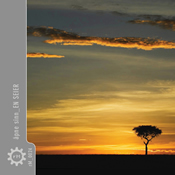 In his second outing, Åpne Sinn (aka Geoff Small) enlists ambient friends Steve Brand and Peter James in pulling together a strong blend of drifting ambient washes that glide across understated tribal touches and skirt the edge of shadow when they’re not simply easing forward with cloud-motion grace. The pacing here is wonderful; it’s part of what makes the disc stand out. Small skillfully guides the listener through his spaces, starting with “Son of Low Birth,” where that tribal percussion loops around intersecting bell-curve pads. There’s a strong touch of Roach in the flow, but it’s all Åpne Sinn at the core, and the sound layers run deep. From here the flows cools into a long stretch of quiet music. Brand is called in for one of the longest tracks here, “Unconquered,” to kick off this section. Brand’s signature is a vast, contemplative expanse of ambient washes, and that feel blends readily into Small’s often slow-handed constructs. There’s very good chemistry here that results in a warm and somewhat dark drift. The next track, “His Great Heart,” continues the quiet with yawning drones that sound quite like a harmonium. Again, there’s a quality of warmth at work; this piece has a very personal feel, like there’s an unspoken dedication being made. James joins Small for “What Rough Beast.” This is the darkest track on En Seier, working up from a low grumble and what to my ears sounds like the crackle of a fire. It does indeed slouch its way through its eight-minute length, trailing a slight sense of unease. The detail here is fantastic, and the atmosphere is just thick with sound. For that it’s matched only by “Still Transmitting,” where Small employs reverse echo over soft drones and creates a cool sense of something coming back at your from a distance, some forgotten message still carried on unseen waves. Small eases the beat back in in the form of subdued heartbeat pulses that open into light percussion on “The Long Plains,” the second collaboration with Brand. It subtly marks the end of that rich, quiet stretch and brings us back to the surface before the disc closes with the absolute sighing softness of “Deep Breath Out”–an accurate title if ever there was one. It’s 12 minutes of meditation-perfect ambient pads breathing slowly. The feel is light, calm and utterly unhurried. Looping this track alone would make for a superb ambient listen. Which would be fine, but I suggest you simply loop En Seier for a while, like I did. The way it’s paced turns it into a very workable circular listen, a quite complete journey. Just allow yourself to be guided along and trust Geoff Small to get you where you’re going. This is a great sophomore release and, as I said with his debut Espiritista, firmly marks Åpne Sinn as a name worth listening to and remembering.
 Frozen in Motion erupts into your eardrums with a metallic clatter and pinpoint shots of sound and then, just shy of a minute in, reforms itself in a dubstep-based mode and takes full control of your groove centers. This is “Hajime,” the first track, and it’s the stepping-off point for a lip-smacking dose of sweet electronica. Chris Child, recording as Kodomo, takes a sound-set steeped in the ordinary noises of everday life and kneads them into new shapes to put together in this constantly shifting, always engaging CD. Heavy on the jerky rhythms of glitch and, as noted, giving deep debt to dubstep, Frozen in Motion is stocked full of ear-catching moments. Check out the point in “S Equals Zero” where things suddenly take off like someone gave an orchestra playing Phillip Glass an overdose of Red Bull–this coming out of a quieter, much more lounge-friendly structure to take you by surprise. Stutter-stop glitches at just the right moments pump it up even further up the cool scale. I like the industrial edge that pushes “Collide,” along with the pulse-modulated and always uncertain rhythm at work, like a car that’s just about out of gas, surging unevenly. “Gate 5A” goes post-rock, complete with catchy hook and lush string sounds, including cello from Dave Eggar, to soften it up. Guitar from Thad De Brock rounds out the texture nicely and helps set the track apart from the more purely electronic tracks. The title track feels like a guilty pleasure of dance-floor-worthy riffs. Again, Child plays with the modulation, shoving sounds at us and pulling them right back. This track possesses serious funk. Overall Child does a great job of mixing up his styles, track to track, but staying within that common framework of dubstep/glitch as his driving themes. With each element doled out wisely rather than thickly ladled on, Frozen in Motion remains engaging, start to finish. This is a disc you most definitely need to hear.
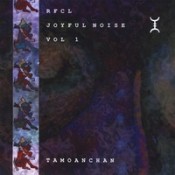 Please do not go into Radio Free Clear Light’s Joyful Noise Vol 1: Tamoanchan planning to listen to it. That’s not what you do. Rather, you let it pull you in and surround you with random washes and snippets of sound from countless sources that you’re meant to just be near, to be within and to look, aurally speaking, at what you’re being presented with. What you do with the influx of impressions is up to you, and mileage will vary greatly. RFCL head Juan Carlos Mendizabal calls the piece an updated sacrifice of sorts, taking the old–the cast-off bits and pieces captured in the found sounds and scavenged loops–and pairing them with the “living blood” of the improvisational moment in this sonic mass. What comes of it is something less modern primitive than urban primitive, a citified pulse jammed in synch with old belief and the timeless simplicity of the acoustic. Guitar melodies carved out in the almost ungraceful cadence of one lonely note at a time, a trumpet played with ragged, amateurish zeal, a wailing sax trying to find its key, all pushed across your scope of mental vision by a wayward tide of understated sound. Tamoanchan happens around you as you listen, with moments prodding you to a more vivid awareness. There are few tactile points of reference for you to latch onto, which all but forces you into a sort of floaty acceptance. So just put on the headphones, open your mind and join in the sacrifice. It’s wonderfully off-kilter, ripe with the energy of improv and very, oddly, deep. I’m not always sure what I’m listening to on Tamoanchan, but I know it’s doing a hell of a job keeping me interested.
 Award-winning New Age composer Louie Andreas lays down a set of quiet, romantic tracks on his new release, Magickal Nights. Piano and synthesized flute feature heavily in the seven tracks here, dancing their way across light pads. It’s a beautifully made album that unfortunately is just too light for my personal tastes. There’s not a lot of difference, track to track, so the whole things leans toward the repetitive side before too long. It’s pleasant enough at first but without any real dynamic it loses its flavor well before it’s done. Listeners more in tune with very light New Age instrumentals/healing music might find more to take hold of here. I kept waiting for something more to happen. Samples are available, of course, so have a listen.
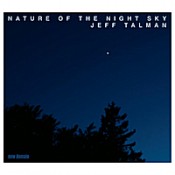 On one hand, I think you had to be there. Imagine walking into a clearing at dusk in a Bavarian forest. Speakers in the trees begin to play as the light fades, and the space is enveloped in long drone tones. You’re told that it’s the resonance of 15 stars, sounds normally too low to be heard, magnified 1,000,000 times. It goes on for 50 minutes as the stars fill the quiet sky. That’s the origin of the music, as an installation piece, and that’s probably where it was best experienced. On the other hand, looking at it strictly as ambient music, Talman, an artist known for his work in exploring the resonant qualities of different spaces, takes his star-sounds and maps out a very deep voyage. He employs binaural stereo to replicate the surround-sound environment that naturally occurred in the installation, and the added depth makes the sound a little more soothing. The time passes calmly. Shifts in tone are small and easily made, leaving not so much as a ripple in the flow. This is a good disc for low-volume listening; it’s shadowy and hushed, filling your listening space and gently morphing itself across the 50 minutes, largely unnoticed aside from its mental balm effects. Listening to Nature of the Night Sky makes me wish I had been there in that forest space to take in the blend of sound and emerging starlight. I may just set up my outdoor speakers and create my own version at home. An interesting release from Jeff Talman.
 Hypnagogue Music Reviews