
 Lush with sacred music overtones and lightly wound with shadow, Alio Die’s new release, Deconsecrated and Pure, establishes a sense of meditative reverence from its first notes to create an extremely intimate ambient space. A hymnal quality takes over from the start in “Layers of Faith.” Woodwind sounds take the lead here as Alio Die (aka Stefano Musso) builds his way toward a wonderful sonic density. Light touches of field recordings help Musso carve out a sacred grove for the listener, a very personal cloister for hushed reflection. The second track, “Obliterated Alcove,” gets a lift from vocal samples. Musso takes recordings of work by 16th century Venetian Renaissance composer Claudio Merulo, performed by Paolo Tognon and the Quoniam Ensemble di Dulciane and De Labyrintho Ensemble Della Rinascenza, and layers them over his droning loops. His arrangement, apparently giving each voice in this choir its own personal phrase, makes each feel like a piece of a quite larger whole, the segments falling apart and coming together in a rich, fragmented prayer. Near the six-minute mark, Musso pulls back the drones and lets the voices take the forefront. This is where the disc elevates to its strongest sense of the sacred, riding on that largely unprocessed presence. Again, as the field recording of a stream (or rain? hard to say) is subtly dovetailed into the mix, the atmosphere of the piece is again heightened. With “Peel Away This Mortal Coil,” Musso introduces a clattering bit of dissonance into the mix, playing with the contrast of metallic collisions, twists of key-searching woodwinds and his base drones. It’s a busy track, but the chaos is obviously controlled. Nothing overwhelms; there’s a tenuous chemistry happening between elements, and the dissonance just skirts the edge of feeling too random. What makes this work even more is that it flows into the softer space of “Cerulean Flow.” This is my favorite stretch of the disc, ten minutes spent wrapped in concentric coils of sound. There is a warmth to the voice here that may be amplified just a bit from its coming on the heels of “…Mortal Coil.”–but it’s a very personal warmth, regardless. Musso closes the disc with “De-Altared,” again giving over to threads that initially compete and jar one another. The woodwinds honk rather than sing; wayward field sounds poke out of the sound; the mass feels like it’s trying to find its identity–but again, within the tangle a calming sense of near-order surfaces. There are so many intricate layers at work, it’s a pleasure to get lost in the interplay. This is the longest track on the disc, and Musso carefully plays with the balance of sound and emotion, wildness and reserve.
Clearly, Deconsecrated and Pure is a deeply engaging piece of work. Musso’s use of processed acoustic instruments–notably the dulciana, a type of oboe–embeds an organic depth in the flow. While they retain an ambient texture, there’s a notable solidity to their tones that rises up in spots. The field recordings and even gentle tapping on metal, very earthy, present sounds, are gingerly placed as concrete elements in the otherwise empyrean atmospheres Musso creates. This is the product of a master at work. Listen to it many times over; there’s a lot to hear, all worth the effort of listening closely.
Available from Projekt.
 In under 40 minutes, Winnipeg-based artist Stephen manages to lay out ambient music pieces inspired by, among other things, films by Lars Von Trier, internal conversations, lost children and dead raccoons. The 10 pieces here are quick hits, most roughly pop-song length, so there’s not a whole lot of room for development. And, as you might guess from the range of themes, it’s something of a mixed bag. Experimental pieces like “The Conversation” and “Tron’s Wooden Leg” go somewhat awry and seem like they’re trying too hard to be interesting. On the upside, when Stephen is content to slow down and spread out a little, there’s good listening. “Cycle of Life” is built on a slow, melancholic melody over which he lays subtle, almost ghostly field recordings. The result comes off like a patient panning shot across his thematic timeline. (This one’s “visual” involves a woman dying of cancer at 18.) “Lost in Frequency” pulls off a good balancing act between skewed and straightforward. It opens on the soft side and drifts along, eventually taking on a beat and some textural treatment. The sound-play skirts the edge well; it doesn’t go too far and disrupt the symbiosis that develops. Stephen is at his best in the ambient framework of “Floating in Space.” He nails the theme here, long pads supporting a stretched melody. There’s a good turn here, a switch in tone that’s nicely executed and takes the story to a different and no less interesting place. Abstract is hampered, I think, by its own shortness. I can’t shake the sense that it could be a stronger, more fleshed out effort. Thirty-five minutes overall isn’t much time, musically speaking, for most artists to say much, especially in this genre, nor is the three-to-five-minute per-piece range that Stephen shackles himself to in his work. The vocabulary is there. Of that I have no doubt. But I’m not sure Abstract is the best expression of what Stephen may have to say.
 In a genre that tends to be dominated by the “record today, release tomorrow” mindset begat of and enabled by the influx of DIY technology and software, the duo Austere distinguish themselves with a work ethic that involves composition time followed by shelf time, agonizingly self-critical consideration, and a refusal to release music just for the sake of being heard. This translates to a good thing, as their releases carry the quality that comes with a surplus of patience and control. Their latest, Euterpe, revels in its deeply layered sounds, quietly anchored by what the duo say is a “centuries-old Tibetan meditation ‘pulse.'” The blend of near-drone tones and the heart-slowing effect of the pulse make Euterpe a disc to fall directly into. First, however, you’ll need to pass through the slightly darkened gate of “Polyhymnia.” This piece features vocals from Christina Carter that, while lending a sort of mythic/spectral feel, are also just keening and edgy enough to make you work to take in the beauty. The depth of sound here gives it a sensation of sitting in a temple, listening to these wordless prayers echo off the roof, the sounds redoubling on themselves to discover new depth. From there, though, the duo settle down to carve out constructs that they self-deprecatingly (and with a bit of a Wink) call “ambient mindscapes that even your Mom will like.” Well, I’ll tell you what–I must be your mom because I like the coming-sunrise washes of “Roseate” and the way it quietly builds while keeping an optimistic tone. I could happily just curl up into the warm, hypnotic sound-cocoon of “Sunshone” and stay there as its base drone keeps wrapping itself around me, textural touches easing past like wayward thoughts. And I love the ode-to-the-muse flute work from R. Johnson and Glurp on “Betroven,” paired against another whispering and unwavering drone. The thing about Austere is that even if they decide to do “accessible” ambient–and let me say here that I’ve never found them all that inaccessible–they’ll do so (and have done so, here) with their signature depth. They will tweak it to make it specifically theirs. Euterpe is not a disc of simple ambient music; it’s deeper than that and requires you to have a real listen. Spend 17 minutes inside of “Totonality” and you’ll get it–there are sounds upon sounds, including guitar work from Freq.Magnet, and the interplay between everything is mindfully made and deliciously complex. Euterpe needs and rewards attentive and/or headphone listening. As with any Austere disc, the wait was decidedly worth it.
 The duo Mitoma piece together speedy glitch constructs and IDM grooves on their new release, Satellite Hive. You get what you expect here. The beats are thick and hard-hitting. The glitch-work fires at synaptic-overload speed. Repetitive elements lend it bit of a hypnotic feel in spots. (Check “Residual,” for example.) Throw in a bit of a dark edge and the occasional lean toward the more industrial side of the scale, and that’s Satellite Hive. High point for me here is “Rawling 4851,” which comes off like the theme to a science fiction show if it was done by Prodigy. Your pulse rate cranks up, your body takes up the beat, it’s fun. For me as a listener, however, Satellite Hive is pretty much Yet Another Glitch Disc. If you can’t get enough of the stuff, give it a listen. (You may want to move quickly, however; the run is limited to 100 copies.)
 Not all of Janne Hanhisuanto’s Quiet Places are entirely quiet. They are all, however, quite engaging. With a flair for variety, Hanhisuanto presents 11 distinct narratives that range from spacemusic-style meditations to perky, sequencer-based riffs to clean New Age simplicity. The disc starts off in space with “Hayley.” The piece shifts when Hanhisuanto subtly slips a bit of hand percussion in under his starlight synths to ground it. “Ptolemaios” takes a short piece of phrasing and works it through a slowly rising feeling of drama. Hanhisuanto finds his focal point in a potent bass note that cycles through, growing in presence and importance as the piece proceeds. The song feels like it moves through scenes, with its center shifting from element to element–from a slight Mediterranean flair to the bass, to patient runs of glittering notes. An excellent offering. The artist briefly gives in to the dark side with “Breathing Universe”; opening with cold-space tones and minimal movement, the piece comes across like you’re watching stars from a distance. Their shimmer is there, far off, something to reach for that never quite comes. I like the way Hanhisuanto maintains that feel of vastness and separation without getting too grim. Often, an artist truly shows us what they can do not by how much they can put into a piece, but by how little they require. Hanhisuanto does this with “Daydreams” and “Romance(2).” In amidst all his electro-wanderings, he comes back down on these tracks to let the purer sound of guitar and piano, respectively, gleam through. “Daydreams” matches a folksy acoustic guitar with a pleasant electric piano accompaniment and lets them simply sing together. “Romance (2)” is a straight-up, one man/one piano situation, a composer caught in the midst of, well, a romantic moment. The clean sound stands out on the disc without ever feeling out of place; it’s merely a step in the overall journey.
 Because I am a Reviewer of A Certain Age, one of those who was young when the Berlin School was new, Phillip Wilkerson was able to hook me immediately with the first track–no, make that the first few notes of his new release, The Stars and Afterward. The open-throttle sequencer pulse of “Monoceros” sent a jolt of joy through my analog-loving heart. But this isn’t simply a Berlin-style outing. Rather, Wilkerson places a couple of these beat-potent excursions among softer, more Wilkerson-esque drifts to shuttle the listener easily back and forth. “Among the Nebulae” reduces the beat to a barely felt pulse, a suggestion running under pads that he gives a metallic, church-organ tone. You’ll notice it, but even when it’s at its most apparent it’s still modulated well into the mix. A nice touch. “Seven Degrees North of Castor” is another piece on the pulse-enabled side of the equation, and is just a fun, cool track to kick back with. There’s a lounge-like timbre to it, patched in with the retro vibe. What makes it work is the play between a striding bass line and a whistling, high melody–perfectly balanced. The drifting/droning tracks, like the lush and moving 21-minute “Radiance” are handled with Wilkerson’s practiced and, quite honestly, breathtaking grace. Wilkerson imbues his ambient flows with a feeling of pure patience and unhurried tonal observation. His “ambient mix” of “Among the Nebulae” and the title track, which ends the disc, carry this sense. “Among the Nebulae” is drone-based, a hypnotic wave of gently moving sound. “The Stars and Afterwards” is flush with a bit of star-romance, coming in on a somewhat dramatic rising tone before leveling off into a relaxed ambient drift. As is often the case with Wilkerson’s music, a through-line of optimism seems to thread itself into the work. The listener comes away feeling good, the spirit lightened just a tad. And that’s a very good thing. The Stars and Afterward is another superb release from one of ambient’s most consistent performers.
 Good things come to those who wait. The latest collaboration between ambient masters Oöphoi and Paul Vnuk, Jr. began its life in 2005 when Vnuk sent Oöphoi (Gianluigi Gasparetti) a series of improvised loops. That back-and-forth eventually produced their first album. Then, in 2009, Oöphoi returned to those source loops and began creating something new. Three years later, with both artists adding their signature touches and machinations, we are treated to Dreamfields, four long tracks of spacious, shadowy ambient constructs. “North Field: Axis” arrives bearing big, bass-heavy synth pads that bully open a real sense of space and distance, of an unspeakable vastness ahead. My own personal frame of reference takes me to Steve Roach’s “symphonic ambient” works like Magnificent Void; this track has that same building majesty under it. There’s also a sound early on that I can’t help but liken to a core sound in The Dream Circle. Oöphoi and Vnuk build this one to a gorgeous density, then spiral it back the way it came, paring to silence. This is the longest track of the four, and it acts as a gateway into the other, different spaces. With your brain suitably salved you can move into “South Field: Khyber”–a decidedly grimmer affair, awash in tenebrous swirls of dark sounds and a sense of dislocation. This track is thick with ghosts and whispers, both passing in a constant, vaporous stream. A snippet of Vunk’s son reading poetry slides in under the sounds later in the track and ups the creepy ante. A great atmosphere overall. The duo widen the space back out and lighten it slightly in “East Field: Helikum.” There’s more breathing room here, although the memory of shadows still curls up around the edges. Those rich undertones from “Axis” rise up in places; the mix of textures here is superb, and the drift is warm and enveloping. The disc closes with “West Field: Awua.” Here the duo spread their sounds to a thin and breathy wash. A sense of slow motion takes over. Chimes sound in the darkness to guide you back home–all the more effective for their being the only “solid” sense for the better part of an hour. Gently, Oöphoi and Vnuk guide the piece to a close. The sensations, however, linger. Dreamfields gets better and deeper with every listen. There’s no doubting the alchemy at work here, and no doubt that you are in the hands of a pair of ambient masters. This is a disc to set aside time for. The rewards begin immediately and just continue. This is music you will feel. One of the best ambient releases of the year.
 In what must be taken as a departure for two artists known for their dense, rich ambient atmospheres, Bruno Sanfilippo and Max Corbacho’s Bioma relies more on actual atmosphere–field recordings made in the fields and forests of Tarragona, Spain–to create a quiet, fully immersive soundspace. The field recordings, birdsong, water, wind, take the forefront throughout much of this 59-minute nature walk. Sanfilippo and Corbacho weave their electronic textures through the space like wind in the leaves. Around the halfway point, however, the sound takes a turn. The electronics slide more forward. Bells and chimes clatter, not entirely pleasantly and with a touch of discord. It’s like we’ve come to an uncertain place in the forest where something less than pastoral hangs in the air. Toward the end of the disc, the birdsongs that fill the early parts give way to crickets and distant nightsounds. Bioma is an interesting experiment. It’s clear that the two principals are not afraid to push their boundaries. The underplaying of the electronics early in the disc is nicely balanced with their stronger, darker presence later. This is a good low-volume listen that takes on new, deeper life in headphones. One caveat: if the sound of birdsong wears thin on you quickly, this is not the disc for you.
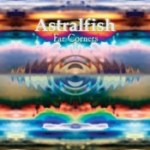 If you’re looking for a bit of eclectic listening, you’ve come to the right place. From trippy space-jazz to charging prog to freeform funk and various points in between, the broad collective called Astralfish touch a number of musical bases on the rightly titled Far Corners. Fronted by Bridget Wishart, who spent some time in Hawkwind, and Don Falcone, last seen around these parts as half of
  Hypnagogue Music Reviews