
 On his newest release, Joe DeVita alternates between laying out cool jazz licks on guitar and piano and running those same licks through a sonic meat grinder to blend them with potent, experimental spices to bring out a whole new flavor. The result is an interesting and sometimes mildly confounding disc, set out in three multi-part movements, that changes identities over and over. While the disc is at its most accessible when DeVita is playing it straight–he’s a superb jazz musician–the riskier pieces also have their own flair. “Visions,” part of Movement 1, starts with fairly straightfoward electric piano and hand percussion over a spoken word piece (which carries the title theme through the disc)–but as it goes along, only the voice retains “normalcy.” The background begins to fill with random sounds clashing against each other and the piano feels more improvised. Late in the track, and moving into “Journey,” it seems that DeVita picks out phrases or pieces thereof and drops them back into the wash. I’m not sure how much here is caught played live and how much is looped/processed/post-produced, but the artist makes great use of this sort of repetition throughout. “The Spiral” (Movement 1) starts off sounding like an intimate jazz combo before DeVita again roughs up the background and piles on densities of resonant sound, swirling phrases and clatter. What makes it work is the set of heavy piano chords and steady bass and drums laid down with an unwavering, Brubeck-like solidity in the face of this sonic storm. The stretch formed by “Secret Meetings” and “Can You See It?” in Movement 3 borders on dark ambient, with big rushes of grim sound, buried and weirdly processed vocal samples, and feedback drones.
Personally, I find Evolution to be at its strongest when it’s not venturing too far off into avant-garde land. “Requiem,” from Movement 1, is a beautiful arrangement of piano backed by a whisper of synth chords. Movement 2, which is just two tracks long, showcases DeVita’s spiraling, liquid guitar work. On “In Perfect Silence” it stands by itself save for more of the spoken piece and simple choral synth pads sighing beneath it. The guitar here is very soulful, hanging meaningful pauses and letting the resonance of the hollow body sing undertone. “Man vs. Nature” is a no-frills small-combo outing, a pure jazz groove of guitar, piano and bass. (In the opening of Movement 3, “The Heretic,” DeVita takes that same structure and coarsens it–the guitar fuzzes out and gets frantic, the piano and bass wander around the room a little more freely. It’s a great juxtaposition.) The closing track of Movement 3, “Funeral March,” is filled with gorgeous guitar runs lightly backed up with electric piano chords and touches of electronic treatment. The guitar here again absolutely drips with sad soul.
It helps to have a taste for jazz going into Evolution At its heart, it’s a jazz disc with electronic intentions and an experimental spirit. As I said, it changes it appearance often, but each switch brings a new way to appreciate Joe DeVita’s talent.
Available from Daddy Tank.
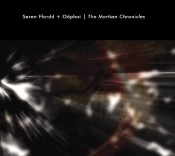 Drone masters Seren Fford and Oöphoi interface with the spirit of Ray Bradbury on the long-form ambient work The Martian Chronicles. This is an impressionistic work, the sounds and drones carving images of the Martian landscape in your mind. And that landscape evolves across time. At the outset, the scene is sparse, windswept red dust issuing over cold ground. A sense of loneliness gnaws through the sound. Late in the first track, “The Long Years,” the feeling is so stripped down it becomes almost unnerving. The duo carry the unease straight into “Dead Cities,” where low funereal drones moan under a quiet, freezing hush. As the piece goes along it slowly grows in vibrancy and light, moving us into a more inviting landscape. It’s the first sense of forward motion, of narrative discovery. We understand that we’re on the cusp of something, and it arrives in “Blue Fire” with some unexpected percussion. We’re taken through a brief passage with tribal overtones, like a look into some lost civilization’s past or the finding of some indigenous culture’s outpost. It’s a great touch, even as slight as it is, after such a long ambient stretch. This is where the tone of the disc begins to shift toward the optimistic and organic. Water is discovered in “Canals,” the sound quietly burbling over warm ambient cloud formations. Again, the tone here is warmer and more welcoming than in earlier tracks. We’ve arrived somehow at a different, hospitable Mars. More signs of life come with “Flamebirds Waiting for the Storm.” The chittering of a thousand electronic Martian avians bounce and dance over a virtually unchanging drone. Thunder begins to roll in the background. The simplicity of the undercurrent tone is amazingly effective, a straight-line constant against the chaos laid over it. The disc closes with the prayer-like chant of “Unremembered,” a quite straightforward ambient piece, meditative and reverent.
 Urbs is a deep ambient disc, beatless and drifting, composed from synthesizer washes, liquid electronic textures and field recordings. This is a heavily atmospheric album, full of impression and amorphous imagery and an almost unfathomable sense of vastness. The field recordings are melted and manipulated into new forms. They dwell like ghosts of memory in the background, retaining recognizable elements–the rolling murmur of a crowd, the lilt of a voice across a public address system. There’s an intriguing austerity to Sanfilippo’s landscapes in Urbs, a wind-swept loneliness that comes to feel very personal. This is about you, separated and isolated in an urban canyon. The pauses between moments, especially in “The City Reflected,” become small eternities of waiting as notes fade into an impossibly distant horizon. Sanfilippo leans toward an uneasy feel throughout much of the disc–“The City Reflected” lightens noticeably toward the end–but his sounds are so foggy, floating and incorporeal that they become oddly lulling. It’s easy to give yourself over to it all. This is never more the case than on the stunning “Chaotic Order.” This 25-minute track evokes Eno in its long-drawn, unobtrusive pads. A repeating chime brings up echoes of Thursday Afternoon. Negative space is used beautifully throughout; Sanfilippo is definitely not afraid to hang a pause. This is a piece you internalize in short order, the cadence of the warm synth bringing your breathing in sync. The field recordings here exist at the edges of hearing, a slight breeze of voices wafting through. Headphone listening is a must with Urbs. Sanfilippo’s details are exquisite, down to the very smallest, and you’ll want to take it all in. Light taps of percussion pepper the background, quiet drones rise and fall, and he never seems to run out of new sounds to fold into the flow. This is a simply amazing piece of ambient work.
 On the other side of the talent coin is the simple, romantic New Age-style piano compositions of Piano Textures 3. I say, in all admiration, that this disc makes me want to pour a glass of very good wine and sit in contemplation while it plays. Sanfilippo offers up quiet and quite emotional ballads and the occasional neo-classical foray, all carrying the feeling of a gentleman simply sitting down at his piano and playing what he feels. His playing is crisp and clear, and he again shows that he understands the potency of a pause, letting notes ring down to quietness with no need to overfill the space. In places the pauses feel as though Sanfilippo is thinking about the next thing he wants to say, and the notes come only as he reaches that point. This is a very personal disc, and you won’t be able to help but respond to the range of feelings Sanfilippo takes you through. Although it clocks in at under an hour, the effect stays with you long after. This is a gorgeous, must-hear release, particularly for those who appreciate the clean sound of solo piano. Pick a wine, put the disc on, and listen.
 It takes some balls to open your disc with a robotic voice spewing out a warning that starts with, “Hello, my name is Susan. Welcome to hell.” and suggests that maybe you should take it back and get a refund. But at the very least, Suck Susan–another identity for Mr. Michael Valentine West–gives you a chance to hit “stop” before he starts bludgeoning you with a pile of scavenged sound and five-punches-a-second glitch. No Head in the Helmet takes some getting used to, and some may never get used to it. It’s divided into two sections. The first 12 tracks comprise “Reality Block.” This part ranges from the intense, grinding noise and pure assault of “Kelechi Said So” to the hip-hop flavored snap of “Superhero Micro-Skills” and “Blood Smear.” Big beats, vocal drop-ins and a load of bass keep this stretch moving. It’s not always easy. “Krush-Style Movements” feels too close to a piece that’s wandering to find its identity; “Wu Tang Temple of Bass Mantra” uses the words “Wu Tang” so much that I want to find RZA and slap him. The last eight tracks come under the title “12-Bit Dust.” The tracks here feel a bit slowed down, less glitch and more strategically placed noise-bits. It feels, often, like an intentional undermining of downtempo memes, reconfigured to play up the experimental. “Thirty-Six Double D in Repetition” pulls apart “My Funny Valentine” and sort of presses it back together with a lot of gaps purposefully showing, while a lounge beat gets kicked around by electronics. “Surrender to Water” revives the early-90s trend of pairing dance structures and opera. It’s about the calmest water, pardon the pun, on the whole disc. “Blessed by God” is a downplayed track as well, picking up a brass phrase and a backbeat laid down over a man talking about his life and why he is blessed. An old-school approach, shades of IDM’s beloved samples, that works. The final track, “End Trip,” however, is bound to piss people off. It’s five and half minutes of tiny scratches, pops and clicks, and nothing more. Sounds a lot like when a vinyl LP reached the end but the tone arm wouldn’t go up. Tucked in there, however, are beat phrases that suddenly make themselves clear before ducking back into the super-minimal wash.
 Paul Ellis pays tribute to the Chinook tribe of the Columbia River Gorge on his new three-track release, I Am Here, and in the same nod acknowledges his musical inspirations with work that rings with the familiar while still being potently original. Berlin-School structures dominate the mix here, with powerful, criss-crossing sequencer lines weaving a minimalist foundation for soaring melodies. Along the way, the points of reference tickle the ear–downward-curling twiddles borrowed from Jarre, ominous bass lines ported out of early Tangerine Dream. That’s part of the pleasure of I Am Here, particularly if your tastes are anchored in the sounds of early electronic music. Nostalgia, however, is not the bigger part of the disc. It’s Ellis’ strong narrative hand as he guides this trio through symphonic movements as they progress. Tone and timbre change in each like new colors being added to a painting, the whole developing and revealing itself over time. “She Who Watches” starts the journey with an echoing thump on a drum and the high whistle of throat singing. A sinewy synth line pulls itself up out of the sound and blossoms into rich ambient chords. The sequencer comes in from a distance, and Ellis calmly builds the intensity in airy layers. There’s a great shift around the 10-minute mark that rings of Jarre, an extended sequencer arpeggio that curls in tight spirals around you then flares out into deep bass and spreading chords. “Chinook Wind” drifts in on a wafting sequencer pulse and a lightly sing-songy minimalist phrase. The simple cadence becomes a bit hypnotic, small shifts in key keeping your mind involved. There’s a great sense of expectancy, of waiting for something to evolve. When this track shifts into its second movement, it’s distinct and deliberate. The sequencing falls away, an undulating bass drone takes up the bottom end, rising and falling like a prayer chant, and Ellis brings in lush string sounds that vary from the high cry of violin to the grumble of cello. This is a beautiful, quiet passage. Then, out of nowhere, the sequencer jams back in like a jolt of energy and the piece moves off, not at high speed, but definitely at cruising speed. Later in the track Ellis lays down a very distinct Tangerine Dream vibe that will carry well into “1 AM On An Island in the Columbia River.” The slow, menacing open of this closing track is carried on the aforementioned TD bass twang. It emerges from a murk of synth sighs and electronic twiddle and takes up a heartbeat rhyhtm. Ellis deftly interlaces his sequencer lines into a polyrhythmic tapestry and sets his melodies free to fly over them. This half-hour piece is overflowing with expertly crafted sequencer work. The interplay is a pure pleasure to sit back and try to follow. There’s a wonderful sense of the artist at play and being very much in love with his sound as he takes it through its paces.
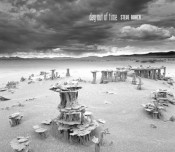 Day Out of Time was created as a soundtrack for the Steve Lazur film “Time of the Earth.” The pieces picked to accompany Lazur’s mosaic of time-lapse images of the stark and startling beauty of the American desert were taken from various existing releases, along with some new (at the time of the original release) material. It all comes together in a classic Roach desert/tribal meld, full of shadowy whispers, desert-night field recordings, snarling didge and spirit-grabbing percussion. The disc certainly adds a dimension to Lazur’s film–not being a film critic, I’ll withhold comment–but is also a great listen on its own. While the tracks contain a lot of common threads that run through thjs chapter of Roach’s style book, it’s a well-modulated collection. When the feel is out in the open, as in “This Life” and the fantastic, drum-driven and drone-underscored “True West,” it’s vast and spacious. When it goes underground, as with “Walking Upright,” one of my personal favorite tracks from Early Man, it’s pleasantly dark and mysterious, the atmospheres absolutely dripping with detail. For anyone not familiar with this arc of Roach’s career, Day Out of Time is an excellent primer. For existing fans, it’s a new way to revisit these superbly carved landscapes.
 Stormwarning captures three early live performances, from 1985, 1987, and 1991. Culling structures from three of his earliest albums, Traveler, Now, and Empetus, in these concerts Roach essentially built a full studio set-up on stage and took off on deep sequencer excursions. The three tracks are live and straight to tape, with no overdubs, no backing tapes, and no post-production remixing. This is Roach on the fly and very much hands-on with his analog-only gear, manipulating the flight and flow as he goes. “Day One” opens with a quiet set of ambient chords reminiscent of (though pre-dating) sounds on Dreamtime Return. Out of nowhere, sharp clarion-call notes mark a shift, and the sequencers kick in. The dense weave of notes–on all three tracks–is astounding not just in its complexity, but also in how Roach drops out and picks up different sets to alter the complexion of the thing across a track. “Day Two” shares a similar structure with the first track, but here the opening feeling is grimmer and more shadow-choked. Rippling bass notes threaten over distant clattering sounds and a rising electronic wind. The sequencer lifts off from the midst of the mix, a potent dose of light and energy pulling away from that darkness. Roach fires off a Berlin School-style melody over the sequencer bounce. There’s a great spot where Roach is absolutely thrusters-at-full, exploding across the space at near-light speed, then slams on the brakes and shifts the tempo down innumerable notches without missing a step. Here comes the hyperbole: it’s literally breathtaking. “Day Three” is from a concert in Germany six years after “Day One.” A misty wash solidifies slowly into the sequencer pulse here, and again there are very distinct echoes of Dreamtime, which had by then been released. While the sequencer holds the low rhythmic end, we get the twanging notes and subtle percussion of that landmark disc, covered in flowing ambient pads.The percussion gets heavier and more tribal as the track goes on. “Day Three” seems somehow more full of life than its counterparts, or simply bigger. It’s less given over to the high-speed demonstrations than to spreading out the sounds and exploring the difference between pulse and flow. It may also be that the Roach here is on the cusp of shifting styles, the precursor to the Roach we hear on the Journey of One CD. Thinking along those lines, “Day Three” is a nexus of styles, and a perfect way to showcase the artist’s progression while also showing the through-line back to his beginnings. Stormwarning is an absolute overdose for analog lovers, a synapse-blistering ride that requires that you play it loud.
 From the opening moments of his new release, The Deception of Reality, ambient artist Numina creates a true sense of spaciousness, of a vast and immeasurable place that collects and holds sound, and then proceeds to immerse you in it. This disc is filled with big, rich pads that draw long arcs across the sky, their vapor trail remnants crossing and playing off each other. The strata run very deep here, and superbly dense, paired in places with a sense of melody pulled out to the distances, to create phrases that reveal themselves over time. The disc opens in tenuous territory with “The Illusion Transmission.” Dark curls of sound, moaning vocal samples, and a persistent bass drone lay the foundation. The movement is languid and dream-like, but the dream is dark and brooding. With his usual finesse, Numina slowly tweaks that feeling, and by mid-track the mood has lightened and lifted. The change is so subtle that you likely won’t notice it until you feel it–and that’s testament to the effect of the music. The shortest offering here is over nine minutes long, so Numina is giving himself ample room to stretch out what’s he’s got to say, and cover a lot of sonic and emotional ground. It’s a seamless flow; the “tracks” are just index points marking time along the journey, because you will, in fact, become lost in it. Each track also has its own distinct sensibility, and the movement through them feels sensible and solid. Light and buoyant notes sing across much of “Our Elegant Experience,” perfectly airy against the thick wash behind them. As the track rolls along, Numina changes the texture of this repeating pattern, keeping it from going stale. This simple mantra of notes marks waypoints in the depths of a very mesmerizing flow. “In Cerulean Haze” takes another extended bass drone as it launching point, then widens out into broad ambient drifts, quiet and calming and quite affecting. “Empire of Nothing,” the longest track, carries on that meditative flow, but adds a more distinct touch of melody in glittering high notes. A slowly rising and falling waveform threads its way through the track like a breath. It ends with a rush of synth wind that takes us into the final track, “Translunary Return.” The character here is one of slight melancholy, borne on that wind (which packs a nice classic electronic music feel) and more vocal pads singing in a soft chorale. Once again, the layering is splendid; you can listen to it build here quite well, new elements dovetailing into the mix as the piece progresses.
 Complex Silence is an ongoing curated series of drone-based ambient works, each by a different artist. The stated mission is to have them “explore the depths of long-form ambient music composed entirely of extremely subtle changes, dissonant harmonies, stretched-out harmonics, abstract tone washes, layers of mystical atmospheres, or field recordings…” This 23rd edition is Philip Wilkerson’s fourth contribution, the others being numbers 1, 5 and 15, and it offers a somewhat different Wilkinson than some of his listeners may be used to. And this is a good thing for two reasons. First is that it’s beneficial to any artist to challenge themselves to follow new pathways, to break from their comfort zone and chart a new mode of expression. Second, and specific to Wilkerson this time out, it’s work that was born out of a period of conflict and pain in his life. It’s always good to get that crap out, however you get it out. To our benefit, he has gotten it out with some deep, introspective drones that move, like healing, from relative darkness to a place that’s lighter and uplifting. The long drone form gives the listener plenty of time to internalize this movement and the emotional journey that’s being charted. It’s one of the good things about quality drone-work–there’s not a lot to distract the listener from the layering at play and the tonal colors being put forth. Wilkerson starts in a space that’s pensive but reasonably light, a pleasant ambient drift. Late in the track, the tone begins to turn colder on a rising synth wind. As the second track begins, things darken. The atmosphere becomes weightier. The feel bends toward the isolationist ambient side of things, with its distinct tinge of loneliness. This is a wonderful stretch of lulling drone that calmly opens a space in your mind and lets Wilkerson’s intentions drip in. From here, beginning, appropriately, with “Sunward,” Wilkerson starts the redemptive leg of the journey. From the start the tone glimmers; big, arcing pads take over and spiral upward. This, the shortest piece here, moves us into the very lovely “As Lost As You’ll Find,” a 23-minute opus of floating ambient. This comes much more in line with the kind of optimistic, healing ambient Wilkerson is known for, and it’s as gorgeous as anything he’s done. There’s a subtle feel of constant upward movement, and of reconciliation with the darkness through which we’ve passed. The disc closes with “While Silence Sings,” another thoughtful prayer of sound. Gently hissing noise, like rainfall, whispers in the back over light pad structures as Wilkerson eases us toward the end.
 Listening to the new Silentaria release, What’s Real?, I kept asking myself if I’d enjoy it at all if I hadn’t come of musical age in the heart of the synth-pop era. The disc hangs on a very tenuous balancing act. On one side is that sense of retro cool, heavy on the nostalgia and the sort of just-finding-our-way feel of the first noodlings of synth-pop. (Think “Just Can’t Get Enough” and compare that to later Depeche…). The other side is a sound that comes off like it’s trying too hard to get it done without having all the tools it needs. My enjoyment sways depending on how far it leans to one side or the other. When Silentaria (aka Rixa White) hits it, he lays down a blend that calls to mind the good, sequencer-based electronica coming out of the Netherlands and early 80s synth-pop. (If you don’t catch a whiff of Ultravox here and there, you’re not quite listening.) I get a guilty-pleasure vibe from the surging pulse of “Vital Doubts.” It’s partly cinematic New Age, partly a New Romantic-style pop tune from the 80s. (Hello, Classix Nouveaux.) “Real Fantasia” is airy and somewhat quaint, a dance of electronic energy. “Consciousness” coasts along with a strictly-by-the-textbook EDM feel. The problem is that the really catchy tracks are few and far between, and the slavish adherence to influence gets wearisome. In addition, there are spots where the mix can be a bit dull and tinny. (“Oceans of Illusion” suffers from this.) But nothing truly stands out, and the album can’t shake its clear do-it-yourself pedigree. Looking over the artist’s web site, it’s clear that White has put a lot of thought and energy into creating his “Man in the Mask” persona. He posts extensive “here’s what you’re supposed to be hearing” notes on his tracks, and offers at length his own musical philosophies and his background. It’s a bit ego-centric for the quality of what’s offered. This is now my second encounter with the music of Silentaria, and I would suggest that channeling some of this energy into a stronger refinement of his work to start with would be helpful overall. Too much focus on the intangibles, and not enough focus on what listeners hear. The talent is there.
 The self-titled debut from the duo of Erik Tokle and David J. Dowling greets the listener with a thin, airy wash of sound that slowly but surely folds itself into the most vaporous, stripped down version of post-rock yet, an ennui-lacquered sigh of looped guitar that wraps itself around your head to leave you feeling like it’s 3 in the morning and you’re not sure why you woke up, or if you even did. Once you realize that you’re following along to the very subtle beat running underneath “Neucleotidal,” and that in your head you’re quite liking its lengthened pop-song structure, you’re pretty much owned, and Tokle and Dowling will have their aural way with you for the rest of the disc. The guitar sounds range from ethereal washes to slowly plucked and echoing notes, from light drops of sound to long chordal exhalations, and all of it serves a purpose. They may hate to have me say it, but this is a pretty record. It’s got heart that simply oozes out of it, a vulnerable human side that wants you to just be there to listen, it’s got something it needs to say. And it’s not all moody introspect; “The Golden Mean” comes off with an optimistic slant, between the glittering, high-register drones and the dose of rock guitar that states itself underneath late in the track. The pair play with a bit of glitch/microsound as well, using it to lay down the beat behind “Old Ghosts.” This is a fantastically quiet track, coming in barely above a whisper, an ambient waking dream, a fading feeling you can’t shake. The longest stretch of the disc is given over to the closing track, “…And It Never Goes Out,” a thirteen-minute pensive prayer of downplayed sound, a hush that circles back around to the first track to begin again. And again. This beautifully constructed batch of post-rock ambient musings begs to left playing, the sounds just growing deeper and more communicative with each pass. Bust out the headphones. Dive into it. A strong debut that requires your attention.
 Hypnagogue Music Reviews