
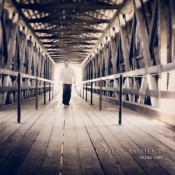
 In the perfect world that exists only in my head, Darshan Ambient (aka Michael Allison) is on tour right now in support of his new disc, Falling Light, backed by a band of top-notch studio musicians and filling intimate clubs and small venues, and I have a chance to see him play live. It almost literally stuns me that Allison, a musician who so perfectly and so often straddles the borders between jazz, contemporary instrumental, and New Age music, isn’t getting the metric ton of respect and exposure he deserves. This is not hyperbole, this is fact, and a single foray into Falling Light will bear it out if you’ve got any question. Building on the sturdy jazz foundation of his previous superb release, Dream in Blue, Allison continues to lay down catchy, inspiring songs full of depth, inner meaning and a mighty dose of soul. Not in the funk sense, but pure, deep-down human soul. His signature is a masterful blend of catchy hooks and riffs paired with quiet synth pads that drift like dreams under the music, and it’s fully packed in here. “Out to Sea” opens with the pads, giving way to a simple phrase of four notes, then six, then four again, on piano. With each fresh pass, Allison gently lays in more elements–a sighing pedal steel guitar, the round, rich tone of fretless bass, and more. It’s wonderful in the way it embraces its simplicity. This sense–working off a central phrase that holds still as the music grows in pieces around it, comes back frequently. On “The Night Coming Home to Sleep,” piano takes center stage, speaking the phrase, accented with guitar and smooth washes. “To Look At In Winter” works off a simple scale run on piano while Allison piles in the layers. At the start, there’s an interesting and unexpected touch of vinyl crackle.
In listening to Falling Light, keep in mind that this is all Michael Allison. Every note, every instrument. Here he is, playing the Isham-esque trumpet in “Small Blue Ones.” He comes in after another hushed-dawn open on synths, playing a slow song. A jazz-perfect rhythm section folds in to keep time and pick up the tempo while the trumpet keeps its own pace in counter. One of my favorite tracks here, and not just because I’m an Isham fan from way back. Here he is tearing it up on a vocoder-sounding guitar on “Second Thoughts,” bolstered by a snappy backbeat on drums. (If you’re looking for the funkier version of the aforementioned soul, here it is. Come ‘n get it!)
With its (in my opinion) widespread crossover appeal, Falling Light is a shoo-in candidate to top the various Best Of lists for the year and would, in a perfect world, catch ample airplay not just on the various niche/New Age programs out there, but in the jazz-based mainstream as well. Make no mistake: this is a superb, amazingly constructed disc by a very, very talented musician. It’s got that Sunday-morning-music allure, laid-back and pleasant enough for a casual listen with your coffee, but is also strong enough, in the pure musical sense, to satisfy intent listeners.
Now, if you’ll excuse me, I’m heading back into my perfect inner world to catch Darshan Ambient & Band at a local club.
Available from Spotted Peccary.
 Inspired by the possibilities of faster-than-light communication, Broken Harbour (aka Blake Gibson) returns with a set of long-form pieces that range from sparse, isolationist wanderings to hushed, spacey ambient drifts on The Geometry of Shadows. As always, Gibson’s work is minimalist at its core, maximizing the impact of a relatively small number of well-orchestrated sounds. His layering is full but not overly deep, which lets the listener hone in on the specifics. Gibson offers up five tracks that cover an hour of solid sonic imagery. In general, and with the exception of the title track, each piece starts from a place either sparse or relatively dark, then works its way upward into a vaster, more freely flowing space. The draw of the disc is in how Gibson manipulates each ride. “Superliminal” starts out with cold-wind drones gliding across a barren landscape. Gibson works them through roughly textured filters to have them emerge softer and warmer late in the track. There’s a nice pulse running beneath it that plays well off the longer stretches of pads and washes above it. “Between the Darkness and the Light” is aptly titled. In its early minutes, it’s a cold breeze of unwelcoming drones. The shift here is virtually unnoticeable until you’re in the middle of it and an awareness overtakes you. The darkness has moved off, you’re breathing easier, and the sound is light and shimmering. The subtlety of going, as the title says, from dark to light is masterfully handled. “Luminosity” begins in a brighter place than its counterparts, and soon develops into a beautiful ambient piece made of long, floating pads. Eventually these are underscored with a low drone that rises and falls in fairly quick order, creating a sort of three-note phrase. This gives the piece a sense of motion, an arc as it glides along, and the suggestion of a beat. This may be lightest I’ve heard from Gibson. “Ansible” drifts in on a sustained drone and a breath of wind. A gentle waver in the otherwise unchanging drone becomes hypnotic as Gibson wafts more sounds through the mix. As noted earlier, the title track breaks the mold, and it does so superbly. From the start it takes the listener to a place that’s murky and coated in grimness. Gibson’s fond of using the sound of crackling vinyl in his work; here it scratches its way quietly beneath his fairly foreboding drones. New sinister sounds slip in and out, maintaining a hold-your-breath aura of darkness.
 I try to avoid playing the “sounds like” game when I’m listening for review, but as I worked my way yet again through Northcore’s Desatero, two reference points wouldn’t leave my head. The first is the smooth and smoky “exotic electronica” that used to flow out of Waveform Records; the second is the snappy, analog-fueled EM currently coming out of the Groove Unlimited label. Add to that a firm dash of world-music flavor and you’ve got the sonic deliciousness that is Desatero. Carl Gibbons and Jana Tillotson man the ever-shifting controls here, kicking it off with the Waveform-ish “Looking Glass.” A rasp, at first like needle on vinyl but then more of footsteps on crisp ice, marks a beginning rhythm. Wispy electronics swirl in mid-air; then comes Tillotson’s voice: “And if the ice breaks under my feet, will you catch me?” With that cue, we shift into a lumbering, almost dubstep-style beat that Gibbons and Tillotson divert with a melody that sounds like a Renaissance folk dance tune, transported to the 21st century and dressed up in electronics. It’s these sorts of little sidetracks that make the difference on Desatero. Check “Nocturne,” with its Middle-Eastern-feeling vocals (pulling memories of Deepfried Toguma from my back-brain) and hand percussion–and then, in a beautiful and sudden shift, crunching in huge, soul-shaking church organ chords that just elevate the call-to-prayer feel of the voice. “Jupiter” gives the nod to the recent lot of good Netherlands-based EM and folds perhaps a touch of Tangerine Dream into the blend. Energetic and spacey, it courses along on a strong sequencer line and bass pulse. This is a high-volume ride that revels in its retro cred. “Green Fridge” falls into an odd IDM-type space, with a rushing wind sound that becomes a repeating musical phrase over a simple, repetitive bass pulse. Grinding, crunching sounds drop into the mix, and the thing takes off at speed. “Quercus” is an odd but effective interruption in the flow, an almost quaint tune mainly on kalimba and flute. The fact that it’s unexpected in the midst of everything else marks it as quite Northcore. For me, there are just two slight misses on Desatero, and they’re both tracks where the duo work in lyric-based vocals–or, more to the point, straightforward English lyrics. These cuts, “Oxygen” and “Parting,” feel weaker than everything else here. The lyrics come off a bit forced, as though Gibbons and Tillotson aren’t quit comfortable with them. It’s a minor consideration on such a strong disc.
 I have an interesting relationship with the music of Parallel Worlds (aka Bakis Sirros). When I first encountered his solo work, it didn’t really strike me. This, despite the fact that everything I read cited him as a master of analog synth. I felt like I was somehow missing something. However, I’ve been quite taken with his work as a collaborator–Circo Divino with Alio Die is on my recommended CD list, I gave Exit Strategy with Ian Boddy good marks, and now this, his release with Dave Bessell, marks another Parallel Worlds offering that makes me think I wasn’t listening closely enough back then.
 Michael Page says that his new Sky Burial release, There I Saw the Grey Wolf Gaping, marks a return to shorter-form work and pulls in inspiration from shoe-gaze, krautrock, musique concrete and more. But while all the work here is solid, it’s the three long(er) tracks, each clocking in at about 10 minutes each, that land with the heaviest impact. On these, Page showcases the densely packed, frequently ominous sonic sculptures he’s known for. As always, the ride is expertly modulated. “Incantare,” which starts the disc and features contributions from dark chanteuse Jarboe and German duo Troum, opens with long, hypnotic drones. Percussion folds into the mix to bend the sound in an almost tribal-ambient direction. The last keening note from Jarboe fades into a moment of quiet–which is consequently shattered by the heavy dramatics of “Shedding the Husk.” Dirge-like and deadly serious, this piece thunders into the room, then spreads like a consuming shadow. In here is Page’s trademark sonic density, big drones flowing over each other. “Silence Moves” is the last of the long pieces, crafted with help from Anni Hogan (formerly with Marc Almond of Soft Cell fame) and sound artist Xiphoid Dementia; it rises up with an almost optimistic tone (comparatively), then turns slowly on its axis to become somber and deep. Piano layers in and soon finds itself fighting against dissonant chords that first swallow it whole then let it emerge unscathed. It makes for a great narrative. The shorter tracks are the ones that divert from the drone-based flow. Two, contributed by Danny Hyde of Coil, stand out immediately. Take the trippy “Carne[vale],” built on a tortured chipset-style sound to create something like a deranged and distorted 80s video game soundtrack. The jaunty sound of it carries Hyde’s nod to the Carnevale atmosphere, but it’s viewed through a skewed, jiggling lens. Toward the end, it breaks down in a jagged act of pure deconstruction. He reuses the chipset sound later in “Fools Circel9Wys,” pairing it against a processed vocal that comes out with a cool didgeridoo-like tone. This one pulses right along. “Beyond the Veldt” takes an interesting turn, with dream-state vocals from Bridget Wishart of Hawkwind (also a repeat Sky Burial collaborator) working over a hazy shoe-gaze beat. The title track represents the musique concrete portion of the evening, bringing a clash of bagpipes and the squeal and clatter of (what sounds like) trains to wrestle for dominance.
 On his new release, 3AM, Joe McMahon captures the feel of being very much alone with your thoughts in the wee hours of the morning. And he does it in very simple style, relying only on quiet keyboard melodies and minimal electronic treatment. In this way, the melodies become thoughts and feelings; the washes become the atmosphere–sometimes literally, as with the lapping of water on “Reflections in the Lagoon.” This is a very intimate and emotional work–potently so. McMahon has created a disc that takes on two very different identities depending on how you listen. It’s not just a matter of hearing more detail on a focused or in-headphones session. It’s that the work takes on a wholly different character. Played quietly, in the open, it’s a keyboard disc that has wisps of other sound floating around it. Melody takes the forefront. Up close, the atmospheres play a more vital role, the keys then existing within a well-realized aural space. The personal impact of the pieces is stronger. The difference is not easy to describe, but it’s very easy to hear. A prime example of McMahon’s detail work is the interesting touch running under “Traffic Lights, No Traffic.” It’s like he’s placed a secondary song, for lack of a better word, underneath his thoughtful piano melody, in a key that’s just short of complementary to the main one. The secondary sound has a twanging, metallic tone. In places they match up, more or less, creating an iffy harmony. In others, the clash creates a very rough texture, like an intruding thought that won’t go away. It’s an aggressive choice on McMahon’s part, and he makes it work. On two of his tracks McMahon breaks out an electric piano that brings up reminders of Steve Halpern’s music in both tone and style. In “The Sprinklers Are Running,” a slow bass line walks just behind the melody, humming a little ominously to itself. Subtle washes form a misty background. On “Empty Sidewalks,” my favorite track, a deep and thoughtful melancholy runs through the music. Pauses between notes become the stillness of a deserted night. Trilling electronics work their way through the piece. There is a wonderful sense of slight waywardness, that place between needing to keep walking the night until things sort themselves out in your head, and knowing that you should just go home and sleep it all off. McMahon plays with his theme on “Awake Too Late,” taking the listener to a slightly disoriented, in-and-out-of-sleep state of staggered and staggering sounds, odd sensations and a little off-kilter sound-play.
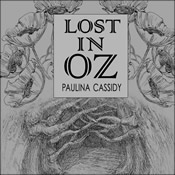 Having established herself with a style that mixes ethereal, faerie-inspired vocals and rhythmic, edge-of-ambient drifts, Paulina Cassidy switches gears and takes the yellow brick road into a dreampop/synthpop space on the quite enjoyable Lost In Oz. Most of the tracks here are underscored with a thumping bass drum counting off a club-music cadence. I have to admit I could have done with less of that, but it’s a minor consideration when everything else is just blissful and fun, demanding that you play it at volume. Cassidy takes hold immediately with the boppy beat of “Cyclone” and on into the world-flavored title track. Great percussion fuels this one, along with xylophone-style chimes running the melody. “Dance of the Scarecrow” is about as infectious as the tracks come here, that bass drum a vital heartbeat over a repeating keyboard phrase. There’s something intriguingly mysterious about its tone, and very old-world. It’s hard to explain without hearing it. As cool as the beats and sound sources are on Lost in Oz, they’re here serving the big draw, which is Cassidy’s voice. Ranging from ghostly whispers to banshee cries and often invoking the spirit of Kate Bush, the vocals here come dressed quite like chants, intricately layered to create a unique showcase instrument. (Check out “The Great and Powerful Oz” to hear it at its smokiest dream-whisper, calling to you through a mystical haze and psychedelia-worthy synth.) In with all this come moments of straightforward instrumental goodness, too. “Poppyseed” is a quiet contemplation on keys, accented with a tapping beat and pleasant strings in the background. The utterly charming “Kiss of the Good Witch” takes under a minute to spin its scene in piano and strings.
 Recorded live during a 2011 sleep concert, Sphäre Sechs’ Tiefschlaf is a deep and slightly dark hour-long drift constructed by Martin Stürtzer, who also records as Phelios, and Christian Stritzel. Although divided into six “phases,” the disc slips quietly along, intermingling drone structures playing across one another in slow-motion patterns that become hypnotic in very short order. This is very much a headphones-on, lay-in-the-dark disc, certain to paint wide mental vistas as your mind is coaxed deeper into relaxation. Overnight listening at low volume is also recommended. (Keep that dream journal handy.) Stürtzer and Stritzel do an amazing job of keeping a shadowy edge in play, a constant feel that something is moving or waiting just behind the fog of sound, but never letting it become distracting. This drift is in constant motion and each shift in tone reconfigures the landscape just slightly. A superb pure-ambient work that stands up to close listening and excels in a passive-listening atmosphere.
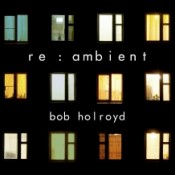 Composer Bob Holroyd takes some of his existing works and hands them over to others to remix on his latest release, re:Ambient. Given Holroyd’s own diverse musical scope as a starting point, the infusion of fresh takes on the source material creates a mixed ride that glides smoothly through up- and downtempo zones. On the upside are Saul Stokes’ jaunty post-rock version of “After.” Acoustic guitar notes ring out and smooth string sounds blend with field recordings. The mood stays joyful throughout and the beat is infectious. Holroyd’s own rework of “Crusts of Dust” gears itself up into a Berlin-style groove, energetic and angular. (Let it be noted that I’m a relative newcomer to Holroyd’s music, so my impressions are of these pieces alone, not the manner in which they relate to the originals.) The post-rock structure informs several of the pieces here, perhaps best defined by the two takes on the track “Parallels.” The Album Leaf’s rendition has something less of a “rock” pedigree, boasting a gentleness that rides on a beautiful piano line over hushed drones and electronic percussion. A tone like a melodica takes up the melody at the end, a very nice touch. Scottish “ambient-rock” group Mogwai take a more directly electronic route. A coarse-edged sequencer line opens over a growing, pulsing backdrop and big chords. This one feels deeper, dimensionally, and the layers add on in a nice organic fashion. On the less beat-driven sides are Venona Pers, surrounding their charge, “Absence,” with deep, echoing atmospheres, the simple repetition of phrases slowly prying open a space in your head and heart. The backdrop of gathering sounds builds gently and its hold on you gains impact as it goes. Steve Roach’s contribution takes up the most time stretching out a gorgeous 12-minute version of “All Colours Pt 1.” Hints of Roach’s tribal work find their way in. (Is that the ocarina I hear, lending a little tenuous air?) Clatters of percussion lift up airy drones and washes. A processed voice weaves through the sound. Eluvium’s “Beachcomber” finds a good spot mid-stream. Hazy drones and minimalist repetition stretch out over a bass line describing just enough of a melody to feel like there’s forward motion. I quite like the pure density of sound here and the dovetailing of phrasing. The deeper the fuzzed-out sounds go, the deeper the bliss.
 To listen to Caul’s Let the Stars Assume the Whole of Night is to willingly immerse yourself in the artist’s incredibly potent emotional currents as he moves effortlessly through changing styles. The disc is presented in what amount to short vignettes with strong cinematic overtones, fully painted scenes with impact and dimension. The tone overall is a bit moody and reflective, never crossing over into full-on maudlin but certainly graced in large part with a certain sadness. Some of the most affecting tracks happen when Caul slides into a sort of shoe-gazey post-rock zone. “Upon the Vines” sounds like someone gave Arvo Pärt a slot in just such a band, with arcing, choral vocals spiraling over a superbly plodding, bass-loaded rhythm section. Big drumbeats hammer out the backdrop. “Words of Praise” follows suit, with that blend of softly wailing vocals and a catchy, albeit slowly counted off, beat. In other tracks the feel shifts toward a more neo-classical sense. The closing track, “A Clear Eye Loves the Shadows As Well” features rich string sounds that slowly move through their paces with a slight hint of Henryk Górecki. “She Is Holy to Those Who Are Lost or Dead” has a chamber music sense about it. A slightly muted piano picks out a tentative melody, accompanied by a very deliberate bass line. This atmosphere is shrouded in dense fog; the experience is dreamlike. Speaking of that feeling, “Just One Autumn for Ripe Songs” takes you through some half-awake, edge-of-nightmare spaces. Echoing piano and long pulls on low-end strings mix with a cold-wind backdrop and disconcerting tumbles of percussion, just light taps like half-heard footsteps all around you. This track will stay with you. What strikes me most throughout the disc is its strongly organic/acoustic feel. Caul blends his electronic and acoustic sources well, which makes the whole thing feel very personal, exhibiting a shared intimacy that, with the darker feel working through it, can almost border on discomforting. The shortness of the tracks–the longest is just over six minutes–has the effect of taking you into a new place, a new thought and feel, while you’re still firmly in the grasp of the last very real batch of emotions Caul has poured into you. I have been through this disc many, many times since I received it. I feel like I’m always hearing some new element as I go through. There’s a lot going on, and it’s all handled beautifully. You must hear Let the Stars Assume the Whole of Night.
 Hypnagogue Music Reviews