
 Citing influences from Brian Eno to Jerry Garcia to Erik Satie, Matt Borghi sits down with his guitar and effects to pour out soulful, jazzy lines over subtle pads on Ambient Guitar. Although the title might suggest you’re in for nothing but drift and layers, this is a different kind of ambient. Borghi’s slow-handed, folksy style (there’s the Garcia influence peering through) is at the forefront, picking out beautiful melodies complemented by the washes and drones beneath it. The resultant sound is warm and relaxing and honest. Borghi crunches 11 tunes into 37 minutes, but it’s a pretty blissful 37 minutes that quickly becomes 74, which becomes 148… The core of this album is its apparent simplicity. Borghi isn’t trying to do a lot. He sets his ambient beds, gets them shifting and interacting, then kicks back to play his songs over them. The equation remains the same throughout. It’s the face of each piece that changes, the way Borghi chooses to express the melody. As he notes, this is the way he plays when doing his “jambient” work with Michael Teager. (If you have not done so, you need to check out their excellent albums Convocation, Shades of Bending Light, and Awaken the Electric Air.) His style is crisp and deliberate, squeezing as much as he can from each note. I get caught up in the sweeps and trills on “The Snake,” which shows a little bit of blues fangs, especially in its first few moments. When he hits the low strings, it’s bliss for my bass-loving soul. The elegant curvature of the lines of “Belle Isle” come from easy runs along the neck, a sound that’s reminiscent of both the blues and a little Spanish guitar. On the aptly titled “Grace,” the background has a string section ease to it. The melody is bright and uplifting. Borghi plays with his sound as well. On “English Folk Song,” we first hear the melody through a haze, like it’s coming from far off. On the next pass he plays it clearly, punctuated with muted, wavering chords. He repeats the two passages once more, and lets it all fade, hanging the last note expectantly. The entire track is only about two minutes long, but the smart construction of it makes it memorable. “Pamela” is mostly unadorned, perhaps just a touch of delay to go with the looping. Borghi forgoes the processed pads and instead opts for stacked guitar lines. The folk influence is strong here and once again the clean simplicity really shines.
There’s apparently no end to the charm of Ambient Guitar. On the day I wrote this review, it was literally the only album I listened to, over and over. Never once did I feel like I’d heard enough–and remember, it’s just half an hour long. Borghi’s style is so pure and resonant, sharp and defined, it doesn’t wear thin. This is just a pleasant bit of work to dig into. Unassuming and very effective. A great release from Matt Borghi.
Available from Matt Borghi’s web site.
 Fross (Oscar Hidalgo) lays down a half-hour of whispering drone on his EP La Floresta. While there’s not a lot of variation between tracks, the atmospheres manage to be quieting but with just the smallest edge of grim weight–particularly at the outset of “El Sendero Gris” (The Gray Path). Distinct guitar tones run briefly beneath the thick drones before giving way to more of Fross’ dark, smooth soundscapes. His brother, José David Hidalgo Solís, lends a hand on the album, bringing in bass guitar.
 After many listens, I find that I prefer Darren Rogers’ Interstellar Love when I play it at low volume. This collection of romantically tinged spacemusic has, for the most part, a quiet, flowing grace and an emotional core that is strong enough to come through in a background listen. What comes through less in these listens is Rogers’ dependence on some well-worn New Age library pieces and the occasional iffy choice. I quite like the intelligent way the album starts off. Rogers, in telling his tale of finding your soulmate, laces his opener, the title track, with clips of love songs and proclamations of love. It comes off like earthly transmissions captured somewhere far off in space, and it definitely caught my attention. It moves itself into a slow, airy space piece. A surprising appearance by acoustic guitar further along the way is a nice touch. “Wavering” is another soft-voiced drift carved in pads, floating somewhere between thoughtful and melancholic. And if the rest of the album stayed like this, it would probably sit better with me. With “Carefree Dreams,” Rogers heads off in a symphonic, over-sweetened direction that instantly seems out of joint with what’s come before. This is a personal preference, of course; many listeners may find it stirring. But I had just settled in to some deeper spacemusic, and now I’m back out of it. I’m further pulled out by “Passion,” which starts in a good place. It’s back along the lines of “Wavering,” just coursing through starlit spaces. A light pulse of drum finds its way in, the same sort of interesting choice as the guitar. Then, pretty much out of nowhere, Rogers chooses to plop in trance-style keyboard riffs and I have myself a genuine what the? moment. Not only is it interruptive, the sound feels like it was just lifted wholesale out of a loop library. I apologize if that sounds harsh, but when you hear it, you’ll know it. Rogers plays over it as well, and it’s a bit of a tangle. In later listens, this is one I’d choose to skip. The two final tracks, “The Love Inside” and “Looking to the Stars” find a balance between the quiet spaciness I enjoy on the album and New Age touches. “The Love Inside” puts a lovely vocal sample to good use against an almost baroque-sounding backdrop. The closer just coasts, again making me wish I’d been given more of this style. This, I think, is where Rogers thrives: classic pad-based spacemusic that reaches for the far distance.
 The Ghost of An Alien is one of the monikers used by Mike Waller, who also records drifting drone ambient as Seconds Before Awakening. On Dust. Time.. Gravity…, which is the last album he’s putting out under this name, he heads into the cold, dark stretches of space and dedicates it to the crew of the ill-fated shuttle Columbia. This is a reasonably weighty album, pulling up short of the depressive pall of real dark ambient, drawn in low-end drones and airy whispers. There are some heavy moments early on, by which I mean that the bass notes are thick and forward, coming in a borderline snarl. But I find myself getting drawn in more when Waller dials that back and focuses on a sense of stripped-down barrenness. The combined impact of “Polar Distance Displaced” and “Space Junk in the Trunk” (great title!) comes from their minimal construction. Long, quiet drones, the endless sigh of space-wind across an empty void, a feeling of being apart. Waller laces “Space Junk…” with a hint of phrasing that appears first, slow and spacey, near the beginning, then comes back later more concretely, like an intercepted transmission. These tracks form a 20-minute block of drone-based washes in which to lose yourself. The eerie, echoing spaces in “Always Looking Up” almost feel lighter, but retain a bit of a jarring edge.
 Darkness and cacophony. You down with that? You’ll need to be in order to get past the first track on Sinter Pools from Ionophore. The trio of Leila Abdul-Rauf, Jan Hendrich, and Ryan Honaker form the group, bringing together a very heavy blend of neoclassical influence, thick electronic treatments, voice, and massive brushstrokes of darkness. That first barrier, the title track, screams at you in a dissonant voice courtesy of horns from Abdul-Rauf. It’s quite aggressive and is going to send some listeners running. But the secret is that behind that imposing wall are layers of dark beauty, waves of insistent beats, and some deep immersion. I will honestly say that when I first hit play my initial reaction was, “Oh hell, no.” I wasn’t ready for some typical dark ambient face-punch that was just going to relentlessly assail me. So it came as a surprise when the screaming ended and Abdul-Rauf began singing on “Infantman.” What’s this? I thought. Well, it’s a landscape still painted in somber tones, but it doesn’t want to hurt me. It wants me to see. To show me around. From there, Sinter Pools becomes a very different and cool thing, indeed. “Infantman” and “Unchecked” are better examples of what this album is about, two pieces that are more darkwave than dark ambient. Steady, deep beats count off over windy bass drones, and Abdul-Rauf’s voice comes in from a dream and winds around it all. The shouting is gone, the clatter is left behind, and the real trip starts. “Infantman” kicks off with springy metal sounds and dark drones before the singing starts, then smooths out under the calming influence of the vocals. “Unchecked” works its way up to intensity, growing a buzzing back wall of drones. “Sequester” plays out like medieval polyphony slipped beneath moaning pads and stretched into new shapes. Tapping percussion and the return of the horns rebound it off into another direction in its last two minutes or so. At its end, it pares back to the voices. “Checked” slips in some sounds borrowed from glitch, goes heavy on the bass chords, and floats in another dose of those delicious, ghostly vocals.
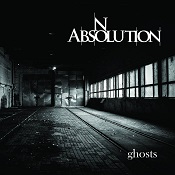 Take the nostalgia-heavy sounds of the style known as “synthwave,” cross it with some post-rock structure, and slap some glitch on it and for the most part, there’s Ghosts, the debut release from No Absolution (Justin Burning). I find the album a little uneven. There are moments that shine, but I’m just not getting hooked by the synthwave side of it. Burning crunches nine songs into just over half an hour, so the whole thing flits by with just a few tracks leaving a strong positive impression. The bass-driven weight of the title track helps make it the best offering here. It lumbers in all moody and heavy on massive chords, then meets up with a melody in a higher register for contrast. It keeps its lead-booted rhythm scheme throughout, just varying how hard it hits. Late in the track Burning switches to a faster pulse of bass sequence, and the slight change of velocity gives it punch. “Paradise Lost” stands out for its Fender Rhodes keyboard sound, playing a melancholic tune over droning washes. On an album that tends to load on and layer a lot of stuff, its uncluttered nature makes a solid statement. Simple, sad, and effective. One spot where the synthwave ideal works for me is on “Disconnect.” This track comes off like the opening music for a science fiction mystery. Burning splashes it with a gorgeous wave of tremolo leading up to mid-track, then snaps it off out of nowhere to move the piece into its next phase. And if a bit of cheesy retro is the allure of synthwave, the grungy harrumph of the synths that leap in here are just the thing. Many other tracks just leave me ready to tap the “next” button. “Penumbra” churns noisily but feels uninspired. A video game style arpeggio doesn’t help, but I’m not a big fan of that point of reference. “Fragments” is overpowered by its tinny, repetitious drum line. It’s all I can hear, and it’s not long before I don’t want to hear it. Mostly, though, Ghosts represents a decent starting point for No Absolution. If you like the synthwave idea, you’ll get more out of this than I do. I think there are some good ideas happening here; I’m just not a big fan of the presentation.
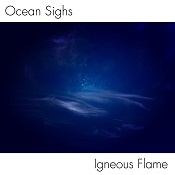 Ocean Sighs is almost a bit of a throwback album, a reminder of the early days of New Age, where blending quiet synth with the sound of waves would not have been unusual. But I do find it a touch unusual for Igneous Flame, whose work tends to find a comfortable spot between darkness and warmth, with little room for these kinds of standard tropes. Don’t get me wrong–I’m not complaining. On this album Pete Kelly runs the wave sounds through some treatments, adds binaural and vocal harmonic elements, and gives as much weight to the waves as he does to his drones. The result is a set of very deep pieces, absolutely relaxing (especially in headphones) and ready for long looping. Although the album is broken up into nine songs, the consistent pairing of waves and music, and the consistency of tone within those aspects, makes it feel like a singular thing, albeit with slight pauses between passages. There are places where the music rises up. The duo of “Vox Sanctus” and “Vox Humana” lift above the waterline with a sacred music feel. Choral pads, always a must in this kind of music, are used well here. Kelly doesn’t overplay them, sticking to his 50/50 plan so that voice, drones, and waves live in harmony. At that, there are moments where their presence is rightfuly strong. The real sacred music piece comes later, on “Vox Sanctus (Reprise),” which comes at you with a surprisingly big, distinct church organ sound before it fades back to drone. And then there are passages of pure quiet and beauty. “Oceana” is a breath-slowing piece that moves simply but at the same time pulls threads of emotion from you. It drifts into “Clairaudient” which retains that hushed warmth as the water sounds turn to a light crash of waves. (And do I hear a gull?) The waves get their solo moment on “Breathing Waves.” It’s a pleasure to listen to them on their own for a bit, and–in a close listen–to try to hear how Kelly has manipulated them. This is as close as he gets to being just a “relaxing sounds of nature” album, but its place late in the flow, setting the stage for the closing track, lets it work in keeping with the overall arc of the album.
 Over the course of three albums, this being the third, I have been following and enjoying the seamless, innovative, and sometimes strange chemistry that happens when you put Onewayness (Adam Holquist) and dRachEmUsiK (Charles Shriner) in the same room. As they did on Immeasurable and The Sound of Thunder, the duo lay down a thoughtful flow that can vary from dark to light and from challenging to easily immersive, always retaining an in-the-moment edge that suggests a bit of improv may have been happening. Mirrors to the Bonfire is made of three long pieces that cover an hour’s time. The opener, “Your Invisible Power,” is the most raw and challenging of the three. After a few minutes of the duo adjusting and tweaking and sending random electro-sounds off into the air, this piece settles into a thrumming, dark minimalism. This winds down to a very sparse, whispering place that sets the stage for a recitative vocal snip from the text that gives the piece its name. (These gents are very fond of the vocal insertion.) Overall the piece is darkly meditative, though its grim tone may lose some listeners. I find a lot of intensity in it, and that’s part of what pulls me in. That bass-rich thrumming sound, which comes and goes, is hypnotic. Things get a touch lighter and softer in the two parts of the title track, which cover a solid 40-minute stretch. Part 1 opens with wavering tones and electronic sweeps, moving itself in a lightly spacemusic-oriented direction. The background builds in layers and there’s a feeling of Holquiist and Shriner tossing ideas back and forth to one another, tugging and warping them as they go. It’s an active piece in that regard as we’re always listening to it change and shift without leaving its central idea. By comparison, Part 2 spins down into a more ambient space, with less textural changes but bringing in the ease of a calm flow. Shriner takes the front on electronic wind instrument, breathing sweet, smooth lines into being over a sleepy wash of pads. In the midst of this, you begin to see the narrative, how we moved from that dark, uncertain place, through waves of change and reconsideration, and ended up here, meditating and breathing, safe and warm and at peace. It’s also where you realize that Holquist and Shriner handle all of those aspects confidently and with equal ease. The longer this track goes, the deeper it goes, and the deeper you go. A truly gorgeous ambient piece.
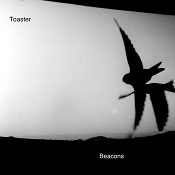 I’ll be honest–I brace myself before starting a Toaster release. Historically, Todd Elliot has alternately shocked me with experimental weirdness and surprised me with comparatively calm thoughtfulness. On Beacons he skews toward the thoughtful side, working guitar and electronics into some quite emotive spaces. (When he sent me the album, he noted that it had been a while since he had done any “Hypnagogue style” music.) Which is not to say Beacons doesn’t swerve a bit toward the challenging side in places. Of course it does. The first wavering notes of “Spider” that welcome you to the album feel uncertain and a touch off-kilter. But as the notes turn to sighs and start to layer on, they become warm and quieting, yet never quite give up that quirky edge. “The Fire Sermon” pulls off the same trick of being a little unusual while still pulling a strong emotional thread behind it. Burbling out in an initial rush, it keeps sending its message in a jittery Morse Code of notes that get washed over by larger droning chords. There’s an urgency to it, and that’s the feeling that pulls it forward. “Conventionally Attractive” may try some listeners’ patience as it yawns out its edge-of-discord structure. It’s about the furthest Elliot goes into challenging territory here. The dirge “Apophony” has a strong central darkness to it, with low notes giving off a church-organ vibe as the piece plods slowly forth. I do prefer Beacons when it settles down a little. “Shannon” is a soft ballad with a fuzzy-focus edge from a broad dose of reverb and sustain. “Out of Range” is a stripped-down folk song with its internal charm still visible. Elliot picks thoughtfully over a background of humming drone with a metallic edge.
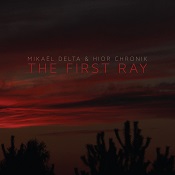 In this half-hour offering, Mikael Delta and Hior Chronik lay out quiet blends of ambient and piano, then cap it with a laid-back. dub-flavored track that for me is the best part of the ride. “How to Define Existence” kicks the album off with crackling noises over pads, then laces in the piano and some upright bass that gives it a touch of a jazz aspect. That crackle comes back in “Till I Will Born Again” to give the track extra allure. Its echo-packed piano picks out a tentative melody, adding depth slowly as it goes. Fluid drones fill in the background, coming just up over the top of the piano. It’s dreamy, yet a little dark with that insectile crunching sound. “Standing in the Middle of Nowhere” is like a small string combo playing alongside piano and unobtrusive field recording drops. Though short, it is graceful and compelling. Bare boned and breathy, “I Have Everything” is a haunting piece not too far removed from elegy. It moves only slightly, with a minimal rise and fall to its string-like sounds, while an indecipherable voice intones from some far-off place. The closer, “Revival,” takes the album in a wholly different direction, as noted. With full-on dub flavor coming in right off the bat, it’s rhythmic and cool, reminiscent of the bass-heavy “electronic exotica” from the Waveform label. I could take an album’s worth of this.
 Hypnagogue Music Reviews