Kim Halliday: Birdsong in Mist

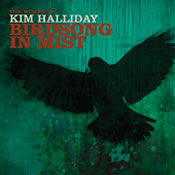
halliday_birdOn the press release for Kim Halliday’s Birdsong in Mist, it says “File Under: Classical [Contemporary and Avant Garde].” While you’re at it, however, please also file it under “Experimental,” “Electronic,” and “Face-Bashing All-Out Guitar Assault.” Because that’s what you’ll be getting on this deliciously and intriguingly diverse disc. With a background scoring music for movies, TV, and multimedia, Halliday rolls out a broad arsenal and opens it up fully in these 15 tracks. The classical music framework is distinctly there, existing pretty much to allow Halliday to subvert and challenge it, along with our perceptions of it, in manners that range from the subtle to the dramatically overt. It begins right away with the echoing piano and intruding secondary melody in “Development of Late.” While the primary song carries the straightforward feel of a nocturne, the sustain of echoes and the subtle-at-first insistence of the underlying motif take the simply familiar and force a re-think–or, at the least, a more careful listen. “Silver” takes a lively, almost folksy dance and spatters it with a sequenced-sounding underscore. Halliday plays with the sound of piano, muting it in spots. Again, the familiarity of the main piece fights for focus, and it’s that conflict that creates the newer concept in your head. I also like the willful dissonance and toy-piano tinniness banging away in “If I” as runaway scales trip from high to low. The ballad-esque title track plays the same game with your head. Here the main song is straight New Age piano; the backdrop whistles and sings in counterpoint. But it’s not all pianos-and-stuff. Halliday throws in fresh ideas throughout the disc. “Eastern Games” sneaks in with pinging chimes, rising drones, and an interesting sense of tension. It stands out for being the first track without immediately recognizable piano. It’s a hmmm moment that piques the attention. “Loss” is infused with a laid-back sense of sadness and a slowly tapped-out beat. Yawning chords wah along behind it. (Here I throw in an obscure reference to a personal favorite: the sound reminds me Radium 88.) And then…talk about a shift. With “November Falling Fast,” Halliday takes an abrupt turn and busts out a fuzzed-out, growling guitar. It chews its way over a droning bottom layer, spewing rock ‘n’ roll attitude. And that’s him just getting warmed up. Its follow-up, “Steel Eye,” is full-on post-arena-rock built on thick power chords and a too-cool bass line and just a hint of B3 sound. It’s pure infection, and I can’t listen to it just once. (Oh, wait til you get to the snare bursts…)

At the heart of Birdsong in Mist is Halliday’s splendid playing. His piano work runs deep with emotion; his use of the space between notes is potent. The range of instrumentation and breadth of style speaks to his talent. (In case you’re looking for a score for your next high-tension film scene, you’ll want to have a listen to the very dramatic “Victim Selection.”) What’s more, he crams these 15 fully realized vignettes into less than an hour’s time and nothing feels rushed or lacking. I’ve given Birdsongs in Mist a lot of listen-time since it arrived, and it just gets better the more and the deeper I listen.

Available from Kim Halliday’s web site.
Peter Kater: Light Body

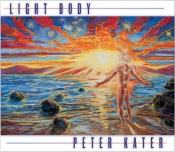
kater_lightPeter Kater is a well-known quantity in the New Age scene, a platinum-selling, multiply Grammy-nominated pianist and composer with a prolific output over the course of 30 years in the business. Surprisingly, his new release, Light Body, is my first exposure to his music, although I have long been aware of the name. Not surprisingly, this first exposure has granted me a hefty dose of “Look what I’ve been missing.” Light Body is a beautiful set of seven pieces, each based on one of the body’s chakras, creating a suite that is relaxing and enlightening, romantic and descriptive. Kater’s piano most often takes the role of laying down a rich rhythmic bed, accented with light synthesizer work, as an accompaniment to Paul McCandless’ flowing brass and woodwinds. They are joined on several tracks by Trish Bowden’s gossamer, wordless vocals, and all the elements are gently mixed into one deliciously laid-back hour of listening. Kater starts from the bottom of the energy chain and works his way up, opening with the earthy “Root Chakra.” Field recordings of rainfall or wind whisper in the background. Choral pads–I don’t believe this is yet Bowden’s voice; it sounds like the familiar synth effect–float up to harmonize with Kater’s piano. This leads into “Sacral Chakra,” one of my favorite songs here. This is the first place where McCandless joins in, his sweet saxophone melodies lending a soft voice and (to this listener’s ears) a smoothness reminiscent of the Windham Hill sound–particularly over Kater’s crisp keys repeating an easy arpeggio. Bowden’s voice coos quietly in the background. Field recordings of children fold in briefly, a nice touch. McCandless carves hawk circles in the air on “Solar Plexus Chakra,” a piece filled with a joyous, vibrant energy. The pace slows for “Heart Chakra” as Kater lays down patient piano lines, letting McCandless fill the spaces between phrases. This piece has a deeply romantic classical-music feel and the simple intimacy of chamber music. Bowden lends an angelic touch. That overall sense carries into the relative hush of “Throat Chakra.” The start of “Intuitive Chakra” borders on ambient, with Kater laying down rising pads over light chimes. This piece has a nice misty air to it, and the space between piano notes feels even more pronounced. Pennywhistle and flourishing glissandi from the piano fly in to add something of a faerie-inspired touch. This one swells with a little extra romance, nudging the edge of being a trifle too bombastic. But it works. The disc closes with “Crown Chakra.” A super-high note draws your attention (and later peeks through the music in spots) before Kater and company begin laying out another quiet and soothing story. McCandless’ work again is sublime in its emotional depth, long notes hanging like dream-dust in the air, his wonderfully descriptive phrasing keeping you close.

Light Body has already landed on a lot of “Best Of” Lists and is reaping its share of well-deserved notice and nominations. One can dispense with the healing-music trappings of having each track chakra-aligned–I know that can be off-putting to some. With or without that connotation, this album is a moving, straight-to-the-heart suite of absolutely beautiful songs. The minimal construction, with most tracks working in little more than piano, light synth backings, one or two instruments from McCandless, and Bowden’s almost imperceptible but quite palpable additions, give everything that distinctly intimate feel. This is a very personal album for any listener, nudging out soul-stirred responses. A lovely wind-down disc that has already gotten a lot of repeat play here at Hypnagogue. New Age fans need to hear this; people who think they aren’t New Age fans need to hear it more.

Available from Peter Kater’s web site.

Andreas: Paradise Café

andreas_paradiseYes, I have occasionally been caught with my toes tapping to the New Age/light jazz/world-pop tones of Andreas’ Paradise Café. It’s hard not to. While the music here runs quite a bit lighter than my usual tastes, the allure of its upbeat chillout, laced with hooks and global flavors, can be hard to deny. The title track sets a Calypso tone straight out of the box, a quick dose of musical mood elevator to get you started. “Evolving the Distance” pairs acoustic guitar with a textbook backbeat and Middle Eastern vocals (which are featured on several tracks). “Night Vision” gives us the tang of mixed strings–Spanish guitar and what sounds like an oud or sitar. “Simple Pleasures” is just that–an into-your-soul jazz groove complete with a brushed backbeat, drops, and a megadose of feel-good. Andreas laces some of the background with the sound of waves, amping up the disc’s theme of taking some well-deserved downtime somewhere tropical. Mostly what’s here is a decently crafted, cool take on smooth jazz aimed, according to Andreas’ label, at the spa crowd, and thus suitably light in tone and approach. Listeners looking for a lot of substance are advised to head elsewhere. It’s mood music, and the mood is a bit fluffy. In with the bearable lightness of this disc’s being, there are spots where things get a little too sugary for me, as on “Secrets of the Deep.” However, I can’t deny that listening to Paradise Café has managed to enhance my mood here and there. Plus, I now want a daiquiri and some coconut shrimp.

Available from Paradise Music.

Steve Roach: Soul Tones

roach_soulThere is no hyperbole in saying that Soul Tones easily ranks among Steve Roach’s best quiet works. In two long-form pieces (45 and 28 minutes), Roach slowly spins out meditative ambient threads that wind their way around the listener. The deceptively simple rise-and-fall flows weave through one another in complex paths and patterns, rendering themselves into a signature sound-cocoon you won’t want to leave. There is little to effectively say about the work here other than that; the sound is perfectly immersive and calming, as soothing a piece of ambient as I’ve ever heard. As Roach did during the disc’s inception, I suggest you leave Soul Tones running for long stretches. It’s music that’s meant to be lived within. Personally, I’ve had it looping in headphones for up to four hours; the sound is internalized in short order and goes directly to its palliative work. Time and breathing slow; ease takes over. This is an ideal disc for meditation and sleep-listening. It has, for me, a distinct centering and cleansing quality to it. The last few minutes of “Resolved” are touching and moving in a way that I haven’t felt in much other ambient music. Soul Tones is the first in a planned set of three connected releases coming out over the next year; having delved deeply into this one on many occasions already, I am very much looking forward to what comes next. In the meantime, I will spend more time inside Soul Tones.

Available from Steve Roach’s web site. It can also be streamed in its entirety at Bandcamp.

Igneous Flame: Harmony Through Conflict

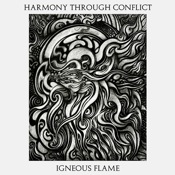
igne_harmonyAmbient music listeners should take it on faith that when they sit down to listen to something new from Igneous Flame they’ll be giving the next hour over entirely to being inside of and deeply examining the sound. On his latest outing, Pete Kelly “used some of the more ‘traditional’ instrumentation and sound sources that are commonly associated with ambient music in musically diverse and subtly different ways.” He also notes that he wanted to create an album that let him experiment beyond his “usual ways of working.” This is one of the things that has long endeared me to Kelly as an artist. He doesn’t rest. He doesn’t sit on a comfortable sound-set and reorder it. He challenges himself to reinvent Igneous Flame, even if it’s in a slight manner, each time out. Harmony Through Conflict has distinct stages to it, from the kind of warm and far-reaching ambient pad work that forms the artist’s signature sound to borderline dark spaces. Kelly says he sees the work here as “heavy” rather than dark, and I’d agree with that. The further into the disc you get, the more he loads on a sort of emotional weightiness, a specific gravity of tone. Nothing here is truly without that tenuous sense. You hear it in the animalistic sounds lurking under the pads, watery burbles and light cave echoes of “We Remember.” It resides in the bass-drone underlay at the outset of “Electric Blue.” Kelly plays with vocal samples here, too, an interesting and unexpected touch that comes in at the end as he levels the sound out to a classic ambient wash. The lush tones of “Message to the Other Side” give off the first hint of a shift toward shadow. This easily ranks with my favorite Igneous tracks, 12 minutes of the warm depths of his sound, a nicely ominous tone laced throughout. Kelly knows how to sustain feeling with a minimal soundset; in places he pares it down to thin, almost solitary sounds. In contrast to denser moments, it almost creates a sense of isolation. This track gives way to the grinding open of “Phosphorescence” and the real start of the heavier side of the disc. The weight comes fully to bear on you in “Ray Four,” a piece that wends its way into a murky abstract form composed largely in uncomfortable whispers, thick, bass-rumble washes and guttural utterances. There are moments of breath-holding tension before Kelly releases the track with rising pads. He closes out by bringing a bit of light back around in “Bluebird.” Chimes and bass guitar lift their voices and move teasingly toward a melody that never quite flourishes. But the hope of it is enough, a sign that we’ve passed through.

Harmony Through Conflict is another winner in the Igneous Flame stable. As Kelly suggests, this is very much a headphone listen. He’s a master craftsman with a strong focus on sound texture. The deeper you listen, the more your mind’s eye sees. Take the time to really focus on this disc. It’s worth it.

Available from LuminaSounds.

Praguedren: Kartography

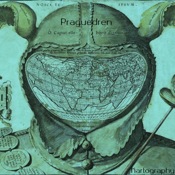
prague_kartoMisty drones and washes make up the majority of sounds on Kartography, a 30-minute ambient appetizer from the Czech duo Praguedren. Subtle field recordings and near-hidden bass drum pulses tucked into the flow add texture and a little aural interest. While the disc is quite listen-worthy, there’s not much variation as it goes along. Tones move in slow motion, following a rise-and-fall cadence, often bordering on white-noise softness. The only real shift here is felt in “Memory Map” as the duo rough up the edges a bit and drop in some disjointed soundbites for atmosphere. As I listened, it felt like some of the tracks fade out too soon. The endings feel arbitrary in spots, and it’s the quality of these pieces that make the early exit more noticeable. “Beyond the Edge of the World,” for example, is drifting along quite nicely for itself, buzzing drones working into your head, but then it seems to change its mind and just…stop. Kartography may have benefitted from having some if not all of the tracks quietly run together, making a smooth shift from one to the next, instead of pinching tracks off in what feels like mid-stride.

For the short jaunt that it is, Kartography is a pleasant enough ride. It’s a soothing suite of pieces that take on extra depth in a headphone listen, and the softness of it overall lends itself to looping.

Available in February from Dank Disk.

Second Culture: Flying Potion

second_flyingSecond Culture’s new release, Flying Potion, offers up twelve tracks from the trio of Keyth McGrew, Andy Hutson, and Mark Florin. For the most part, these trippy grooves laced with shots of playful sound experiments dance their way through phases of chill-room cool, namaste-worthy yogic tones, spicy World flavors, and borderline psychedelia. For much of the ride, catchy hooks prevail and the overall feel is upbeat and light. “Arcane Ritual” is like being lead through a Sanskrit chant by the happiest guru ever. Hutson’s snappy drumming underscores an ebullient chanted/sung mantra, and there’s a touch of the Beach Boys hiding in the excellent harmonies here. I love the way this cruises straight into the intense energy of “Hurricane Eyes,” which widens out into a rich Middle Eastern space. The trio lose me for a while beginning with “Bardo,” which features a spoken-word aspect that pares down to one phrase which is then repeated, in my opinion, way too much. It carries over into the next track, the otherwise engaging “Blue Purple Dream.” This track has a cool house backbeat and a bouncing bass sequencer line that I could fully drop into if not for that one overplayed bit. With the quiet electronic twiddling that opens “All the Symmetry is Obvious From Above,” they pull me back in. This track builds nicely, taking its time adding elements and lacing in a Berlin-style sequencer feel. This segues without a bump into the analog burble of “Super Hero,” a bit of a joyride for old-school fans like me.

Flying Potion has a lot going for it. It’s easy to take in, catchy as hell in spots, and diverse. If you’re looking for some uptempo electronica with a somewhat eclectic edge, it’s definitely worth lending an ear to.

Available from the Second Culture web site.

Paradiso & Rasamayi: Attuning to Oneness

paradis_onenessFor a disc that falls into the “healing music” modality, Attuning to Oneness, from Paradiso and Rasamayi, spends much of its time bordering–a bit surprisingly–on the shadowy side of things. Perhaps it’s the throaty song of the didgeridoo, the hushed peal of the Tibetan bowls or the dreamy, distant chants and vocals that wash through like passing ghosts. That being said, however, this didge-driven meditation is quite capable of taking the listener in and down, and of using the power of sound to salve mind and spirit. Both musicians are sound healers by trade, and they understand how to best use the resonant aspects of their respective instruments. Paradiso’s didgeridoo rises up from below, primitive and potent, to curl around the listener and open their energy centers. I happen to love the sound of the didge, and often feel affected by it–either listening or playing–so this aspect of the disc is right in my target area. The middle stretch of “Wisdom Warrior” is serious medicine, as the didge gets paired up with chant and throat singing for a major dose of chakra-shaking vibration. The didge’s mesmerizing power gets even stronger in “Staying the Path,” and this is also where the ride gets surprisingly dark. Drums rumble as the stick talks in a serpentine voice, and Rasamayi floats mournful chords into the mix. It’s a gorgeous piece, and very effective; the tension it imparts–again, while retaining that hypnotic quality–catches me pleasantly off-guard. On the other/lighter side of the sonic equation  Rasamayi’s bowls ring down from above in many of the tracks here, their sharp clarity standing out in counterpoint to Paradiso’s low end. Her voice, too, is a lovely and effective guide along this path, taking gentle hold of the traveler’s hand and leading the way. It is warm, comforting, and reassuring.

The one mis-step for me comes with the last track, “All is Love.” After the better part of an hour being washed over with sound flows and wordless or vaguely worded chants, which let the listener hear the music’s voice on their own terms, the clearly sung lyrics here feel a little intrusive. Whereas everything else was very intimate and based in the listener’s own response to the sound, these words, which feel a bit wedged into place, detract at the exact point where the listener should be allowed to simply come up out of their immersion.

Overall, I was surprised by how much I enjoyed Attuning to Oneness; I am not usually a healing-music listener, but this disc departs from my perception of what that term usually means. The “sound-healing” aspect is definitely there, in that what’s presented is definitely something you feel as you listen. I do believe that we can be viscerally affected by sound (I admit that my vote is still out in terms of a physical effect), and I have been so affected by my several dives into Attuning to Oneness. Obviously, this disc will appeal more to those listeners who buy into the modality, but it’s definitely a disc that should be heard and experienced regardless.

Available beginning in March from 5th Element Music.

Max Corbacho: The Ocean Inside

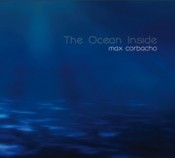
maxc_oceanI happen to live not far from Geoff Small, a partner in the Relaxed Machinery label and an evangelical Max Corbacho fan. I had to drop something off at his house recently, and I mentioned that on my drive I was listening to Corbacho’s latest, The Ocean Inside. He asked me what I thought of it, and I could only reply, “It’s…big.” And so it is. Over the course of two discs and nearly two and a half hours, Corbacho creates immense and immensely calm spaces out of full, sighing synth pads. The tones are warm and welcoming, the movement is gentle and fluid, and it’s mere minutes before you are completely lost within the sound. Corbacho is looking to express “the analogy [of] the mind as an ocean, with constantly changing waves at the surface, and the inner stillness and silence at the depths.” Done. The constant motion is there in the shift and shape-change of the pads; the stillness is there in you as you go deeper into this lengthy excursion. The Ocean Inside is not a release that does anything particularly new with this brand of ambient, this massive, floating construct; it just manages to do it magnificently well. There are no jolts or mis-steps in the two-plus hours. Slight tonal shifts, more attitudinal than anything else, move you through its various phases without ever straying far from the disc’s hushed intentions. Track listings are a mere formality here, as each moment dovetails smoothly into the next. Once you’re inside it, you’re in for the full ride. This is a work that’s perfect for meditation and for true ambient listening. While there is an incredible depth of detail at work, even a passing listen, letting the sound quietly fill your space, is enough to engender a reaction–a deep and personal reaction. Putting either disc on loop is recommended; putting them both in one playlist and looping that for hours on end is even more highly recommended. Max Corbacho has been patiently improving his ambient craftsmanship for years, and The Ocean Inside finds him at perhaps his absolute best. This is a must-listen.

Available from AD21.

Steve Roach & Byron Metcalf: Tales from the Ultra Tribe

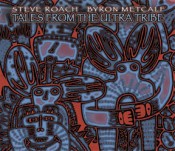
roachmetc_ultraThe electro-shamanic ritual continues on Tales from the Ultra Tribe, the new offering from Steve Roach and Byron Metcalf. Coiling up out of the same spirit well that has empowered earlier journeys–most notably the epic tribal-ambient work The Serpent’s Lair–this new release focuses less on ushering the listener into the lower worlds and more on sharing its power in an energizing, spirit-releasing way. This is a statement on the connection between primitive and modern, tradition and transformation. It is about trance states imposed equally by drum and drone and the way in which that thing, that ancient thing inside each of us, can be called and awakened by either. The format is familiar; Metcalf’s thunderously potent drum work, his rattles and shakers and pots, set up our collective pulse and Roach conjures a mist of sound that tells us how and when to breathe on our journey. As the disc moves along, Metcalf the traditionalist and Roach the technologist switch places at the helm. At first, it’s largely Metcalf’s show because we need to be called into ourselves, and the drums are the way in. The 13-minute “Setting Forth” is packed with medicinal percussion; Roach’s sounds gather and curl like stormwinds. This eases out into “A Noble Direction,” pushed ahead by the deep resonance of Metcalf’s frame drum. There is a point here where, for just a few seconds, everything drops out except for one pure-pulse beat on the drum. It doesn’t last long, and I wish there was more of it, but it’s an incredibly effective thing where your head just empties out and there’s just you and this simple sound connecting you to the flow. And then you’re back in it, moving into Roach’s domain for “Midnight Migration.” Here’s the first switch from tribal to tech, a transmutation that doesn’t lose any of the preceding potency as analog synths take over the role as guide, curling into distinct trance formations and adding a bit of bouncing groove. Metcalf’s drums continue to call thunder into the mix. They swap back for “Magma Clan,” where the shadows roll in, distant didgeridoo sounds haunt the backdrop, and the drums grow thick and intense. Just when it’s looking a little grim, “Road From Here” amps up the energy, a high-BPM churn of drum and guttural snippets of analog that should set your heart racing. If that doesn’t do it, the massive drum slaps late in the track will. By the time “Fire Sky Portal” and “Return of the Dragon Bone Clan” roll around, your mind should be suitably melted and set free; “Clan” in particular continues into a trance zone fueled again by the drums. Roach’s synths hiss and spit in the background, burrowing fresh tunnels into your head. At last you’re left to sit in the comparative quiet of “In the Safety of Travel,” cool down and come back to start again.

Whereas Tales from the Ultra Tribe has been noted as taking its cue from Serpent’s Lair, or being the descendant thereof, I came into it expecting more of Roach and Metcalf’s excellent “let’s go to the lower world” excursions. But Ultra Tribe is a thing all its own while nodding openly to its lineage. It is an exhilarating tribal ride that doesn’t head into dark zones but rather infuses the listener with soulful energy and a sense of release. That being said, if drums aren’t your thing you may have a harder point of entry–because that’s what this disc is about: the ritualistic, mind-opening, trance-instilling power of drums. But as they take hold, they simply melt into the organic whole of the thing, amplified by classic synth work from Roach, and it’s not as though you’re going to be in your body for the entire ride anyway. Get the headphones on, lay down somewhere quiet, and take this journey. Another strong dose of sonic medicine from Roach and Metcalf.

Available from Projekt.