Signal Hill: Chase the Ghost

signal_chaseFrom its first shiny post-rock guitar note, Signal Hill’s Chase the Ghost gets busy bringing the feel-good. This disc has been living in my car’s CD player since I got it, and has provided the soundtrack to many go-nowhere summer drives. It lands in your ears with its blend of effective hooks, shoegaze overtones, and laid-back attitude. Every song here could fall into two categories: background music for a scene that hasn’t been filmed yet, or catchy song in search of meaningful lyrics. Dave Masters and Rishi Arora switch off up-front guitar duties, both bringing a similar, thoughtful style, making a real cohesion of sound. And when they play off one another, the chemistry of their years playing together comes through. The title track, which closes the disc, is a great example. Very quiet and personal, rising to a cathartic (yet still cool) climax. It’s like listening in on a pleasant-yet-intimate conversation. Brian Vasallo and Tim Cooper, on bass and drums respectively, hold down the rhythm section across these nine tracks. Cooper is a steady, understated presence, even when he’s given a little break of his own on “The Fantastic Hours.” There’s some interesting production hiding amid all the nearly radio-friendly tracks here. Field recordings of children bridge the space between the chill groove of “Pacific Northeast” and “Imaginary Friend #2,” a beautiful slow piece which also has some tasty vibraphone from Dave MacEwan and violin from Samantha Rawlings.

Let’s be upfront here: those who don’t enjoy slightly upbeat, guitar-driven, indie-style tunes probably need not apply. And there is some sameness to the sound, with the abundance of crisp, high, strummed chords and slow-handed melodies, but it’s so pleasant and positive that it’s easy to overlook. Plus, it’s killer in a mix. A very good listen.

Available from SunSeaSky.

World of Metal and Rust: Music for Prisoners

wmr_prisonersIndustrial drone and grind meets thudding beats and wayward bits of piano on Music for Prisoners. World of Metal and Rust (aka Ross Dabrowski) uses “samples collected from field recordings and random recordings made around [Portland]” as his sound sources, then grinds them into a fairly standard dark/industrial paste. The pieces are brief, sometimes blessedly so, but Dabrowski at least tries to do something different. Usually, that involves the piano, which tinkles and stumbles, a bit out of tune, and it’s often helped to limp along by percussion. For me, Music for Prisoners wears out its welcome in short order. It’s not deep or dark enough to hit me on a visceral level; I feel that I’m just standing and staring at it, waiting for something interesting to happen. Repetitive elements are often too much so. The dynamics seem to be lacking. To some degree I wonder if Dabrowski is standing in his own way by not giving himself room to stretch these things out and explore the real grit and depth of his ideas and sources. Listeners into dark, experimental work may want to take a listen.

Available at Bandcamp.

Takahashi Suzuki: Voyage – Hiroshima Eternal

suzuki_voyageClose your eyes and drift. That’s all you need to do to enjoy Takahashi Suzuki’s lush ambient/spacemusic work, Voyage – Hiroshima Eternal. Between the long, so-gentle pads and light touches of classic analog sequencing, this sonic tale of a spirit’s journey after that day in Hiroshima coasts along with endless grace and beauty.  It’s as moving as it is relaxing, and gains a lot of strength from a well-considered simplicity. For the most part, the pieces on Voyage rely on a familiar, not-too-involved rise-and-fall of chords, letting harmonies work their magic rather than heavily layering sounds. Upon my first listen, I almost felt like the sound was a bit thin. In the repeated listens that followed, I understood that here, less is more; that Suzuki’s melodies, pulled out to a slow-motion dance, don’t need a lot of embellishment or augmentation. There is precisely as much here as there needs to be for the music to work, to be felt as well as heard, and Suzuki relies on a lot of subtlety in his compositions. I especially like how he weaves the analog lines into “Knowing to Return.” Having given us long stretches of smooth quietness, the sequencer sounds more vibrant, its texture more pronounced. It bring us back around before the final track. And, again, it’s subtle. It doesn’t barge in, it just insinuates itself into the flow like it’s always been there. It works in perfect concert with the pads around it.

Voyage, it should be said, is a very familiar ride; Suzuki stays well within the confines of this brand of music. It’s the strength of the emotional core that pulls it above the ordinary. It’s touching and personal. I’d say it’s almost impossible to go through a softly soaring piece like “The Knowing,” with its angel-choir pads and almost elegiac string tones, and not have a deep memory, similar in feel. rise to the surface. That’s what makes Voyage the excellent disc it is.

Available from CD Baby.

Jack Hertz & Symatic Star: Shambhala

hertz_shambIncense-smoke drones and a slow, throat-sung chant welcome the listener into Shambhala, the new collaboration between Jack Hertz and Symatic Star. This hour-long meditation spends a lot of its time hovering close to darkened areas but, courtesy of its hypnotic drones and soft-edged sounds, manages to pull the listener in deep without resorting to the more off-putting aspects of true dark ambient. The duo skillfully maneuver their way through their tales of the legendary paradise, varying the tone just enough as we go. After the grim and ritual-like atmospheres of the opening track, “Journey to Shambhala,” the tone lightens a bit with “Mountain Kingdom.” Here the lead is taken by a sound like processed guitar (although no guitars are listed in their gear) that puts me in mind of Erik Wøllo’s work, long, soft notes sighing off into the distance. Hertz laces the background with small, effective sounds, echoing drips and light clatters, This track moves upward in feeling, appropriately, given its title, the high notes and gentle approach carving out our sonic impression. These two tracks take up the first half hour, by which time you should be fairly well owned. But the tales continue with the deep “Om” neatly played out in sound on “The Doorway.” This is another track that dwells on the lower end, rich bass notes resonating and moving in motion with your breath–or, to be accurate, vice-versa before its eight minutes are up. The dense tones here are excellent, and the cadence is meditation-perfect. The half-shadows return on “Two Worlds,” ten minutes of misty drones augmented with small sounds and a full sense of dimension. It keeps the slow-breath pacing coming out of “Doorway,” and adds an interesting edge, the sense of raised perception. Prepare for your wake-up call then as Symatic Star (aka Simon Walsh) ushers in the final track, “Return from Shambala,” by blaring out a call-to-prayer note on processed trombone, simulating a Tibetan horn. A flute tone takes the forefront here, a light and hopeful sound against a gorgeous classic-ambient backdrop. It brings the release to a cleansing finish and drives home the sense of it being a meditation. It’s very easy to get lost in Shambhala; I’ve had it looping pleasantly for hours. The darker spaces are not grim, but just a bit moody. They’re not threatening, they’re introspective. Because of them, the lighter stretches seem more soulfully buoyant. This release is also one to pay attention to from a construction standpoint. It’s beautifully layered and pieced together and gives off a real sense of tangible depth. Hertz’s small sounds and atmospherics carefully enrich Walsh’s A-level synth work. It’s dramatic, it’s calming, it tells its story in a confident voice. A superb release, and a must-own.

Available from Aural Films.

Ex Confusion: With Love

exconfus_loveIt’s been a while since I came across a release as gentle and serene as Ex Confusion’s With Love. Composer Atsuhito Omori has apparently found a way to melt guitar and keyboards into a fine mist  which he applies via three- to five-minute vignettes that float along, leaving a quite pleasant lull in their wake. He plays with the fading resonance of his acoustic elements, the hanging sounds and echoes laying down a constant backdrop for the slow melodies at play. The title track is a great example, taking a simple and lovely piano melody and letting its story trail off as it goes, its own voice deepening the dimension of the piece along the way. Omori’s style is classic slow-handed ambient; there’s a nice patient sensibility to it all. He eases ambient pad-like tones out of his guitar, laying them out in a familiar rise-and-dissipate style, and the calmness it evokes slows your breath and soothes your soul. His piano pieces are beautifully played–listen to “Only An Angel,” where he brings misty drone up behind a repeating piano phrase, submerging his melody in an increasingly dream-like space. Though the songs here are brief–and let me get back to that–each is thoroughly loaded with emotion. It’s a very personal disc, and it’s easy to internalize it to bring your own thoughts and sensations into play. The brevity, while not typically sounding too short save for a couple of quick fades that had me thinking, “That’s all?”, makes me wonder what Omori could do in a longer format. And not just wonder, but actually hope for. He clearly gets the ambient mindset; now I’d like to hear him break out of the pop-song time frame. If With Love is any indication of what this self-taught musician has in store, it would be very good indeed.

Available from n5md.

Music for Voyeurs: The Long Sleep

mfv_sleepPlunderphonics and melancholy mix to create a sense of loss, longing, and giving up just a bit on Music for Voyeur’s second outing, The Long Sleep. With its well-planned jumble of post-rock melodies, long sound bites, and sonic distortion, the disc gives off an interesting sense of disjointed intimacy. You’re being shown someone else’s private story/stories, but you’re also being asked to take the feel of the music into account, but you’re also having random things thrown at you while you try to figure out what to focus on. Sometimes it’s subtle, like the almost-too-closely miked rasp of guitar strings on “It Will Be the Last Time,” coming off as the only harsh aspect of a quiet duet with piano. Or a sudden whir of gritty sound that rolls in, then fades. Sometimes it’s right there in your face, like the howl of barnyard animals and the roar of an engine in “September” or the wail of a baby crying–which later turns to laughter–in “Someone Else’s Life.” Musician Rick Senley uses all this to create a nice dichotomy without being super-blunt about it. The base music, the elegantly simple guitar and piano songs that are trying to tell their story, are excellent on their own, but they take on a more vital role when they’re crushed into this mix. Senley delivers his strongest and most affecting work on “Jane.” Here he brings together a beautifully sad piano song with a spoken-word piece, then peppers the background with curling electronic sounds and random wah-wah cries of guitar. If you’re not a little sad after you listen to this, professional assistance may be required.

My initial listens to The Long Sleep were not the easiest. Senley’s interruptive, mess-with-the-moment manipulations bordered on aggravating. And yet, I had to keep going back to listen again. The more I paid attention, the less heavy-handed and random it all seemed. To be honest, those barnyard animals still irk me, but there’s enough at play here, enough of an intelligent challenge that feels thematic, to reward a bit of patience. Have a go.

Available from the Music for Voyeurs web site.

DeeperNET: ONE

deepernet_oneBust out the strobes and glow sticks and get ready to give your subwoofers the hearty workout they need. DeeperNET’s debut release, One, is a huge, throbbing, speaker-punching mass that lands somewhere in the middle of EDM and trance. My initial response was to write it off as thinly disguised club music, all thump and thud and no substance, but then I realized how in the middle of the sound I was and how firmly it had me in its grasp. Yes, it threatens to overdose on bass drum and its own clubby memes, but producer Andrew Miles manages to keep it fresh, largely calling on a depth of sound and the right balance of big and small. He pays as much attention to the clicks, gurgles, and chirps that pepper the background as he does to the in-your-face beats and VIP-room-worthy synth runs. If you’ve listened to any EDM, you know this stuff. You’ll feel the beat drops coming from a mile away in a track like “Sirens,” but then when they do happen, you still reflexively go, “Cool…” Can’t help it. Miles’ constructs hit on a visceral level, especially when you’ve got them cranked up. Which you will. So accept that you’ll hit certain recognizable landmarks–“The Eagle Has Landed,” which is superbly potent and relentless in its 10-minute sonic psy-trance assault, throws me directly into an obscure old track called “Searching for UFOs” by Astral Projection–and just dig on the effective power at play on One. Another solid release from Spotted Peccary’s growing O3E imprint.

Available from Spotted Peccary.

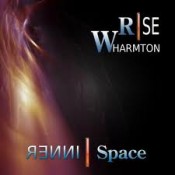
Wharmton Rise: Inner Space

wharmton_innerWharmton Rise’s signature sound is based in a Berlin School frame with a little extra rock power thrown in. On his new outing, Inner Space, he mixes in an extra dash of Middle Eastern flair and grinds out eight pop-length pieces in just over half an hour. (Seven if you count the two takes of “Neural Interfaze” as one track.) Relying heavily on vocal samples, which he uses well, multi-musician Andrew Mark Lawlor comes in with the throttle jammed open and just keeps it going. There’s a fair bit of similarity from track to track–we get pulsing sequencers and big drums and wailing vocal samples in most tracks, but the energy helps to overcome that somewhat. Lawlor does a decent  job of modulating his tunes, even if, again, said modulation tends to be similar as we go along. “Frostbite” kicks in with the familiar sounds, then downshifts into a more drifting space before firing it up once more. “Sorceror” does the same, the forceful passage dropping out to a cloudy-night kind of feel with a ringing bell in the distance. He slowly folds his sounds and beats back in to drive it to the finish. Lawlor also lands a couple of nice lounge-like moments, particularly in “Neural Interfaze”–lush, sensuous passages reminiscent, appropriately, of belly-dancer music. Inner Space is not, in my listening experience, Wharmton Rise’s strongest outing. Individually, the tracks work; it’s the similarity, especially in so short a time frame, that undermines this disc. Theme is one thing, but too much theme without diversity to off-set it is another. Still worth checking out. Lawlor knows his way around the style.

Available from  LAD through the Wharmton Rise web site.

On My First Ten Years

You know, I would have sworn the Steve Roach review came first. But it was actually third.

In 2003 I bought a copy of a Brannan Lane sampler CD. I came across Brannan’s music during the mp3.com days, when I had set up a station called MindMeld. At the time I was also an active member of the spacemusic Yahoo group.  One day I decided to exercise my long-held secret desire to be one of those guys who write liner notes, and I knocked out a quick and appreciative review of the disc, which I posted to the group. At the bottom, I slugged it “John Shanahan, Freelance Reviewer.” A few weeks later I did the same thing with Communion by The Current. The community responded well, which made me happy. Then the Steve Roach Thing happened.

I wrote a review of Steve’s sampler,  Space and Time and, again, posted to the group. Shortly thereafter, I got an e-mail from Steve himself–although I must admit that at the time I would have written that FROM STEVE FREAKIN’ ROACH HIMSELF! He wrote to say he appreciated the review, and would I like to listen to and review his latest. Well, yeah.

And that’s how this whole thing started. That October, I grabbed the name Hypnagogue, made a page on the site I had back then, and opened my mailbox to submissions. Lo and behold, they started coming in. Now it’s 10 years later, I’ve lost count of how many reviews I’ve written although I have to figure it’s north of 1,000, I’ve been exposed to some amazing music, and although lately I’m frequently overwhelmed by the volume of stuff I receive, I remain grateful for the chance to do this.

Being Hypnagogue has let me do two things that I’ve always loved. On the writing side, I get to be, like I said, sort of the liner note guy. I’ve always loved them. That’s one thing about being an old guy who’s gone from vinyl to tape to disc to download. I got the benefit of opening an album and reading what someone had taken the time to say about it. Record sleeves, or the inside of a fold-out, gave someone the space to connect with you about the music. As a jazz and blues fan, I enjoyed a steady diet of it. I’d pick up one of George Wein’s Giants of Jazz records and digest the history of what I was listening to. It’s how I know that in Toronto one night, the same night as a Marciano/Walcott fight, Charlie Parker had pawned his sax and he had to wail on a plastic alto, and still managed to light “A Night in Tunisia” on fire. It’s how I know the story about Robert Johnson calling his agent for money because “a lady here wants to show me a good time for a dollar and I lacks a nickel.” I still remember reading the smudged white typeface on the black sleeve of Cheap Trick’s first album, where Eric Von Lustbader introduced the band to the world. So there’s that. On the music side, well, I’ve made it clear on many episodes that I’m a frustrated DJ, someone who maybe should have gone into radio but didn’t. Being Hypnagogue lets me do that, and lets me play the Ambient Evangelist, hopefully gaining some converts on the way.

It may sound precocious to say this, but I continue to be amazed at the response to Hypnagogue. I look around my office at the number of woefully unsorted and haphazardly stacked discs that have found their way here courtesy of other people trusting my opinion, and it’s still sort of surreal. Because I will share with you one of my secrets: a lot of the time, I don’t believe that I have much to say. I just know that I’ve always wanted to say it, and you people find something of substance in it. Me, I just write what comes out when I listen to the music. It’s 10 years later and I still don’t consider myself an expert in any sense of the word. I can write about how the music affects me, and I can give my opinion on it, but I still have no idea how 95 percent of the gear works, from the Abletons to the soft synths to whatever the hell you kids use to make your glitchy things. Sit me down at an old analog synth and I’ll try to play “Chopsticks” for you, but it won’t sound good and I’ll probably just mess up your patches, whatever those might be. I’m just a listener who happens to be a life-long writer. I’m a guy with words milling around inside me, waiting for someone else’s music to pry loose the right ones and put them in order. One Listener’s Opinion. A thousand discs later and it’s still One Listener’s Opinion. I cannot stress how deeply I hold that conviction. It’s why I never out-and-out pan anything–and folks, to be honest, and I think I’ve earned the right to say it after 10 years, I’ve heard some real crap in my day. But it’s crap in my opinion only, and someone else may dig it, so that’s the tack I take and always will.

I’ve been introduced to some amazing music over the last decade. I’ve developed many favorite artists out of the masses of music I’m sent. I’ve had my music palate broadened with intriguing flavors, from dark to goa to space to noise. I’ve become a better listener. And I hope, after all, that what I’ve been able to do is to provide just a little more exposure for these artists who know they’re making art that has a very small audience–but they keep at it. That’s noble. And that’s part of why I have kept at this for 10 years, when, quite honestly, no other writing endeavor has engaged me for so long. Because they make the music. I just talk about it to as many people as possible.

I thank everyone who’s ever stopped by the site in its various incarnations. I thank the musicians for trusting me. I thank the many other reviewers out there who have been at this even longer, people like Bill Binkleman, Michael Foster, Phil Derby, Matt Howarth, Rik MacLean, and others. It’s a great community to be a part of, and their excellence at reviewing drives my need to be somewhere near as good. And thanks to Steve Roach for that invite back in 2003 that made me genuinely feel like, yeah, I can do this. (And, I must admit like the fanboy I can be, that standing in a Tucson hotel parking lot the morning after SoundQuest Fest, talking casually to the guy whose music has resonated within me for 30 years now remains one of my favorite music-related memories. That, and handing the man a Guinness across his gear at the WXPN studios while he was in the middle of crafting what would come to be the Landmass album.)

It’s been a great 10 years. Thank you all for believing in me. Now if you’ll excuse me, I have a ton of music to review.

peace & power,
John

Anima: Light of Aluna

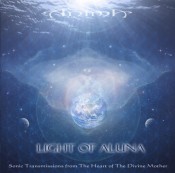
anima_lightI clearly remember my first impression of Anima’s Light of Aluna. I was in my car–I often load my CD changer and then forget who I put in there–and I heard throat singing. The sound got hold of me, as it tends to do, and my first response was, simply, “Cool…” As the sounds proceeded to broaden and open, they brought me into spaces reminiscent of my early excursions into the more electronic side of New Age, and then Light of Aluna had me pretty well hooked. Musician Ali Calderwood and vocalist Daniela Broder fill an hour with changing, always gentle soundscapes with a healing-music sensibility. Lightly energetic in spots, the album overall is quite laid back and spiritual. Tone and tempo shift just slightly as the music moves along, never enough to break the easy flow. Calderwood’s piano and guitar work mesh neatly with his electronics, from soft pads and swells to sparkling, classic-synth runs and arpeggios. When Broder’s voice glides in like clear river water, it adds a sacred-music feel and a true performer-to-listener intimacy. She is at her best on the absolutely gorgeous “Peace,” her chants and verses coursing intensely over deep drones and rising, glittering synth sounds. Her voice takes on a storyteller quality, and you’ll find yourself swept up in the narrative. Calderwood keeps his input on the low end, letting Broder spend the entire 10 minutes in the spotlight.

The more I listen to Light of Aluna–and believe me, I have listened to it quite a bit–the better it gets. There’s always some new element of beauty that reveals itself in the next listen. Calderwood’s compositions are nicely layered, smoothly flowing and absolutely soothing. It’s healing music without some of the overdone memes that can plague the style. This music makes its way into your spirit, soothing and salving, but never gets entangled in its genre’s trappings. It just does what Anima set out to do. A great repeat listen that should definitely be enjoyed in headphones. Expect this one to rank high on New Age and healing music “Best Of” lists at the end of the year.

Available from the Anima web site.