PAS Musique: Abandoned Bird Egg

pas_egg“Repetition, beats, and field recordings” form the basic sound-set on PAS Musique’s new release, Abandoned Bird Egg. With an eye toward creating a “meditative” experience, Robert Pepper and his crew take those elements and assail your listening space with thick swaths of gurgling electronics pinned under industrial weight, accented with IDM-style voice samples. I throw quotes around “meditative” because while the dense sonic atmosphere and buzzing, drone-like undercurrent can forcibly lull you into a kind of numb stupor, it comes fully edged and barbed and is in ceaseless, abrasive motion. A lot of the sound on Abandoned Bird Egg is super-dense, mercilessly piled upon you into whirlwind cacophonies anchored, now and then, with thudding and, if I may, catchy beats. In other places, as on “The Light Side,” the drones take hold, possessing their own considerable weight. Here they take a white-noise hiss and an incessantly repetitious sequencer riff, distort the sound like it’s over-amplified, ramp it up and down in intensity, and pull back the edges to let additional sounds leak out to keep you aware. And just so you can’t really get a handle on what’s happening, there’s always the clumsy funk bassline that welcomes you into “Dark Canopy.” But don’t get comfy–this soon rises up with spurts of feedback and more aurally aggressive clusters of sound. As challenging and rough as it is, I actually find Abandoned Bird Egg to hold some of the most approachable work I’ve heard from PAS. It’s not an easy listen by any measure, but there are enough familiar elements to let you take hold of something in the storm. You have to like your noise, but here’s the thing–this is purposeful noise, a chaos that actually achieves what the artist sets out to do. It may be the weirdest meditative experience you’ll ever have, but if you can find your way in, I assure you this stuff will carve out its own space in your ahead. But still, approach with caution. It’s not for everyone.

Available from Alrealon.
Bruno Fleutelot, [ozo viv]

fleut_vivHad I thought to check before listening, I may not have reviewed this re-release of a 2005 work from Bruno Fleutelot. My policy is to disregard work over a year old. But since I only learned of said status after diving into [ozo viv], and having heard what it offers, I felt it was worth giving up a few words. Thematically based on lunar landscapes, according to the artist’s label, [ozo viv] offers up guitar-based minimalism heavy on drones, processing and atmosphere. Touches of vocal samples work their way in as well. The overall feel is slow-paced music that’s taking time to think. Fleutelot understands the importance of pauses, not just the ones filled with resonance and fade, but simple breaths of silence within a flow. His guitar playing tends to focus on patient, simple playing, letting the sounds of the strings melt into his electronic backdrops. “Palus Nebularum” is a great example, as he strums his way through a chord one simple and deliberate string at a time while the background whispers with understated electronics and spectral voices whimpering in the distance. “Oceanus Procellarum” pairs the slow guitar with echoing string rasps. Fleutelot hangs a lot of pauses here, gaps in the sound that hold you in a bit of suspense. The feel is dark and heavily weighted.  “Mare Australe” takes a similar approach with piano. Fleutelot plays slowly while a drumbeat shuffles in, the combo working through its slow-motion song over a quiet, swirling curtain of electronic sound. Aside from these sort of near-deconstructionist pieces, he also meanders into experimental territory. “Sinus  Roris” is one of the dark bits,  driving forward on a metallic, scraping sound that stalks across low-end drones. It’s uncomfortable in it edginess but also a little hypnotic. I particularly like the bonus track, “Marc (Pt 1, 2 & 3).” Fleutelot modulates the flow here, going from deep, hypnotic drones to clear guitar tones that waver and fade like heat shimmer.

Fleutelot maximizes the effect of his minimalism, heightening our awareness of waiting for the music to do its next thing. The music here pairs simplicity with uncertainty, the obvious with the odd, and the blend works. [ozo viv] is mesmerizing and a pleasure to give a deep listen. I do hope this reissue heralds newer music from Bruno Fleutelot.

Available from Eglantine Records.

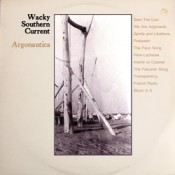
Wacky Southern Current: Argonautica

wacky_argoYou would think that after ten years in the review business, I’d have stopped flinching at artist names. But, come on…”Wacky Southern Current”? Luckily for us all, Italian musician Marco Cervellin redeems his odd moniker choice with a batch of guitar-fronted pieces that range from folksy finger-pickers to feedback-laced post-rock wailers. Cervellin harshens up the sound a bit in spots with distortion and light electronic treatment, but never to the detriment of the song itself. Argonautica is a decent release, but with several listens I couldn’t shake the feeling that I wanted more out of it. The songs are pleasant and varied, and Cervellin’s guitar playing is excellent. He can absolutely tear it up, as he does on the rocking “We Are Argonauts,” which cuts loose with snarling, prog-like riffs and runs. And he can run the edge of experimental, which is where we find “Padawan,” where dissonant chords, seemingly wayward drumming, and electronic grind fight for attention behind a simple five-note arpeggio. But these are the exception rather than the rule. Little else jumped out to impress me. The release comes across as an easy-listening album with the occasional touch of something more ambitious–and it makes me want more of the ambitious stuff. Definitely worth having a listen, and I will be interested to hear what’s next from Wacky Southern Current.

Available from the No-Source netlabel.

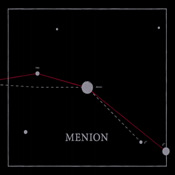
Menion

menion_selfMenion is the pseudonym of guitarist Stefano Ferrari. In this 10-song release that clocks in at just over half an hour, Ferrari cranks out a mixed batch of pieces that run from jittery experiments to dubstep-influenced rides and even a bit of jazz. This is all meant to capture the feel of the musical scene of Berlin, where he has spent the last few years, and in doing so winds up packing a sense of hurrying from place to place, musically, and visiting each just briefly. This gives it a slightly schizophrenic quality, with its approachable moments in distinct contrast to its more left-of-center ravings. Thing is, the approachable pieces are very much so. “Night in Berlin,” with its dubsteppy warble and plodding pace, makes for a great start to the release. Ferrari spatters the piece with microsounds and underscores it with a stalking bass line. When his guitar really kicks in, wailing its way through what would make for a very funky spy-movie theme, I get chills. There’s a similar, and similarly effective, break in “Stai Attento ai Segnali.” It busts open after several minutes of minimal, chopped sounds laying out a multi-layered beat, accompanied by pizzicato guitar. This track highlights Ferrari’s attention to small detail, which runs throughout the release. “Sopra un Aeroplanino di Carta” shows another side. Its chill-out groove is balanced with gritty noise, and in its quiet moments it’s simple, pensive, and engaging. When it breaks into a sort of smooth jazz thing just before the four-minute mark, the shift is both surprising and pleasing. The song wears several different faces in its five and a half minutes, all of them done well. There are also several very short pieces, the longest just over a minute, the feel a bit wayward, like half-thoughts thrown into the mix for transition. They’re fine, but for me they don’t add to the experience.

It took me a little time to warm up to Ferrari’s style. Whereas at the start I thought it was going to be too “out there” for me, I found myself getting quite into both his superb guitar playing and the richness of the sound. There’s a lot going on, and he manages it all skillfully. I find that sometimes glitchy elements can be overdone or overemphasized; here, they’re downplayed to the point of a well-used accent. When Ferrari chops and re-arranges sound or throws in drop-outs, as in “In Fondo a Un Lago,” it can be a challenge upon first listen. Then understanding comes. It’s not just that the sounds are chopped up, it’s that they’re being bounced back and forth between speakers (or ears) to play up their rhythmic aspect and to give dimension. So I have to say that Menion managed to win me over. See if he does the same for you. I’m looking forward to more.

Available at the Menion web site.

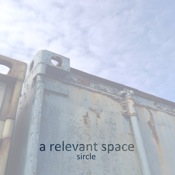
Sircle: A Relevant Space

sircle_relevHere’s your pitchline: Crowd-funded drone/ambient soundtrack for use in a floatation tank. That being said, I was surprised to find that Sircle’s A Relevant Space wasn’t just a stretch of quiet, long-pad ambient. Instead, the six tracks here blend the soft and hypnotic drones with a lot of texture and additional sounds. Children’s voices, surprisingly enough, greet you as the disc begins. This seems like an odd or even jarring choice for a relaxation piece, but it’s a happy, playful sound, mixed with what almost sounds like the splash of a fountain, and it’s soon subsumed into the rising drone-haze as we glide off into our mesmerized state. In places, we get the lap and hush of water; in others, the surface bristles and roughens, but not distractingly so. It’s part of the dynamic that’s at play throughout the release. Sounds move all around your aural periphery, shifting places and dropping familiar snippets to keep you cognizant of what’s going on in your ears even as you’re losing track of time…and possibly losing track of where you are, physically. Strictly in terms of its effect on the listener, A Relevant Space is one of the most relaxing sets of work I’ve heard in a while. Whether musician James Mills is employing a bit of binaural tech in his compositions or it’s just the allure of very quiet sounds and some near-white-noise backgrounds, the music here absolutely does what it sets out to do. This is a release to set aside an hour for, get somewhere comfortable, and just literally go with the flow. My only issue with A Relevant Space is that I wish Mills had found a way to flow the pieces together. The space between tracks becomes very pronounced, and almost interruptive, because the music takes the listener so deep. Its sudden disappearance pulls you just slightly out of the soothing space into which you’ve been lead. Still, a great release, especially for use in meditation.

Available from Frozen Forest.

Melorman: Waves

melorman_wavesWaves is a soft-spoken album with a laid-back attitude. It just wants you to get comfy and chill, nod your head to its beats here and there, and maybe get a little introspective. Melorman (aka Antonis Haniotakis) puts forth nine tracks wrapped in soft, cloudy sounds for your casual enjoyment, and while there’s a certain similarity at play as the disc moves along, it’s offset well by the ease and the disc’s overall uplifting feel. As I listen to this over and over, and happily so, it occurs to me that there’s not a lot to say about it–it’s a pleasantly innocuous thing, subtle to the point of being nearly subliminal. I mean, your foot’s tapping and your body is bopping along a bit, so you know you’re into it, but the sounds surrounding you are so misty and cool it’s like they’re coming from somewhere far away and you’re just feeling the residual effects. A nice melody like “Lights,” paired up with a low-and-slow bassline and understated glitch percussion, makes you smile and sends ripples of feel-good through you, but maybe it’s just making you remember something good. “Heights” drops sweet chord breaks that bring echoes of cool 90s IDM to mind–a little bit K&D, a little bit Beanfield–and wraps them through and around a romantic song on sighing keys. Something here cuts straight to my core. Close your eyes and drift with it and see what comes up for you. That’s part of what works for me about Waves; the songs manage to trigger very personal responses courtesy of its strong emotional undercurrent. Plus, it really makes me want to sit by the ocean with a good drink at sunset. And as the disc winds down with the oddly funky closer, “Numbers,” with its electronic voice chanting off random sequences over clap-your-hands percussion, I do believe I’ll order another one, then hit play and glide through these Waves again.

Available from SunSeaSky.

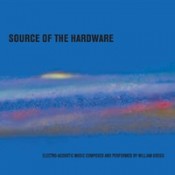
William Gregg: Source of the Hardware

gregg_sourceWilliam Gregg makes his entrance into the ambient and electronic world with a set of live electro-acoustic pieces. Having this disc on hand has led to those moments when a song comes up in shuffle and catches my attention. More than once I’ve picked up my mp3 player in moments like this, and there was William Gregg. On these pieces, Gregg improvises on guitar or violin over an “orchestra” of synth sounds, and thus gives us a workable blends of deep electronics and familiar, organic sounds. “Nocturne 2” is a good example. Gregg places a cool, coiling bit of synthesizer buzzing in our ears, then offsets it with a lovely, slow melody on acoustic guitar. “Circular Path” is a  soft, folksy song that sings over spinning curls of synth. The title track is a New Age-style keyboard piece full of flourish and drama and slow beauty. It’s not straight-up piano, however; there’s a raw edge to the sound, a slight fuzziness that resonates off each note and gives it a more electronic feel. And then there’s “Intelligent Universe,” a good classic spacemusic piece, full of big, floaty synth pads. Gregg folds in some violin, grounding the piece and lending it extra texture. But it’s not all soft and fuzzy here. On “Diabolus,” he adds a hint of darkness and unease through dissonance, both in the drones and in the guitar itself. A few pieces here play with dissonance, and while I like that Gregg challenges himself and his listener with it, to a slight degree the harder pieces like “Diablous” and “Invocation” do a minor disservice to the quieter pieces here by jarring the flow. My opinion may be swayed by how much I enjoy the softer side of Gregg’s work, which makes up the majority of the disc. Let it also be said that while the dissonance presents a challenge, it also highlights Gregg’s ability because he never loses the reins with it. It exists in service to the composition and isn’t just there to grate in contrast.

Source of the Hardware is a solid debut that caught me by surprise. In his notes, Gregg relates that he released the pieces only after audiences at his live shows kept requesting him to do so. To which I say, thank you, William Gregg’s audiences. This disc feels like a precursor to more, deeper explorations from Gregg. There is a hint of restraint in the music here which sometimes renders it a little thin–and let’s understand that this may be a totally subjective thing on my part–so I look forward to hearing what he can do with full confidence and an audience ready for more. If his live improv’ing is this listenable, I imagine a straight studio effort would really shine.

Available from CD Baby.

John Ellis: Sly Guitar

ellis_slyMany musicians in the electronic and ambient world found their way here via the avenue of rock ‘n roll, but few may have the punk pedigree of John Ellis. A founding member of the Vibrators and long-time guitarist for The Stranglers, Ellis brings that energy to his new collection of electronic-augmented guitar pieces, Sly Guitar. First off, this is just a blast to listen to.  Ellis’ playing is sharp and fast, and his ear for a catchy tune hasn’t faded. Sly Guitar mixes studio pieces with exercises in live looping, and while the full-on pieces obviously pack more density and punch, the looped pieces are cool from a technical standpoint and also have the organic rawness of being live improvisations. Ellis comes at each differently. The first, “Infanta,” borders on the abstract. He opens with a riff packing a bit of Middle Eastern flair, which morphs into a long. wavering drone. He noodles over that, kicking out rapid-fire notes in cool contrast to the steadiness of the drone. Further down the disc, “Farud Gets Electricity” layers itself into something of a one-man garage-band jam as Ellis sneaks in each new phrase, then rocks out over his funky base. This is a straight-up rock tune crafted through looping, and catchy as hell. The title track is an 11-minute looping piece along the same lines as “Farud…” Although Ellis does do a bit of take out/put back in with his loops, the length of the piece makes the repetitive aspects of looping more apparent and can wear just a trifle thin. On the shorter pieces, one forgives a bit more. There are absolute gems among the rest of the tracks. The opener, “Levitation,” is a full-throttle pleasure cruise that’s all high energy and hooks. “I Remember Futurism” blends a repeating line that runs in concentric circles over sailing e-bow lines. (Ellis says there’s e-bow on most tracks, and he likes the way the instrument lets him “weird-up” his guitar sounds.) Tasty distortion here amps up the energy, and the production work is excellent (as it is across the board). “Don’t Be Misled By Your Eyes” brings in some world flavor with its percussion. The seductive pace of the beat lends mystery and smokiness as Ellis glides up and down his guitar neck. I catch a whiff of early Adrian Belew on this one. Vocal drops, which creep in on other tracks as well, round out the sound. Sly Guitar has made for a nice, upbeat and rocking respite from my otherwise steady diet of more ambient stuff. I keep coming back to it for general (ie, non-review) listening when I need a jolt of energy. It keeps paying off. Definitely give this one a go.

Available from Chanyou Records.

Kine: Meditations in April Green

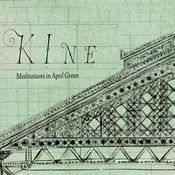
kine_meditVietnamese artist Dao Anh Khanh growls, chants, sings, and ululates his way in, around, and over an improvised backdrop of guitar, percussion and electronics on Meditations in April Green. This is not a disc for casual listeners. The five pieces here have a very raw feel–in press materials, it’s referred to as “meditative journeys using musical experimentation,” with the emphasis on experimental. Khanh is joined by Robert Pepper and Amber Brien of New York-based avant-garde collective PAS and guitarist Brett Zweiman of $50 Doller Trumpet. Pepper adds the various electronics, from drones to squawks, to the mix, Brien supplies beat via the garrahand, a cousin to the hang drum, and the quartet spend 45 minutes varying between abrasive and hypnotic, with the occasional stop at mildly disturbing. Khanh’s vocal contributions often sound simply like a man in great distress. While I understand that the basic conceit here is for the musicians to work off this well-known artist’s performance and build support around it, I found the work more interesting when it was just Pepper, Brien and Zweiman. The music itself is gritty and dense, droning but very active. All in all, something of a miss for me, but only because it reaches too far over the performance art/avant-garde fence for my personal tastes. Edgier listeners, and those with more adventurous ears, may want to have a listen.

Available from Alrealon.

Al Conti: The Blue Rose

conti_roseNew Age storyteller Al Conti returns with the beautiful narrative The Blue Rose. Rich with Eastern instruments and feeling, this disc comes off as romantic as the tale of love it tells.  Conti’s an amazing multi-instrumentalist, and he fills this disc with everything from piano to flute to koto. Added sounds come from Hannah Beth Crary on fiddle and the very talented Ann Licater on flute (on the lovely “Bamboo Night Garden”). Conti does a great job of changing up tone and tempo as his chapters unfold. There is the energetic bounce of “The Merchant’s Rose,” with what sounds like a mouth harp wobbling through the background and a percolating rhythm that’s hard to resist; and there is the slow and elegant “Minstrel’s Song,” telling its tale in piano and strings with understated synth backdrops. There is the mix of Eastern strings and chill-outs on “Painted Vase”; and there is the straight-up world groove of the title track. And everything works in the hands of this talented artist. He’s found the sweet spot between East and West, old and new. Obviously, New Age fans will particularly enjoy The Blue Rose. It’s light listening that just wants you to sit back and take in the stories. Conti, however, is very accomplished–as in Grammy nominated–which means that a good, close listen shows how solidly and thoughtfully constructed the disc is. Everything down to the smallest tap of rhythm sticks is integral to the whole and adds its own touch to the mix. I enjoyed The Blue Rose more than I expected, because, to be honest, the last album of Conti’s I listened to, Scheherezade, left me a bit flat. This one, however, leaves me looking forward to the what Conti will do next as he continues his musical journey through the world’s many tales and legends,

Available from Al Conti’s web site.