Wharmton Rise: Life Line

wharm_lifeCharging out of the gates fueled by high-octane electro-funk, Wharmton Rise’s Life Line is a quick shot of five uptempo toe-tappers that race by in under 30 minutes, leaving just a big wash of euphoria in their wake. It’s tasty electro-pop with a slight old-school edge, and it’s pure fun. “Avatar” puts me in mind of George Duke as it opens the disc with a meaty bass line and a jazzy attitude. Andrew Mark Lawlor laces a nice drop into this one, switching up the feel for a minute or so before he brings it home. “Disturbance” is about as close to club music as I’ve heard Lawlor get. The beat thuds along over a chugging rhythm and floaty melody. This one has a tasty 80s synthpop vibe to it, and begs for extra volume. It leads into the title track, an angular, robotic thing with something of a late-Kraftwerk edge to it. (I am also reminded of some of Sensitive Chaos’ work here.) “The Park” is my favorite piece on Life Line. It opens with twinkling keys and string pads. Piano comes in and the piece becomes a smooth blend of New Age and electronic–with a rimshot-driven lounge beat and another tasty bass line to hold it all down. “Recollections” follows suit, a lightweight piece of ear-candy with a cool groove to it. Lawlor closes the release with “Titan’s Rhythm.” Clocking in at under three minutes, it’s almost a toss-away track compared to the rest. Throbbing chords pair up with high pads, bringing echoes of Oldfield’s Songs of Distant Earth to mind. It seems to end right about the time it wants to get more interesting.

Life Line, as I said, is a fun release. It’s got energy to spare and its clean, edge-of-retro sound is easy to latch onto. Lawlor’s definitely in his comfort zone here and it shows. A short ride that’s definitely worth taking.

Available from LAD Music.

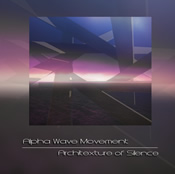
Alpha Wave Movement: Architexture of Silence

awm_archiAlpha Wave Movement (aka Greg  Kyryluk) has been a consistent yet consistently quiet name in the ambient/spacemusic scene since the mid-90s. I feel like AWM slips under most listeners’ radar, and this is a shame because he’s an artist who should not be missed–and that is firmly proven on his new release, Architexture of Silence. Doled out in five mid-length movements, this release serves up classic spacemusic with Berlin School undertones to take the listener on a quite comfortable, very laid-back voyage. Kyryluk’s sound is warm and soft throughout. His graceful pads and silky arpeggios trace glowing lines across your mind’s eye, laying out arcs which he then anchors with solid bass sequences. Tempo shifts are handled with the utmost skill as Kyryluk gently guides the throttle without a hint of hurry or turbulence, and the balance is superb. There are long, hushed and thoughtful passages where we drift through space; there are brightly twinkling, wonderfully analog-feeling spaces, exemplified Movements II and IV; and there are hefty, sequencer loaded runs such as Movement V, which rises out of calm pads to pick up a dose of pure energy and ends up playing out like a perfect homage to the EM pioneers of yore who first charted these spaceways and described their vistas.

Architexture of Silence is one of those releases that reminds me why I fell in love with this music in the first place. I like its subtlety; Kyryluk keeps things on the quiet side, letting the simplest rhythmic elements nudge the intensity of a piece to take it from ambient drift to light, spacey groove. The flow is impeccable, and turns the disc into a seamless voyage that you just don’t want to end. When he does opt to actually ramp it up in the middle of Movement V and heads into solid Berlin territory, it’s loaded with a great nostalgic resonance, every metallic, twanging sequencer angle and low-end bass thrum firing like memory. He builds to this point throughout the disc, and when it arrives as the payoff, it’s excellent. I’ve had this release looping for hours during my review listens, and it’s a pure pleasure to hear again and again. It’s full of dimension, it’s technically gorgeous, and it showcases the absolute talent that is Alpha Wave Movement. Go get this.

Available from Harmonic Resonance.

Sky Burial: Pas the Sarvering Gallack Seas and Flaming Nebyul Eye

skyb_pasFrom its first moment, Sky Burial’s new release, Pas the Sarvering Gallack Seas and Flaming Nebyul Eye throws its listener into a dizzying whirl of sound, setting them on an impressionistic journey that may simply confound some. But those who can stick with it will end up taking a ride that’s as diverse as it is weird, a balance of cacophony and thoughtfully constructed drone-spaces that combine to create vivid, if often challenging, sonic atmospheres. Composer Michael Page loads up on the sound sources in this hour-plus offering, then stacks them in weighty layers. What comes of it all is a set of dark and hypnotic washes of sound with real dimension–it’s in your face, it’s far off, it’s all around you. And here and there, up out of the churn, come odd sonic moments–the wail of bagpipes, for example, in “Na Fir Ghom.” Or perhaps you’re reeled in the by rhythmic bass pulse breathing through the comparatively quieter parts of “Vessel,” and you have to come to terms with the idea that this noise has its own kind of groove. Page does a great job of modulating the ride here. His denser, more aggressive storms, like the title track, are balanced by sparse stretches that take their weight from the dark feelings they evoke. The first several minutes of “The Longest Day Heralds the Darkness to Follow” churn with machine sounds and push along on long drones and pads. Its relative openness almost feels like breathing room, but it retains an edge of suspense that won’t let you relax into it. As is often the case with Page’s work, underneath everything is the sense that Something Is Not Right.

There’s no easy point of entry into Pas the Sarvering Gallack Seas and Flaming Nebyul Eye. It’s heavily abstract and somewhat off-putting if your tastes don’t run dark and experimental. However, it’s Page’s careful construction, his diversity of sound sources, and the measured hand on the tiller that makes the disc worth the effort. This isn’t noise for noise’s sake. It’s headed somewhere, and you have to be willing to take the good with the mad to get the most out of it.

Available from Sky Burial’s Bandcamp site.

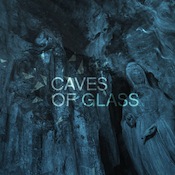
Caves of Glass: Mariana

caves_mariWhere will we go during the 42-minute jaunt that is Caves of Glass’ Mariana? A little bit of everywhere, actually. We’ll check out some post-rock moments with razor-wire guitar, take a couple of bass-loaded death-metal pummelings, and even get dragged through a howling screamo maelstrom. Best of all, we’ll enjoy it all along the way. Caves of Glass is a collaborative fronted by Larry Hansen of Zora and including members of five other bands, all falling into the post-rock/post-industrial category. As such, Mariana is a big album, sonically speaking, and a powerful one. Yet Hansen and company are smart enough to modulate the ride so it’s not just one long beating, and that turns Mariana into a diverse and intriguing listen. The roadmap here is to start in a fairly quiet space, then either build it in intensity or just slam it into high gear by bringing in those magnificently overamped guitars and the whole metal/industrial mindset to lay waste to the place for a few minutes. After the listener’s been thoroughly saturated in those raw, solid blocks of pent-up energy and emotion and probably left breathless, Caves of Glass then throttle it back down to complete the thought. The first track, “The Hollow,” sets the stage. For its first 90 seconds, it’s just a single guitar playing a finger-picked ballad over glittering electronics. It fades, and then the drums drop in and we’re in a full-on rock space. Two minutes in and they fire the screamo rockets and kick the thing into a whole new, aggressive passage that should get your inner animal up on its hind legs. A tempo shift leads into a searing guitar solo that could leave casualties. And then–abruptly–we drop back out to a quieter space. Glitchy crackles fleck the background. Oh, but they’re not done. Massive power chords drop like missile strikes a few minutes later and you’re back in intensity-land. And this is how the disc tends to go. The title track follows this lead and is a standout track for me. It opens as a quiet post-rock piece with ambient-style guitar sighs and melodic playing that reminds me of Slow Dancing Society or My Majestic Star (excuse my slightly vague references). It does its melancholy thing, keeping to itself, for five minutes or so  before, with no warning at all, it erupts in fuzzed-out, uptempo, indie-rock joy. For me, it’s fantastically cathartic. The centerpiece here is the 12-minute opus “Barren Earth.” Again the group covers every side of their sound, laying it out in a smoothly shifting narrative. There’s a lot of drama, great changes of energy, metric tons of feeling. The piece breaks at the halfway mark, moving from grinding bass and heavy drums to a solo piano. This is just to give the gents a fresh base to push off and upwards from again–and when that launch comes, if you don’t start throwing rock fingers like Dio and swinging your head, you have no rock and roll soul to speak of. The savagery fades out to an ambient-perfect drone to give you time to exhale.

While the heavier industrial aspects and the occasional screamed vocals may ward off some timid listeners–and this kind of stuff isn’t normally my preference–it all works so well, and is doled out in such well-thought-out proportions, it would be a shame to skip Mariana because of it. This is an album that pulls you firmly in and makes you feel what it’s got to say. Hansen and his cohorts mess with your personal sliders, bringing you up and down as they please, and they make sure you’re not sure where you’re going next. Which is awesome. To come out of the black-hole density of “Barren Earth” and into the bright, quieter guitar and piano of “The End”–well, it does something to you as a listener. It does what music is supposed to do. It gets a reaction. Across the span of Mariana, Caves of Glass get a lot of reactions. This has been a pleasure to listen to over and over, and it deserves a lot of attention. Take a chance, and keep your hand on the volume knob for those moments when maximum sonic assault is called for. This is a superb release, with lasting effects, from Caves of Glass.

Available from the Caves of Glass Bandcamp page.

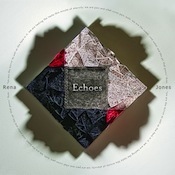
Rena Jones: Echoes

rena_echoA sweet serving of warm, comfortable chillout is on the menu for Rena Jones’ new release, Echoes. According to her press releases, this disc represents something of a departure for Jones in that she brings in full ensembles on each track to create a live studio album. The result is a sound that’s deep and rich, full of the resonant pleasure of violin and cello, and just a pure joy to kick back with. The cool begins right off the bat with the title track as Jones trades violin licks with Emancipator’s Ilya Goldberg. A slow beat snaps out a smooth cadence as the bows sigh and pizzicato notes dance in the background. The quality of the sound here also immediately jumps into the foreground.  Jones is a sound designer and producer, and the mix here is impeccable–clean, loaded with dimension, and with everything balanced beautifully. It’s like listening in 3D. As such, deep listens reap good rewards. Let yourself fall fully into “Returning to the Source” and hear all the small sounds coasting around like dust in sunlight and every bit as mesmerizing. There’s a whole lot of tasty ear candy happening here, moments that either give you goosebumps because they’re so good or that just stretch your face into an involuntary smile. Sopie Barker, whose voice has graced music from Zero 7 and Groove Armada, lays out breathy, airy lyrics on “Wishes” and “Mirror Me.” There’s a hint of Bebel Gilberto smokiness in her voice, and her belted high notes are both angelic and powerful. The mix of synth from Matt Robertson, who’s played with Bjork and Bat for Lashes, and Roel Funcken’s trippy string-sound manipulations on “Mesmerized” warble and wobble their way into your head while drummer Earl Harvin keeps a cool, jazzy beat. Rubin Elias’ Rhodes piano on “Shadows” reminds me of how much I loved Chick Corea in his electric days.

Echoes is a downtempo masterpiece, a cocktail-hour-ready blend of sweet grooves and laid-back attitude. Perfectly produced and loaded with crossover potential, Echoes is a disc I expect will end up on plenty of Best Of lists at the end of the year. It’s in heavy rotation at Hypnagogue HQ and will stay there. Melt into this.

Available from Rena Jones’ web site.

Monochromie: Enlighten Yourself While You Sleep

monoch_enlightThe main idea behind the new release from Monochromie seems to be to take fairly straightforward melodic instrumentals, then over-modulate certain sounds to grit up the texture and make a contrast. For the most part, this works fairly well, but there are two issues. First, it’s overdone in places. The over-saturated sound in “Birds Never Die” starts right off the bat, and rises to reach a level that just seems to exist only to annoy the listener. I get about halfway in before I need to move along to the next track. “Fireworks” doubles down on the test-your-patience efforts by bring in not just spatters of static like a radio that’s slightly off frequency, but also a high-pitched whine underneath that grinds away at your ears. Second, it’s the only idea at play here, and across the span of nine tracks it gets old. Which is a shame because the underlying music is a pleasure. “Ashes and Sparks” finds a near-perfect balance, with twinkling piano singing along with soft pads under lightly fuzzed accompaniment. “Day and Night of a Scarecrow” works well, its post-rock tune coming in on the heels of what sounds like a recording of light rain. This one builds up nicely, elements lacing into place–piano, chimes that take a counterpoint, shuffling drums–and then, nearing the end, the interference, which Monochromie keeps at a level where it partners with rather than overpowers the rest of the sounds. In this instance it makes a great accent, helping to drive the piece to its conclusion.”Insomnia,” the last track, does away with the distortion almost entirely, replacing it with a resonance-based drone that draws a virtually unwavering line through another piano melody and a lovely vocal sample. The drone has a mind-soothing effect and the piece overall is dreamily ethereal. Unfortunate that it’s at the end of the disc we get a taste of what might have been had it not been for all that fuzziness. There is quite a bit of very good material on Enlighten Yourself While You Sleep, but you’re asked to dig through too much of one thing to find it.

Available from Fluttery Records.

Cryobiosis: Within Ruins

cryob_2_withinLooking at the artist name and disc title, I braced myself before heading into my first listen to Cryobiosis’ Within Ruins, steadying my nerves for an assault of dense, heavy, depressing dark ambient. And it never quite came. Don’t misunderstand me–there is plenty of darkness here. But it’s a lot more than that. Within Ruins is a work that’s rich in atmosphere and dimension; musician Cristian Voicu slowly paints vivid pictures through sound, taking us into “the depths of abandoned structures, dwindling stairs and the history of civilizations past.” Field recordings, from natural sounds to mechanical noises, get dialed down to background accents that further open the space. Instead of laying heavy on the grimness for the whole ride, Voicu ushers the listener through passages where a sort of calming-breath softness offsets the crunch and grind that are the main voice here. And when a piano appears in “Recollection” to play a melody amid steamy hisses and light industrial clatter after 20 minutes of darker fare, its crisp, grounding clarity is almost cleansing. Through moments like this, Voicu shows a solid hand in terms of working the intensity slider here, keeping Within Ruins from having to rely too heavily on standard dark ambient tropes. Even when he gets into that space, as on “Murkfall,” he tempers it with a touch of beat to give you something to latch onto. It’s an odd sensation, to finding yourself sort of nodding along with something that’s gurgling and rustling and snarling in your ears, or to catch a hint of a drawn-out string melody humming somewhere in the distance, but that’s the draw here. It’s like dark chill. It’s a dark ambient stepping-off point for people who think they don’t like dark ambient. My recommendation is to jump in, headphones on, let the bass tones rumble their way into your soul, open your ears and mind and see where Cryobiosis will take you. This is a superb journey, excellently crafted in every regard, and well worth repeat visits. Give it a solid, focused listen to make the most of the experience.

Available from Cryochamber.

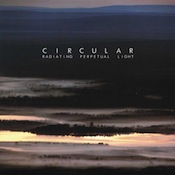
Circular: Radiating Perpetual Light

circular_radiThe title Radiating Perpetual Light is something of a misnomer. If there is light coming from the music on the new release from Circular, it is the suffused glow of a sliver of moon hidden behind thick clouds. Or, as musician Johannes Riedel says of it on his site, a dark and glowing sunset. Whichever murky light source we’re talking about, Radiating Perpetual Light surges forth with plenty of rich bass as a landscape over which float shadow-shrouded pads and warm ambient structures. Beats, pulsing waves, and acoustic instruments seep Into the midst of all this to create a very engaging and, ultimately, fairly soothing groove. The ride growls up out of the grim rumbles of “Dissolved,” and the worry here is that those quick to label might mistake it for dark ambient. If it was, it would be pretty workable dark ambient. Sliding into the next track, however, Riedel starts to slip in that pulsing rhythm and some higher tones to play against the bass, and now we’re on the move, headed through several different states. Guitar finds its way into the mix. It’s a nice touch, from the heat-shimmer glisten in “From A Concealed Perspective,” which reminds me of Suso Saiz’s work with Steve Roach as Suspended Memories, to the simple, post-rock strokes that carry through “Beneath the Luminous Sky.” Riedel drops a guitar melody into the end of “All Colours of Space” after a few minutes spent in slow ambient washes paced off by a bass drum beat. As the disc moves along it picks up much from good chillout music, and the effect is heightened by Riedel’s choice to keep to the low end of the scale. There’s a graceful lacing of melancholy to the laid-back feel, the beat patient but irresistible. You’ll particularly feel it on “Deep Time Illusions.” Not a good track to be left along with when you’ve got a lot of things on your mind that you’re trying to avoid thinking about, y’know? I also like the windy electronic hiss of “In A Distinctive State.” Electronic burbles pop through the sound, and a string melody appears from out of the mist. This track becomes very human toward the end–listen and you should understand what I’m saying.

It’s been easy to come back to Radiating Perpetual Light for the repeat listens I give discs I’m reviewing. It’s soothing in its own way, as I said, but its grooves run deep and dig right into you. There’s a lot of dimension at work, and the mix of electric and organic, slight though it is, shines through. Moving work from Circular.

Available from Loki Found.

Jeff Talman: Sea of Curves

talman_seaThe new release from Jeff Talman not only offers up 45 minutes of mind-salving, drifting ambient, it also has the “oh, cool” factor of having manipulated wave sounds, recorded by hydrophone, seismometer and microphone, as its basic sound-set. As Talman’s press release notes, the sounds here include”the ‘hum of the earth’–oscillation sounds of the earth as created by the worldwide impact of ocean wave sounds on the sea floor, much as a thudding bass sound might cause the floor and walls of a room to vibrate.” The music here was originally presented as an outdoor installation piece in Pouch Cove, Newfoundland, where the recorded music was augmented by the sound of waves crashing below. Given its genesis and initial intention, Sea of Curves can be a little iffy as a direct listen. It’s almost too ethereal and random to hold your attention, and its single sound-set doesn’t afford much variation. It is what it is. But played in the manner in which it was intended, as something that enhances an existing atmosphere by seeping into it rather than by giving it immediate attention, Sea of Curves definitely finds its place. The sounds are naturally meditative, ebbing and flowing in intensity and also shifting from simple calm to darker-toned stretches that seem almost ominous. So there’s a somewhat dynamic aspect there. The upside is that it’s easy to internalize the music, as it offers nothing interruptive, no rhythmic moments to involve body rather than mind, or odd turns of timbre to pull you out of the flow. It just rolls along, its breathy tone feeling in spots like a tune that’s been run through Paulstretch. Like all good ambient, though, it lets you get lost in it at your own pace, then finds places to make you aware of it again. It’s an interesting experiment, but it must be said that the sameness of the sound across 45 minutes may turn some listeners off. Others may find ocean-like depths within these waves.  

Available from Jeff Talman’s web site.

Jurica Jelic: Distant Memories

jurica_dmI’ll be able to keep this review of Jurica Jelic’s Distant Memories short if I just admit that I don’t get it. Playing fretless guitar and working with the Csound compiler, Jelic goes deep into experimental territory. Dissonance meets randomness meets microsound meets, I guess, a realm of musical theory that’s well beyond this listener’s scope. If you understand what Jelic means in his liner notes when he talks about discovering “the wonderful world of non-twelve tone tuning systems,” then perhaps this is for you, and you should check it out. Me, I’m left confused.

Available from Alreaon.