Material Object & Phonaut: Indiana Drones

indi_dronesInitially created to be released on Pete Namlook’s FAX label, this collaboration between Material Object and Phonaut instead became a tribute to the electronic-music legend, self-released after his death in November 2012. On his bandcamp page, Material Object notes Namlook’s deep influence on his style; in this hour-and-twenty minute journey, tribute is paid in full. What awaits here is simply mesmerizing. Part 1 opens with a mash of disparate sounds that clash and tangle slightly before resolving themselves into a sort of cadenced pulse. Inside of five minutes, the solid basis is laid down, a patient dynamic is established, and all that’s left to do is let go and listen. Background sounds turn to washes, and the washes take on a kind of softly mechanical feel, the hum of unusually quiet machinery. Part 2 stands out as the shortest piece, an interim between the first half hour and what’s to come–45 minutes of absolute blissful immersion. The spiral into kiss-your-brain-goodbye begins as Part 3 slips in on white-noise pulse, glittering pads, and a fast pseudo-beat meted out in small thumps of sound. That is one of the great parts of this excellent disc: there are no beats per se, but the duo do an amazing job of turning layered, repeating phrases or pulses of sound into rhythmic elements. Your body responds to them regardless. They are as irresistible as they are insistent and understated. It’s a very cool feeling to be in a slightly dissociated mental state, courtesy of these misty drones, and to be aware that you are, in fact, swaying just a bit with the rhythm. This slides neatly into Part 4, which at first flattens the pulses out into long drones, still heavy on the hissing mist. There’s a physical shift that happens with the listener here, a movement from the active response of moving with the music and into a passively responsive, meditative state. I recognize that this happens with many ambient/electronic works, but there is something more emphatic about it here. The transition, in both music and listener, is simply beautiful. The drones here are warm and fluid, the current easy and comfortable. A mid-track change brings in bright chords and a chant-like vocal sample. As a rhythm slowly re-establishes itself, the piece becomes a bridge to the final movement. I really like how the pair use a simple bass pulse to finalize the transfer. Part 5 complete the shift with a nod to Namlook’s techno/IDM background. This one can’t really be called a drone. Rather, it cranks along on sequenced notes in an almost unchanging, Morse Code-style cadence. Under it swirl warm pads and subtly moving parts. The sequencing becomes hypnotic and brings us back to that active involvement in and response to the sound.

This is an amazing release. The sound is deep and very dynamic, one of those examples of how making good drone is not an exercise in simple tonal stasis. The infusion of rhythm is handled perfectly and the ride is superbly modulated. I would own this just for Parts 3-5; that stretch alone should be considered required listening across the community. The more I have listened to this, and the more time I have blissfully lost within it, the more I have come to appreciate it. Do not miss this release.

Available at Bandcamp.

Arovane: Ve Palor

arov_veAfter almost a decade away, Arovane returns to unleash some snappy glitch work on Ve Palor. These dozen tracks fall into a fairly standard structure where the glitch is supported by cool melodies, with the slower, unbroken pace of the “song” working to offset the rapid-fire patchwork of the electronics. “Leptr” is a great example. The melody is kept low in the background, humming and sighing its way along against spatters of glitch and an insistent beat. The title track hits it, too, with the melody laid out in light tones like a muted steel drum laced beneath an irresistible beat and curling gurgles of electronoise. The blend is flawless as Uwe Zahn plays with the dynamics and density. “C LL T” is crisp, with bright overtones and a drawn-out pad, just a little buzzy around the edges, drifting along underneath it. “Deev” curves in on a snaking bass line that takes the forefront. Surprisingly, the singleness of tone doesn’t get old. There’s plenty going on underneath to hold it up. This is pretty much how it goes; Zahn’s glitch constructs are complex, with even the barest scraps of sound making a difference, and the melodics ease their way into your brain. For me, there are places where the frenzy of sound goes a bit too far into chaos, but Arovane smoothly pulls things back into line and carries on before I have enough time to really complain. While Ve Palor doesn’t add much new vocabulary to the glitch lexicon, it’s a solid lesson in How It’s Done.

Available from n5md.

Secret Pyramid: Movements of Night

secret_moveTake a post-rock framework, stretch it lazily across time, then wash it over with a hissing, soft wall of noise. This is what you get on Secret Pyramid’s lush and thoughtful Movements of Night. Darkly dreamy and packing a certain opioid quality in its mesmerizing flows, this release finds an engaging middle ground where recognizable beats and and identifable melodic structures meet amorphous, mind-displacing atmospheres and everything just gels perfectly. Much of the work here sounds based in guitar drones. Right out of the gates, “A Descent” peels off slowly strummed chord phrases and spirals them away into a rising drone. A ghostly vocal line half-swiped from dreampop deepens the feeling. Keys figure into the mix as well; listen to the dirge-like, repetitive phrasing at the core of “Move Through Night,” sending its own resonance off into the gloom to build on it. “Escape (Fade Out)” lays down almost lounge-like electric piano chords–but if this is lounge, it’s where the lotus-eaters hang out, vaguely remembering and deep in their glossy dreams. Then there’s “Closer,” a big, ambient-style piece that achieves a sort of slow-motion minimalism courtesy of a phrase that states and restates itself in thickening sonic greys. It’s nicely dovetailed into the brighter space defined in “To Forget.” I like the dark/light juxtaposition of these two works. The sound on Movements of Night is very textured, mostly coarsened up with light distortion or touches of static. It manifests in an edge-of-white-noise mist that aids the ongoing, gentle subjugation of your mind as you listen. You’re nudged into introspection, and you’ll gladly go along with it. Musician Amir Abbey packs a lot of feeling into these short works, and each passing moment serves to enhance and amplify the hypnotic effect. His use of slow repetition plays up a certain air of stasis, of moments half-frozen for closer examination. Headphones on and away you go. An excellent release from Secret Pyramid.

Available from Students of Decay.

Another Neglected Hobby: Sleeping With the Window Open

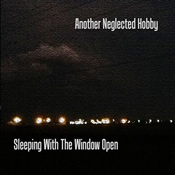
anh_sleepIn preparing for this review, there have been several times where I listened to this release in my car. This, I am reasonably sure, constitutes driving under the influence. Hushed drones, light industrial touches, and slow-moving beats come together to capture musician Mark Cotton’s memories of Sleeping With the Window Open in his rural town as a boy. That inadvertent blend of sounds coursing through the darkness, from the natural to the mechanical, the close and the distant, manifests itself in these nine tracks in a slowly enveloping mist. Rich with low-end sounds and an excellent depth of small detail, the work here is as effective as a “surface” listen as it is when you take the time to go deep. You will become immersed either way. Cotton’s structures are in constant motion, making barely perceptible shifts and additions that nudge the feeling in fresh directions. The details fold in unobtrusively, whether it’s a quiet clap of thunder of the patter of dripping water. They feel like sensible moments within the larger sensation. Overall there is a definite darkness to this album, but it’s not a dark ambient piece per se. The darkness here makes you feel like you’re part of it, not apart from it. It is the feel of having night all around you and being aware, as Cotton notes he still enjoys doing, of the myriad sounds that belie the stillness. It captures our primal fascination with night, pricks lightly at our mistrust of darkness, but ultimately welcomes us into it and makes us one with it. Give this one a good deep listen at first to take in Cotton’s excellent and careful construction. Then just let it loop and be with it. A strong and affecting release from Another Neglected Hobby.

Available from Bandcamp.

Sonaljit: Dreaming the Afterlife

sonal_dreamNew Age newcomer Sonaljit Mukherjee charts a charmingly familiar course on his debut release, Dreaming the Afterlife. Fronted by elegant, sweeping piano and soaring flute, this 45-minute excursion will head straight to the heart of fans of David Arkenstone or Jim Brickman. The sound here is big and full and often swells in that romantic sort of way–if you put a video to this you’ll need lots of aerial shots, zooming low over pastoral landscapes, or maybe waves crashing on rocks. The opening title track packs enough exuberance to set your heart racing. The flute work is beautiful and soulful. “Nodi Ontoheen (River Endless)” adds acoustic guitar and a slight Celtic lilt into the mix to bring up memories of early Nightnoise. Mukherjee offers several solo-piano versions of his songs, which somewhat shortens the span of the album, but his playing and the simple clarity of the instrument make up for the repetition. Plus, you need to bear in mind that he is a self-taught keyboard player. His smooth runs and patient phrasing would suggest anything but. All that being said, for my tastes, there are places where Dreaming the Afterlife gets a little too overly dramatic, too full of New Age puffery. “Waiting for Love” will probably strike many as a very lovely song. For me, both the solo version and its fuller counterpart soon turn into a sort of soap-opera theme song from the 70s–something the orchestrated version amplifies. The solo version revels in big, sweeping, Van Cliburn-style runs up and down the keyboard. It’s just too saccharine for me. Another example is the full version of “The Road to Limelight,” which I quite like. It’s a moody, pensive piece where the piano oozes sweet melancholy over rushing rasps of low-end strings. It’s engaging…right up until the final two minutes where the artist opts to drown it in an overdose of pomp. Narratively, I get it. It builds to this. But there’s just too much ta da going on for me.

Overall, Dreaming the Afterlife is a promising debut that will definitely find a home with listeners who like this sort of full, symphonic New Age. The playing is beautiful and the production is crisp. I think, going forward, we can expect very good things from Sonaljit.

Available from the artist’s web site.

Bryan Carrigan: Below Zero

carrigan_zeroClearly, the title Below Zero exists solely to note just how chill Bryan Carrigan’s newest release is. With its mix of downtempo grooves, world and dub influences, and smooth combination of electronic and acoustic, this is a laid-back and loop-worthy bit of work. With a sneaky little vinyl crackle to open the proceedings, the title track immediately hits you with dub-swiped echoes and cool keyboard tones and tasty bass that immediately evoke thoughts of the “exotic electronica” style from the early 2K’s. I would have been completely okay with it if Carrigan had decided that this was the only direction the disc would take. He hits it again on the cocktail-cool flow of “Twist of Lime,” which shuffles along on a house-style beat and thick blobs of bass. It gives you an extra dose of aww yeah from icy trumpet riffs that sound like what would happen if Mark Isham decided to get funky. That feel comes back up in “Frisky Martini,” with the trumpet playing alongside crisp piano notes. The lounge-style stuff is very well done here, and it deservedly wears its pedigree proudly. But what makes the disc really work is the way Carrigan switches things up as we float along. There’s an irresistible Spanish guitar flair in both “Almost There” and “Catalan” that makes me long for Acoustic Alchemy. (Sorry to keep name-dropping, but these are the places Carrigan takes me.) This is where that acoustic/electronic meld is at its best; there’s something in the rich organic tone of the strings, not to mention that romantic edge Spanish guitar has, that really resonates in me. “Runway” touches the edge of techno/trance, with piano breaks dividing the high-speed flow. Carrigan is professionally involved in video and film production, so it comes as no surprise that there’s often a cinematic sense in the pieces. I could see a number of them finding their way into commercial use. (I’m looking at you, “TGV.”) Catchy, infectious, upbeat…I’m ready to buy. You should be, too. Below Zero is an excellent release from Bryan Carrigan, an artist who is now firmly on my must-listen list.

Available from Bryan Carrigan’s web site.

Juta Takahashi: Transcendence

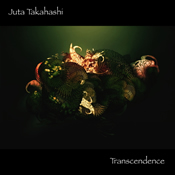
juta_transFile this one under “Appropriately Titled Albums.” Juta Takahashi’s Transcendence will absolutely take you out of yourself and escort you to a deep and meditative place filled with gorgeous sound. Presenting four mid-range tracks (16 to 17 minutes each), Takahashi aims for maximum soul/body displacement and hits his mark. Each piece finds its own to get you there. “Higurashi” is bright and quiet, its long-arcing pads sustained in higher registers. There’s something of a spacemusic feel at play, but it’s more edge-of-space somehow. Soft piano notes blend with the electronics to ground the piece. “Nirvana Électronique” is, I think, my favorite piece here. It uses a drone like a tambura or harmonium to buzz and burrow its way into your head. A wavering tone falling somewhere between flute and a bowed string instrument sings intermittently. I like the way Takahashi marks the flow’s passage with shimmering pads that rise up above the drone. “Maitrī” slots firmly into the spacemusic mode with crystalline pads and softly ringing chimes. Pay attention to how well Takahashi uses pauses and fades here. There is no hurrying your transcendent state; there is just these warm sounds surrounding you and the patient slowness of your breathing as you listen. The title track comes back to the bright tones of the opener and takes the listener on an easy glide on rich pads. Again, it’s warm and comforting, unhurried and deeply layered. Slow-motion dynamics imbue the flow with emotion–when the sound swells, you feel it in a very real way.

I have been enjoying Juta Takahashi’s music for a few years now, and I have to say that I think Transcendence finds him at his highest point yet. This is an ambient masterwork, a piece that resonates deeply within the listener and truly carves out a very personal space. It’s perfect for meditation, although left to its own devices, it’s likely to simply cause a meditative state to occur. I don’t think there’s anyway around it once you let these sounds in. This is a close-your-eyes-and-let-go album. Obviously, deep/headphone listening reaps marvelous rewards. But just let this one loop within your space and see where it takes you. I guarantee you’ll go somewhere nice. A must-hear, outstanding piece of work from Juta Takahashi.

Available from Juta Takahashi’s web site.

Uwe Gronau: Flight 14

gronau_flightAs he tends to do, Uwe Gronau keeps things brief and peppy on his new feel-good release, Flight 14. Twenty short pieces, most falling in the 3- to 4-minute range, are on the itinerary as Gronau takes off on a trip inspired in part by a vacation in the Bahamas, but also acting as a way to express the feelings brought on by the recent passing of his parents. This all plays out in a combination of smooth jazz runs, brief flirtations with prog rock, and introspective piano solos, making for a reasonably pleasant listen that, for me, does get a bit over-sweetened in spots. For the most part, however, I’m happy to settle in with Gronau’s toe-tapping pieces when the mood is right. I can dig into the title track, which chugs rhythmically along, punctuated in places with analog twiddle and big, Berlin School-pedigree bass twangs. “The Other Way” is a dose of super-smooth jazz on electric piano. The warm, round tones are comforting enough on their own, with a certain 70s-sitcom theme-song feel. Gronau lays them over quiet pads and the result is a few happy minutes of nothing but “Ahh.” For a pure smooth-jazz groove, look no further than “Night Train,” which features sultry sax from Matthias Keidel. Resist the urge to put on a silk bathrobe and chill some champagne, okay? Also of note on Flight 14 are the pieces where it’s simply (or mostly) Gronau and his piano. These pieces are clean and simple, and they showcase what I really enjoy about Gronau’s work. There’s a grace and charm to it, and it rings with honesty. The two “Magic Tree” pieces are charming songs, pure New Age piano pleasure. “Father, I Miss You” is appropriately emotional, beginning with rain-spatter arpeggios and ending on a slight hanging note, perhaps the essence of something left unsaid. The closing piece, “What I Forgot to Say,” with its speedy trills and runs, makes sure you understand that Gronau is a piano player foremost.

Twenty songs is quite a bit to take in, and I do find that I prefer Flight 14 shuffled into a larger listen. Those whose tastes run a little lighter and zestier than mine may not have the same reaction. All in all, it’s a well made, pleasant album to kick back to–a mood enhancer from a talented artist. 

I don’t normally comment on art, but MBSpektral’s work plays nicely into the album’s feel. On the cover, as you see, there’s a piano being hauled into the sky. Inside, subtly, the piano is seen in the far upper right corner, parachuting down. Flip to the back, the piano is underwater, accompanied by a pair of surely curious dolphins. It’s fun.

Available from CD Baby.

Dalot: Ancestors

dalot_ancestorsI will tell you up front that I like Dalot’s Ancestors quite a bit. Then I have to admit that my favorite track on the release is a remix done by Bvdub, whose work I also like. Which is fine, but…ideally, shouldn’t the best thing on your release be yours? This 46-minute release features just 22 minutes of work from Dalot (aka Maria Papadomanolaki) and another 24 minutes of excellent remixes of the title track from Bvdub, Northcape, and Dryft. Dalot’s own work melts together soft ambient frameworks and mildly sedated post-rock. Much of it moves at a glassy-eyed pace, wispy but greatly detailed. The title track, for example, just about melts at the touch. Dreampop vocals and ethereal washes are grounded by fragments of melody on guitar. Dalot gives a few minutes over to ballad-style piano mid-track before offering it back to the guitar. “Staircase” layers shiny guitar notes into a humming drone. The weaving of tones is lush and intricate, churning gently as it goes. “Night Owl” folds in a folksy feel, augmented with soft string pads. The soft, underplayed, three-tone representation of an owl call is a nice touch. Of the remixes, each has its own character, but all definitely take the slow-it-down route. Northcape hits his style of downtempo stride, setting the scene with a heavy low end. I like the way he pulls Dalot’s vocal samples, when he drops them, far to the back. Dryft heads for a kind of minimalist zone at first, dousing them with pure chill and forming a bed of rich, edge-of-dubstep bass. Repeating arpeggios, steady hand-claps, and washed-out backdrops all do their job just right. Late in the track he nudges it into a more glitch-based place, and the switch-up works nicely. But let me tell you–Bvdub nails it, taking the source material, driving a ton of extra raw feeling into the rich emotional core that’s already there, stretching it out to 14 minutes and creating what I feel I need to refer to as a masterpiece. At the very least, a piece I could listen to all day. van Wey’s choice to add his own vocals to Dalot’s just shoots it into a whole new place for me.

Ancestors, as I said, is a very good take overall. Having gotten just a slight taste of Dalot’s abilities, I would definitely say I’d like to hear more. Put this one on when you want to chill, and get those headphones on to take in the excellent intricacy at play.

Available from n5md.

John Davis: Ask the Dust

davis_dustI’m not sure I can accurately tell you what’s going on in John Davis’ Ask the Dust, but I can tell you that I’ve been listening to it a lot. A filmmaker by trade, Davis brings a definite sense of atmosphere and movement to the five pieces here–two mid-length tracks and three shorter ones–and loads his spaces with fine details. The music here is largely impressionistic, built on carefully curated noise and transmogrified instrumentation, tenuously layered so that it sometimes collapses into tangles of sound. But when it does so, it’s to recreate the moment in a fresh form. As far afield as Davis may go in his works, the listener never feels completely removed from some hint of melodic structure. Often it’s vague, more a memory than something tangible, but it still exists. This lets the work stand up to close examination, and it consistently reveals itself to be deeply intricate while pushing at its own borders. The two long tracks are the draw here, although each of the fives pieces are solid. The longer ones feel broken into movements. Sometimes the shifts are subtle, sometimes they are abrupt, and in the course of each track, both transitional elements are employed. In “Superpartner,” Davis works the flow in several stages,  from calm and quiet passages that rise out of downplayed electronics to sharp, angular clusters built from analog squabble and static. Between there are sparse spaces that echo with neglect, the sounds of forgotten things blowing in a breeze, and distorted loops that mumble meditatively over specks of electronic detritus.  “Synecdoche” comes in on a straightforward piano melody, but if you’ve been listening, you know it’s not going to stay that way. (And let it be noted, the piano playing is excellent, full of tone and emotion.) Here’s where one of the good abrupt shifts hits; it literally sounds like Davis stops and pushes things over, gets up and leaves. From there we fall into a gentle, drone-based zone, perhaps Davis’ most ambient stretch of the disc. For someone who’s spent most of the album surrounded by jagged, culled sounds, he handles this side very well. The softness is a bit of a surprise, as is an uplifting swell that surges in around the 7-minute mark, carried on a deeply resonant bass tone. Davis maneuvers this into his into his next phase smoothly, coating it in a brief spot of shadow in transition. It passes briefly through another of those abandoned spaces, rasping and grating and tainted with a distinct sense of unease, before ending in a lighter space with echo-coated piano and a high drone that sounds like a mutated tambura. This track absolutely mesmerizes me. The shorter pieces are also noteworthy. “Joy Meridian” begins as a quiet drone and grows into something raw and gorgeously over-amped; “Palestrina” feels like a take of spacemusic, with glittering sequencer lines over long pads and light touches of distortion. “Julian Wind” rides on a bagpipe-like sound, washed over with hissing static and a swirl of background sound. Davis ushers us out with an unusual sound bite of a woman, clearly hypnotized, talking about her life on another planet and lamenting that it “wasn’t full enough.” It’s just weird enough to be the right ending for this excursion.

It has taken me some time to find a way to encapsulate the work on Ask the Dust. It’s one of those “dancing about architecture” moments for me as a reviewer. This has lead me to leave the piece on loop for several hours at a time. It doesn’t wear out its welcome, and seems to keep revealing new layers depending upon when and how closely I’m listening. The attention to minute detail is excellent, and the release has a solid emotional through-line. It becomes something you need to hear all the way through. An excellent release from John Davis.

Available from Students of Decay.