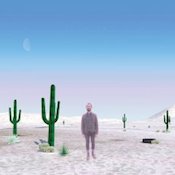
Andrew Weathers Ensemble, Fuck Everybody, You Can Do Anything

aw_feveryTake Americana. Flip it on its head. Set it down on a clean sheet of drones. Fold it in on itself. Take vocals with a spiritual-music quality and dissect them. Rearrange them in slightly skewed layers. Manipulate them. Leave all the emotional value intact. There: now you have Fuck Everybody, You Can Do Anything by the Andrew Weathers Ensemble. These seven tracks unfold in gloriously melancholic slow motion, pulling incredible amounts of warmth and honesty from their wide assortment of acoustic instruments. Weathers recorded these songs as improvised sessions with various musicians—the Bandcamp page lists 15 guest stars—whose contributions range from violins to clarinets to guitars to melordion to cello to, yes, pine cone. Back in the studio, he went at the raw material and reformed it, added electronic treatments and turned it all into an album I quite frankly can’t get enough of. To my ears, there’s more than a hint of Appalachian music going on here, a kind of laconic bluegrass feel underscoring everything. Weathers’ voice consistently has a reserved, heartbreaking tone to it. On “Keep Fighting 2K15,” it comes in over a clean mix of drones and dobro-like guitar, all but mumbling “Praying for your happiness/Hope that you recover” over and over, and something in the tone, in the way the words come out, suggest a scene where the singer isn’t sure what to say to someone, and this is the best they can muster. I will try not to overuse the word “honesty” in this review, but it keeps coming up in my head. It often reveals itself as a bare truth, unadorned of pretense. While the vocals are not always super-clear, their feel comes through—piercingly so. On “Live By Golden Rule: Go Orange Be Strong,” I pull out “I’d sleep on the floor/right next to your door/And I think I’m all right/I know I can drive tonight.” It’s from “Backwards from Ten” by The Progress, but slowed, slurred slightly, and loaded with that head-down resignation. You can hear the shrug. A repeating phrase on guitar pulses through, leaving a wake of simplicity. A touch of (perhaps) auto-tune on backup vocals is a great touch. It’s done throughout the album in places, always to up the texture.  Lyrically, by the way, Weathers pulls from a broad range of sources, from R&B guy Drake to folk legend Buell Kazee to punk rockers Oskar. So there’s some eclecticism to the mix, and Weathers distills the words down to fit his front-porch-jam style. I don’t normally review work with a lot of lyrics, but as they’re presented here, it’s less about lyrics and more about their use as one more layered in instrument. There are places, as on “We Will Never See A Cloud Again,” where a chorus of voices joins in, but everyone’s kind of singing in their own tempo, just a hair behind or ahead. Again, it creates texture and takes us into a place where folks have gathered to praise in song and maybe some of them don’t know all the words. We’ve all been there. And what comes of that? Yes, honesty. Hominess. Truth. And the need to listen.

From the first of the many times I’ve listened to Fuck Everybody…, it has had its hooks in me. “Live By Golden Rule…” has nearly brought me to tears more than once, and since it leads off the album, it makes me want to stay in the flow and the feel, and that is duly rewarded with an ever-deepening experience. It’s the mix of the straightforward sound of the instruments, Weathers’ own vulnerable vocal style, and the unobtrusive electronic treatments, all meshing impeccably with the quality that is at the album’s core: honesty. This is an album you definitely need to experience. One of my favorites this year.

Available from Bandcamp.
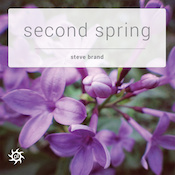
Steve Brand, Second Spring

brand_springSecond Spring is almost an hour and half of deep, detail-loaded ambient from Steve Brand. I could end my review there and tell you that’s all the convincing you need to go listen to this, but then I wouldn’t get to talk about said detail, about the move from dark to light, about the thoughtful-as-always compositional style of an artist who is, quite frankly, one of my favorite names in ambient right now. Brand saves the lighter side of this journey for the later tracks. Second Spring‘s path opens in a place  that is surprisingly gruff in spots, thick with shadow and concern and potential energy. It feels like passage. Big, edgy guitar-like chords bloom throughout the title track, outlined with buzzing distortion. Sound rises in heady walls. Parts of “The Sun Resides Within My Body” offer a snarling, guttural vocal like chant’s less-well-intentioned cousin. There’s a distinct tone of ritual and passage. That’s something that should be noted—as heavy and near-dark as these opening tracks start out, in typical Brand fashion, they resolve into something softer and more accessible, with more space to breathe. That transition becomes a physical effect, a release that works very nicely. The tone brightens for a bit when Brand breaks out his flutes and shakers for “Transitional Experience.” There’s a lot of sonic activity going on in this track, with plenty of small sounds and pad work filling the space. The flute work continues on “A Drop, Becomes A Stream, Becomes A River, Becomes the Ocean.” Up close and intimate, Brand lays down snaking, jumping, twisting lines over very quiet pads. The contrast of dynamics is excellent, and something in his playing feels like he’s captured a raw, improvised, spirit-of-the-moment energy. Gong strikes roll in and push the work again toward prayer. Touches of dissonance bring us back to an edgier spot in the flow even as it winds down to a meditative space. The album finishes with its two brightest tracks, “Fruit of the Spring” and “Love Never Dies.” (You can read into it what you will that both pieces time out at 11:11.) “Fruit…” features a melody that bounces off the strings of an oud, like a hesitant raga, buoyed on pure ambient pad flows. Chimes clatter in accent. “Love…”  begins beautifully as an ambient/spacemusic piece, then adds a melodic element on keys roughly halfway through without shedding the lovely high tones and quiet hush that’s been set up. I find this a very touching piece of work. Brand manipulates the dynamics for maximum emotional impact and drives his listeners to an uplifting, peaceful conclusion. This is one of those albums that, when it ends you just want to spend a few more moments being aware of your breathing and of the spiritual light that’s been left there for you.

Steve Brand’s output is consistently amazing. The very personal nature of the music always shines through. He is truly one of the top names in electro-acoustic music right now, and Second Spring exemplifies why. It encompasses so many ideas, yet fuses them seamlessly. Once you hit play, the ride is captivating and smooth for the next 79 minutes. Everything here is deeply affecting at any volume, and rewards both deep listens and repeat listens. An incredible suite of pieces, and a true must-hear.

Available from Pioneer Light.

The Ambiguity, Returning to Another Time

ambig_returnA couple of throwaway tracks and several iffy song-end editing choices mar an otherwise decent listening experience on Returning to Another Time. In fact, I’m not entirely in line with the album until the third track, “Still.” After opening with the 60-second exercise “Remember to Rewind” and the twinkly “Plucking Stars,” which is pleasant enough even if it does seem to simply sit there and repeat itself like a music box before ending abruptly (more on that in a moment), it’s not until “Still” comes in with muted pads that I feel like paying attention. It’s a good ambient drift laid out in chords that nudge their way through a drawn-out melody. It like its foggy feel. It gives way to the album’s centerpiece, the 16-minute track “Dust.” Gritty but minimalist, “Dust” is a gathering of hissing white sound, mournful and distant pads, and tiny-yet-effective accent sounds. Hearing some of them, I literally checked my window to see if a light, pattering rain had started falling. The background noise is soothing in its hush, the chords turn a slow dance, and the extra sounds add depth and dimension and keep me listening attentively. Artist Charlie Broderick guides it down into a thinner feel as it fades toward the end. Segues nicely into “Pulse,” another well-executed ambient piece. It’s not really more than a solid rise-and-fall pad piece, but it’s got a nice warmth that goes well with it simplicity. So there are spots where Returning to Another Time pulls me in; the problem is, there are also some moments that knock me right out of it. Several of the pieces drop off ungracefully at the end. Once might be an artistic choice, kind of a cool wake-up call. It’s been done. But more than that? Feels sloppy. “Plucking Stars,” “Windows/Visual Noise” and “Glare” all snap off at the end, and once that happens. my ride is disturbed, and I have to figure you don’t give enough of a damn about your work—my opinion. This is compounded by the last track, “A Piece of Quiet,” which quite honestly sounds like the artist put a recorder in an empty room, perhaps with an air conditioner, and let it run. Three minutes of barely moving white noise drone with an almost undetectable something-or-other going on under it? Maybe I just don’t get it, but I’ll pass. (And, let’s mention, it also cuts off like it’s been guillotined as well.)

Looking at Broderick’s Bandcamp page, he’s been on quite a tear lately as far as releases go, pumping out new music every month or so. Makes me wonder how much better it might be if he throttled down on the release velocity and instead put a little more attention into the quality. Returning to Another Time is my first exposure to The Ambiguity, and I can definitely say there are some things worth listening to here—it’s just a shame that the voyage is loaded with bumps in the road.

Available at Bandcamp.

Dead Melodies, Slowwave Perception

dedmel_slowThe keywords at the bottom of the Bandcamp page for this album suggest it encompasses ambient, ambient folk, drone, electronica, experimental, lo-fi, post-rock, and shoe gaze. Can you really fit all that into four tracks and 22 minutes? Apparently, yes. At the very least, you can pour a bit of it into each song. Slowwave Perception is immediately engaging, offers plenty of cool sonic touches to keep you listening, and should leave you wanting more. Your introduction to the Dead Melodies sound slides in quietly with “Sycamore Rain.” A four-note arpeggio builds over hissing pads. Listen for the bits of texture that precede a vocal drop, a conversation between (it sounds like) a pilot and the control tower. Soft guitar noodling makes an appearance, and the whole thing is wrapped in patient calm. The title track is little more than a shifting whisper in your head, with sounds like muted brass taking the front. The background pads churn and burble. There are brief moments of rising intensity that feel like they might want to become something bigger, but then they sigh and sidle back down into softness. A long, near-silent pause mid-track acts as a breather before the process repeats. A beautiful track that takes a lot of its beauty from restraint. The slow lope of “Radars & Stars” wraps itself around whispered vocals to capture both the post-rock and shoegaze sides of things. “Laze” opens in an ambient space with echoing, far-off pads washing past. A beat like the steady cadence of machinery mixed with a familiar house riff on drums slips in and out, its arrival and subsequent returns very welcome. A shot of wavering EDM keys toward the end are a nice touch.

Slowwave Perception is an excellent debut, if a bit brief. But there is so much going on and such great attention to detail that it rewards deep repeat listens. In addition, if this where and how Dead Melodies begins, I fully intend to keep listening to see what comes next. (A second release has come out since this one was sent to me.) Take a listen; I bet you’ll want more, too.

Available from Bandcamp.

Robert Otto, Lux Aeterna

otto_luxAlthough I enjoyed easing through Robert Otto’s quiet set of peaceful ambient pieces on Lux Aeterna, I often found myself wanting it to have a bit more substance and depth. As nicely put together as the songs are, I never felt that I was being given a reason to want to hear them or to get deeper into them. It’s spacemusic by the numbers, and it has a definite grace and calm, but the sound tends to be a bit thin for my tastes. There are moments that are nice enough to listen to, like the light glisten of “Starlight,” or the slow float of “Requiem for a Dream,” but again, they just wash through without leaving any kind of lasting impression. My overall takewaway is that I’ve heard this before. The best track here is the very beautiful “Peace.” Quiet pads host a slowly played melody on keys. Otto leaves plenty of room between the notes to let the resonance form a mist, and the sensation overall is warm and gentle.

To sum up, it’s like I’ve listened to Lux Aeterna without really noticing it. And while that may sound like the picture-perfect definition of ambient music, the difference is that I never really felt the album. It shared space with me but didn’t affect me the way ambient is intended. There’s nothing wrong with Lux Aeterna; it just doesn’t work hard enough to be right for me. Chances are it works better as part of a shuffle, where its soft tones and light weight either blends in or adds contrast. As a straight listen, it’s not for me.

Available from Bandcamp.

Off Land, (Drone Variations) Volume 1

offland_droneI imagine I might theoretically get more out of Off Land’s (Drone Variations) Volume 1 if I went back and listened to the source tracks–this is the first of an ongoing collection of revisions intended to reconsider and “deepen” the original works. Thing is, I’m actually quite content to listen and enjoy without being encumbered by the need to note or understand the differences. That may not look good for a reviewer, and it may not be what musician Tim Dwyer had in mind, but having put forth a very quiet set of pieces with his typically subtle hand at the controls fully on display, he pretty much sets me up to do just that. Over the course of several listens, this has found its slot as a low-volume loop. Dwyer keeps things on the very warm side of the sound, content to draw his notes out into long strands, then nudge them just slightly to change their tone. Layers slip into place, then glide back out to reform. Dwyer avoids getting into the rising/falling breath motif somewhat typical of beatless ambient, preferring instead to keep a steady line when changing notes. The drones mutate organically, with glacial deliberation. Although there are eight tracks on this album, it feels like one long, deep piece with the barest of pauses. There’s no major shift of tone or approach from one to the next, and the overall flow is quiet and smooth. Infrequently, Dwyer drops in a bit of an attention-getter—a sound in “(Auk)” that oscillates between your ears, a somewhat sharp rise in tone on “(Turnstone)”—but even at that, it sounds and feels more like passages in a long-form work.  While I would not necessarily call (Drone Variations) an overly impressive album, I would call it an extremely effective one. It creates an extended period of quiet listening, and maintains its unobtrusive manner throughout. Just a suggestion to Mr. Dwyer: you could probably make a killing by retitling this and marketing it as a mediation album. (How about Om Drones, Vol. 1? Feel free to use it.) With its silk-and-gossamer flows, hushed voice, and never-ending landscapes, this is an album designed for sitting quietly and just existing with the sound. Well worth checking out, (Drone Variations) Volume 1 will find a home alongside your favorite beatless ambient works.

Available from Bandcamp.

SIJ & Sergey Gabbasov, Zhang Zhung

sij_zhangBring together a dark ambient artist and an ethnomusicologist and give them an ancient Tibetan kingdom as their theme, and you get Zhang Zhung. This release offers two long tracks that cover an hour and twenty minutes, time spent deeply immersed in the sounds of ritual and the sense of the endless vista of the landscape. Gabbasov brings in a host of Tibetan instruments, from airy flutes to the wonderfully cacophonous silnyen (Tibetan cymbals). The ritual would not be complete without throat singing/chant, so you get that as well. The first track, “Bon Sacred Rituals,” carries more of the call-to-prayer aspect. Reminiscent, for me, of the work of Nawang Khechog, the track opens with plaintive cries over a rising drone backdrop from SIJ (Vladislav Sikach). The duo go on to paint a cold and windswept landscape where horns echo in the distance. Sikach’s drones are steady and just a little ominous; they shift and change but never give up that mildly off-putting feel. Gabbasov’s instruments move away just a bit, then ease back in like we’re traveling from one temple to the next across marginally inhabitable lands. At the end, the chant returns to drop us into reverence and meditation. I have always loved this sound, the throaty croak and eerie one-voice harmony, and this section of the track pulls me right in. “Tengri” takes its name from the sky-god of the Bon religion, and as such feels a wider and more open than its predecessor. It’s no less dark at the outset, with Sikach pulling grating, scraping drones out of his gear. Flutes enter carefully, like light pushing tentatively through storm clouds and assume the lead for a long, very meditative stretch. Sikach’s sounds become like the hum of abandoned machinery. This track is an album unto itself at 43 minutes in length, with its own fully realized dynamic flow. The duo move in and out of passages where the tone and intensity change, and there’s no need to rush on into the next phase. Every step of the way has time to flesh out, and the change between sections is seamless and organic. When new elements come in to offer a fresh direction, the do so quietly and without a bump. This is true of both tracks, and it’s a beautiful thing to listen to. There are also great stretches where the flute winds its way through a wash of sounds that have an edge of dissonance to them. It’s that sound that seems just off to Western ears, but which is such a hallmark of much Eastern music. The flute seems assuring in the “normalcy” of its tone when compared to the jangling, tinny tone–a term I am using in a good way–of the background sounds.

Zhang Zhung is a beautiful album, but it takes an open ear to appreciate it. It is meditative, but perhaps only if your meditative practices embrace the dark places as well as the light. The drone work is definitely hypnotic, and the ritual elements do exactly what they should and bring us toward a state of spiritual rapture–again, if your mind is tuned that way. This release has a lot of elements that I personally love, from the chants to the flute to, yes, even those clattering cymbals. I love the ritual beauty of them, and I love their role in the overall tone of Zhang Zhung. Mileage will vary on how listeners feel about this work, but it has taken this listener deep within himself several times over. Carve out some time and let this one happen.

Available from Databloem and the lost gterma.

Geary, The Silent Watcher, The Mountain Is Woe

geary_silentGuitarist Matt Geary pours a ton of emotion into 25 minutes of ambient-tinged, folk-infused instrumentals on The Silent Watcher, The Mountain Is Woe. Raw, beautiful, potent emotion that drills straight into the listener. Citing classical music and raga as his compositional influences, Geary varies his velocity from thoughtful picking to frenzied strumming, then surrounds the sound with interesting electronic touches and frequent accompaniment from piano. He works in rapidly shifting dynamics; quite often the guitar bursts in, shouting, to shatter and change a quiet moment. Then, having exhausted its say and its energy, lets the song cool back down toward that quieter place. The opener, “Line of Desapair,” introduces us to that motif in fine style. For the first 30 seconds or so, we’re lead to believe we’re in a quiet-yet-organic space of guitar ambient. Then boom—Geary is hammering at the strings while a low drone holds a steady line underneath. There’s a nice tempo shift at the two-minute mark that brings us down to the close. “Life on Wires” opens in an energetic place, crisply strummed lines meeting up with a three-chord phrase on organ that then spreads into a long pad. The guitar carries on its own song without breaking stride. Piano takes the front on “They Speak to Me in Sleep” before handing it over to the guitar. Here Geary plays with the sound, the plucking of the strings taking on a springy, echoing twang. Again, drones support the backdrop. It’s a quick piece, but effective. On “Mantras,” the album really hits stride, and the balance of guitar to pads, of energy to calm, is at its best. It builds to a big crescendo and then Geary lets it glide back down, the crush of sound he’s built just finding its own way out. There are one or two spots on The Silent Watcher… where the sound gets a bit confusing. It feels like Geary is trying to cram too much into a single space. Coming into and heading out of “Remedies for Shaking Hands,” Geary tries blending a couple of thoughts and ends up overlapping them. It literally lead me to check my computer to see if another sound file had started for some reason. The chords rising against the guitar felt like they were headed in their own direction, and it pulled me out of the moment. As much as I like “Life on Wires,” it happens there as well, around the middle. It’s a minor quibble, however, in a set of work this strong. The songs themselves are solid enough that you’ll find yourself humming along, and the treatments are deep enough to really dive into. Geary understands both sides of that equation well. The Silent Watcher, The Mountain Is Woe is a short debut, but one that also promises a lot of interesting work to come. I have a feeling Matt Geary is just getting started. Have a listen, and if you like what you hear, keep an ear on him going forward.

Available from Fluttery Records.

Ionosphere, Nightscape

iono_nightsBy the time I am finished listening to Ionosphere’s Nightscape, I feel that I must step out of the thick grey fog that has surrounded me for an hour and make my way, rather reluctantly, out to the real world. And let me tell you, it’s a long walk back. Erik H. Sander’s work on these eleven tracks skirts the very edge of dark ambient, tucking his listeners into that place where fading shadow meets true night in a blend that’s as lulling and hypnotic as it is brooding. One compliment I can give this release is that whenever I’ve listened to it, I’ve had a very strong urge to just lay in the dark with my phones on and let it take me wherever we end up. It’s an album I want to listen to as closely and fully as possible to maximize the experience. A majority of my listening session have been with the phones on but attending to other matters in the meantime, and quite frequently I’ve found that I have stopped attending to those things and instead wandered mentally off into the sound. The pace overall is soporifically slow, but every element is in constant motion—and there are a lot of elements. Textures rise and change, radio transmissions are intercepted, tiny sounds track azimuthal courses across our minds, and it all happens in that glorious half-light. There’s a lot to take in if you can remain focused. (You won’t.) I like the slightly stuttering bass riff that emerges in the middle of “Radio Altitude.” It adds motion to a whispering construct dotted with the aforementioned transmissions, but also ups the hypnotic quotient as it repeats over and over. The quite-dark “Orbit Determination” places a ritual chant at its core, working itself into a churning rhythm over sighing pads. There’s another drop in here, a snippet of Neil Armstrong’s “one small step” speech. “The Silence Underneath” has a hold-your-breath grimness to it as it unfolds into a dense layers of breathy drones. On the somewhat calmer side, “Palilicium” pitches more into a hushed spacemusic tone. A slight percussive pulse low in the mix insinuates a rhythm into your head.

Nightscape is a totally immersive ambient journey that absolutely demands long, looped play and up-close listening. Sander’s blending of quiet and dark is seamless and never wanders too far into either realm. The balance is exquisite. Get yourself into some dim light, set aside the distractions, and go deep into this excellent release. A must-hear from Ionosphere.

Available from Loki-Found.

Ebauche, Adrift

ebauche_adriftPatience is a virtue. Adrift by Ebauche is an album four years in the making. Some of that, I imagine, was time spent gathering “…location recordings from…Kirirom national park and ancient temples of the Angkor Wat….the breathing waters & wild winds of the rugged northern coastline of Ireland; and the dark & ancient forests of the Carpathian mountains…” Alex Leonard takes these sources and kneads them into eleven tracks that are deep, layered, and immersive. He infuses each of these vistas with their own character, from soft rolling waves to edgier forms laced with implied beats. “Kirirom” blends sound recordings from the park noted above with electronic washes and crystalline notes that sparkle like sunlight through the trees. The tone is bright and soothing. Field recordings on “The Suspension of Consciousness” whisper in our ears as Leonard spools out a hypnotizing minimalist drone with just enough motion to keep a touch of dynamism going. Voices pop out of the misty flow in places, just loud enough to get the attention and then gone before we can make much sense of them. The longest piece on the album at 14 minutes, this one takes you out of the real world for a bit. It eases into “Warmth” to take us even deeper. Light crackling sounds pepper the edges here, and the field recordings make us feel like we’re off in the trees somewhere, far from the path and just taking it all in. “Cover Before Nightfall” pulses and glides itself into a smooth rhythm. Chime tones lend a feel that’s both meditative and exotic. Close your eyes here and listen to how much is going on. The atmosphere is full of flitting sound. It’s very much alive. The energy reaches an apex on “Gonglaing.” Percussion and a chorus of repeating motifs come together with an extra touch of joy; the sound here is uplifting and shiny. It just feels good. On the harder side, “Focal Stop” builds on static and crackles and turns itself into a buzzing sonic barrier in its three-minute span. “Resin” is another noise-oriented piece; listen closely to hear voices lost in the white sound. A slow melody plays out in wavering tones beneath it all. Adrift is at its absolute best in headphones. Up close, the density, subtlety, and attention to minute detail really shines. It works in the open air as well, but my best listens to it have been when I’m able to take in everything that’s going on. And it’s a lot. This is an album I’ve been glad to listen to many times over. It just gets better the more familiar you become with it. Adrift is a work you must hear.

Available from Ebuache’s web site.