
 In my previous outings into the sound worlds of Off Land (aka Tim Dwyer), I saw him as a purveyor of quiet drone-sculpted spaces and deep textures. Which is part of what makes Afterglow such a surprise and an excellent release. Here we get a somewhat different Off Land, or at the very least an Off Land who’s decided to go play in a different sandbox for a bit. Which is not to say it’s better than his beatless works. Rather, it’s another great case of an artist stretching his craft and hitting a fresh mark. The difference sets in straight away, with the world-music overtone of “Zodiacal Light.” Its easy groove, gently tapped percussion, and well-placed bird-like squawks create a cool tropical feel, somewhere green and shady and gloriously overgrown. Dwyer also plays with classic EM and Berlin School styles several times on Afterglow. “Subtypes” locks down a low-volume sequencer line, then traces floating melodics over the top. Chime tones sparkle across the space, and a heavily echoed and subdued vocal drop slips in for extra interest. “Pulsar” sets up a swirling spiral of sound, then slyly slips in a beat and a sequencer line. The build on this track is excellent and evolutionary, with each new element really ramping the piece. It leads into “Radiance,” which matches a chugging sequencer with round chime tones and rise-and-fall pads. The contrast works well, with the chimes never trying to match the pace of their accompaniment. The ambient and spacemusic side of things gets its moment on “Photosphere” as Dwyer lays down long, large-scope pads with a distinct dramatic flair. A manipulated vocal comes in, raw and distorted, as if to denote the point here he starts to smoothly nudge the piece into a slightly different shape. Without leaving the spacey side of it behind, Dwyer folds in new textures to keep your attention focused. (It’s easy to lose your way in such a hypnotic vista…)
One thing of note is that while Dwyer gets more active in a lot of the work here, he doesn’t forsake the kind of cloudy quietude that tends to envelop his music. He’s found the right blend of his signature ambient style and the stronger dynamics of classic EM. His thoughtful approach to building layers and tones is definitely on display, and his attention to the smallest details makes Afterglow very rewarding in close listens. This is an excellent release that shows Dwyer taking his Off Land identity in interesting directions. He has always been an artist to keep an ear on, and Afterglow takes that from a suggestion to an imperative. If you have not done yourself the favor of looking into his work, start here and start now.
Available as a download from Carpe Sonum . Physical release expected to be available in 2017.
 Let me start by confessing that I tried reading Joe Evans’ explanation of what’s going on in Elemental States, and it got a little music theory-ish for this simple reviewer. He notes that he’s interested in “…the idea that intervals based on the same prime number may have similar characteristics in the way that they are interpreted by the mind. For example 5ths, 4ths and 9ths sound similar, having a structural or even an architectural quality and all share 3 as a common factor.” Still with us? Okay, then you may be ready to dig in to this blend of sounds created with metal or glass household objects, paired with field recordings made over the last 30 years, fitted into this mathematical framework. From my earlier encounters with Evans when he was recording as Runningonair, I’ve understood that he always comes at the work from a mathematical/theoretical side, then uses his findings to create something both challenging and listenable. On Elemental States, I wonder how well he’s hit that second mark. It’s challenging, but for me, not entirely listenable. Relying heavily on soft chime tones and field recordings, the work does take on a drone-like quality. But, as on “Water – 5- Liquid,” which has the chimes and, as one might guess, the sound of a running stream, it also becomes a bit too repetitive. For me it feels like from a the standpoint of supporting Evans’ theorem it’s probably going well, but I can’t escape the thought that I’m listening to my garden wind chimes. It doesn’t abate as the album moves into “Air – 3 – Gas”; instead, it trades the water sounds for a rush of wind that I initially mistook for some kind of quieted-down industrial clamor. “Aether – 11 – Virtual” works best for me. It’s the one track here created “synthetically” as opposed to using those analog household sources. It is a quiet, humming ambient piece that warbles slightly to create a warm and misty flow. Ripples in the flow rise up as it goes, the agitated curl of an electronic wave. It may very well f0llow the same path of repetition as its kin, but it may be that whereas it’s already a drone as opposed to a more organic tone, the pattern becomes less obvious.
 Joe Frawley uses music to show us visions through a fragmented lens and tell us stories where the pages have been torn and put back together in more or less the right way. On Cartomancer, the subject of the story is 19th century American astrologer and mathematician Olney H. Richmond, who devised a complicated methodology of using a deck of playing cards as a divination tool. Cartomancy has its followers to this day. Frawley interprets the tale via piano, mostly unaccompanied but placed in the midst of an atmosphere of manipulated sounds and his signature vocal snippets. The work is beautiful and haunting.”Arline’s Dream” opens the album firmly in familiar Frawley territory: bright piano, a moment of a woman’s voice, a snippet popping in as punctuation, a bold, heavy strum across piano strings. The narrative gets set here as we hear the woman turning our cards and explaining what they mean. (As one note of dissent, as is often the case, I could really have done without the sound of a crying baby.) The changeover to the lonely sound of the echoing piano in the title track, which follows, is particularly effective for the way its open, simple sound contrasts with the clutter of impressions that preceded it. Frawley plays with a core of one phrase and works in spirals around it. It’s a lovely solo piece that uses the instrument’s own resonant sound as fill. Frawley does a lot here with just the piano, or barely accompanied piano. On “The Magus” it pairs in a dramatic duet with ambient guitar textures from Greg Conte. The piece has a nice, improvised feel in places as the two trade phrases. The piano part feels like a sonata that takes on the occasional jazz frill. Each new chapter in this story gives us a new texture. “Trident and Pearl” has an Asian undertone, with plucked strings like a slowly played shamisen. Heavy, dramatic chords open “Upon this Rock…” and Frawley throws in a ringing hum like someone running their finger along the rim of a crystal glass, the jarring thud of something hitting the floor and bouncing, and an insectile buzz of string sounds. It’s ominous and weird and thematically potent. The kaleidoscopic dreamscape feeling returns for “The Mystic Test Book, or the Magic of the Playing Cards,” with more vocal drops and snippets coming in and out, and the piano speaking in short phrases. “Leda and the Swan” comes in honking and flapping courtesy of field recordings. We get more of Kay Pere’s melodic, almost ghostly humming, and Conte streams in his lines to add a slightly discordant edge.
 Hello, math. I mean the equations, algorithms, and conceptual thinking of prog rock. Once you’re about a minute and a half into the first track from SONAR’s Black Light, the notes start getting algebraic, multiplied by funky time signatures and raised to the power of King Crimson. From there the numbers remain fairly the same with a few variables thrown into the mix, and if you’re very into a Fripp-esque angularity and complexity, you’ll likely devour this album. Guitarists Stephan Whelan and Bernhard Wagner trade licks and leads while Christian Kuntner on bass and Manuel Pasquinelli on drums form a tight rhythm section. Much of the album sticks to a similar pace, relying on technique rather than pyrotechnics to try to hold your attention. “Enneagram” ramps up slowly, and is constantly in danger of seeming too static. It runs nine minutes, and spends a lot of that on large chunks of repetition. The way the individual lines are brought together is interesting, but not for all nine minutes. The title track kicks off with a bit more energy, but soon falls into the same situation. I know that there’s higher compositional thinking at play here and I might be missing some subtleties of music theory, but by mid-track I find myself wishing they’d get on with it. “Orbit 5.7” makes for a nice departure, slowing the pace down further and bringing the jazz feel up. It’s a carefully metered piece, mostly lacking flash but making up for it in the super-tight adherence to its crisp underlying angles. It’s like an exercise in how intense the ensemble can make something without straying too far from a distinct line of thought. One thing that stands out for me on Black Light is the way Kuntner’s stalking, bestial bassline puts an incredible amount of weight into the closing track, “Critical Mass.” Late in the track he uses it to set up a pulse-like thump and has a conversation with Pasquinelli—but again, as much as I like the moment when it arrives and although it does change up as it goes, it wears out its welcome.
 Some albums are worth waiting 10 years for. When Manitou’s All Points North came out around 2005, I was smitten with its washed-out, unhurried textures, stretched melodies, and overall sense of thoughtful calm. Plus, there was an air of mystery about it, as the label insisted that Manitou did not wish to be identified. Ten years on, it’s more of a known thing that Manitou is an alter ego of the very talented Matt Borghi. In this guise, he creates lush guitar ambient paeans to the memories of a Detroit long gone, captured here as Landscape Histories and Sentiments. The Manitou sound is like the whisperings of a ghost, breathy and melancholic. It is both warm and misty, and holds closely to the Eno-esque ideal of being engaging whether you’re actively listening or not. Borghi streams long, patient lines out of his gear and molds sets of textures. It could be the dark, metallic droning of “Zum Island Hums Beneath the River’s Current,” the hypnotic steadiness of “Last Cry of the Seven Sisters,” or the haunting keen and distant bell-like tones of “Keep the Lake Francis Light Burning for Me.” Although each feel similar on the surface—that hushed, stretched, airiness—each has its own distinct character. There’s definitely a minimalist mindset at play, that deceptive surface-level simplicity that drone work can show, but which goes away in a focused listen. Borghi builds and layers and deepens everything here, but does it with without rippling the surface. From the first note to the last, Landscape Histories and Sentiment is content to tell you its story in a low, assuring voice. I have mostly listened to this as an open-air loop, happy to let it change the atmosphere and mood, but pop on the headphones to really appreciate the slow-motion construction at work.
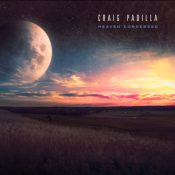 Two short pieces and two long excursions make up the floating, flying, edge-of-space pleasure that is Craig Padilla’s Heaven Condensed. Packing more than its share of pedigree-worthy old-school style blended with the ethereal, twinkling tropes of classic spacemusic, this is an album to put on and get lost in. These are the kinds of vistas Padilla explored in his superb trio of discs with Zero Ohms, and for me it’s become a release I put on quietly and just let it cruise around me. Which is not to say you shouldn’t be diving as deeply as possible into it; quite the contrary. Padilla skillfully piles and weaves his layers, and laces in a considerable amount of tiny detail work, so headphone listening reaps delicious rewards. There’s a balance at wotk on the album. The shorter pieces are more dynamic, driven onward by meaty, twanging, low-end sequencer pulses. These are where Padilla revs up the engines a little, getting us to escape velocity. It’s a comparative dynamic; we’re not talking about high BPMs or loudness, it’s just more beat-based than the long tracks. Those, both clocking in at about 28 minutes, are the points where we gape out the windows at the universe around us and try to take in the amazing view. The title track winds its way down to an incredible softness, nearly subliminal in places. Padilla gracefully lays in melodic elements in chime tones and electric spirals, creating moments of absolute beauty. I find myself stopping whatever I’m doing to just close my eyes and listen. “Heavenly Sails” opens with twisting skeins of analog sound launching across the space before settling in. Later in the track, piano arpeggios gleam brightly against the starscape, augmented with a complementary bass phrase and bolstered with angelic pads. Bordering on symphonic electronic, it adds an extra shot of romance to an already vivid scene. Both of the longer tracks have their own internal dynamic; they’re not just big, spacey pad outings. They change form, add some sequencer here and there, rise slightly in density and intensity, and settle back into the hush of a stellar wind. And it all happens smoothly and naturally, courtesy of your pilot.
 Let me say that I do enjoy SiJ’s Way to Dream. Or, I try to enjoy it when it’s not busy drenching me in theme. There’s a lot of water sounds, nature sounds, various clatters and thumps and maybe some rain on the roof type things, and in among a fairly relentless assault of them, Vladislav Sikach tucks in some piano work and soft ambient passages. He imports an impressive number of sound sources (which he refers to as “provided materials”) that range from duduk and singing bows to dumbek and singing glass. For me, if some of the atmospherics had been judiciously left off, Way to Dream would be a much more immersive album. The piano can get a little overly melodramatic in places, but when it’s dialed down, it’s beautiful and moving. The easy lilt of “Birth of Life” makes me want more like it, a track where subtlety takes the lead. Chords sing softly, a light tap of percussion slips in, and a great wobbling sound like didgeridoo bounces around the background weaving an ear-catching texture. It’s a track that lets you really appreciate Sikach’s use of small sounds and layering. “A Night Like This Will Never Come Again in Your Life” has a similar effect, but its emotional core is bigger and more direct. The piano on this piece—which gives off the sharp twang of a harpsichord—plays out a very slow melody, low left-hand notes landing with percussive force. Once again, Sikach loads the environment with some field recordings, but they’re kept low and light, which is not always the case here. The closing track, “Deep in Dreams,” features the flowing lines of the dudek from Ilya Fursov. (I assume this is what I’m hearing, since Sikach’s lengthy indicia on his Bandcamp page shows no other kind of reed instrument.) I’m pulled in by the twisting lines and the simple construction, and when this piece slips down to a field recording of crickets to close the album, it makes sense.
 Set the volume low and prepare to drift off as you listen to, or rather, get surrounded by, The Great Schizm’s For the Ancient Ones. In four tracks of increasing length, the last being 25 minutes long, Anthony Bloxham sticks to a trusted formula of long, rise-and-fall pads in overlapping layers. His tones skew toward the warm and soft, with plenty of earthy low-end notes for that kind of in-your-soul reverberation. It’s quiet and contemplative, with spots where it rises up a little without ever challenging the hush of its own flow. After a number of listens, I find I enjoy For the Ancient Ones more the less attention I give it. Bloxham’s very good at conveying feeling through the manipulation of his tones and drones, and the quietness of it all is effectively soothing. It’s just that the delivery of it lacks some variation. That being said, I think that lack tends to work in its favor at low volume or as a background listen. This is the kind of stuff that will slowly fill your space and change the mood by slowing everything down; that’s when it’s at its best for me. Dedicating focus and really listening for an hour? Less so. For intensive listening, these tracks fare better individually. I’ve played them on my podcast and probably will again, because they do stand on their own quite well when blended with other things. I have always appreciated the sort of minimalist approach that’s at play in these pieces, but even minimalist pieces can vary. If you’re looking for deep ambient or low-volume music for sleeping or meditating, definitely give this a listen.
 Here’s one that taps me right in my jazz-loving spot, and is probably a bit far over the jazz border for me to review. But if your instrumental-music appreciation runs to small, guitar-fronted combos, Things Left Unsaid from Samurau is something you need to hear. Guitarist Michele Sanna, bassist Matteo Muntoni, and drummer Alessandro Garau lay down eight catchy tracks that range from quietly thoughtful to vibrantly energetic, and keep it absolutely engaging the whole time. Sanna is a guitar chameleon, taking his tunes from the silky glide of classic jazz to sparking, dirty blues riffs in a snap—and he nails both sides of the equation. Take “Killer Wave,” for instance. Its front end is dressed for cocktail hour, coming in as a gentle melody full of softly swept chords and dexterous note-picking. About halfway through, there’s a half-step toward blues and the guitar gets a little more smoky. At the end, Sanna plays with cutouts to flash us messages in gritty Morse Code. And the changeover makes total sense. I must say that I really enjoy when Sanna gets his blues on. “Freezing Frog/Strange Blues” makes me wait for it, opening with what almost feels like an improv in a funky time signature, all three players working off each other around the central motif. Each pass is punctuated with thick low-end notes. The combo moves through a slow, quiet passage and the guitar starts to speak in blues tongues. Muntoni helps lead the way by walking his bass down and Sanna picks up from there. And, man, the first raw licks of pure blues give me chills. Any jazz fan knows that the rhythm section is the backbone of a small combo, and Muntoni and Garau do exactly what they are supposed to do: lay down the bedrock and keep it solid. Muntoni’s opening riff on “Things Left Unsaid” sets a great tone, slow and walking and ready for Sanna’s tremolo-washed guitar. This track features floating, flying, smooth-jazz sax from Gavino Murgia. It’s a joyful noise, bright and sharp and breathtaking. It’s particularly effective since it’s the only spot on the album that’s not just two guitar and drums. There are songs here that don’t need to switch tone to be enjoyable, of course. “Dangerous Squares” is just a solid block of small-combo work, with Sanna running his jazz scales in crisp, hollow-body tones. A great sense of fun runs through it, the feeling that the trio are just digging the moment. “Sevilla” is a casual samba as sweet as a rum punch. I like Garau’s fills here as he finds small spots to pop in a little flair to match Sanna’s playful up-and-down-the-neck leads.
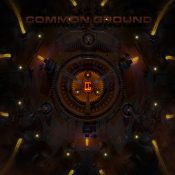 Collaboration is a way of life in the ambient world, and I like it that way. Bringing talent together for the first time creates fresh chemistry, new explorations, and re-imagined definitions of the craft. So it is with Common Ground, the trio of Bill Olien and Gary Johnson from Resonant Drift and spacemusic composer Hollan Holmes, with ambient legend Robert Rich handling the mastering. The initial liftoff is from a grounded standpoint, opening with nature sounds. But it’s not long before we leave that behind for broader, deeper places. To be honest, the first couple of minutes of this track, Many Voices,” don’t do much for me, between the chirping and the straightforward pads. Then the warm, round tone of fretless bass slips in and nudges my attention. Sequencer work—I presume it’s Holmes’—begins to percolate in the middle of the flow, and now I’m hooked. The piece works back down to its starting point, and I find I’m more okay with it at this stage. That blend of pads and rhythms also drives “Ancient Whispers.” This piece will pull in some Steve Roach reference points, with understated tribal drumming counting off time as Johnson leaks out sighing guitar chords a la Streams & Currents. The trio keep this one dialed down in tone; its smooth waveforms ease into your system. When these gentlemen shift into more beatless zones, the drift is blissful. The stretch formed by “The Apollo Frequency” and “Edge of Tranquility” is filled with warmth and dimension and a feel that seems more driven by Holmes’ ambient sensibilities than Olien’s and Johnson’s. Of course, it’s the collaborative effort of all three, and what we enjoy here is pure and correct chemistry, so I really don’t care who’s at the helm. I’m just along for the calm ride. “Apollo” offers up some changes in tone that nudge toward being too sharp, but the skilled hands at the controls lay off just enough that they instead accent the drama of the passage. “Tempest Rising” opens in the same soft space as “Edge…”, but true to its name, begins to ramp up in intensity a few minutes in. This is another spot where solid sequencer work takes the lead and laces in a cool old-school sense. The closing track, “The Ties That Bind,” takes an interesting approach of building up a stretch of pads, very full and gentle, then letting them fade down to virtually nothing. A pause, and then the next wave rises slowly. Small sounds tick and ping like light chimes in the background, and the feel overall is simply meditative. A nice way to end this hour-long run.
 Hypnagogue Music Reviews