 You should be feeling pretty good by the end of “Future/Now,” the first track from George Wallace’s Light Music. Bright and energetic, it bursts out of the gates and grabs your hand to show you all the things on the composer’s musical mind. In notes on his website, Wallace calls this piece “A joyous communion” and “a wild celebration,” and as grandiose as that may come off, it certainly is both. To be honest, if this album stuck just to this kind of tone–and it has plenty of it–it would probably wear thin for me in short order. But Wallace’s stories are many, so after this shiny opener, he curves off into the more shadowy, arcana-tinted “Existentia.” Slow-moving and mysterious, it’s pushed along with the hum and growl of didgeridoo and some textbook tribal-ambient percussion. Wavering sweeps of tone add texture, and the piece rises gracefully as the tale progresses. In past outings, I have sometimes felt that Wallace’s work can get a little too wrapped up in the kind of big, sweeping melodramatic phrasing and sound-imagery that can turn the music into cloying pomp. A piece like “Existentia” has the potential to head there, but never gives in to it. Instead, it just gets more darkly intense. Great piece. (Oh my, did I just actually drum on the table to this while I was writing? Yes, I did.) There is a little touch of the too-much-trope in “Behold the Mothership,” when Wallace opts to throw in the big, whooshing sound of the engines as we head into space (hello, Michael Stearns’ Encounter). Prior to that, it’s one of those vast-distance, pad-driven spacemusic pieces. After the trope, Wallace lays down some gorgeously quiet tones (because after the hyperdrive, the float). “Imaging Cathedrals” almost lost me at the beginning because Wallace once again relies on a too-obvious tool: the ringing of church bells–or a clock tower hitting the hour. (“The Cambridge Chimes.”) Yes, I recognize that the song has “Cathedrals” in the title, but when you kick off a piece with something so blatant, I’m going to grimace. That being said, what’s happening here is that Wallace then takes said tones and melts them down into the framework of something more interesting than it seemed it was going to be. Light touches of field recordings add depth, and then Wallace laces in a catchy Latin-esque rhythm and swirls of flute. It’s a quiet groove, and I like what the track becomes, but I kind of wish he’d foregone that initial point of reference. He plays with that four-note tune later in the piece, and if it just came in there, it would work as a very cool nod to the title and theme. If you want a fine example of the range of Wallace’s musical capabilities, you have dive into “Interstellar Hoedown.” I am going to admit that I was worried that this would devolve into something a little too cheesy, based on the name, but…wow. There’s the word. Just…wow. It sounds like Shadowfax crossed with Jean-Luc Ponty and maybe a little Return to Forever. Just the flute alone, spiraling along in jazzy riffs and runs, will brighten your soul. Violin dances wildly across the scene, and the round, chunky sound of fretless bass anchors it all. Slap some joyful hand percussion in there, and it’s a party, pure and simple and thematically perfect.
I’m aware of how many times in this review I’ve noted that a piece from Light Music made me concerned that if might turn into something either too obvious or too overblown, only to have Wallace reel it back in and fully hold my attention. It’s a matter of personal taste versus the composer’s expression. There’s some fantastic music here, and once I get past my wincing points, I am fully into Light Music. It has stories to tell, and they’re diverse enough to keep you listening for the next tale. A solid, well-composed suite of works from George Wallace–possibly the best I’ve heard from him to date.
Available from CD Baby.

 This live recording from the 2015 Awakenings festival find Phobos (aka David Thompson) heading down into dark spaces and inviting us to join him. It’s an hour of minimal drone and thick textures, mostly cold and black as space. The main attraction here is the 44-minute “Awakening,” which showcases Thompson’s skill as a sonic guide. Although it dwells on the grimmer side of sound for the majority of its run, Thompson bends and shapes it through a strong variety of tones and textures. Early on there is some knob-twiddling that releases squibs of sound that push against the drone-wall beneath it; stretches of desolate wasteland get laid out before us in minimalist washes; and there are places where the darkness is quieter, and soothing. As he approaches the end, Thompson veers his tone up toward lightness and leads us into the 15-minute “Evening Sky.” Almost like a reprieve, this piece is pushed along on an easy, tapped-out rhythm and comforting pads. It is the essence of autumnal stargazing, captured in sound. The consistency of the rhythm pushes us toward a light trance state, and the warmth of Thompson’s pads is like the perfect blanket around us on this October evening. The closer, “Drift Away,” heads back into the shadows, but maintains a balance between dark and light.
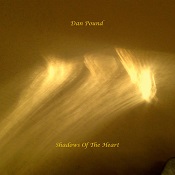 And now, coming to add itself to your lists of quiet-looping, evening-coming-on, meditation-time, and headed-off-to-sleep favorites, we have Dan Pound’s Shadows of the Heart. Pound is up front about this being “… a space music album that will prevent you from being able to keep your eyes open…”, but he does slip in touches of sequencer work and the occasional shadowy change of tone, and those may help keep you awake. In fact, the opening notes of the first track, “Shadow Light,” greet you with a somewhat growling low end and a touch of drama to their rough edges. That might throw off the idea of a sleepy-time album, but after grabbing your attention with them, Pound smooths them out to set up the rise-and-fall pad structure that dominates the album. When this album gets quiet, it gets very quiet. “Night Shade” uses soft flows and pinpoint notes like single raindrops to slow your breathing and ease your mind. Crickets chirp in near-stillness during “Moon Cast,” waiting for well-spaced notes to flutter in, gather, and carefully organize into a melody. Flute and acoustic guitar step out the shadows to enhance the mystery. Its follow-up track, “Invisible Night,” enters on familiar vocal pads and sets itself up as a spacemusic piece. It has that dramatic, broad feel, brightened by moments of twinkling electronics. Toward the very end it picks up a little vibrancy with bouncing tones that play quietly in the back, which Pound carries forward into “Always There.” They become an element shining through another elegant wash of pads. The offset is a lot of fun, and Pound orchestrates it patiently, not overdoing the drop-ins of those tones, but using them as a perfectly placed accent. He pulls this trick off in the title track as well, where a light touch of sequencer bubbles under a slow-moving arc of string pads. It never takes over, just blends in like welcome ripples in the flow. I really enjoy the subdued orchestral feel the deep blend of strings gives this track.
 Alpha Wave Movement takes inspiration from the ocean and crafts an hour-long drift comprising two half-hour suites on Harmonic Currents. Let it be noted that if you’re not a fan of elemental sounds in your ambient, there’s a lot of the gentle crash of waves here–as, for the theme, there should be. For my tastes, this sort of aspect is easy to over-do, but it never grates on me here. Within a few minutes, it gets swallowed into the greater flow, the long, spacey pads and the rich rises of rumbling bass. I understand that AWM has grounded this piece in the idea of the ocean, but it’s still got a spacemusic core, and as he works in the sequencer lines in the title track, we definitely achieve a bit of liftoff. The bright tones may be meant to represent sunlight on water here, but it resonates as the familiar twinkle of stars from whatever your favorite spacemusic piece may be. Vocal pads just up that particular feel. I find my mind goes quiet as m0re elements ease into this section, hitting that spot where my love of this kind of music lives. With half an hour at his disposal, AWM has ample room to explore, to shift his flows from drifting to vibrant and back again. “Nautilus Dreams” opens with the wave sounds over a rolling bass drone. The low end slowly fades back to let a graceful string-sound wash take the lead, and the flow develops and expands from there. It’s quieter than the first track in that it never finds its way into that sequencer-driven vibrancy, and is instead content to carry you off with bright flecks of electronic sparkle and these warm, enveloping pads.
 In the name of full disclosure, I must reveal that I am a long-standing Cyberchump fan. I’ve been on board since Scientists in the Trees introduced me to their blend of highly intelligent electronica and unmitigated funk. On The Construction of Things, they further solidify my appreciation. With 10 short tracks jamming by in 49 minutes, it’s a series of mostly pop-length tracks they refer to as “Dub meets Neo-Cosmic Aural Sculpture.” I refer to it as a pretty cool groove. Cyberchump have a signature sound and cadence to their work, a blending of sticky bass lines, yawning psychedelic guitar, and ambient-wash backdrops. That basic framework gets melted, twisted, and reformed each time out on this release, so while you will definitely hear variations on a repeating theme, each fresh rendition has its own character and its own way of working itself into your head. “Stuck in Stutter” comes in strong with a repeating phrase and bright sequencer tones. It’s big without being overly forceful, deep without getting too complicated. A big dose of energy early in the album. You get another hearty shot of it later with the memorably named “Shark Your Booty.” This is the sort of song you close your concert with, a thundering jam of considerable size, packed with adrenaline and doled out with the occasional beat drop to bring the crowd in. Fists in the air, everybody, they’re playing “Shark Your Booty”! The duo tackle some downtempo work as well, as with “Trap City,” where tones like chimes crossed with Fender Rhodes play out against a hazy backdrop that warbles its way through. More yummy bass strolls easily along with it. Space lounge, more or less. “That Nagging Feeling,” which precedes it, stays reasonably laid back, with more of those Rhodes tones taking their time to poke their heads out and look around. The bass arrives to join in, also keeping its voice down as this thing spins into some sort of spy-movie narrative. Slick and slippery guitar leads later in the track trace their lines across it as well and ramp up the vibe a little. Smooth. “No Big Deal” gets trippy with a slithering flow and a smoky, half-sung, half-chanted vocal by Jeanne Marie Vielleux. This mid-tempo piece is thoroughly loaded with atmosphere. The guitar here carries a twisty, acid-tinged flavor that adds perfectly to the mysterious feel.
 Live-looped trombone ambient. Don’t hear that too often. But if Quiet Horn’s The Last of the Sun is any indication, maybe we should. Jeff Bernhardt presents 80 minutes of solid low-volume ambient on this release, turning out sounds that most listeners would be hard pressed to identify as trombone. Using the horn as his primary source, he finds and spins out new sounds, many of them small but vital, and works everything into thick layers of drone that never fully shed that almost reserved tone trombone creates. Each of the pieces here is freshly drawn, a new and interesting vista each time. It’s not a pleasant place we’re taken in “Everything Gets Cold in the End”—nor should it be, given that title. This is a stretch of murky, miasmic drones and grim textural treatments. Bernhardt uses the sound of his breath in an excellent way here, its rasp and hiss amplifying the overall creepiness and despair. Mildly unnerving and very effective, with a lot of sonic imagery to gaze into. “Mountains Melted Into A Molten Sea” is a very listenable exercise in taking a phrase and mutating it over and over, layering its new forms on top of one another while still leaving its core recognizable. Give it a few minutes to establish its base, then listen as the shifts and changes slowly work their way in. The complexity increases and the sound deepens. This is the longest track at 18 and a half minutes, and it will take you under. Mere moments into “Hydrogen Fuels Our Time With the Sun” I was certain the track belonged on another album. It opens like a knob-and-switch electronic music piece, spastic blurps and bloops of sound ricocheting about in some kind of awkward sequencing. Minutes later, with all those ping-ponging sounds masterfully and almost inexplicably massaged into longer, smoother strands that cross and weave and sigh and float, I find myself fully involved. In the number of times I’ve listened, I can’t pick out the exact moment when the changeover occurs. It just does, quite organically, and suddenly I’m deep into a wholly other thing than I started with, and it’s excellent. This has become my favorite track on the release.
 The warm and welcoming tones of fingerpicked nylon-string guitar are at the forefront of Still Voice from John Gregorius, and that’s just one of the many good things going on here. In 10 light and laid-back tracks, Gregorius pulls in a number of ensemble players to lay down a style that brings in folk touches, hints of Windham Hill influence, and a very soulful feel. It’s unabashedly music for wine by the fire (and sometimes for solitary contemplation), but it’s got real depth and emotion that’s played up by engaging arrangements and a fantastic production job. The opening track, “Grounded in Mystery” brings in Gregorius’ side players, adding bass from Eric Pittman, and vocals and piano from Kimberly Daniels. It’s a tight combo, with each instrument stepping gingerly into place around the central core of guitar.It’s a smooth introduction that sets the tone for the album. Other players fold in to other tracks just as seamlessly. Daniels takes the vocal lead on “Fall Into the Open,” a hazy dream of a piece with lyrical clarinet work from Keith Ward. A light touch of drums from Mitch Ross rounds it out. This song is as warm and safe as a mother’s hug; the washed-through, pleasantly indecipherable lyrics pack a reassuring tone. Gregorius pops a surprising moment into “Benevolence” by suddenly tossing in a bit of raw guitar. It’s just a small snarl, but its gritty coarseness briefly takes this mildly uptempo piece over toward the gates of post-rock. A nice wake-up call in a flow that’s easy to over-relax to. There’s a little shot of that, but with less grit, in “True Self.” It may be the gentle funk from Ross’ small-kit shuffle, and something of a beat drop that happens, but this is one of those songs that feels like it would be happy to get some lyrics of its own. The album close with “The Dance,” which starts as a delicate waltz quietly accented with strings. For several minutes it’s content to be just that, and then Gregorius’ players step in to fill out the tone. More prayer-like vocals from Daniels, and the sweet sighs of Cherkova’s strings lightly drizzle memories and emotions all over it. The only minor mis-step for me on Still Voice is “Wonder of Grace.” Don’t get me wrong; it’s a lovely song, but it just gets a little too sugary for me, too big and melodramatic and New-Age-obvious. I like Daniels’ vocals everywhere but here. Again, they’re still good, but here they’re just a little too Enya-meets-an-angel for my tastes.
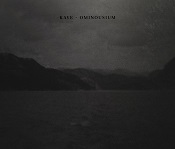 I don’t mind dark ambient. I don’t mind minimalism. I don’t mind drone. But in all of these things, I expect something to happen. I expect, at the least, to experience some form of response. Preferably not a yawn. And yet, this is the reaction Kave (aka Bram Gollin) elicits with Ominousium, which is dark and minimal and droning and not much else. Gollin notes on his Bandcamp page that he’s looking to “induce a meditative experience where inner landscapes are forged and the listener is left to wander through his own interpretations of these cinematic soundscapes.” Sorry, but if this is cinematic, it’s a long, unmoving shot of a bleak landscape where nothing happens. My interpretation of it is to say no thank you and move on. I’ll give him the meditative part; my mind definitely wandered. Away.
 Veteran Hypnagogue readers are probably well aware that your host, being a gentleman of a certain age, has a touch of a weak spot for music with a 70s/80s flavor. So I’ll tell you up front that listening to Sectio Aurea from Ombient is like having the stuff I love mainlined straight into my system. It’s a knob-twiddling, oscillator-tweaking, sequencer-adjusting, leave-me-alone-for-the-next-hour bolt of analog pleasure. Ombient (aka Mike Hunter) eases his way toward the front of the analog/modular resurgence with this release, definitively showcasing his understanding of the rhythmic latticework complexities of this style. To this he adds textbook compelling fills and runs on high, flute-like notes. There’s sometimes a slight rawness to these that suggests creation in the moment, and it ratchets up the release’s genuine appeal. After a brief warm-up with “Overture,” Hunter offers up four more long excursions on craft that may be familiar but are nonetheless a fantastic ride. You’ll want to listen closely; he believes firmly in the power of small sounds, and these pieces are loaded with them. They may just be be momentary squibs that flit across your headspace in the time it takes to flick a switch or twist a knob, but not a one is wasted and they all need to be heard. From warbling swirls that spin dizzy spirals in the title track to corrugated trills poking through “Undersea Miner,” Hunter slips in some tasty ear candy to go with his rich bass sequencers and straight-line step-and-repeat weavings. “Undersea Miner” is where you’ll draw your strongest TD comparisons (which are, naturally, inevitable) as it chugs forth. Its core sequence feels somehow more strident than the pieces before it, and with more of a low-end aspect. Something in that just screams TD to me. That, and the rushes of electronic whirl and whoosh that run through it. I keep coming back to this one, and for more than just my hit of nostalgia. “Ataraxia” has a great stretch where whimsical notes bounce around over a springy sequencer—it’s just a dose of cool using minimal elements about mid-track before Hunter sends back into a higher-velocity space. “Olostanette Recumbent” begins in a quieter space, offering you a bit of a breather. Echoing chime tones and more electro-wind patiently fill the space. This is an excellent choice after the more complex, heavily loaded pieces before it, and shows that Hunter also knows how to use his gear’s capabilities to carve out a more meditative space. The classic analog tone is still firmly in play, but he takes the idea down to a minimalist zone and pulls a melodic line into a long, hushed stretch.
 Hypnagogue Music Reviews