John Davis: Ask the Dust

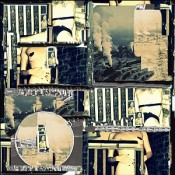
davis_dustI’m not sure I can accurately tell you what’s going on in John Davis’ Ask the Dust, but I can tell you that I’ve been listening to it a lot. A filmmaker by trade, Davis brings a definite sense of atmosphere and movement to the five pieces here–two mid-length tracks and three shorter ones–and loads his spaces with fine details. The music here is largely impressionistic, built on carefully curated noise and transmogrified instrumentation, tenuously layered so that it sometimes collapses into tangles of sound. But when it does so, it’s to recreate the moment in a fresh form. As far afield as Davis may go in his works, the listener never feels completely removed from some hint of melodic structure. Often it’s vague, more a memory than something tangible, but it still exists. This lets the work stand up to close examination, and it consistently reveals itself to be deeply intricate while pushing at its own borders. The two long tracks are the draw here, although each of the fives pieces are solid. The longer ones feel broken into movements. Sometimes the shifts are subtle, sometimes they are abrupt, and in the course of each track, both transitional elements are employed. In “Superpartner,” Davis works the flow in several stages,  from calm and quiet passages that rise out of downplayed electronics to sharp, angular clusters built from analog squabble and static. Between there are sparse spaces that echo with neglect, the sounds of forgotten things blowing in a breeze, and distorted loops that mumble meditatively over specks of electronic detritus.  “Synecdoche” comes in on a straightforward piano melody, but if you’ve been listening, you know it’s not going to stay that way. (And let it be noted, the piano playing is excellent, full of tone and emotion.) Here’s where one of the good abrupt shifts hits; it literally sounds like Davis stops and pushes things over, gets up and leaves. From there we fall into a gentle, drone-based zone, perhaps Davis’ most ambient stretch of the disc. For someone who’s spent most of the album surrounded by jagged, culled sounds, he handles this side very well. The softness is a bit of a surprise, as is an uplifting swell that surges in around the 7-minute mark, carried on a deeply resonant bass tone. Davis maneuvers this into his into his next phase smoothly, coating it in a brief spot of shadow in transition. It passes briefly through another of those abandoned spaces, rasping and grating and tainted with a distinct sense of unease, before ending in a lighter space with echo-coated piano and a high drone that sounds like a mutated tambura. This track absolutely mesmerizes me. The shorter pieces are also noteworthy. “Joy Meridian” begins as a quiet drone and grows into something raw and gorgeously over-amped; “Palestrina” feels like a take of spacemusic, with glittering sequencer lines over long pads and light touches of distortion. “Julian Wind” rides on a bagpipe-like sound, washed over with hissing static and a swirl of background sound. Davis ushers us out with an unusual sound bite of a woman, clearly hypnotized, talking about her life on another planet and lamenting that it “wasn’t full enough.” It’s just weird enough to be the right ending for this excursion.

It has taken me some time to find a way to encapsulate the work on Ask the Dust. It’s one of those “dancing about architecture” moments for me as a reviewer. This has lead me to leave the piece on loop for several hours at a time. It doesn’t wear out its welcome, and seems to keep revealing new layers depending upon when and how closely I’m listening. The attention to minute detail is excellent, and the release has a solid emotional through-line. It becomes something you need to hear all the way through. An excellent release from John Davis.

Available from Students of Decay.
Zero Ohms: 369

zero_369Long loops of droning flute and electronic wind instrument blend with field recordings in a dreamy wash on Zero Ohm’s meditative 369. Zero Ohms (aka Richard Roberts) guides the listener through a spiritual voyage that begins with us grounded in the real world and ends with us in some blissful, relaxed elsewhere. Roberts accomplishes this in three mid-length tracks that never raise their voice above a loving whisper. The tracks are each titled with one number from the album title. “3” begins the journey and it’s here that the field recordings play their part. Nature sounds, gruff (and, it must be said, slightly jarring) voices calling out in some unidentifiable language, and the crisp crunch of leaves underfoot suggest that we are out walking somewhere. Point  being, we are aware, at this point, of the world around us. The world we will soon drift away from. Throughout this voyage, Roberts’ tones are consistently warm, enveloping, and organic. To call them drones does them a slight disservice; it is more of a slow current, shifting gracefully but not imperceptibly, and in constant motion. It is in very short order that we give ourselves over to the sound. On “6,” the field recordings fade back, and Roberts surrounds the listener with low, shadowy sounds that still maintain warmth. He stretches them out to a rise-and-fall that brings our breathing in line, and this is where we leave the concrete world behind. The slow weave of sounds is mesmerizing. This track alone is reason enough to hear this release. “9,” the closer and the shortest track at just over 10 minutes, brightens considerably from its predecessor right from the start. It’s as though we’ve passed through a space between the concrete and the spiritual, and here we are, in some indefinable place beyond. This track contains a signature Zero Ohms sound, a texture that for lack of a better term sounds like a brief throatiness, a grounding solidity amidst the softer, ethereal sighs.

369 is a superb piece of work from Zero Ohms. While I do have my minor issues with the disruptive aspect of the voices in the field recordings, the effect very fades as the music deepens and leaves the solid world behind. It’s an artistic choice and, in the long run and looking at the effect of the release overall, it works. This release will take you very deep, and it loops nicely for maximum immersion.

Available from Relaxed Machinery.

The Fucked Up Beat: Hunting a Schizophrenic Wolf

fub_wolfWhere shall we file this one? Under trip-hop? Could do that. It’s got the beats and breaks and the nice jazzy undertones. Under plunderphonics? Yeah, sure, that’s an option. Vocal drop-ins, lifted samples, that stitched-together feel that somehow manages to work its way into rhythms that hit and stick. Maybe we just file it under “better than I thought it would be” or “grew on me quickly.” Definitely that. The bi-coastal duo of New York’s Eddie Palmer and San Diego’s Brett Zehner lay down something quite interesting on Hunting a Schizophrenic Wolf, a confluence of styles that caught me a bit off-guard at first. Coming in, the release would seem to be the sort of loop-laden offering we’ve heard before. Palmer and Zehner pull out and lace together bursts of swing-band brass and some fairly standard breakbeats. But then they’ll freeze a moment within a loop, isolate a tone and leave its resonance hanging out there in a hypnotic wash. Catch it pulsing along toward the end of “Disembodied Poetics” or the way layered moments float in static, nudged by a vocal drop-in, at the end of “Bank of America.” There you were, tapping along to a cool lifted rhythm and mutated jazz licks, and then you realize you’ve gotten lost in a smooth drone. When the duo bring the beats back in or restart the samples, it’s a gentle re-folding of the space and the ride continues sensibly along. It’s never jarring. That, perhaps, is what surprised me most about Hunting A Schizophrenic Wolf; for all of its disparate elements and its jigsaw construction, it’s a pretty seamless ride. It makes sense in a way I didn’t expect it to, and it didn’t wear out its welcome on repeat plays. If anything, I kept paying more attention to what Palmer and Zehner were tossing at me. Is it a bit familiar? Well, yes. You’ve heard this stuff before. But within that familiarity there is plenty of innovation and interest that freshen things up and make this release one worth checking into.

Available from Daddytank.

Aaron Martin & Christoph Berg: Day Has Ended

martin_dayAlthough Day Has Ended is a split release between artists Aaron Martin and Christoph Berg, the two halves flow so seamlessly together that it seems a single cohesive thing. Both artists fall under the modern composition category, their work in both halves of this release carrying an intimate chamber music feel. Rich strings and melancholic piano draw vivid sonic images as the duo describe the course of a day–a theme that, in the long run, is secondary to the introspective beauty of these eight songs. Martin takes the first four pieces, with a focus on strings, from the first shiny guitar notes of “Slow Wake” to the crisp, unexpected twang of banjo in “Burl.” A noted cellist, Martin works those sonorous strings into the mix as well, a steady dramatic voice underscoring the complex interweaving of sounds going on around it. Martin takes another turn in using choral voices to open “Comfort of Shadow.” These give way to a deep, resonant bass drone on cello. Higher strings slowly work into the flow, bringing some potent emotion with them. Berg’s section begins quietly with “Pillows,” carrying the raspy, organic quality of Martin’s bow-work but infusing it with a more spread-out sparseness. “Today has Been Alright” manages, in its slowness and repeated phrasing, to capture a sort of hesitant musical shrug of acceptance; its edge of sadness is tempered by its brighter tone. Overall, Berg’s four pieces are less angular, more couched in quiet than Martin’s. The emotional level is certainly equal, but the approach, perhaps in trying to convey the sense of the latter half of the day, feels less sharp. “Coda” brings the release to a lovely close, offering in its structure a hint of a post-rock ballad. It sways just slightly, lush strings making a floaty bed for piano. There’s also an underscored air of optimism, perhaps the sense that this day was a bit more than alright after all and tomorrow’s coming.

Day Has Ended is a quick hit, just over half an hour, but it lands with considerable emotional force. Both composers speak in confident voices through their music and the fact that the release glides so easily from one artist to the next plays up their simpatico approaches. The intimacy and rich organic feel of the compositions, sometimes nicely raw in spots courtesy of the strings, has had me coming gladly back for repeat listens. This is a wonderful end-of-day listen (go figure) and a release you must hear.

Available from Dronarivm.

Steve Roach: Live Transmission

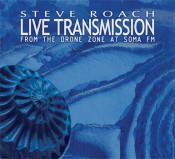
roach_livetIn May 2013, two days after laying down a mind-bending set at the AmbiCon concert, Steve Roach brought a compressed version of his Timeroom studio into the intimate confines of the SomaFM.com offices and proceeded to knock out a two-hour voyage that was captured on the double-disc release Live Transmisson. Like many of Roach’s live sets, this one soars through a variety of soundscape styles, arcing from glittering space-pads to the deep, smoky caverns of the primal mind and on into pulsing analog equations. It’s not a “Best Of” kind of thing, it’s a revisiting of the worlds Roach has already electronically terraformed. What’s of real note here is the setting; this is a full-on, deep-immersion, no-release-until-it’s-over set, crafted in a minimal space. There’s a great picture of this event where you can see an analog synth propped up on a couch behind Roach. I know that a lot of electronic musicians make do with minimal gear, but the fact that Roach does so here without any sense of anything being missing or lacking, without it feeling non- or un-Roachian, makes it a great listen for me. Being the tribal ambient lover that I am, I go particularly deep during the stretch that starts with the bass-heavy rumbles of “Zone of Drones” and unfolds gorgeously into “Looking for Safety” from Dreamtime Return. That’s a nice nod to long-time listeners. From there he heads back toward the shadows with “Reflecting Chamber” from Light Fantastic, making use of samples of the fujara, a large Slovakian flute, from long-time collaborator Dirk Serries. Drum loops and long, spiraling pads fill out the familiar tribal feel. The 32-minute groove “Vortex Immersion” kicks off the second disc and ushers us into that gurgling, hands-on-knobs analog space Roach has been spending time in since Possible Planet. Here we shift from tribal rhythms to more complex grooves, the beats curling up out of misty constructs. “Westwind,” from Proof Positive, kicks that into overdrive, giving us that early-Roach flavor of hyperactive sequencers rapping over pads and electronic twiddle. The voyage closes with a relatively new piece, “Today,” a cleansing drift–as is standard with a Roach live set–to bring us gently back to our wakened state. Your breathing will come in line with Roach’s rise-and-fall structures.

Perhaps needless to say, this voyage runs deep. The blend of older tracks, recreated live in the moment, and fresh takes offers a panoramic look at who Roach is, musically, without feeling like he’s doing fan service. Any Roach live voyage is subject to mid-course changes and tweaks, so the familiarity also comes with an edge. Again, for me it’s the matter of a sizable sound and an engaging voyage carved out in a “this is where we are, this is what you get” setting that makes this memorable. This is one to leave looping.

Available from Projekt.

Julian Ray: Mysterious Garden

julian_gardenThere are spots on Julian Ray’s Mysterious Garden where I felt like I was listening to an old radio show and the announcer was about to tell me that this is what music will sound like…in the future! As composer Yury Shumakov lays out his 10-track voyage, the ride slogs through some tunes that come off sounding a little overly dated, but several standout pieces go a long way toward making up for them. The work here sits between melodic electronica, skewed toward the New Age side of the equation, and lilting space music. He hits it squarely on “In Mist of Immersion,” where floating drones cross under percolating electronic rhythms and a repeating arpeggio acts like a chorus. Shumakov laces in some jazzy keyboard riffs for an extra touch of cool. “Pool of Eternal Life” is another notable track, managing to (just barely) skirt the edge of nostalgia without getting too syrupy. Piano twinkles in a repeating phrase over spacey pads and a catchy, understated hand-percussion beat. Again, you may catch a light (and welcome) smooth-jazz feel. I like the laid-back, easy-listening feel of “Two Souls,” even though it–again–almost lays on too much sweetness for my tastes. And tell you don’t hear just a little lift from the old Seals & Crofts tune “Summer Breeze” hiding in here.

With the exception of those few tracks that just lay a little heavily on saccharine and standards for my tastes, I’ve enjoyed hearing Mysterious Garden. I like it better mixed into a shuffle than as a listen on its own, but Shumakov’s compositions are well crafted. This one will sit better with New Age fans, but is worth a listen across the board.

Available from Julian Ray’s website.