S1gns of L1fe: Language of the Ancients

s1gn_langLanguage of the Ancients, the debut from S1gns of L1fe, offers up spacey, melodic electronica with an attitude so chill it’s got frost on it. I hear in its crisp, easy beats and funky bass anchors echoes of Carbon Based Lifeforms and the laid-back “exotic electronica” that used to come out of Waveform Records. Loaded with hooks and some nice “oh, yeah” moments, this is a disc to drop into and stay with. The opener, “Aphelion,” lays down the equation for most of the tracks, with its wispy backdrops and instantly infectious rhythm–part straight-out beat, part glitch. This one hits cruising altitude pretty quickly, and then it’s smooth flying from there into the cool glide of the title track. This one has some nice breaks in it, spots where musician Chris Bryant strips his sounds down to a minimum. “Symbiosis” carries an excellent retro feel via simple sequencer lines paired with glistening pads. This is another track with that pare-it-back/build-it-up construction, and it hits a nice stride coming back in. But it’s not all beats and bloops here. Bryant can dial it down to lay out very workable ambient-side musings. “Catalyst” doesn’t speak much above a whisper, nor does it really need to. Its hushed tones and quietly pulsing beat work perfectly, laid out over thin, stretched pads. “Saros (Interlude 2)” puts together low-volume, drifting pads and a mid-paced sequencer that Bailey modulates in and out. The base flow is simple and calming; the sequencer adds vibrancy without disturbing the hush. “Metamorphosis” comes in on a drone that Bailey spreads toward the horizon. A very light pulse works its way in, just enough to waver the surface. And just to be well-rounded, on “Imminence” Bryant  goes the abstract route, filling the space with misty, crawling sounds that gurgle around before a light-as-sunrise pad pushes back the borders for the second half. The transition is smooth and very effective.

Language of the Ancients is a very pleasing disc on a lot of levels. It’s easy to take in, it’s quite engaging, it’s a perfect wind-down groove, and it has just enough retro edge in spots to ping those particular pleasure centers. There are one or two places where I found Bailey’s bass phrases a little too static for me across the course of a track (“Cell Theory,” for example), but that’s a minor quibble in a disc I’ve enjoyed as much as this. There’s a lot of depth and detail at work here. Expect this one to get a lot of repeat listens. A very promising debut from S1gns of L1fe.

Available at Bandcamp.
Matt Borghi & Michael Teager: Convocation

borghi_convocIn improvised sessions employing just guitar and saxophone that make up Convocation, Matt Borghi and Michael Teager have created a fantastically soothing, jazz-oriented space I’ve come to think of as lounge ambient. Not lounge in the standard sense of downtempo, but in the sense of how Teager’s supersmooth sax conjures John Klemmer and Jan Garabarek as it glides over Borghi’s processed guitar sound. Lounge in the sense of Borghi’s classic jazz guitar noodling having its say or trading leads with the sax, everything coming in quiet and wrapped in silk, just lulling you for an hour. There are five tracks here, but they neatly melt together as time slides past, with several attention-grabbing moments along the way. Teager’s fiery solo in “Constant Apex” is pure jazz joy, and his contributions to “Nebula Divide” ooze with a touch of R&B sensuality–the sax’s ever-so seductive sound in full effect. Borghi hits stride in “Precipice,” firing off runs of notes punctuated with simple, high chords he lets ring into the air. What works best here is the pure sense of balance. Both players spend time at the forefront, their time offering up both the simple and the complex. The moments of energy are well offset by long stretches of gentle calm. Borghi’s washes are warm, pillowy and deep, played to the understated side and integral as breath. This is a disc I could leave on all day. Its ambient side is textbook, unobstrusive and purely relaxing; the jazz aspects bring a rich solidity to the space, and just the right edge of funkiness. I’m going to be very surprised if this doesn’t end up on a lot of “Best Of” lists this year. You have to hear Convocation.

Available at Matt Borghi’s web site.

Dissolved: Surge of the Lucid

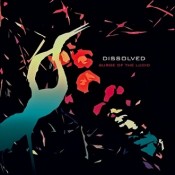
disslvd_lucidAccording to the press release, Surge of the Lucid is UK soundmeister Dissolved’s 50th release. It’s only the third to which I’ve been exposed, but my appreciation for the artist’s sounds-and-beats-in-a-blender approach has grown each time out, and Surge of the Lucid stands out, for me, as the most accessible I’ve heard while still offering an intelligent challenge to the listener. Here, Dissolved has more elegantly folded his wayward sounds into a melodic sauce instead of having them occasionally jump out the bushes at you. After the two-minute opener, “Heart of the Well,” serves as a sort of narrative opener, Dissolved brings in beats, glitch, and song-style elements. But of course it’s not straight-ahead. The wonderfully titled “Your Age in Shark Years” starts with thick, rumbling drum kicks, crunchy layers of bass and lightly overamped glitch. Vocal samples and sudden blurts of chip-set sing-song poke out of the mix. “Selmentrasm” takes a fairly textbook post-rock glitch format and warps it with curved distortions of the sound, giving it just a bit of a wobbly edge. (If you’re of the right age, think of the sound you’d get from slightly warped vinyl.) “Stickleback Red” and “Ski Run in the Distance” show off their proud chill-out heritage, with the former buoyed up on dreamy synth structures and scattered across its face with a shifting, skittering menagerie of noise. The latter sets up a short phrase as its bottom line, a simple slope that the melody gently glides down as the depth of sound ramps up. The two long tracks on this disc are worth calling out. Most of the pieces here run in the three- to five-minute range, but on “Forgotten Processes” and the closing track, “On Board The Deuterium Arc,” he stretches out to tell bigger stories. “Forgotten Processes” is downright catchy, sliding its tempo back and forth from a hurried chorus to a more plodding pace in metered moments, the whole thing haunted by vocal drop-ins and sudden stops and starts. The closer is fifteen minutes of thick and twisted glitch, snapping across the top of a drawn-out melodic line. I like the way Dissolved modulates his elements, giving more prominence to this or that as he moves the ride along. Tonal and tempo changes keep it engaging. There’ s a great stretch that’s almost entirely percussion mid-track, and Dissolved rides it perfectly down to the way he eases out of it and slides other elements back in. It must be said that there is, of course,  the bit of necessary Dissolved weirdness. “Lenslock” sounds like a classical mass for pipe organ on Quaaludes, the tones turned even more ponderous and a bit unnerving. Aside from that–and even including it, really–Surge of the Lucid is a great way to get familiar with Dissolved (if you haven’t been along for the entire 50-release ride).

Surge of the Lucid is a great release from Dissolved. Discover this musician now. You’re already 50 discs behind.

Available from Daddy Tank.

Zoid: Selected Zoidworks 05-12

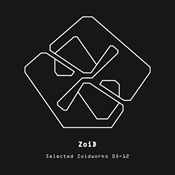
zoid_selectI’m not sure how easy it will be for some listeners to get into and stay with the churning, jazz-informed, bass-synth-driven electronica on Zoid’s Selected Zoidworks 05-12. My first few listens were a little on the off-putting side, trying to catch hold of Daniel Jacobson’s unlikely tempos and unnatural musical angles as I was being repeatedly punched by the low-end force of a 303 synth. And, to be honest, I can’t say I’ve entirely invested in it. But I’ve kept going back to it. It’s like standing back and watching an experiment you’re not sure you comfortable with, but in which the results keep you watching more than they drive you out of the lab. Jacobson lures you in with the reasonably accessible “Aerosoul,” where a smooth jazz guitar vies for your attention with an in-and-out tide of whooshing electronic sound. The contrast is excellent, and it takes a lot of potency from its deceptively simple appearance. Then things get trickier. “Phorph” dials down the obvious jazz influence and puts an almost-minimal rhythm against very quiet synth chords. The pulsing overtones read very retro, and the underlay is content to mind its business back there. The track takes on a slightly hypnotic quality through a repetition some may find grating. “Acid Leaves” tears up the scene with on-fire glitch snaps highlighting Jacobson’s use of non-standard–which is to say, non-electronic music-standard–time signatures. Along with mentor Bruce Morley, he manages to slide a funky guitar take of the standard “Autumn Leaves” into this semi-tamed tangle. This is one of the things that kept me checking out Zoidworks–the well-practiced pairing of the “norm” with the twisted and how well Jacobson, who is jazz-trained, makes it fit into a whole. But it does take some time to wrap your head around it. Try diving into “Obelisk,” another pairing of textbook jazz guitar playing underneath a rush of chittering, rapid-fire microsounds. Or submit to the grinding, over-modulated bass sounds powering “Cember” before a chipset-style melody creeps innocuously into the mix. A funky drum riff in the back makes it catchy even as it’s pounding away at your head. Drums take the forefront in “jwrong,” a twist of complex signatures snapping out over slow-paced bass. Sighs of sound and more of the guitar come in to find their own place in it.

Selected Zoidworks 05-12 won’t sit well with everyone. It takes some work and some patience, but through repeated sessions the method behind Jacobson’s sometimes overwhelming madness becomes clearer. It’s a tricky blend to pull off, this skidding collision of electronica and jazz, but in the hands of Zoid, it tends to work.

Available from Invisible Agent.

Toaster: Sariel

toaster_sarielThree tracks, three different approaches, and just 32 minutes long. Sariel makes for a good, quick take from Toaster (aka Todd Elliott). After a short burble of tones, “Is Born” works itself into a moody ambient drift. It’s a straightforward, relaxing piece. “Variant IV” was recorded live, as many of Elliott’s “Variant” pieces are. This one is a long and dark-edged dronespace that opens with processed groans and eerie, misty chords. Over the course of 18 minutes the flow varies in depth, but tends to keep its weighty edge. Vocal samples sweep through behind the sound, and Elliott slowly modulates the drift toward a wider, more open sound and a subtle arcing toward a lighter tone without fully delving into it. The closer, “Ophanim,” is a plodding, mutated electro-pop tune weighted down at the bass end of the keyboard but lacking none of the groove. Muffled thumps and industrial clanks serve for beats, and a strangled vocal sample mutters below the mix. It’s quick and catchy in its off-kilter way. A good sampler from Toaster.

Available at Bandcamp.

Peter DiPhillips: Midnight Sun

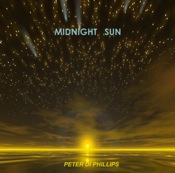
diphil_midnightBetween his last release, Mystic River Reflections, and his new work, Midnight Sun, Peter DiPhillips has placed himself firmly in my sights as an artist to keep an eye and both ears on. The music here ranges from spacey explorations to tribal-touched pulses, with DiPhillips giving himself plenty of time in the five tracks to fully realize his visions. “Tromso” and “Soroya” start the journey with wide, spacey drifts. “Soroya” is the softer of the two, a cloud of ambient pads and soft-edged textures that spends much of its time floating in higher registers, then takes a subtle turn toward the dramatic late in the track. It’s a nicely told story and a superb piece of quiet music. DiPhillips skims along the borders of the darker side with “Mageroya,” opening with electronic gurgles and clattering curls of sound over ominous pads. He plays with a shifting sense, now bringing in beats and a rhythm metered out with a shaker, now cutting you loose in an ambient drift, now corralling wayward sounds in one small space and letting them mix. This is where the tribal sense slides in, with the shakers and slightly warbling drums, and the whole affair takes on a waking dream (one might say hypnagogic) sensibility. And just when you think DiPhillips has packed in enough sound, you’re touched by straightforward guitar notes. It’s a very cool moment. This 17-minute track is, without doubt, the centerpiece of the disc. The last two tracks, “Vadsa” and “White Night,” head back to spacier environs. The fluttering tones in “Vadsa” capture the feel of the cover photo, a glistening celestial display. DiPhillips eases a melody through the pads. There are lovely shifts of tone in here, and pads that rush up to fill the space. Halfway in it takes a slight Berlin-style turn, a sequencer line coming in to call out a subtle shift in energy. “White Night” is another deep drift, 14 minutes of intermingling spacemusic washes and passages of tribal percussion, an ideal pairing of soothing and invigorating sounds. Look at this as the lighter-side counterpart to “Mageroya,” every bit as immersive as that earlier track, and a great ending to an excellent disc. In my opinion, this is DiPhillips at his very best, and it speaks of more good things to come. Start listening to Peter DiPhillips now.

Available at Happy Puppy Records.

Subsonic Winter: Introducing

subsonic_introIt has taken me several listens to get into Subsonic Winter’s first full-length release, Introducing, and while it’s grown on me a bit, it still remains a hit and miss affair for me. It’s not that there’s anything particularly wrong with it, it’s just that nothing seems overwhelmingly right. Perhaps it’s that the disc starts so strong, then waters down a bit somewhere around the middle and loses me at the end. Looking over Harden’s press materials, it appears that the first few tracks are newer works, and these are the better pieces. Two of the other tracks are remixes that, put up against newer material, suffer by comparison. For the most part, Introducing is a comfortably familiar disc–musician Alex Harden cites Jarre, Oldfield, and Enigma as inspirations, and the imprint is certainly there. Harden shoots out of the gates with “The Inner Circle,” immediately bouncing into a vibrant Berlin School groove with a hint of laid-back lounge by way of  good Netherlandic electronica. Harden rides his energy up and down nicely, keeping the flow very catchy. The melodic line, like a lot of the work here, smacks of the 80s–in a good way. (There are places on Introducing where the electronic percussion instead conjures up memories of clunky electro-pop, with everything very rigid, laced with predictably programmed fills. The remix of “The Obsecration of the Inestimable Glass Clouds” is the most egregious example.) “Providence and Virtue” cooks along on a nice percussion line, loaded with the sound of congas and tabla. A smoothly sliding synth gives it voice. “New Haven” is pure, delicious synth-pop, its thumpy bass line and, I have to say, slightly cheesy electronic drums (which I don’t mind here) hitting the nostalgia button before giving way to an absolutely ripping guitar line. It may be synth, it may be guitar. Once it blows the door open, I really don’t care what it is. It just rocks. Harden hits his stride slightly before that with “The Sirens of Io.” This is where he offers up his Engima side, but also comes away reminding me of T-Dream offshoot Picture Palace Music. Soaring vocals work across a big, dramatic backdrop that gallops past, laced with a touch of vocoder. It’s got a lush, cinematic feel and takes the listener right along for the ride.

So there is some very good stuff on Introducing. The rest simply misses for me, but–again–perhaps only by comparison. The tracks where Harden nails it, however, definitely make me interested in hearing more from him. But only if we’re going forward.

Available from the Subsonic Winter web site.


Dark Sunny Land: Emanations for a Returning

dsl_emanationSteve Painter calls his work as Dark Sunny Land “cranky ambient.” Employing effect-laden guitar along with keyboards, rainsticks, household objects and more, he grinds out a set of moody and mildly unsettling constructs on Emanations for a Returning. The disc opens with the four-part title work, 44 minutes of gritty, humming drones layering aggressively to cast a mesmerizing spell while other elements knock and clatter around them. It opens with the jarring clang of a gong, and then Painter begins to wrench sounds from his gear. Part I works through a slow build, elements folding in and thickening the sound as it goes. A bass note marks a slogging sense of rhythm as Painter works toward an industrial tone harshed by long yawns of feedback. Part II takes on a slightly more menacing air, opening with a well-stretched, eerie drone. Here he keeps minimal elements in play, maximizing the tension through modulation. Part III gives off a sense of having something resembling a more traditional structure. There’s less straight-line drone and more of a feeling of interplay between phrases–while maintaining a vaporous and metallic tone. Part IV is ghostly at first, the sound thin and distant. A noise like a host of electronic cicadas chitters in a rise and fall cadence. The deep resonance of temple bowls ring out against rasping chords. From there Painter takes us to the “Toxic Playground,” a sparse and creepy place, a space haunted by dying memories and ringing with a metallic clatter like empty swings banging on rusting metal. Painter’s guitar shimmers and weeps. “Blues for RJ” is an interesting mix of finger-picked acoustic guitar and a waveform drone, with Painter’s random sound collection clattering, thunking, and reverberating in the background. A separate set of bass notes underscores the guitar. What really works here is how the soulful feel of the guitar vies against the cold, mechanical repetition of the drone. There’s a definite loneliness to it, heightened by the play of the familiar versus the off-putting. And, in a very nice touch, Painter ends with a strike on the gong. Your dark meditation has come to an end.

It takes some patience to dig into Painter’s work. His drones tend toward the appropriately static side of things, shifting quite minimally, gaining strength through slow-motion repetition. But there’s a rich depth of sound at play and a very strong emotional thread coursing through it. Mind you, that emotion can border on unpleasant at times, or at least uncomfortable, but it’s worth working through. Emanations for a Returning grew on me over repeat listens, and I look forward to hearing more from Dark Sunny Land.

Available from the Dark Sunny Land web site.

Colin Edwin & Jon Durant: Burnt Belief

edwin_burntBurnt Belief is an energetic and varied prog-based excursion from Porcupine Tree bassist Colin Edwin and guitarist Jon Durant. The eight pieces here mix the complex with the cool, churning them into a thought-provoking, must-listen mass. The hook comes straight away, as  “Altitude” describes the sighing, ambient sound of Durant’s signature “cloud guitar,” the thick, round tones of Edwin’s bass, and the way in which they’re going to get along just fine. Durant begins, assisted by small tangles of electronic burble that will manifest itself into a light sequencer beat. Edwin’s bass steps in one patient note at a time before getting comfy and deciding it’s okay to ramp things up. Durant’s guitar takes the cue later in the track with the first of many blistering solos. Here is also where you’ll catch wind of the Middle Eastern tinge that glides through much of the music. It’s a musical masala made up of Durant’s elegantly carved guitar lines, touches of snappy tabla, dumbek and more on some tracks from Jerry Leake, and the serpentine potency of Edwin’s bass. I’m a huge bass fan, so this disc offers me a lot of love. “Impossible Senses,” for example, where Edwin’s rich lines slick their way over sharp raps on the tabla from Leake, laying down a bed for Durant to shred across. Just to note: While Durant’s delay-based cloud guitar style is his signature, let’s just lay it out here that the boy can absolutely rip it up in a blaze of  pure rock  attitude, and does so often, much to the listener’s delight. In fact, you get the best of both of Durant’s worlds in the dark, slow-at-first track “The Weight of Gravity.” In the early parts of the piece, the cloud guitar trades phrases with the bass. Midway, Durant flicks the switch and unleashes a snarling, rapid-fire array. I like the mix here, keeping the sharper edged guitar tucked just under the gurgling bass. It’s a great, well-thought-out balance. But getting back to that Middle Eastern taste: the flavor is also strong in “Uncoiled,”  with a cool pace and stretched notes that remind me of Shadowfax’s “New Electric India,” and the sultry “Semazen.” Geoff Leigh, formerly of avant-rock legends Henry Cow and Edwin’s bandmate in the Ex-Wise Heads, sits in on “Balthasar’s Key.” It opens on growling, king-sized chords roughened up with distortion, and then in comes Leigh to counterpoint it with the high, fluttering flute. Leake again lays down the cadence. Durant not only flails away on the axe here, but also anchors the rhythm section with smooth electric piano tones. This is just a big, meaty jam that requires you to turn it up. Edwin and Durant bring the ride to a close with the quiet song, “Arcing Towards Morning.” Durant takes up his acoustic guitar here, along with piano, and the duo lay out a sort of late-Windham Hill feel. It’s small and intimate by comparison to the rest of the disc, a perfect choice on which to end.

I have quite gladly spent a lot of time listening to Burnt Belief. It’s packed with musical adrenaline and wears it rock ‘n’ roll heritage proudly, yet it certainly doesn’t shy from its own intelligence. Crank it up and let it roar, or settle in to listen closely to the collective years of art-rock understanding at work. Either way, it’s a pure pleasure.

Available at Alchemy Records.

Frore: Undercurrent

Frore_UnderFrore (aka Paul Casper) heads into dreamily miasmal electro-shamanic spaces on his newest outing, Undercurrent. Employing  rattles, stones, digeridoo, shakuhachi, fujara, Tibetan bowls, field recordings and more to layer over long-form drones, Casper creates an hour-long journey reminiscent of Steve Roach’s more shadowy excursions. This is a darkly meditative disc, a spot-on bit of tribal ambient that oozes with primal memory and takes the listener well down into themselves courtesy of  big, horizon-spanning pads and soul-awakening percussion. It’s easy to get lost in, and to do so quickly. Undercurrent begins  with “Journey Internal,” rising out of a quiet, cave-like atmosphere.  The percussion kicks in to drive up the energy and fill the space. The sound thickens and deepens; the flute calls out like a bird from this tangled jungle of sound. It’s an energetic way of setting the stage, and gives us a peek at the elements ahead–the drums, the rich field recordings, the deep greys that form the tone overall, the shambling pace. Casper carries us deeper in “The Dreaming Ground,” guided by the resonating thump of a frame drum. (I won’t keep dropping Roach references, but this puts me very much in mind of InnerZone, a personal favorite.) The middle of this track is about where I surrender to Casper’s constructs and just cut loose into the flow. The small sounds at the periphery, the gurgle of the didgeridoo and the dry clatter of shakers, add a lot of subtle dimension. “Trial By Fire” is pushed along on some of the strongest percussion here, pounding a beat over soft, eddying flows. This one has a nice sense of ritual to it. For pure immersion, drop into the 18-minute centerpiece, “Emerge from Shadow.” A churning rhythm charts the course over softly wailing pads. The steadiness of the beat is hypnotic, and the flow is warm, wrapping around you like smoke. Casper manages a nice shift mid-track, easing out the rhythm and giving the space over to these silken sounds. It truly lets you focus on them, and just dwell in the wide space Casper has carved out. The beats are slowly and briefly folded back in, but you’re left to drift for the last couple of minutes. This fades to the closer, “Place of Shelter,” which is pure ambient. Casper lays out his wide-sky pads, anchored with a rich and earthy low end and lets the work coast to a soft and soul-cleansing finish. There’s a definite sense of the journey gliding to completion.

Undercurrent falls squarely in my personal wheelhouse. This is exactly the stuff I love–strong tribal overtones that shake loose our primal memories, textbook drone and ambient pad work backed with superb percussion, and a true sense of journey. That’s one of the strongest aspects of Undercurrent; you move along with it, pass through its shifting spaces, rise and fall with it, and emerge feeling the effects. It transports and  transforms the listener, and absolutely demands repeat play. One of the best tribal-ambient works I’ve heard in a while.

Available from Dark Duck.