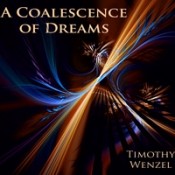
Timothy Wenzel: A Coalescence of Dreams

wenzel_dreamsCarrying the momentum of his well-received debut album, Mountains Take Wing, Timothy Wenzel returns with a fresh set of  New Age pieces on A Coalescence of Dreams. While Wenzel’s songs course across fairly broad New Age territory, he plays with the lilt of Celtic music throughout the disc, notably in the pleasant flute melodies in “Follow the River” and “Miles from Nowhere.” The title track is an engaging blend of choral pads and Wenzel’s lyrical piano. This one takes on extra dimension when dulcimer-like tones enter as accompaniment. The long voice of rich string sounds finish the blend.  Folksy acoustic guitar opens “The Road to Hana,” quickly joined by strings and piano. The cantering pace is catchy. It’s a traveling tune that sets the foot tapping but also takes a nice emotive turn–there’s something very personal at work here. For me, however, the go-track on this disc is the brilliant “Mountain Rain.” Opening with acoustic guitar, piano, and string pads, it moves gracefully along, fluid and calm. Then a shift–everything drops out except for hushed choral pads, underscored with a low string sound. It creates a stunning, spiritual moment that gains its strength from its simplicity. That passes, and the guitar and piano resume, joined by flute. This is a wonderful piece that really showcases Wenzel’s multi-instrumental talents. He’s not alone here, however; Michael Rud offers up some soaring edge-of-rock guitar licks in the late half of “Ice Wind,” and Lenny Lavash contributes drums to that track, along with snappy hand percussion on the closer, “We Walk Together.” This track was created in the throes of emotion stemming from Wenzel’s learning of his brother’s incurable cancer. On his site, Wenzel writes, “At around 2 AM I could not stand any more so I went to my keyboard and poured out my soul, every last drop of it. The keyboard was literally wet with tears by the time I finished. Exhausted, I could do no more. I could not even listen to the song again without crying.” It’s a fantastic piece, built on piano and sliding in and out of complexity in its arrangement. It has distinct phases, and is a truly affecting piece of music.

A Coalescence of Dreams is a straightforward New Age disc, beautifully played and designed for downtime listening. It may be too light a take for some, but on the whole it’s easy to enjoy and lovely at low volumes–but do yourself the favor of giving Wenzel’s work a close listen, too. This is a talented composer with a lot to say. New Age fans will want to keep an ear on Timothy Wenzel.

Available at Timothy Wenzel’s web site.
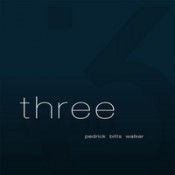
Pedrick Bitts Walker: Three

pedrick_threeWhile I am not a jazz reviewer, nor do I intend to become one, I am a long-time jazz fan and one-time jazz radio show host, so I can be kind of a sucker for jazz-based discs that arrive in the Hypnagogue mailbox. Luckily for guitarist David Pedrick, of Pedrick Bitts Walker, my personal favorite jazz arrangement is the trio–frontman, bass, and drums. Normally I like my trios headed by piano; I could listen to Bud Powell or Ahmad Jamal all day. So here comes Pedrick Bitts Walker’s Three, with guitar, bass, and drums, all improvising, live and unrehearsed and bound only by a “unifying concept…of designated meters, tempos and sonorities based upon the number three,” and soon enough I’m kicking back and digging into a nice set of exchanges and interchanges between three solid musicians. Pedrick, bassist Mike Bitts, and drummer Aaron Walker all share the front. Bitts’ work takes on a very lyrical feel in “Two” (the tracks are just their order number), playfully running alongside Pedrick’s picking and taking the lead late in the track. Throughout the disc he’s right there supporting Pedrick’s moves, laying out super-fluid lines and keeping the rhythm section locked down. Walker slides up front on “Four,” pounding away as Pedrick and Bitts keep pace with the click and check of muted strings, and is the skin-slamming superstar of  “Eight,” conjuring six minutes of serious thunder to an unchanging rasp from the strings. (It’s quite a way to end the disc!) Pedrick, however, is the “singer” of the trio, and his rich hollow-body noodlings are top shelf jazz. I like the Latin flair he brings to the title track, peppered with speedy runs up and down the neck. His phrasing is tight, and he knows when to dial it back and support. He plays with pleasing restraint; there’s no fear of wild avant-garde grandstanding here, just the pure shine of the notes. Although it must be said that he cuts loose a little on “Six”–but he could just be following Bitts’ cue as the bass has apparently gotten a dose of sugar, too, especially late in the track.

One thing that shines brightly on Three is the sense of sitting in some intimate club where you’re just feet from the stage, watching as these guys play and challenge one another and pull fresh directions out of the moment. The sound is clean and vibrant and the work doesn’t get bogged in the cacophony that can plague improv. Sit back and enjoy three musicians at play on Three.

Available from David Pedrick’s web site.

Caul: The Long Dust

caul_longdustBroad and dusky ambient vistas meet shuffling, shoe-gazey post-rock beats on Caul’s new release, The Long Dust. Caul (aka Brett Smith) brings a cinematic sense to his tracks, everything moving with a thoughtful slowness, the long, considered pace of deeply mulling something over. It’s like watching a series of long tracking shots, the camera panning and pulling back to reveal a lone figure. It’s moody and a little brooding, a mindset that’s strongly presented from start to finish, but which never bogs by getting maudlin. That’s due in large part to the beats and the guitar, the way they ground the ambient side. The slump-shouldered drum beats and the lazy twang of the strings serve to amplify the emotional effect of the edge-of-giving-up synth pads. The post-rock framework makes it accessible, and infuses it with a recognizable energy. The ambient side is a thing all its own. Tending toward the low end of the scale, earthy notes grumble and sigh as they spread out to form a somewhat bleak landscape. In the moments where it exists on its own, the ambient aspect is deep and potent, with its own definite beauty. The mix, therefore, ramps it up. “Relic” nails it early on with garage-band drums and a spaghetti-Western guitar. The synth pads moan in the background as Smith casually turns up the catchiness. The last 30 seconds are given over, to great effect, to the synths. This moves us into my favorite track, “Anointing.” The drums clatter, a bit on the ungainly side, over crying pads and chords. It’s a bit stark, bordering on minimal for two minutes, and then–oh, my, how it explodes in a sudden burst of power-chord joy. “Veil of Sand” also works upward from a sparse start, the loneliness of the guitar and drum combo offset by an almost hopeful-sounding blend of high pads and chorals. Even so, it retains a solitary feel. “The Road” has a roll-the-credits solemnity to it. Watch the main character walk off, only partially defeated, into a heat-shimmer sunset, accompanied by a resonating acoustic guitar. Smith builds in more elements to heighten the feel. Once again the backbeat makes it catchy even as it keeps its head-down, alone-again tone. A keening voice sings the last few notes alone.

I’ve seen this disc described as dark ambient. It’s not. It’s heavy, certainly, but it’s a stones-in-your-pockets emotional heaviness. It’s painted not in cloying blacks but in chromatic greys. It dares to show a little hope here and there. What it is, is human. This is a very human disc. It is vulnerable and sad and alone, but it’s finding its inner strength and going on ahead anyway. It has a story to share, and it’s told very well. The Long Dust will ping your emotional core and find something in there to make you a little sad, a little pensive. That’s how and why it works so very well. Another superb offering from Caul.

Available from Malignant Records.

Markus Mehr: Off

mehr_offYears ago, I had a college professor who described the effect of words in poetry as taking one palmful of rose petals, which have their own scent, and one palmful of some other flower petals, rubbing them together and then opening your hands again to discover the new scent that been made. I thought of this while listening to Off, the third piece of a triptych from experimental composer Markus Mehr, because the equation is somewhat the same. In one hand, Mehr holds simple and lovely piano melodies and string phrases; in the other, loudly hissing walls of sharply stippled white noise and random spatters of electronic chatter. These two elements are ground together, rubbed vigorously, and set free to fly in a new, engaging, and quite stunning new form that at once challenges the listener while celebrating a clearly well-considered balance. Off is a single 42-minute piece of constantly shifting character. The sounds clash and clatter, the air clears for a moment to allow the piano to speak, the wall of sound re-erupts and thickens, a sacred chorus chants its way through some storm-wracked hymnal, tense harshness vies with moments of clearing-skies beauty to return your breath back to you, and the whole time you are fully and hopelessly engaged. The contrast that’s hitting you squarely in the face, this overt pairing of clarity and corruption, of coarseness and calm, is hypnotic. Beyond the piano I wouldn’t even venture to guess what or how much of what Mehr has brought in to form his sounds. There is the electronic, there is the acoustic, there is the howling. And it all co-exists in this maelstrom of intent. Clearly, many of the sources at work are repurposed from Off‘s predecessors, In and On (read those reviews here), each of which were their own experiments. Off, then, represents in part the alchemy of all the disparate elements in one place. Where In was quiet and built to noise, and On started out roughly and pared back to calm, Off insistently puts them together from the start, then modulates the relationship along a constantly sliding scale.

Listening to Off is a challenge, but it’s an incredibly rewarding one. The balance is tricky, because the opposite ends of this equation are the far ends, but Mehr makes its work perfectly. You are pummeled with the unyielding intrusion of blatantly non-musical noise, and you are salved with the reassuring solidity of the piano, and somehow it makes sense. Yes, it requires an open approach to music. If you like it pat and simple, this won’t work for you. And maybe it’s not supposed to. The triptych as a whole has been slim on easy access points, but that’s also a hallmark of Mehr’s work–he’s not easy to listen to. He is, however, well worth the effort, and Off is perhaps Mehr at his most stunning.

Available from Hidden Shoal.

Chronotope Project: Solar Winds

chrono_solarJeffrey Ericson Allen, recording as Chronotope Project, takes listeners on a classic spacemusic voyage on Solar Winds. From the very beginning, this disc resonates with familiarity as it charts its own course to the stars. In five tracks, Allen creates a comfortable trip built on space-between-stars drifts, occasionally using uptempo sequencers to bring us up to cruising speed. The opening title track welcomes you with big, rich pads crossing slowly past one another to establish the spacey theme. A fantastic transition late in the track ushers in a shift that hits in the form of a percussive sequencer groove–it’s brief, but effective. From there the tone shifts back to the quiet side with “Raga of the Earth.” Here, a woodwind tone wafts introspectively over a bass-loaded drone and the unobtrusive exhalations of sighing-wind pads. A pleasantly meditative piece with a slight Eastern touch. This one works its way into you, body and soul–you may not be aware how much you’re relaxing to it until it ends.  “Sirens” livens things up, packed with star-twinkle glockenspiel chimes over rolling waves and vocal pads. A touch of harp finds its way into the mix. Allen captures a sort of feminine grace with this track, along with a very solid 80’s spacemusic vibe. It feels like a track you’ve heard before–and don’t at all mind hearing again. “Redshift” opens with more spacey pads before a beat works itself in by way of an insistent tone, something between the ring of a dulcimer and the sharp snap of a tabla. Allen uses it to ramp up the pace to the disc’s most energetic, building a rush of vibraphone-like notes with a Phillip Glass pacing. Even at that it’s still a pretty laid-back, toe-tapping kind of thing, a starfaring joyride that deposits us into the very hushed environs of “Clear Bells Ringing in Empty Sky.” The title tells you what you need to know. Gentle wind chimes sing their complex song over choral pads as Solar Winds winds to a calm close.

Solar Winds doesn’t go out of its way to do anything novel with the spacemusic framework, but the easy familiarity and the superb execution of the style make it very listenable. There is a wonderful softness to it, offset in places with the rigid maths of the sequencer. The balance is excellent. It’s quite loop-worthy, either as a pleasant backdrop or, as I’ve been doing, as a close-up headphone listen. Solar Winds is a very enjoyable journey.

Available from the Chronotope Project web site.

Warszawa: Kinetica

warsz_kineticaI worry sometimes that I don’t put enough personal emphasis on the headier philosophical aspects of the music I listen to. According to the PR blurb on the Carbon 12 Records site, “Warszawa explores alternative views of cultural and technical periods in art and sciences. […] Kinetica is a soundtrack to the exploits of the East in respect to technological advancements.” And here I was, just sort of grooving to it. In this 36-minute aural snack, Warszawa launches rapid-fire, dance-music beats and glitchy textures wrapped in a lightly old-school feel. There’s a nice angular edge to the music that calls earlier EM to mind. (The label also says there’s an electronic body music [EBM] influence at play. You’ll catch that at its strongest in the “Gulag Lockdown Mix” of “Interkosmos.” It’s a big, aggressive, pulsing nod to the 90s.) There are basically four tracks and two remixes here, all thoroughly shot through with hooks and nicely crafted. From the playful tones and thumping bass drum of “Dscnt” to the spacemusic-turned-spacegroove of “Wostock,” Kinetica is an infectious, if brief, ride. Save the philosophy for after you’ve enjoyed Kinetica a few times. First, just turn up the volume.

Available from Carbon 12 Records.

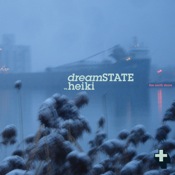
dreamSTATE vs. Heiki: The North Shore

WebYou have to love it when a semi-plan comes together. As part of preparations for the kickoff of dreamSTATE’s Drone Cycle 2012 shows, the Toronto-based duo and sound artist Heiki Silaste droned their way through a couple improvised sets “in deep-winter mode.” Listening to the prep sessions later, Silaste declared that he wanted to mix part of it (along with Kris Helstrom), while  Scott M2 of dreamSTATE took on the other rehearsal sessions as well as the Drone Cycle concert itself. What you the listener get out of all this is the cold, deep, and enveloping drone-space environs of The North Shore. The centerpiece of the disc is the 40-minute “Ice Flow,” a shifting epic of drone curving its way in and out of shadow, including short stretches of upward-arcing pads that wind their way out of some quite-deep sonic caverns. There is, to mix phrases somewhat, a great patient dynamic at work. Moments are created out of raw material that change the timbre of the voyage without losing its constant edge. Stretches of time melt away as these artists cull fresh sounds out of their gear and ease the thing along. Subtle beats, whining curls of electronic spatter, and whisper-hiss breezes form the atmosphere. “Ice Flow” alone is reason enough to get this disc. The other three tracks each have their own distinct character while dovetailing perfectly into the overall feel. “Snow Drifting” begins with big, comparatively soft ambient pads, edging toward a less comfortable space as the piece nears its end. “Expedition” picks up that darkening feel; a low-end drone stretches time across a sparse landscape of sound. Choral pads and rising wind fill in the details. The closing track, “Winter Light,” rises up out of “Ice Flow” with a growl, then eases off its rough texture to reveal, in title-appropriate fashion, a slightly brighter and calmer character. There’s a nice balance of warm and cold here, the latter brought in with that persistent low-range drone, the former in the high tones.

This is a great batch of minimalist, immersive drone, and you’re going to get lost in it. It’s a fantastic headphone listen, giving the subtler details more substance. The mix of mesmerizing drone and underpinnings of uncertainty and shadow works very well. You can relax with this disc, but you’re always aware of the edges. The way each piece evolves carries the feel of the organic movement of an improvised piece, with no mis-steps to impede the flow. Let this one loop for hours.

Available from Paper + Sound.

Michele Ippolito: Drifting in Dreams

ippol_dreamsWhat an appropriate title. The hour it takes to glide through Michele Ippolito’s third release, Drifting in Dreams, goes by with you embraced in a warm haze of equal parts New Age and spacemusic with a lovely hint of classical. Ippolito layers in soft synth washes, harp, flute, and more to load her songs with strong emotional content and breath-slowing calm. If anything, Ippolito’s music exists closer to the spacemusic side, but with a bit of restraint. Her scenes are more intimate and immediate; she’s not guiding us to the farthest reaches, but inviting us to turn inward. Yet the work has that deep dreaminess, that sense of the voyage. Her style has the potency of a Constance Demby, but without relying on the celestial trappings. “Ship Ahoy” takes us as far as any starfaring synth track, and carries a waft of aching melancholy that cuts through the misty wall of sound around it. It’s a very touching piece. “Reaching for the Stars” starts off feeling a little sweet, but soon melts into another reflective set of washes. Keyboard notes twinkle in the background. There’s a lot to like here. “Mystical Forest” takes a repeating phrase on keyboard and intertwines it through long pads and breathy flute tones. Ippolito makes excellent use of subdued percussion on “Midnight Moonlight Trance,” building in a bit of mystery and tension, along with just a touch of the tribal. The beat nicely breaks up the long flows on either side of it. “Across Still Waters” is another flute-led piece that courses along on warm synth pads. This is one that’s quite easy to get lost in as Ippolito whispers her story in your ears. There are a few points on the disc that get almost too standard-meme New Age-y for my tastes, but Ippolito never veers too far toward the sugary side of the equation. The depth of emotion and the slow, sure pace keep things strong. The work is solid throughout.

Drifting in Dreams is very much an end-of-day, low-volume kind of disc. There’s no way to deny its simple, subliminal call for you to relax. It has a definite grace and allure, and it stands up nicely to a close listen. A strong release for New Age fans that will also appeal to anyone who just enjoys good, quiet music aimed at helping you unwind.

Available from CD Baby.


Leaving Richmond: The Bird and The Submarine

leaving_birdI’ll say it up front: this album is fun. Leaving Richmond’s The Bird and The Submarine is poppy, upbeat, unabashedly bright and shiny, and just plain fun to listen to. Yes, this disc sits at the furthest edge of the big field of what Hypnagogue Reviews normally covers–it’s like a pop-punk band peeked over the fence and said, “Hey, we got rid of our lyrics…can we come over?” Everything else is post-rock intact and it’s nice to have them here. Jordan Pier and Adam Sanborne form the duo and crank out seven feel good cuts that are ready for primetime (their work has appeared on Cartoon Network’s Adult Swim). “New Machinery” comes across like Ennio Morricone Goes Surfing, twangy cowboy guitars catching a West Coast groove. “I’ll Find Meaning, Just Not Today” is my favorite track here, a big dose of pure indie joy, a shot of musical adrenalin. (And it’s..here it comes again…FUN.) I love the slammed-out chords at the bridge. This is like riding with the top down all summer. “The Aftermath Never Adds Up” opens with a folksy acoustic feel, ramps up with gritty, sliding chords to something bordering on anthemic, drops back out–then comes back at it again even stronger. The seven songs here breeze by in less than half an hour. It’s an appetizer at best, but it’s frigging tasty as hell and it should leave you wanting more. It’s got the familiarity of modern rock, the infectious energy of good pop, and all the hooks it needs to reel you in. Keep an ear open for Leaving Richmond.

Available from the Leaving Richmond Tumblr site.

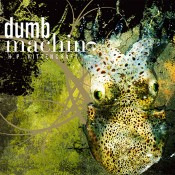
Dumb Machine: H.P. Kittencraft

4PAN1TFor the record: If you’re going to come at me with an album with titles like “Fuck” and “Fucked Up Shit,” make damn sure you’re armed with something more to show me than your unresolved anger issues, Trent Reznor worship, and a need to appear “edgy.” Luckily, Laird Sheldahl, recording as Dumb Machine, just manages to shoulder his way past my song-title-based preconceptions with the industrial crush of H.P. Kittencraft. There’s anger aplenty to be had, turned into churning and relentless edge-of-noise soundwalls, along with IDM-like soundbites ground into the flow. And although you do get a distinct whiff of NiN (Sheldahl’s label, Carbon 12, also throws out a Swans mention, and I can see that), you also get hook-packed, dark dance grooves and a massive hammerfall of sound. (Please be advised that physical damage may result from getting in the way of the 12-ton guitar chords punching their way through “Fuck,” and that the listener may suffer whiplash as a result of uncontrollable headbanging.) H.P. Kittencraft is only 45 minutes long, but Sheldahl loads it tightly and doesn’t give the listener much relief until he’s done. This is energetic, vicious, and potent industrial. You have to like it hard to like what’s here, or at least be willing to take a punch. Brace yourself. It’s worth it.

Available from Carbon 12 Records.