 Here’s how it works: five ambient/electronic artists turn over sound sources, all of which must be between nine and twenty-seven seconds long–no more, no less–to a sixth who hangs onto them for up to two years. When he returns them, they’ve been run through a sonic alchemical process, added to, subtracted from, twisted, turned and transmogrified. The result, when the sixth artist is the well-respected sound manipulator Disturbed Earth, is the engaging and often challenging Sister Cities. Mike Radice, Nathan Youngblood, Shane Morris, Magnetic Wind, and Winter Umbrellas (actually a trio–Disturbed Earth, pixyblink, and Russian ambient artist Enseuno) provided the sound-seedlings at Disturbed Earth’s request. Unlike a standard collaboration, there was no back and forth, says Disturbed Earth (aka Dean Richards). There was provision, trust, and metamorphosis. These are long tracks, including a half-hour “jam” that comprises everyone’s contributions, and Richards neatly works his way through several scene changes in each. “Sudan,” with Radice, opens with hints of an appropriately Middle Eastern flair–the high snap of a percussion line tapped out on tabla or clay pot accompanies wisps of flute and smoky sound washes. Later in the track the flute takes prominence and the sharp ding of a chime adds a ritual touch. The track with Nathan Youngblood’s samples rushes in on a fast bass pulse and a hard-struck beat. Richards takes Youngblood’s sitar atmospheres and layers the background with them to smooth out the electrified bounce of the rhythm. Swelling drones crawl across the mix and the whole thing takes on a tight tribal feel. Toward the end Richards reduces it down to the rhythm and a low-end hum. The end snaps off and makes a cool connection into “Swing,” the piece featuring Shane Morris. Here the sound builds off a jazzy sample of a simple vibraphone melody, again backed up with that tabla-esque percussion. After a few minutes the beat falls away and the vibe tones play quietly, turning hypnotically calming. Halfway through, Richards twists the feel, adding a rough edge and cranking the drumming back up to speed. This is one of the more abrupt changes, a sudden wake-up call. “Significance,” working off samples provided by Magnetic Wind, is the second-longest track here, and probably the most abstract. It rarely raises its voice, easing in on a strummed-string warble and in-the-distance vocal pads. As the track progresses, it finds its way into fresh impressionistic places, often with the subtlety of a door being thrown open. It can be superbly disconcerting. Richards hits an experimental stride in the middle of this, with clattering percussive elements, snippets of drawn breath, and sundry sounds waging for headspace. The Winter Umbrellas track, “Slipping Silently,” kicks in with a bit of a space-tribal feel with big ambient pads over hand drums. This is the least-changing of the offerings here, just a steady and mesmerizing flow, and when it does change, it simply shifts, without much fuss, into a relaxed and airy blend of floating ambient tones. The “jam” track is a lose-yourself drift fully loaded with shadowy tones and morphing textures. This one requires a solid deep listen to take it all in.
I don’t often do track-by-track reviews, but whereas Sister Cities is dependent on the talent of several artists, and because each piece feels truly individual, it’s pretty much required.
Sister Cities may also have one of the more off-kilter points of inspiration you’re likely to run across. Richards says he took his cue from Mr. Squiggle, a famous Australian kids’ show. On the show, a puppet with a pencil for a nose would be given a piece of paper that had just a few rudimentary shapes on it–a circle, a line or two. Then, by adding this and that, and often by turning the paper upside down, a new drawing would slowly emerge. So here we have Richards as an ambient Mr. Squiggle, and those initial lines and circles are the samples he was given. His intent, he says, was to then turn them upside down, come at them from another perspective, and see what would come of it.
Some folks might be put off by the odd range of approaches represented here. While Sister Cities has something of a flow to it, the switches can feel sudden. Taken as solitary tracks, however, each piece here shines with its own light. It’s challenging, but it’s intriguing, and it shows what an artisan like Richards can do given material and time.
Available at Band Camp.

 Pandora, from Igneous Flame and Ensueno, is a different kind of collaboration. Ensueno, a Russian ambient artist, created a series of tracks which he then handed over, digitally speaking, to Igneous Flame (aka Pete Kelly). Kelly took a select set of the sounds and then “added certain sound elements, manipulations and (spatial) processing in particular,” and “re-composed extensively.” The outcome is a lush common ground filled with huge, warm synth pads and misty, deep-dream atmospheres. Each of the pieces here moves through certain changes, most in the form of a rising low end, just on the benign side of marginally menacing, that nudges its way through the flow before being swallowed into it, so there is some textural change in what’s otherwise a breath-slowing mass of classic ambient. Kelly’s always been good for that, though; his cloudy sound-shapes offer up touching chord changes for a distinct emotional content. It’s easy to get fully lost in these eight tracks only to become aware, somewhere mid-stream, that you are responding to it viscerally. The music here can be quite moving in those places where it rises in your awareness–but Kelly and Ensueno seem intent on keeping you deeply immersed and offering no reason for you to come out until they’re done. After four tracks of this, though, the duo make the excellent decision, on “Lightstorm,” to break the drift with some rich percussion. It’s brief but effective, an unexpected shot of adrenalin before they let you drift back into the enveloping flow.
 No, Paragaté, you’re not going to fool me with that piano-recital-perfect opening track on Spaceflight Pharmacology. True, “Friendship” is a simple-enough clean piano solo piece, but we’ve been down this road before, you and I, and I know it’s going to get…tricky. Aha! What’s this I see on your web site? “Friendship” is a shape-note hymn from 1789, and after Tom DePlonty gets done playing it so very nicely at the outset, he and Tim Risher are going to take its structure and mess around with it in other tracks. I see. That would explain your going from a hymn to the punchy glitch of “Jupiter,” which is about as close to club music as I’ve heard you get. That one thumps right along, punched in places with an industrial squeal. I’d like to say I was surprised, but this is what you do, Paragaté. You take a theme and run with it, all over the place. I mean, what about that title track? Well, I’m not sure where the hymn’s hiding in there as you jump from the groovin’ bassline funk and dramatic string bursts of some lost 70s cop movie into a tangled frenzy of free jazz/prog keyboard madness, but hey, I’m along for the ride because it’s just glazed with cool. Weird cool, yeah, but still… Then there’s “Rust Petals,” which feels like a drum-driven worldbeat piece that you lace with glistening runs on electric piano and spike with jazz flute. Your drumbeats here are thick and powerful, the other sounds wafting from hazy dreams to mutant animal calls echoing through some semi-psychedelic jungle. Later, you decide it’s time to get all ambient-ish, so you lay down quiet drifts and pads on “Sway.” But to get to the end, we have to pass through the kinetic bop of “Aliquis Latet Error.” I like the way you rebound these sharp, hard-struck piano notes around in my head and send fragments of the overall melody skittering in search of each other. We’re rolling back toward that glitchy thing you had going on earlier, aren’t we? And the piano? Well, that’s getting us ready for the end, isn’t it, where you hit us with Risher’s reverent reverse-echo take on “Friendship.” You clever son of a gun, Paragaté. And here’s the thing–I was with you for every switch-up, every new equation, each permutation, because there’s a lot to listen to, a lot to take in, as always. See, this is what you do to me, Paragaté, every time. You change and you change and I sit here and say, okay. Show me. And you do, Paragaté. And it’s something new and interesting each time.
 I’ve followed Mingo’s musical path ever since he hooked me with The Once and Future World, but if you’d had me sit down to listen to his new release, Kailasa, without telling me who it was, I would never have guessed. Whereas his past outings have dwelled in places that were a bit dark, spacey and amorphous, Kailasa is a bold departure that finds him very much in New Age/world-music territory–and it’s pretty clear he likes it there. Flute, guitar and hand percussion, along with samples of ethnic instruments offering sounds from kalimba to koto, add an organic touch to Mingo’s backdrop synth flows. There’s energy here–the catchy beat of the title track, pounded out with a hollow-log sound backed with frame drum, counters a melody on floating synth flute (I had to ask). And when echoing acoustic guitar flies into the mix, it adds not just sound but potency. The steady drone in the backdrop provides an anchor point. “Aarushi” reworks a similar equation with keys that pack a Ray Lynch tone, matched with tabla-like percussion and a blend of arcing pads and, again, a straight line of bass drone underscoring it all. This is not to say Mingo has left his spacier side behind. “Aamanaska” is a graceful and breath-slowing mix of washes and light atmospheric touches. “Sapta” opens with a melody played with charming hesitancy on what sounds like a muted kalimba, and accompanies it with a melody made of full, bold chords and keys that mimic the almost-uncertainly played tone of the kalimba. The plodding pace–which works–is very much a Mingo hallmark. The closing track, “Saanti” reminds me in places of “Hollow Ascension” from The Once…, which was the track that cemented my appreciation of Mingo’s music. This is a guitar piece with a beautifully lonely feel, accented by small sounds like the distant call of a bird. (To be honest, I can’t figure it out.) A simple pulse on drum and shakers rides under the sound, and long synth pads sing a bit sadly as the track winds down.
 Inspiration can come from a wide variety of sources. It’s a very personal thing. For Crystal Dreams, aka Joel Sutton, the inspiration for his release, Sedation, came from a deeply intimate point, one which he felt compelled to share–his struggle with mental health. “A musical journey inspired by the periods of my life when I have needed to use medication…” he states in his liner notes. Sutton’s musical therapy here consists of three tracks–an 11-minute warm-up that rings with the feel of classic mid-80s EM, a less-than-a-minute impressionistic piece, and his centerpiece, the 45-minute “At Peace,” which is truly–and perhaps obviously–the draw of the disc. The opener, “Pain,” employs the time-tested equation of using a light-but-solid sequencer line and classic synth washes to lay a foundation for Sutton’s melodies. The piece as a whole carries a gentle feel, and the clean tone and simple structure awaken memories of my earliest encounters with electronic music way back when. Direct associations play out in my head but I find myself unable to put names to them. (Emerald Web? Maybe…) Instead, I just put it in neutral and enjoy this very pleasant ride. “At Peace” takes a more minimalist approach, making do with a very soothing blend of long washes and a slowly parceled out, repeating chord structure that rises and falls. Sutton lays ample amounts of quiet detail into the flow, never loading it to the point of distraction but providing plenty for you to take in, and manages the piece’s internal movement in epochal time. The up-down chord movement stays front-of-mind as everything else works like a slow-drip soporific lulling your mind into a state of pure and welcome calm. I loop just this piece and let time go away.
 Ambient musician Mario Grönnert releases his first full-length work, From Land to Light, and in doing so comes across as a thought-provoking artist who actively strives to avoid simple characterization. The disc mixes a couple of cold, unwelcoming atmospheres into what’s otherwise a very delicate and graceful set of New Age-leaning vignettes. You’re brought into Grönnert’s vision with the chill winds of “Inland,” five minutes of moaning drones, quietly ghoulish sighs, and a heartbeat-like pulse. It’s effectively off-putting, and, had you not read this review first, would certainly make you think you’d found a new dark ambient artist. But then comes its follow-up, “The Plateau,” which is something of an Eno-esque piece with tinkling keys and wafting ambient pads. “Fading Shoreline” is another minimalist piece built on the sound of a hissing wind and tap-tap percussion, and then we’re into the gentle electric piano composition, “Long Term Transmission.” This is a soft-edged piece where string sounds draw curved supporting lines around the melody, which simply takes its time in making its point. At this point, Grönnert seems to decide to stick mostly with the approachable stuff, and it’s a pleasure. “Another Blue Day” is a beautiful ballad with a slightly sad feel. I like the way the last couple of notes strive hopefully upward and then just–stop. “Message from a Dream” has a Mark Isham feel in the mix of emotional melody and quieted back-up in strings and bass. And the closer, “Mirrors Shine,” rings with its own slowly described poetry, echoing electric piano notes marking the path of a marginally melancholy tale.
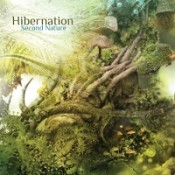 I will tell you honestly that I lost track of the number of times a track would pop up on my shuffling iPod and give me an “ooh yeah” reaction with some smooth groove or drop or just a cool liquid flow and I’d check to see who it was and which disc and yet again, it was Hibernation’s Second Nature. So imagine what happened when I finally sat down and totally dove into it. Yeah, I’m on a little bit of a sonic contact high right now, my head delightfully overdosed on chill. UK-based composer/producer Seb Taylor launches this set of downtempo pieces to skip along from the the familiar keyboard sounds of the classic “chillout room” music of the 90s through glitch and on into jazz-laced IDM. These tasty five- and six-minute snaps come, speak their peace, and leave it to the next one. The lazy rhythm, near-dubsteppy bass and sexy glissandos of “Plastics,” lightly glazed with vocal samples from Natasha Chamberlain, readily make way for the chopped-and-diced keyboard drop-ins and snappy jazz drumming of “Unknown Elements,” which is every bit as pleasingly jagged as its counterpart was silky. The warble and wobble of “Knowledge and Spirit,” with its jazz-combo rhythm section that sometimes lets fly with dub-style echoing rimshots, Return to Forever flute and lowdown dirty trumpet from Vicky Flint, not to mention more super-chewy, undulating bass, drops you off in the glitch-and-flow of “Dreamstep.” Here you get a nice mix of a slow-played chord melody set alongside high-speed glitch riffs. Fast and slow share space in pure electro-harmony. “Lysenko’s Plan” is an ideal mating of lounge tempo, dub bass lines, and a floating New Age essence captured on flute. Listening to Second Nature is like having one perfect cocktail handed to you, and just as you’re coming to the end of savoring one, you’re handed yet another, different, and still perfect cocktail. Don’t worry–you can sip these sonic concoctions all night and be left with nothing but a sense of cool, happy euphoria. This disc is about as loop-worthy as they come. The “ooh yeahs” are on me, and Seb Taylor is setting us up all night long.
 Hypnagogue Music Reviews