
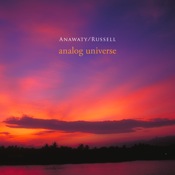
 On Analog Universe, their second of three planned collaborations, Cass Anawaty and Paul Russell slide into your listening space with a set of laid-back, post-rock-influenced tunes that take up immediate and comfortable residence in your pleasure centers. These are songs rather than the longer, jazz-oriented excursions of their previous work, Monjour, and as such they’re more compact in their considerable impact. On videos posted to their web site, Anawaty and Russell both discuss being very conscious of keeping to this song-based structure as the disc developed. Russell’s focus in the past has been more pop oriented, he explains, so these pieces were more firmly in his wheelhouse. Which is not to say that Analog Universe eschews the elements of jazz, world music and ambient that informed Monjour. They’re all here. In fact, I find the songs here lean toward what I’d call a sort of “island jazz” feel in many places. There’s a Caribbean funk to some of the rhythms along with the cool complexity of jazz structures. (Charley Langer’s smooth sax on the opening track, “Theme for an Imaginary Noir” is your David Sanborn-esque clue there.) It just happens to be wedged into 3- and 4-minute pieces. Anawaty and Russell, fine musicians in their own right, opted to load their roster with quality musicians to fill out their ideas. Virtuoso guitarist Don Latarski rejoins the team, packing tunes with his soaring, soulful lines. His opening licks on the title track pull in memories of Chris Rea–silky yet solid, each note so very distinctly fired, with just a spicy pinch of Spanish flair. I confess to playing this track several times in succession, and gladly so. Bassist Jeff Leonard also logs his second stint on the team. His delicious tones infuse pure, living soul into “If I Only Could.” His solo around the three-minute mark is heart-piercingly gorgeous. Of course, it helps that Anawaty has spent the time before laying down some stunning guitar work (love the harmonics) alongside flute from Romy Benton. This is a beautiful ballad that truly nails down the post-rock tone the duo were shooting for. Leonard later grounds the floaty strands of “Another Worldly” with rock-solid lines, and perfectly complements Benjy Wertheimer’s crying and singing esraj, an Indian bowed instrument, on the ambient-edged piece “A Space in Time.” “Deep Sighting,” the closing track, takes a Satie-like piano melody from Anawaty, quietly pulsing along on its own, and introduces it to the sharply plucked tone of a Chinese guzhang. As lovely as this simple duet is, it gets taken up another level when Dale Bradley’s rich cello is massaged into the mix. The hangtime given to the fade of the last note brings Analog Universe to a suitably pensive end.
The thing about Analog Universe is that you really need to dive as deeply into it as you can. It’s great as a casual listen–it’s quickly become a downtime go-to disc for me–but you have to recognize that Anawaty does audio mastering for a living. He’s all about sound quality and depth, and he brings his absolute A-game to this disc, which is only augmented the more by Russell’s practiced input. There are so many small and subtle sounds, touches that literally last a moment, that absolutely resound in your head. The closer you listen, the more you understand how much these guys love this music. And you will, too. I quite expect Analog Universe to get a lot of well-deserved exposure and airplay on genre radio shows. It’s a great crossover disc that should appeal to New Age/world fans, jazz lovers, and folks just into quality instrumental music. Get this disc.
Available at the Anawaty/Russell web site.
 The rising moan of an ominous electronic wind welcomes you to the first of several sound-worlds on Resonant Drift’s new release, Full Circle, but don’t worry–it quickly rectifies itself into a lighter and brighter thing, made of rich pads like the rising sun describing some wide open desert-ambient vista. And so it goes on this latest cross-style journey courtesy of Bill Olien and Gary Johnson. Full Circle moves in and out of quiet ambient places, most tinged with that desert feel, vast and airy and soaring, but also grinds its way through some grittier environments. Resonant Drift have always had an experimental edge that finds its way into the flow, and it’s used here to temper the journey. For the most part, though, Full Circle takes a floating, meditative course, exemplified by the so-calm movement of “And Then the Rain.” Potent pads rise and fall gently over a river of low-end drone, and glitters of electronic sound sparkle through the mix. Contrast that with the track into which it flows, the clattering and cloying “Cross Communication.” Here’s where the duo really exercise that aforementioned experimental side. This is an almost purely atmospheric track. Battered metallic sounds and the rattle of shakers vie against the same electro-wind that greeted you at the start of the disc. This is a rough-hewn track that uses its coarse edges to leave its mark before depositing you back into more peaceful places. “Ocean Migration” takes deep-breath pads and sets them to idly wander over what I’m assuming are field recordings of birds. It’s another track where the pair let fly with a broad, patient sound. The latter part of the disc works its way into some light tribal tones, starting with “Turning the Wheel of Time.” Johnson lays down melty, sighing guitar lines that have such a potent Steve Roach feel, I mistakenly thought it was him. (Roach lent his talents to some of the percussion mix on the disc, and also a bit of synth work.) Over the guitar the pair weave a snaking bass line and tangles of percussion with a very Fever Dreams sense about them. That feel carries through “Fading Memories,” barbed with a catchy rhythm and playful squiggles of sound bouncing around your head. The closing track is a perfect ambient drift, peaceful and optimistic in tone, another dose of that largeness of sound, that sense of space and beauty.
 Word has it that Radiant Mind has been a semi-known quantity in electronic music circles for quite some time. Robert Englis, the man behind the Mind, has created his brand of electronic music for years, but Sense, his debut release on Periphery, marks the first time the general public has been made privy to the secret. It’s a strong first outing, shifting feel from arcing-pad ambient to energetic electronica. There’s a comfortable familiarity to Englis’ work. He may not be treading new ground, but he’s retracing the steps of others in superb style. Sense kicks off with the twilit overtones of “Inner Dimension,” entering on growling pads and an air of uncertainty. Englis shows some of his craftsmanship when he draws back his darker shades to reveal lighter pads and a growing rhythm, then flows the whole thing seamlessly into the beat-based environs of “Sense One.” It’s a smooth move, perfectly piloted and showcasing some of the range at work here. That track evolves into a pumping fractal groove evocative of Roach’s later Immersion pieces. Very nice to fall into. “Sense Three” burbles and churns like a Ray Lynch tune infused with a little extra intensity. Full-fisted chords rise and fall, their low end rich with bass, the high end bordering on celestial. The ever-popular choral vocal pads round it out toward the end. The mix of energy and calm on this track is superb. A Tangerine Dream-derived bass pulse powers the start of “Reaching the Beyond,” then Englis cuts the thrust and lets the rest glide in a soft ambient direction. The centerpiece is the closer, the 23-minute title track. This alone is reason enough to discover Radiant Mind. Shifting through drifts and beats in turn, maneuvering through well-lit landscapes and shadowy vistas, Englis truly gives the listener an overview of his style and his influences. Like a lot of good ambient, this one will ease into your head in places to make you forget you’re listening, then draw your attention back with a slight shift in tone or the almost invisible insertion of a rhythm.
 Grit your teeth and grind your way into Fistula, a batch of noise-based experimental pieces from Sujo and Sun Hammer thatn are going to test your tolerance and your understanding. Given that Sujo is a side-moniker of Ryan Huber, whose work as Olekranon has intrigued and challenged me, I expected a similar situation going into this and, weighing just on that side of the scale, Fistula doesn’t disappoint. The majority of what’s here is huge walls of smashed-together sound, the aggressive cousin of white noise, building to a ferocious density. But that’s the face-value listen. Huber, who handed his sandpapery constructs over to Sun Hammer (aka Jay Bodley) to polish them up, has a way of wedging a downplayed post-rock aspect to his masses of industrial sound . You hear it lurking under the pure weight of the machine-hum drones in “Safian” and “Hari.” It’s not a matter of really hearing them, it’s more a matter of having a sudden recognition that in this maelstrom of unrelenting sonic force, your head goes, “Hey…I think I heard a rhythm.” And that’s what keeps you digging in, you see? The fact that recognizable anchors suddenly rise up in an otherwise dizzying, unstoppable assault of drone. Look: Fistula isn’t for everyone. It’s barely for me, but I’ve acquired a sort of slightly begrudging appreciation for this stuff over time, IF it’s got something more to offer than a sort of “screw you” anti-music sensibility. And Huber’s got it nailed. On the surface, this is static, both literal and figurative; at its core there is a slow dynamic at work. The disc builds to a frenzied tangle of sound, then works its way back out–but never entirely. The title track is a great example–the sudden release from the sound-beating you’re taking comes with the growing understanding that it’s about to start again. Is it enjoyable? Hell, no. And it’s not supposed to be. It’s a matter of gritting your teeth and enduring. Welcome to Huber’s world. Daring sonic adventurers should take a listen–mileage is going to vary widely on this. For me, I like turning the sound up and taking my industrial licks.
 Hang on, friends. We’ve been strapped to a jazz- and funk-fueled rocket with a guidance system that may not know where it’s headed, but it’s damn sure we’re all going to have good time getting there. I mean, are you going to pass on having a listen to tracks with titles like “Slicker Than Yo Mama” (parts one and two, by the way) and “Shaft in Space”? While The Man from Impossible sits on the farthest borders of what I normally review, this hyper-infectious mash of soul, hip-hop/trip-hop, and electronica has won me over. Silas Wood and company know their way around a smooth groove, and they lay them down over and over. A lot of the tracks here smack of the kind of ’90s IDM that embraced sampled jazz licks as their base and worked upward and outward from there. “The Airmail Track” takes a jazz trio formation, adds congas, and gives it a little adrenalin. There’s a sweet bass run in the middle that has aw, yeah carved straight into it. And if it’s bass you love (like me), you’ll overdose just a little on “Robots Body Pt 1” as it wrestles with a deconstructing guitar riff that all but falls apart, by design, by the end. “Shaft in Space” taunts you with 40 seconds of the wayward sound of someone walking along a corridor before dropping in electric piano, flute, and a kickin’ backbeat. Wood manipulates the sound in spots, to give it a trippy edge. Richard Roundtree just might approve. And, yes, “Slicker Than Yo Mama, Pt 1” is a stone groove for your pleasure. Meaty, strolling bass charts the course for electric keys and a roughly textured backdrop. This thing just drips slow cool. (Part 2 is the lesser of the “Slicker” pieces, a rap, more or less, of layered phrases growled out by Dan Whisker. It’s fine for the minute it lasts, and it’s kind of funny, but the disc could do without it.) Speaking of vocals, Susan Dillane’s sexily sleepy voice is brought into play on “Use Me,” which ought to be getting at least club airplay, and “Ghosts.” Sarah-Daisy Burnard brings a Suzanne-Vega-in-a-bad-mood swagger to “Shopawise.” (And you might hear a little “Tom’s Diner” echo hiding in the mix.)
 Both easy on the ear and pleasingly deep, Windows, the third release from Bryan Carrigan, works its way through classic electronic forms, New Age spaces, and moments of world-infused grooves. This is a great set of pieces, loaded with charm and familiar goodness, and every switch in style is nicely handled. Carrigan can float a track like “Pendulum,” which is sure to please spacemusic fans with its bouncing, pizzicato sequencer beat and quiet underlying melody, and can also ably pull off “Morning’s Gift,” with its sounds of dulcimer and strings, a piece that adds percussion and smooth bass to turn it into a charming, upbeat piece that will just make your soul happy. There’s a great strength in the diversity here. “Passages” is an energetic ambient-side piece that offers up big and airy pads describing an arc across stellar distances, flecked by sparkling electronic light. “Masquerade” ties together lightly glitched beats and glittering sequencer lines. I love the barely reined in kinetic energy here and the very subtle layering of sounds. “First Steps” is the shortest piece here, a playful song with guitar, pinging keys and gliding string accompaniment. Perfectly captures its theme, and happens to make me smile.
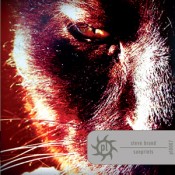 Over the course of several releases, Steve Brand has gotten me used to music constructed out of big, far-reaching ambient washes, long and meditative exhalations in sound. So it came as a pleasant surprise to hear acoustic instruments mixing with the flow on his recent re-release, Sunprints. Here, Brand laces together organic and electric, heavy and light, tribal and modern, crafting pieces that variegate from his familiar ambient stylings to pieces that are complex and comparatively challenging. Much of the disc is underscored by excellent field recordings that Brand uses judiciously. One of the recurring elements is the sound of a burbling stream. You’ll hear it on “Return of the Masters,” its trickling flow and twittering birds providing the backdrop for patient synth pads and the resonant and reverent voice of chimes. (Late in the track there’s also a recording of a cat [see album cover] and I have to admit that the first time I listened, alone at night in my office, it totally freaked me out.) The stream sound appears again on “The Scent of Olibanum,” which finds Brand somewhat straddling the border between dark-ish ambient and a touch of tribal. This is a moody, slow-moving piece shot through with echoing dissonance. A very Steve Roach-like ocarina finds it way into the mix, providing that tribal ambient hint. The stream’s job here is to gurgle along in a reassuringly soothing way amid the more disconcerting elements.
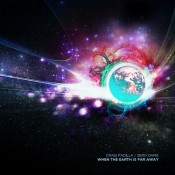 Some things are worth waiting for. Like When the Earth Is Far Away, the third collaboration between electronic composer Craig Padilla and flute/wind-synth guru Zero Ohms. The duo continue the voyage into the deepest realms of the galaxy that began with Path of Least Resistance and carried through Beyond the Portal. Here we find ourselves searching the edges of the universe, discovering some beautiful new planet and making it habitable. The flow of the music distinctly supports this stated narrative, and it does so while stretching time and utterly immersing the listener in the story. This is soft-edged spacemusic, vast and stunning, built on long pads from both artists–Padilla’s patient electronic arcs and Ohms’ breath-borne, organic tones. Our arrival at the new planet is marked by the surprising arrival of the sound of waves in “Blue Distance”–it’s an interesting and effective wake-up call after almost a half-hour of drifting through the space between stars. The last roughly 20 minutes of the disc are given over to the very quiet movements of “Terraforming,” where Padilla and Ohms, along with frequent partner Skip Murphy at first give us a slow and considerate surveying of the untouched planet, then begin easing it into richer life, the tones turning upward and becoming more vibrant. Light touches of pinging electronics in the background have the feel of science doing its work without disturbing harmony. Sequencers late in the track impart energy and optimism into the mix, and the story becomes complete. And the final 90 seconds…well, I’ll leave that lovely touch for you to discover when you take this journey.
 Experimental composer Joe Evans takes a fresh approach to recycling on his latest release, Affected Piano. His source material is piano phrases extracted from past works, which he then proceeds to stretch, pull, distort, and process until they become elements in large, dense, droning structures. In his notes, Evans points out that he uses a 19-note scale rather than a traditional 12-note scale. This, according to the composer, creates a familiar chord structure that is subject to “unexpected changes and subtle new harmonies…throughout.” I’ll take his word for that and just dive into his mesmerizing sound-structures. In general, the five pieces on Affected Piano open with a motif on piano, a solid anchor point for what follows, landmarks that re-appear to stand briefly out in the flow, only to be again subsumed in the washes of drone. Evans works with his resonant sounds and ongoing processing to build and layer and increase his atmospheres in intensity, turning them into swelling sonic landscapes. He’s fond of gearing them up to a point of maximum density, then slamming it back into a cleaner form, often just to begin playing with it anew. There’s an interesting sense of relief that comes with that sudden release; you can physically feel the weight of the sound pulled off you. It’s especially effective in the third track, which is built on sledgehammer chords and works its way into a genuinely abrasive texture. It’s only four minutes long, but it’s a long four minutes. At its core, Affected Piano is drone; the attraction comes from the use of the source material and how Evans plays with it differently in each track. There are layers at work, and a dynamic structure in constant evolution. And while this may seem an odd thing on which to comment, even Evan’s choice to end the disc with 10 silent seconds is a well-considered element. He pares his way down to it, snaps off the sound at the right moment, and lets the sensibilities of the last hour echo in the negative space. A very intriguing listen.
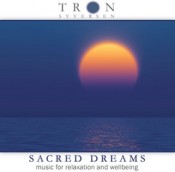 The broad scope of New Age music means that there is a listening audience for virtually every release. That being said, I am not among those in the audience who will enjoy Tron Syversen’s Sacred Dreams. Call it healing music, call it relaxation music, I found myself needing to skim quickly from one saccharine track to the next. Syversen’s playing is lovely enough in a neo-classical-influenced way, but the disc’s constant lullaby cadence makes it all feel very much the same, track to track, and the unvarying “looo looo looo” vocals, like a mother cooing to a baby, don’t help matters any.
 Hypnagogue Music Reviews