
 Pulling up memories of certain well-known purveyors of electro-shamanic grooves as it goes, Disturbed Earth and Shane Morris’ collaborative effort, Suburban Catacombs, took an interesting route on its way to carving a unique path its modern interpretation of the lower world. The music here began as a four-part live set by Morris that included (and I’ll indulge myself in italicizing my favorite parts) “a small percussion battery consisting of an udu drum, woodblocks, bottle caps, Roland SPD-20 electronic percussion, and the base of a microphone stand for a bass drum.” Morris gave the initial recording over to Dean Richards (aka Disturbed Earth), who then added, among other things, guitar and harmonium run through tape delays, along with the usual alchemical processing that makes him a very sought-after partner in sound. The end product is an hour-long headfirst delve into shadowy spaces and humid sonic atmospheres that leaves its impression on the cave walls of your mind. Morris goes thick on tectonic-shift drones and the rich percussion. The duo may state that the disc is about “what goes on under suburbia,” but the echoes reach all the way back to the primitive. Throughout the piece, this borderline grimness is balanced off nicely by natural field recordings peering through. In the earliest parts of the disc, Richards’ nylon-string guitar is an earthy, solid touch against a sort of growing fog as Morris begins to weave his strands. Later, the guitar will return, Richards’ calm noodlings twisting quietly and reassuringly against Morris’ churning, misty dronework. Suburban Catacombs resolves itself by turning upwards and lighter in the end, the kind of soft space that allows the listener to drift back, retaining the resonant feel of the journey. This is a wonderfully dense recording; every moment is filled with finely honed intermixes of sound. Morris is becoming one of my favorite practitioners of the electro-shamanic sub-genre. His journeys are about total immersion as he blends the simple acoustics of percussion with fresh takes on ambient and drone. And Richards, well… There’s a mighty good reason ambienteers are queuing up to have him take a crack at their creations. His touch is impeccable.
This is a disc to leave on for hours. Deep listens garner magnificent payoffs. Much time will be lost wandering these Suburban Catacombs.
Available from Relaxed Machinery.
 Paragaté are the duo of Tom DePlonty and Tim Risher, but Paragaté releases are not simply DePlonty and Risher collaborations. Rather, the two each have a couple of solo pieces and then there are the duets. On their new release, The World Above Us, each half gets two spotlight moments, and we are treated to five full-on Paragaté tunes. The work ranges from borderline ambient to complex experiments. DePlonty’s solo offerings are “Sail When the Wind Allows” and “Wheel.” The first comes close to being a drone-based piece. Softly undulating rolls of sound massage your brain for eight minutes as bass chords shift slowly in the background to form a sense of motion and narrative. The second is a primer on DePlonty’s technically pure and compositionally intriguing piano playing. It lands in a perfect spot between neo-classical and jazz, notes scurrying back and forth from border to border, brushing the edge of atonality in spots before easing back. The spatial mastering on this track is excellent as well, making the notes ping-pong from ear to ear at just the right times. Risher also has two solos here. “Clouds Not Sky” is a great ambient piece. Loops of sound spin their way around manipulated vocal samples. The feel is light and airy, but the busyness of the samples off-set that ease. The title track, his other standalone piece, is a gorgeous drift that floats and sails, accented with soft and lyrical touches of piano. There’s a lot of activity in the synth work even as it exhales its way down to quiet. Together the two revisit a 20-year-old piece, “Cork on the Waves,” which also appeared on the Gnosis release, reviving it with new instrumentation and a different recitative. I asked Risher about this. He replied that “It was interesting to revisit something we did twenty years ago, using completely different equipment and recorded in a very different way, to see what would happen. We changed the chord progressions in the different sections as well, to make it flow more convincingly, and we believe it’s more musically satisfying.” Now, I quite liked the original, but must agree that there’s a more refined sense to this one. It’s softer and more certain and pulls the listener in deep. The voice is Theodore Edison, discussing his father’s “Monoid Theory.” (Let it be noted that you’ll always get a bit of intellectual headiness coming into a Paragaté effort.) Two tracks here stand out for being just plain fun. “Ground Effect,” the closer, is a clubby, thumping uptempo piece with a little retro, near-disco twang to it. You’ll be bopping along with this one–even in the places where it feels like Risher and DePlonty are challenging you with brief, wayward changes in tempo. They’d feel like mis-steps if they weren’t so purposeful. “Where To Find Food” wrangles a Rush Limbaugh sound bite into an upbeat, plunderphonic-inspired commentary on media.
 Jason Sloan steps away from the computer and gets back behind the hardware for his excellent 15th solo release, Fall of the Fifth Sun. Taking ideas and structures from recent live performances back into the studio, Sloan fired up such diverse sonic treasures as a Korg Poly-800, Roland SH-101, Juno -60, and the ever-so-classic Stratocaster, along with more recent rigs, to lay down a set of pieces that blend noise/found sound, cool beats, and big, lush pads into a swiftly changing mix that demands repeat plays. The disc grabs your attention immediately with the muffled and distorted radio voices that kick off “Black Coronas.” A persistent beat slides in underneath, and the thing takes on a slight industrial tone. Cool guitar chords glisten under the sound-scramble, and we’re off. There’s a hypnotic effect that comes from the relentless drive of the beats and the static–to the point where, when it cuts out, it’s almost disorienting. But Sloan only gives you a moment to dwell on that before you’re hit with the aggressive drums behind the title track. Across the board, Sloan does a great job of segueing from one track to the next with themes intact. The title track pares down to a bleep-and-bloop sequence that carries into “Ash and Snow,” which ends with an electronic squawk that clears the space for the bass-note trill that starts “Pulsar.” And so on. It plays up the fact that although there’s a lot of diversity of sound here, there’s also a unifying thread, and Sloan doesn’t want you losing track of that and coming up out of the flow. One thing I quite enjoy about Fall… is how the pulsing beats, which have a fantastic old-school artificiality to them, remain a constant. It’s not just that there are drums, there are those drums, with that particular tone and feel to them. “Ash and Snow” is the best track in this regard, with near-glitch runs carrying the load through much of the end. “Pulsar” is also beat-centric, working with that unwavering bass phrase over Morse-code keys and lilting pads. Sloan quiets things down with the slow movement of “View from a Hill”–even here, a single beat on an electric tom keeps the pace. I love the big, lush pads that drift across this piece. The slower motion here makes a nice set up for the closing track, “Blue Kachina,” because that one works a slow burn to a point of take-off where it picks up a strong Tangerine Dream vibe. A familiar, twangy bass sequence chugs along beneath meaty rise-and-fall chords. There’s great urgency at work here, like the build-up of a load of kinetic energy seeking release. Late in the track, it stretches out into vaster spaces, leaving the beats behind to glide to a stop.
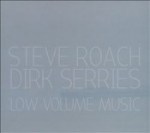 Expect no surprises from a disc with a title like Low Volume Music. Steve Roach teams up with Dirk Serries (aka, formerly, Vidna Obmana) for the first time in a decade, and the chemistry this time melts the air around you into a comfortable cocoon of drifting ambient. Low Volume Music delivers on its titular promise with an hour of unobtrusive flows that take on new character in a deeper listen. Liquescent guitar chords and shimmering synth pads extend and cross in a vast space, sonic vapor trails harmonizing as they fade into each other. The flow is warm and safe-sounding, a place to retreat into and remain. Tuning in deeper to the sound reveals a lot of textural work, precise and properly meted out in elegant doses. Adhering to the title’s suggestion, the five pieces here slowly fill the space, curving in air and hushing the outside world. While this disc is in the vein of Roach’s softest meditative drifts, such as Quiet Music and Structures from Silence, Low Volume Music is so supremely laid back that it makes those two look like they’re trying too hard. Leave this on repeat for hours. It’s thinking music, it’s sleeping music, it’s being music. Roach and Serries have returned with a disc that sets a fresh standard in the ambient landscape.
 Here comes Joe Evans again to make my head spin, both with sound and subject: “Each track [on Ecliptic Plane] came about through a combination of examining the properties of the subjects and a series of mathematical music experiments conducted in parallel.” Oh, and for one track, “…the musical scale was derived directly from the frequency ratios of the orbits of the titular objects…” Okay, then. Not only do you get that bit of higher thinking, but the disc itself comes with a booklet with diagrams of the relationships and formulae involved. But what about the music? In a word, diverse. Evans re-examines his equations and inspirations on each track. The opener, “Receding Sun,” storms in as a big, aggressive drone on the edge of feedback before widening and softening to a stripped-down wash. Its follow-up, “Resonant TNOs,” is a reflective piano-only piece that takes its vocabulary from the ratios that define the movement of Trans-Neptunian Objects. Here it feels like Evans is patiently following the course the cosmos has dictated, the space between notes like waiting for the arrival of fresh information. It’s a very intimate piece that, despite running 10 minutes, never feels repetitive or lacking in feeling. The subtle shifts in approach keep it engaging. The title track moves through a constantly evolving set of spaces, switching guise as the numbers dictate. It moves from deep, unwavering drones to static-spattered spaces where radio voices leak into the room. The shifts can be abrupt, but they all work. And then there’s “Oort Cloud,” which must (and this is mandatory!) be given a deep listen to take in all the ultra-minute sonic details Evans packs into it. Focusing may be hard, as the main body of “Oort Cloud” is a magnificently hypnotic repeating pulse that quite simply wipes all traces of conscious thought from your mind. There’s deeper math at work, but what matters is the engrossing result of the equation. The closing track, “Approaching Sun,” returns to the drone construct that opens the disc, making for a perfect circle of sound.
 Steve Moshier is a prolific post-minimalist composer who has been creating sonic backdrops for theater and dance performances for more than 30 years. Limestone Gates pulls together pieces from his compositions Boys Life (1983), Deliquium in C (1989) and Sudan (1992). Despite their age, Moshier’s constructs don’t feel dated. This is textbook minimalism, hitting brief phrases in repetition to create rhythmic drones or stretching those phrases through time. It’s interesting to note how tone can affect the experience of Moshier’s work. Listening to “Boys Life—Desert Sci-Fi,” the throaty, almost cello-like sound that quavers its way through its simple statement is very lulling. The waveform feels warm. By contrast, the next track, “Boys Life—Highway” is like being trapped in the same room as a slightly malfunctioning ice cream truck for seven minutes. The jangly, saccharine notes grate on the nerves in very short order. But then you’re back into the quieter side with “Boys Life—In the Lab” as Moshier churns out gurgling, bubbling sounds over a gently oscillating drone. Most of the “Boys Life” tracks are quiet and calming, with that one exception. This makes the contrast between Boys Life and Deliquium that much more pronounced when it hits. Deliquium is carried by severe, near-atonal rasps across strings, a scraping and grating that fights against a slowly metered, smoother chord progression beneath it. There’s a frantic energy to this string assault that borders on a desperation to be understood. It’s five minutes of concentrated intensity. This is followed by Sudan, more of an ambient piece nearly a half-hour in length. This slow-moving, graceful flow is supported by a low-key bass throb running behind it. The movement is quite calm and yet very expressive, shifting subtly across time without taking the listener out of the simplicity. For me, this is the highlight of the disc. All in all, Limestone Gates is an excellent introduction to Moshier’s work, albeit work that’s nearly 30 years old. The composer is still creating, mostly with his Liquid Skin Ensemble; having made this introduction to his older work, I would love to hear what he is up to now.
 Listening to Sun Secrets from German duo The Cosmic Garden is like having a friend show up who apparently wants to have a good time, but then halfway through the visit gets a little too serious and rambles a lot and generally overstays his welcome. This album is a mixed bag of concepts that in many places don’t seem to gel. When it works, it’s spot on. The opener, “Instellar Waves” kicks things off in grand style, rapid-fire glitchy beats laying down a serrated sound-bed Sigi Hummer and Tibor Friedman then proceed to slash at it with dubby guitars, percolating synth melodies and a big, spacey, 70s rock sensibility. Like I say, off to a good start. They then shift into a quieter space for the start of “Absteig in die Unterwelt” (which, early on, uses a lifted throat-singing sample), an interesting bit of near-ambient drift–and then it begins to unravel for me. A tangle of echoing piano shows up briefly, some chanting, neither of which ever to get comfortable. The track loses its way, and I lose interest. This is what I find happens too often on Sun Secrets–the pieces seem to be too long for Hummer and Friedman to comfortably move them through to a logical place, and in trying to shift gears, they just make things clunky. “In Love With Rosy Rosy,” for example, starts out slowly and a little waywardly, but manages to find, a couple minutes along, something of a workable groove. A lounge-worthy beat enters, along with a punchy bass riff, but suddenly the duo play with the tempo and it feels like things go off kilter just a bit. What might be meant to be poly-rhythmic just turns into a jerky twist of intentions. “Im Tal Der Eremitten” is another ambient piece that rides on big bass pads spiraling downward. It starts a little awkwardly, but smooths itself out after a few minutes. But just as I find myself slotting into it, the sound starts falling apart. Redemption comes in the form of “Where Have All the Flowergirls Gone.” Loungey at the outset, it picks up another solid beat and then gets fantastically assailed by wailing, heavily fuzzed guitars. “Purpure Liquid Plejades” is another winner here, weird and off-putting at first, but resolving into a pulsing, guitar-driven joyride. At just over four minutes, it comes, makes it mark, and gets out. Thus, it works. There is potential on Sun Secrets but it feels like Hummer and Friedman are pushing themselves too far and they’re not able to satisfactorily close the deal on most tracks. There’s some improvisational basis at work, but you still need to be able to bring an improv full circle to make it work. It’s definitely worth your time to check out some samples and decide for yourself.
 In March 2011, Juta Takahashi’s home and home studio were badly damaged by the earthquake which resulted in the horrible tsunami that devastated Northern Japan. (Living in a hilly area, he was spared the ravages of the water.) In an e-mail to me at the time he said he wasn’t sure how long it would be before he made music again. Blessedly, just over a year later he’s back with four long-form ambient pieces on Angel. It seems like there are two sides to Angel; one offers Eno-like structures where long-drawn pads coast like patient clouds, touched with an intermittent and more tactile element and the other is made of bigger, amorphous, drone-based structures. On the opening track, “Bright Waters,” Takahashi mixes piano into the flow, single, meaningful notes dropping like early rain on a pond, spattering lightly against electronic sparkle and rising pads. There’s a nice undertone of drone at work here. “Fairy’s Blues” also floats dreamily along, its wispy pads accented early on with a vocal sample that’s a very nice touch. This is the softest piece here, bringing mental references to Eno in the calm and dreamy simplicity of its movement. The other two tracks are more drone/pad-based ambient pieces, deep washes of densely stratified sound. I must say that I had some difficulty getting into the title track. Takahashi’s layers here are very crisp and very high–but, at times, high almost to the point of being grating. A sound like a rainstick held too close to a microphone runs through it like static. To be fair, this may be more of an issue when listening in headphones, or at too high a volume. In a quieter, distanced listen the effect was softened somewhat, but there were still places where an air of dissonance took me out of the flow. By the same token, there where also points where I also found myself drifting pleasantly along–so much so that I checked iTunes wondering if I’d changed tracks. I hadn’t. Over repeat listens, the track has grown on me, but it’s my least favorite of the quartet. “Fair Winds,” which ends the journey, begins as a long, swirling gathering of dopplering drones. Takahashi smooths it out over time, converting it into a hushed, almost hymn-like tone. A church bell peals in the midst of the flow, its voice clear and reverential.
 Micro-sound minimalism based on live improvisations, constructed in keeping with the mathematical theories of a 17th century German philosopher. If that didn’t lose you, you might find Fold, the second release from the duo Strøm, to your liking. If, like me, that sort of thing makes you feel horribly lost and alone in a great big field of abstract musical theory, then you’ll likely find the work to be a little obtuse and dull. Gaudenz Badrutt and Christian Müller indulge in an hour’s worth of what the album’s press materials refer to as “spastic sound multiplications,” which doesn’t come off sounding positive. In practice, it’s long test-pattern drones splashed somewhat randomly with burbles of noise and, every now and then, a great big crush of electronic interference. I’m sure that there’s some form of higher musical thinking going on here, but I couldn’t get away from Fold fast enough. If you’re into extremely abstract work, shoot over to the label and check it out.
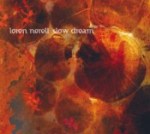 Slow Dream is a quartet of long, shadowy meditations from Loren Nerell. While never delving entirely into a dark-ambient space, Nerell does infuse these deep pieces with a certain sense of being cut off by the sound, immersed in drone and unable to reach the surface. It’s superb headphone listening, never raising its voice above a slightly sinister whisper as it ushers you down into yourself and spaces beyond. Nerell’s library for this disc started with his field recordings of Indonesian and Balinese gamelan. He ran the sounds through various processing programs and other means of manipulation to create a fresh batch of tones and textures that he quietly melts together. Because the source material is acoustic, the processed output retains a resonant remnant of its organic starting point, tucked into the otherwise otherworldly flows. As the opening track “Mentation” eases through its 29 minutes, a single recognizable gamelan chime rings solemnly, the tone marking time’s passing as Nerell’s mist-at-midnight drones fill the space. This is a fantastic half-hour of ambient that works to fully submerge you in Nerell’s intentions. Once you’re here, you’re not coming up until it’s over. It’s interesting to note that Nerell’s sounds are complex but not as densely packed as “dark” ambient tends to be. There’s no crushing weight at work here. His drones feel breath-light, paper wings of sound that hush and sigh past you in small, unhurried packs. Following “Mentation,” the voyage continues through the title track, a piece that borders on feeling isolationist, a lulling drone surrounded by hissing winds and cavernous echo. “A Sense of Presence,” the second-longest track, layers in more foggy grey drifts and a growing sense of the unease that comes with being just slightly lost. But while the feel is present, it’s distant, a worry that never quite forms but which makes you keep your guard up. You find yourself trying to peer through the mist as it rolls past, the high end like an uncertain breath, the low end the rich rumble of an earthy, open maw. This is a gateway to a different place. “Persistence of Dream Memory” is a comparatively shorter piece that ends the journey. From the start it is lighter in tone, high pads belying the penumbral landscape you’ve just passed through. Nerell lets us resurface slowly; we glide upward, patiently. Sometimes we hear a chime. We have been returned.
 Hypnagogue Music Reviews