
 M. Peck showcases his knack for live sound sculpture and flow creation on his latest release, Bodies to the Sky. Taken from a live set Peck played on stillstream.com in early 2010, the appeal here is in the sense of constant motion and development, of listening to Peck chart his course and then keep it deeply intriguing. Bodies… moves through a good number of spaces in its relatively short 49 minutes, and Peck keeps things largely in abstract territory. There are beats sprinkled here and there, and there’s also an ample supply of darkness. The trick, and Peck’s display of strength, is in the impeccable balance. The opener, “Experiments with Infinity,” grinds up from a dark drone to a point where Peck eases in a bit of an uptempo kick. It’s a smooth transition with a lyrical flavor. From here, Peck heads downward with the mechanical clatter and dense electronics of “Floating Out to See.” This space is purely abstract, a knot of sound that unwinds itself into a quieter place and does so with a logical sense of motion. Peck hits his dark ambient stride with “Den of Inequity,” building on blasts of sound that are thick and aggressive. This is perhaps the most challenging stretch of Bodies; the sound seems like it’s daring you to stay with it. “Operative of Relative Obscurity” opens up and lightens up and gives Peck the opportunity to show his true ambient chops. There’s a sense of suspense to it, with distorted vocal samples filling the space. “Let There Be Dark” starts off with the familiar feel of analog sequencing and oscillating tones, then strips down to deposit the listener in a desolate landscape of sound. A shift in tone later hangs on big, gorgeous pipe organ chords that come like a sense of revelation as the piece draws to a close.
Peck is a superb sound manipulator, adept at crafting atmospheres from the abstract, able to shift his spaces without losing the listener’s attention. Much of Bodies to the Sky depends on that connection our minds make between sound and sensation, the visceral response we take away from what we think we hear within it. A great release from M. Peck that you need to hear.
Available from Ethereal Live netlabel.
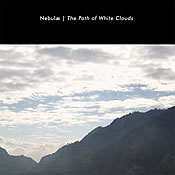 Although the writeup at Hypnos for the re-release of this 2003 effort refers to the collection of artists here as an “ambient supergroup,” The Path of White Clouds is more accurately a release from Oophoi and Friends. Mind you, he’s got some impressive friends gathered here: Tau Ceti, Mattias Grassow, Klaus Weise, Luna, Lorenzo Pierobon and Mauro Malgrande. But they never all appear together. Instead, Oophoi heads up a variety of duos, trios and more that coalesce into a drifting, meditative disc of layered electronics and organics. Flutes, voices and temple bowls are among the organic instruments, and I must admit that the ringing of the bowls in the first track, “The Quest” (with Tau Ceti), almost put me off the disc. The sound borders on a feedback whine at times, and I thought the disc would be taking off into an abstract noise territory. All worries faded with the next track, “Ascension,” where Oophoi’s wide synth washes bolster harmonic chanting from Pierobon. This is a big, droning work with bass-heavy layers bringing a feel of reverence that carries into “Devotion,” my favorite track. Here, Pierobon joins vocal forces with Luna against a soft wall set up by Oophoi, Tau Ceti and Grassow. Geert Verbeke brings in tones from Himalayan bowls–a more subtle sound than their earlier counterpart. This is a hypnotic track that makes full use of its 13 and a half minutes. The next two tracks feature Malgrande’s Japanese shakuhachi flute. In “The Living Mandala” it is processed to an unrecognizable element mixed in with synth from Oophoi and Grassow; in “Enlightenment” it appears in a more natural state, whispering its song over airy washes from Oophoi and Weise. This is the longest track on the disc, a 16-minute excursion that changes gear midway through, becoming somewhat more dynamic, bolder in tone. The title track closes the disc and features Oophoi and Pierobon back to provide vocals to the mix along with Weise, playing one of ambient music’s most overlooked sound sources, the zither. This is a very gentle drift, lyrically true to its title.
 Speak of This to No One and Carnival are similar in approach, yet different in atmosphere. Speak… leans toward a dreamier quality with hints of unpleasant subconscious thoughts mistily floating around the edges. There is, like most of Frawley’s work, a very slight erotic/intimate edge in places, beginning with a voice at the outset of “The Kiss” quietly intoning, “So soft, so sweet.” Amplified moments of breath take on an edge-of-orgasm feel; it’s an interesting thing to hear that in your head and to get that image while at the same time realizing it may just be a breath or a shiver of cold. (“Mirrors” will mess with you this way.) This is where that level of discomfort comes in, as you’re asked to be perhaps closer to the moment than you should, hearing things you shouldn’t, and yet you know you’re not going anywhere. Also of note here is the simple beauty of “Avenue of the Secret Fur,” where Frawley’s piano walks a lonely path through understated backdrop sounds.
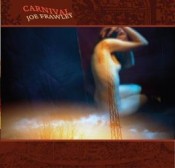 Carnival feels like the darker of the two. A whispering French voice launches you into the whether-you-like-it-or-not intimacy with “Premonition I.” You feel the shadows falling right away. The breathing exercises start right after with “Skywriting/An Extremely Tiny Box” and Frawley piles on the sound sources. Plane sounds, fireworks, more voices… The peer-inside-someone’s-head feel ramps up at this stage and there’s no going back. The feeling of being wrapped in between-world shadow grows even stronger in “Premonition II” (there are III). Perhaps one of the strongest narrative tracks on the disc, it’s just downright creepy in spots–like the voice whispering “fire fire fire.” It feels like Frawley reveals the story of Carnival here as a girl’s voice that’s been heard talking–in clipped bites, of course–about going to a fortune teller has a chance to tell us what exactly the fortune teller said.
 Scintilla is a set of seventeen pieces of glitch-based EDM/IDM that, while constructed well enough, don’t go much out of their way to break the mold. Smooth and often beautiful base work gets scoured by high-speed glitch in a very workable blend that, like a lot of offerings in this genre, suffers from sameness. The question as I listened became, what can you do without relying on the glitch? I hear the potential in the way the last forty seconds or so of “Tight Around Her Throat She Slips Away” quiets down and is allowed to coast directly into the short, more ambient “Like Snowflakes on My Fingers.” The start of “Voiceless Whispers Flicker in the Shattered Mist” also makes a good start and really caught my attention as a track that had the potential to stand out. And then at the 1:20 mark it just gets smothered like so much of the rest. I found myself forwarding past songs after a short listen, looking for something that really makes itself known. My problem with Scintilla is that I can’t just sit down with it and listen. I get restless. When it comes up in a shuffle, it feels stronger. Make no mistake, there’s some gorgeous work in here, and taken in an isolated context, thinking only in terms of glitch, it’s very good. There’s a depth of emotion that’s consistent and strong and a velocity that’s often exhilarating. It just grows thin track after track. If your tastes run heavily toward this kind of music, Scintilla is a disc you need to dive into. For me, I’ll keep it around for shuffling purposes and quick doses of musical adrenaline.
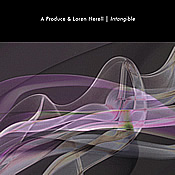 Regrettably, Loren Nerell and A Produce’s magnificent collaboration Intangible is, barring existing unreleased material, the last offering from A Produce (aka Barry Craig). Craig unfortunately passed away in September, not long after this disc was released. Aside from Craig’s too-soon departure at 59, the other genuinely sad aspect of this is that Intangible marked the return of an absolute powerhouse talent in the ambient world and what, from the first listen, promised to be an amazing pairing of veteran ambient talents. Craig, who had been a solid presence in the ambient genre the 80s and early 90s (going as far back as cassette releases) had been away from producing music for a number of years. More tragic, then, that his brief return is marked by what is most surely going to be recognized across the board as one of the best releases of 2011. This is not sentimentality; from its first note, Intangible sets off on a complete, compelling arc of music that courses smoothly from rhythmic ambient to world-beat hybrids to dark reflections and out again. From the pleasingly catchy bounce of the title track, the duo slide into the comparative density of “Planet Atmo”–and this track has plenty of atmo. Mechnical and dark, with an air of absolute suspense. Nerell’s background in gamelan and Balinese music leaps to the foreground for the next two tracks as the rhythms storm back in. This is a pure groove beginning with “String Theory.” Over sharp percussion, Nerell’s chimes ring out with crystalline clarity. Flutes, or their digital counterparts, dance across this platform of sound. Synth winds rise like dust storms. A truly captivating piece that gets the pulse charging. “Area 51.1” (great title!) slows the pace, but keeps the exotic feel with a twangy bass line over sensual sound-washes. This one gets in and drills deep. You’ll feel it the whole way. Craig and Nerell touch perfectly on dark ambient with the isolated rasps of “Lost in Transformation.” There’s a sensible, organic bridge between “Area 51.1” and this piece; the transition is as smooth as it gets. The beats are left behind. Garbled voices rise from muddy drones and clanging gongs and chimes. Unsettling by design, this is a 10-minute immersion in borderline unpleasantry. And it works. They recover–or help you recover, anyway–with two final perfect ambient pieces. “Meadow Dust” shimmers from the outset. Cool pads take flight on easy hand percussion. You’ve made it out of the last track, and it’s going to be okay. This is a spirit-soars kind of track, with high, softened notes giving it a voice. “Pot Covers At Dawn” closes the disc like a whispered prayer. Beats sneak in under the flow to ground the passing moments.
 I first encountered Dean Hinds’ music when he was producing as Lopside. That work depending largely on doctoring together blasts of noise, static and found sound into genuinely intriguing and infectious constructs. His side project, The Post Riot Era, makes a just-about 180-degree turn from Lopside with minimal processed guitar washes and a very light hand on the electronics. On Zero Sum Living clocks in under half an hour and is built on a distinct deliberateness of sound and a sense of quite unhurried contemplation. Hinds grinds out a chord then hangs it there, allowing time to let the feel of the thing saturate the space. Mostly, that feel leans toward a melancholy that stops just short of morose, a little post-modern ennui that neither overstates nor overstays. The character of the thing comes through in Hinds’ sustain and the pauses between statements from the guitar, a kind of veiled heaviness of spirit, a well-timed set of reserved sighs. In the background, white noise washes hiss a counterpoint, often pulsing like distant, unceasing machinery. The sound on Zero Sum is thick; it is, in part, a drone-based work, but the drones birth out of bursting chords one at a time and make you wait for the next. Activity followed by inactivity. It’s captivating, and On Zero Sum Living readily melts into an endless loop that never loses its sad luster.
 Jim Combs is back in his Sensitive Chaos guise, quite intent on fully captivating you with a mix of uptempo electronica, world-fusion accents and lush ambient spaces. Seeker After Patterns is filled with deft switches of identity that showcase Combs’ range of expression. He also pulls in contributions from a handful of electronic/ambient heavy hitters. As always, Brian Good is on hand with his electronic wind instrument (EWI) and saxophone, lending sweet lines that still pull up embedded memories of Shadowfax every time I hear him play. Good’s sax absolutely flies in the opening/title track, breathing swirly smooth-jazz grooves over Combs’ right-angle sequencers. (The disc also contains two shorter radio edits of this track, the second of which puts Good right in the forefront from the start.) On “A Piece of Stars,” one of several live tracks, Combs is abetted by veterans Tony Gerber, Paul Vnuk Jr. and Christian Birk. This improvised track is a twisting road of silken sound; Vnuk snaps out rhythms on electronic percussion and Gerber spins his own airy EWI web while Combs and Birk handle synth duty. Simply stunning, with touches of exotic romance. On “Simon Stilites Dreams of Rain,” Otso Pakarinen co-pilots with Combs on electronics while John McNicholas unleashes a psychedelic mind-melt on guitar. McNicholas’ playing could liquify your brain at 50 paces as he grinds away over the pulses and flows beneath him. Combs himself goes wonderfully ballistic with the remastering of “Sensitive Chaos,” originally recorded in the mid-80s. Here he piles four tracks of bass, 12-string guitar and drum machine into a mad tangle that comes to sound like Hell’s own dulcimer, played at speed over a casually funky bass line. Can’t get enough of this one. Combs’ solo work on Seeker…. is also superb. “L’Ascension,” played on a Roland JD-800 worked through a looper, is a hushed and melancholic piece with a story to tell. “Warm Glow of the Atomic Fire” is a straight-up drone-based floater, waving slowly through the air and shifting form in its own good time.
 Cometa’s Minimal Way is one of those discs that took me a few listens to get used to–and even at that, I couldn’t fully settle in. Part of the reason is that I couldn’t shake the sense that musician Angelo Secondini didn’t fully trust some of the interesting drones he set forth in this captured live set. The opening track, “Simplicity (Wave 12),” sets what should be the standard for this disc. Here, waveform washes are allowed to follow their course over a catchy, straightforward backbeat. For eight minutes, that’s it…and it’s enough. Overall, Secondini’s drone work is excellent. It develops over an appropriate arc of time and shows the glacial-but-present shifts that mark good drone. But come to a track like “Nakedness II,” and in the middle of what’s a just-about-ideal, mind-grabbing drone, Secondini feels the need to throw in a jarring random splash of electronic sound and then let it fade down. Here is where the perceived lack of trust comes in. Let it be. The track didn’t need “more,” from a listening standpoint. Let the drone express itself. To be fair, he does this again in “Nakedness IV,” but there it’s slipped in more subtly and doesn’t quite shake the flow as badly. There, it’s a logical placement. The combination of the last two tracks, “Live-2” and “Nakedness IV,” is the best stretch of the disc. “Live-2” undulates like the water Secondini says is the inspiration for this disc, a soothing pulse neatly punctuated with some electronic shimmer. “Nakedness IV” brings a beat up and under over and over, beneath a mix of drones and pulses. Mid-track he lays in some aggressive sounds in stark contrast, then lets them ease out for a great finish to the disc. To be fair to Secondini, Minimal Way is the musical component to a music and visuals presentation, and live performance of this sort of music provides its own challenges. For the most part, he blends his minimalist side well with his beats and electronic accentuation. There’s good music to be had on Minimal Way; it’s very well worth checking out.
 Emotive phrasing meets minimalism and the art of hanging a pause in the new release from Antonymes, aka composer Ian Hazeldine. The License to Interpret Dreams is a disc in which you’ll be taken completely in by a piece and then wonder if it’s done or if the disc’s over–only to have Hazeldine drop another delicate note into a piece that’s briefly reveling in a bit of negative space. Hazeldine’s not afraid of silence, clearly recognizes its role in his work and uses it to enhance the experience. License… has an acoustic base, mainly piano with some strings in places, supported by light touches of synth pads and electronic texturing. With this, Hazeldine turns out spaces with a dream-like softness anchored in the certainty of the piano. He can also cull compelling ideas just from his instrument alone; the story at play in the deliberate delivery of “Landscape Beyond An Open Window” makes full use of its short two-minute span to embed itself in the listener’s emotions. “A Light from the Heavens” bulds from that same space, then adds strings and brushed percussion to build to a snap-shut closing. Throughout the disc, Hazeldine plays with other ideas as well. Some work better than others. The closer, “On Approaching the Strange Museum,” borders on dark ambient, foggy drones over a distant pulse of percussion that grows closer and heavier. (I am not quite sure if a long pause in this track is meant to separate it from a “hidden” track that follows, or if it’s just an artistically long pause.) “Womb of the Mother” also keeps itself in ambient territory, a drama carved in rising and falling notes. Where Hazeldine first goes slightly astray is with “Doubt,” where Jan Van Den Broek recites a piece by music journalist Paul Morley.Van Den Broek’s choppy delivery, meant to sync with the cadence of the instrumentation behind it, becomes a bit grating. (By comparison, the use of voiceover in “Oradour-Sur-Glane” is perfect, the disembodied narrator listing place names against a drone with very light piano sprinkled over it.) The following track, “The Door Towards the Dream” simply feels out of place, with bold,trumpet-like keys baying a little brashly. It’s not that either of these tracks are bad; they just feel like they belong somewhere else. For most of its listening time, The License to Interpret Dreams is inventive and engaging–especially if you don’t mind occasionally waiting for the next bit of beauty.
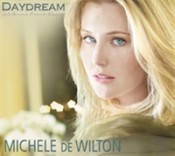 Well, you’re not likely to find a more accurately descriptive title than this anytime soon. Pianist Michele De Wilton offers eleven beautiful, classically influenced pieces on her new CD, Daydream, each played with passion, romance and fire. De Wilton is firmly in control of her dynamics here, able to confidently and competently take the listener from the bold, dramatic and flashy “Heaven’s Bridge” into the near-pastoral sigh and lyrical storytelling of “In the Garden of the Selfish Giant.” All in all, the disc moves very nicely from feeling to feeling without coming across as forced or jumpy. The centerpiece for me is “Winterbluegreen,” a quiet heartbreaker of a piece that softly and sadly confides itself in you in a near-whisper, De Wilton’s carefully picked high notes falling just short of crying. This one will find its way into your soul.
 Hypnagogue Music Reviews