
 Steve Roberts, recording as Amongst Myselves, practices the art of recycling in his latest release, Fragments, and the outcome is definitely reusable. The concept is interesting: Roberts has been recording under a variety of guises for several years. For this CD he culled some old pieces and repurposed them–remixed, rethought, reworked, added field recordings–and created pieces that are new but with a ring of the old. (Roberts notes that much of the old work is “unrecognizable.”) Given the mix of source material, Fragments moves through a variety of identities, more often than not in mid-stream. The first two pieces, “Smell of the Sun” and “She Who Loves Silence,” are built around drone tones and atmospheric elements. (I quite like the hollow windchime sounds in the latter.) The shift comes in the last minutes of “She Who…” as Roberts brings in ringing guitar chords that vie with bassy notes for dominance. Much of Fragments is characterized by these types of turns in tone. “Field of Broken Mirrors” may surprise you as it goes from dark, droney wash to melodic guitar piece before Roberts twists it into something slightly experimental…with a modicum of success. “Clouds of Unknowing” turns more successfully a couple minutes in as pads give way to wobbly sequencer rhythms, both perched on top of a nice field recording of (I believe) the ocean.
Speaking of which, the field recordings on Fragments serve two purposes. First, obviously, they add depth and atmosphere to Roberts’ music–perhaps at their best in the crickets-and-thunder opening to “Town on the Hill.” More elegantly, however, he uses them as a bridge between pieces to create a continuous wholeness out of these fragments. The transitions are utterly smooth; your mind notices no discernible break as the sound and feeling of the track you’ve just heard fades slowly away and the new track begins to present itself. Overall, Fragments is consistently interesting, even if the shifts in tone don’t always entirely work as smoothly as one might like. In bringing his past forward to meet his present, Amongst Myselves has given himself a new direction he should definitely continue to follow into the future.
Available at Amongst Myselves’ web site.

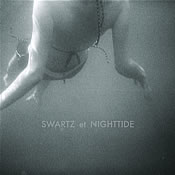 Talk about a lucky kid. Steve Swartz’s daughter was one of the first to hear the ambient guitar work that would eventually come to fill his first solo CD, Nighttide. Of course, at the time he was just trying to get her to go to sleep by playing softly in her room, but that’s what got him started. From there came the experiments in drawing unique sounds out of the guitar, whether by hammering on it or letting fan-blown curtains sweep across the strings. However Swartz went about it, the end result is a set of gauzy grey drones which he layers deeply while prodding the surface gently with recognizable touches of guitar for a nicely worked contrast. The pieces here retain their original soporific capabilities throughout, but Nighttide is certainly more than a set of day’s-end lullabies for grown-ups. While there is an overall warmth to Swartz’s tones, there are also touches of darkness hovering at the edges, sometimes passing over briefly like heavy clouds. What truly makes this disc work, however, is the power of nuance. It’s everywhere, and it’s beautifully done. You hear it in the three simple bass notes that restate themselves across the wash of “Dinghy”; in the way a picked melody in “It Glimmers Through the Snow” slowly fades beneath a rising soundfog, only to re-emerge at the end, a circle completed; in the struck tremolo chords that give “Mid-Day Bells” its sonic identity. There’s something in every track that gingerly but effectively asserts itself against the density of Swartz’s processed guitar. It’s a very soothing disc, to be sure, but Swartz gives you a lot to be aware of, peripherally speaking, while you’re drifting along. It demands, deserves and rewards all the attention you give it. Put it on repeat immediately. Nighttide is a Hypnagogue Highly Recommended CD.
 I will admit that after my initial listens to Morben, the debut CD from Aspectee, I was ready to dismiss it as a straightforward dark ambient piece, a dense assault of drones and rough textures in a big, depressing, amorphous mass. But through repeated listens I came to appreciate it more as a thoughtfully constructed balance of smooth and harsh, a darkness that, while not evenly offset with light, gives way to it in time, the whole thing creating a cohesive thought-line and a richly immersive listening experience. The dark here is quite dark, as oppressively so as in any decent dark ambient I’ve heard lately, packed with sawblade edges and an inherent challenge to the listener. The reason it works lies in the soft warmth of Aspectee’s underlying pads. Taken on their own, they’d make a pretty fine ambient CD. Squared off against the roughened, rasping textures that dominate the disc, the combination comes away stronger for it. “Dianthus” is one of the best examples, crackling with lost-transmission static, laced with dissonant tones and aggressively layered–but hiding beneath is a smooth drone forming a solid sonic bedrock. Hear it again in the title track, where Aspectee goes his furthest in creating grim abstraction–a near crash-dive that he pulls out of courtesy of warbling drones and an effortless tonal shift. Morben ends with the calming washes of “Unwic,” a way to let you come back to yourself after your immersion in the disc. I quite like the way this track starts off a little edgy, with a hint of dissonance and unease, but soon resolves itself into a more soothing pulse and flow.
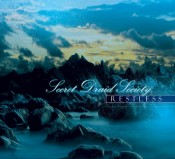 If you’ve heard a dark ambient album before, there will be no surprises forthcoming when you listen to Secret Druid Society’s Restless. All the standards of the genre are here in force: droning bass rumbles that rarely let up, industrial grind, hell-born hisses of demon wind . . . and very little else. There’s no real attempt to break the mold or vary the thick, claustrophobic flow that dominates the disc other than a short span of lighter ambient sound late in “Dawn Over the Deserted World.” Even the densest of drone-based works needs to do something to hold the listener’s attention, and it’s just not happening here.
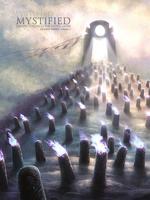 Death is one of those classic bits of inspiration that most artists touch on in one way or another eventually. On his latest CD, Passing Through the Outer Gate, Mystified offers his musical interpretation of a personal moribund journey–his own. As part of the “Eulogy Series” from First Fallen Star, artists are invited to create a vision of their own death and…well, whatever they feel comes after. Passing… skirts the edges of the thematic grimness at hand, focusing more on the drama of crossing over in a blend of almost-dark ambient and thundering neo-classical constructs. Unfortunately, it comes off just a bit uneven to me and, at times, even a touch forced. It could be that I’ve come to expect more subtlety from Mystified and this heavier hand leaves me wanting more of that approach, but I was never able to get comfortable with this disc despite a number of listens. There are certainly moments and passages where I found myself engaged in Mystified’s ideas, but it was never a sustained interest. Samples are available at the label and, as always, I recommend readers check those out to see if Passing… is more their style.
 The spooky overtones of dark ambient get a real workout in Pang’s new release, Garden of Menace. At times they’re allowed to stalk and lumber around by themselves and at other times they’re dipped in a batch of glitchy IDM beats. (You know, in case you feel like tapping your foot while ruminating on the cold meaninglessness of existence.) According to info at the label, Daddy Tank Records, this disc has been hiding out on the internet for “years.” Which is a shame, because it’s certainly worth a listen, especially given how equally well Pang plays both sides of the equation. There’s plenty of dark matter here, thick and shifting walls of grim-grey sound that are at their strongest when Pang uses them to craft abstract forms and atmospheric explorations. The opening track, “Plains,” is exactly that, to the point where I thought I was in for just another dark ambient CD. “Hollows” drags the listener through a groaning miasma of layered shadow for an effective sense of being quite lost. But drop in those beats and you get tracks like “Lost Pictures,” which is stripped down and minimal, a descriptive hiss of sound that’s in constant frantic motion, or “Purlon,” which probably best shows aspects from both edges of its heritage and has a strong sense of narrative to boot.
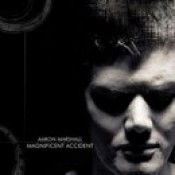 Aaron Marshall takes on the cycle of life in his 2008 release, Magnificent Accident, a moving work composed in well-drawn musical sketches. Marshall moves gracefully through a diverse mix of styles, from melodic instrumentals to flowing abstractions, all without losing his strong emotional thread. And then there’s his practiced narrative eye to consider. Marshall is telling a story here, and it shows. Pieces connect smoothly like slow fades between scenes, and every detail matters. His playing is a pleasure to listen to, no matter the instrument–the delicate piano runs that glisten across “Escape Into the Storm” are as engaging as the guitar work that forms the basis of the gorgeous “Fragments of Twilight.” Marshall is also adept at piecing together a deep, more ambient sound, as evidenced in the dark and church-somber movement of “Last Breath” and (even more so) the soft, meditative space created in the 17-minute-long closing track, “A Blinding White.” Both pieces, through built on long, warm pads and gentle movement, still carry the weight of emotion.
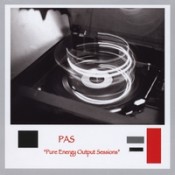 Call me shallow, but first impressions count with me. (I know I’ve mentioned this in past reviews.) So when I open a disc from an experimental collective called PAS and it turns out that PAS stands for “Post-Abortion Stress”… I think I can be somewhat forgiven if I burned the disc into iTunes with more than a touch of trepidation. Despite reading in the press release that the term refers to those who “have been aborted by society,” the material on the disc (I refrain from the word “music” here for reasons noted below) reinforced the idea that trepidation was warranted. Pure Energy Output Sessions is, as noted in the release, “music from the fringes of perception . . . [not] defined by any particular conventions or viewpoints.” Which is to say, anything goes once PAS gets started, guided by their mission of free self-expression. The work here is more sound sculpture than music per se, and it is, by and large, aggressive sound sculpture, dynamic and tending toward assault. As such, it will challenge the taste and, perhaps, tolerance of most listeners. Pure Energy, by design, is a disc solely for the unbiased, wide-open, art-focused mind that can embrace a very abstract, unfettered approach–and I’m honestly not sure, having listened, if that’s me. Sample PAS and decide if it’s you.
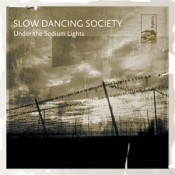 On his latest album, Under the Sodium Lights, Slow Dancing Society (aka Drew Sullivan) comes through nicely once again with his signature mix of processed guitar washes and slow, melancholic melodies. The tracks melt together in your head, but if it’s due to a sameness of sound, then I have to say it’s a pleasing sameness. What works best here is that Sullivan’s straightforward playing has a real crispness to it, a strength and clarity that doesn’t just ease the playing over his reverent, almost church-organ-esque washes–it makes it pop. I also love the sound of Sullivan’s laid-back, country-bred slide guitar work and the shot of unexpected spice it brings to the sound.
 The old show biz adage is, always leave them wanting more. With this offering on Malignant Records, Johan Aernus ends his 15-year run as Wolfskin–and he goes out on what, for a realm as downbeat, minimalist and chokingly cloistered as dark ambient, could be considered a high note. I only came across Wolfskin last year when Malignant sent me the re-release of O Ajuntar das Sombras and I’m not the most dedicated dark ambient fan, but there is a un-nameable quality to Aernus’ shadow-thick work that appeals to me. And it’s certainly here on Stonegates of Silence. With Anders Peterson, aka Last Industrial Estate, at his side, Aernus skillfully guides us through an expanse of fog, fear and unpleasant sensations. It’s suitably relentless, rumbling like the turn of a massive grinding wheel, washed through with echoes of oncoming storms and whispers that hint at the truth of an inescapable hell. Grim and isolationist, it’s not an easy listen–but then, if you like dark ambient, that’s not what you’re looking for in the first place. Wolfskin departs with his legacy intact.
 Hypnagogue Music Reviews