I don’t usually do multiple reviews for an artist in one entry, but with the rather prolific Phillip Wilkerson, it can become a necessity. This review covers two recent releases, 2010’s The Way Home and 2011’s Ten to Eleven. Both are personal compilations and serve as a very good introduction to, and narrative of, Wilkerson’s evolving sound.
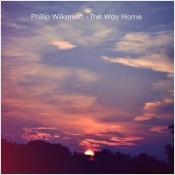 The Way Home is a compilation of early works, gathered in a netlabel release at Earth Mantra. Filled with easy flows in a classic quiet music style, it’s a beautifully reflective disc. For the most part the music here follows a familiar rise-and-fall pattern; some elements only as long as a breath, others stretched and held. Wilkerson infuses each waveform with grace and warmth. “The Adagio for Dreamers” is a blissfully relaxing wash of sound. There are layers, but they’re not densely packed in. There’s just enough interplay between them to create movement. Its followup, “Nightwatcher I” is my favorite track here, nearly 15 minutes of soft drones and long pads, quietly played in slowly shifting tones. “The Stillness of Time” is a graceful blend of birdsong, the crisp patter of rain and delicate ambient constructs. Wilkerson’s restrained hand is fully in play here as he lets the birds and rain carry the piece; the musical aspects come to us from distance. There are also tracks that bring his talents as a more traditional musician to the fore. “Equations” puts a thoughtfully played piano melody on top of whisper-light chords. The motif is heard again in “4 a.m.,” where the keys adopt a tone somewhere between fretless bass and electric piano as they take overtired and almost uncertain steps through the piece. The idea behind the piece is conveyed beautifully here. The Way Home is a time-stretcher of a disc, an hour of music that’s in no hurry to let you go. I respectfully suggest you won’t have a problem with that.
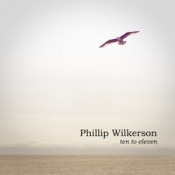 For Ten to Eleven Wilkerson took a number of tracks that had been released in lower sound quality via netlabels in 2010 and 2011 and had them remastered by Ben Cox of the Lotuspike label. Although from different releases, the tracks come together in a seamless flow of quiet ambient. The disc takes off on a high, hopeful note with the warm, intersecting pads of “All Possible Worlds” and pretty much remains up there even in its quietest moments. Wilkerson’s music is always padded thick with emotion–there’s a sense of the stories within the sound truly coming from the heart–and the journey here feels filled with personal secrets being whispered to the listener. The space that forms under the influence of “Complex Silence 15” and “The Heart Has Reasons” (which is from The Way Home) is very intimate; these are perhaps the deepest flows on the disc, 15 minutes spent completely out of time and inside your head. Ten to Eleven runs a scant 45 minutes but Wilkerson fills every moment of it with depth, warmth and meaning–the overarching signatures of his sound.
I’m not enough of an audiophile to pick out the differences in quality on the tracks shared between these two discs. Any way, I burn discs into iTunes as 128 bit files, which is probably some sort of reviewer sin, so I’m not sure it would be distinct enough to pick up. But I’m more concerned with the music’s effect on me, and Phillip Wilkerson is one of the most affecting musicians in ambient right now. Both of these discs are excellent points of entry for the new Wilkerson listener as well as great additions for those who, like me, are following him on his journey.
The Way Home is available from Earth Mantra; Ten to Eleven is available from Wilkerson’s web site.

 Mark Zampella says the distorted guitar sounds on his first solo release are layered, “like a sonic lasagna.” That alone conveys some of the sense of play at work on Tone Poems for Fuzzy Guitar, a collection of improvised, looped guitar works. Zampella keeps his experiments fresh track to track. The round-and-round, sequencer-like buzz of “Hive” is markedly different than the sustained, droning notes he eases out in “Funnel Cloud,” which in turn is nothing like very cool “Undertow,” my favorite track here. Zampella shows a lot of depth on this easy groove. It’s got a laid-back feel with touches of post-rock construction at the edges and a near-glitch rhythm. There’s a sexy little bass run in the middle (picking up the lead of a loop of scale-practice guitar), and the whole thing is shot through with a warbling, prayer-call-like vocal sample that gives it an exotic taste. Another favorite is the trippy “Kneel.” I can’t help but feel there’s a bit of a political statement hiding under the feedback-spiked wails here. Zampella tucks creatively spliced sound bites from some pol’s speech into the background, stitching together a bit of randomized, nonsensical dogma, interspersed with short blasts of applause. It’s effective, and delightfully weird.
 Let’s pick a few descriptors out of a hat here, just to match what’s going on with this disc…deconstructionist, anarchic, proto-avant-garde, experimental. Or, more to the point, the sound of a busload of jazz musicians driving off a cliff. On fire. Robert Pepper of the noise/experimental collective PAS gathers a small crew of like-minded adventurers and assails jazz structure on Two. By “assails” I mean “clubs it to within an inch of its life with wild abandon.” Let me say right off the bat that this isn’t for everyone. Bring your high tolerance for improvisation, load yourself a bag full of “Huh?” and give it a try. In places this crew almost adheres to a listenable structure, as with the opener, “Swift Time DNA” and the early stages of “Flower Cacophony” before it gets torn to anti-music shreds, but for the most part it’s about jamming wildly around the concept. There’s humor at work here, buried under the multiple-car-crash sensibility. Pepper and his cohorts are playing with ideas of jazz’s free-ness, the sense that often informs the artform that no one’s really steering the ship, that the sound is just veering wildly of its own accord and will find its way back sooner or later. At the root, though, there’s some sort of mad intelligent design at work. That is, if you can stand it long enough to try to find it. This will not be easy.
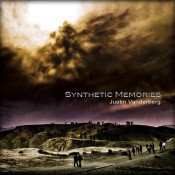 On his first release since his 2007 debut, In Waking Moments, Justin Vanderberg ushers his listeners through gossamer-winged ambient drifts and homages to the “masters of the sequencer” who inspired his own musical explorations. Vanderberg’s modus is to craft drifts that are as substantial as a cloud–airy, high whispers of chord–and layer them into rich, calming musical breaths. Over these he places minimal touches of more concrete sound. Take the deep flow of “67,” for example, where a pair of notes patiently rise and descend in a simple call-and-response match across the expanse of lower-note pads. Or the graceful “Drops,”which Vanderberg accents with rain-glistened piano notes and a light touch of twirling flute. Vanderberg’s comparatively uptempo pieces work well, too, although “uptempo” might be too strong a word for these rhythmically laid-back songs. “From Below,” where Vanderberg is ably assisted by Spotted Peccary head Jon Jenkins, kicks the disc off in gear with a steady, borderline-tribal drum line that pulses through a rising narrative. Jenkins’ presence here, musically and as co-composer, definitely calls to mind the cinematic sound that’s the signature of his work with David Helpling, but does so without over-riding Vanderberg. “The Path” brings keys and light hand percussion to play with the washes in a mix that will likely set the toes tapping. The title track is a classic sequencer piece, squared-off math constructs pinging and bouncing in a mix of rhythmic permutations. A distinct homage without just sounding fawnish. Synthetic Memories is a very soft disc overall, which lets the punchier elements, the twitching sequencer lines and percussion, pop just a bit more–but never to the point of taking the light away from the carefully constructed drifts. It’s a great low-volume listen that stands up to scrutiny, and it doesn’t wear out its welcome in repeat plays. Expect to listen to this one often. Synthetic Memories is an excellent and long-overdue return from Justin Vanderberg.
 Dark, claustrophobic ambient is in store for you on Twilight Transmissions’ Subterranean. This is the musical equivalent of walking through a bad neighborhood in a moonless midnight, assailed by the constant certainty that something bad is going to happen at any moment. Christopher Alvarado takes aggressive beats and makes them plod through the murky sound on tracks like “Palace of Silence” and “Tenebrous.” They’re more like a threat of imminent harm than a rhythm, time signatures stomped out in iron-shod boot-falls. And then there are spaces like “Essence of Dust” and “Eternal Remote,” pieces that exist just to test limits, to put us very much alone somewhere with only unease to keep us company to see what our minds conjure out of the depth shadow. The collection of sound sources at play here make you take notice and drag you in. They’re uncomfortable, mutilated industrial sounds, the collective grinding of rust-aged machinery and jagged edges–dangerously compelling sounds that, craftily modulated and manipulated by Alvarado, keep Subterranean from being just another dark ambient album. A disc well worth enduring, Subterranean will reward you for your bravery with a deeply engaging, if not entirely safe, journey.
 Meteo Xavier harnesses the power of the computer to carve out eight distinct soundworlds on his first full-length release, Espers. Xavier’s touting of the disc as “a unique, professional, conceptual album of music [made] on a single computer” could be seen as a warning sign, the worrisome “look what I can do at home!” mindset that sometimes plagues electronic music, but as Espers moves through its octet of identities, the statement becomes more “this is what can be done with a single computer.” Not only are Xavier’s creations workably distinct from one another, they also alter their appearance as they go along, like movements in a set of 8-minute electronic symphonies. The first track, “Tritochiark–Vestigial Dreamcatcher for the Heavenly Integer” (each track here has a novel-length title) begins in darkness with minor-chord choral voices, temple bells and discordant flute–but only for 90 seconds. A silent pause of nearly 10 seconds and then it restarts with lighter, chime-like tones and a subtle beat. Late in track a guitar takes the forefront and eases the flow down to its finish. The first taste of Xavier’s diversity comes as soon as the second track kicks in. “Ornamekias–A Slight Wave from the Hill Above” drops in with a club-friendly beat and a chill attitude. Airy pads support the background as Xavier lets the drumbeat control the feeling. Everything else takes a quiet backseat, all the elements getting brief moments to step forward. The shift here comes with just under 90 seconds to go. The beat drops, the airiness falls away, and we’re left with a simple combination of a sequenced rhythm cadence and a melody riding on a sound somewhere between an electronic sax and an electronic voice. None of these changes, whether between tracks or within them, ever come as an unpleasant jolt. They make sense. The changes between tracks are just a matter of looking out a new window. “Amenemhetopelzai–Ancient King Lost in Memories” takes us to the rainforest with hawk-circle flutes and, for lack of a better term, a Central American feel in the percussion. It has a strong New Age feel (my brain is racing for the reference, and it’s escaping me). “Icidina–Royal Highshiva of the Glacierplains” grabs hold of a spacemusic feel and bolsters it with more flute and glistening chimes. It builds in drama, gaining power and imagery as it goes. When this one hits its breakdown point, it almost comes as a relief. (And reminds me, with its bass-pulse bottom line and whistling higher tones, of Ministry of Inside Things.) “Navi Whisperwilde–The Forest Sprite and the Mana Spirit in Eternal Recurrence” offers a combination of bouncy sequencer and windswept pads that reaches into my electronic-music-listening brain and pulls forward feelings of Ray Lynch crossed with Suzanne Ciani–the playful meeting the graceful in a relaxing combination. Espers closes with a 10-minute piano piece, “Sagatellah–The One Who Waits for the Life to Come,” featuring pianist and composer Michael Huang. It’s pure New-Age pleasantry, a nice organic touch at the end of a long electronic voyage. Even here the feeling shifts as the piece progresses (it’s nearly 10 minutes long), a wind-down concerto that moves through Winston-esque passages and neo-classic frameworks with equal grace.
 Michael Allison, who records as Darshan Ambient, has had a widely varied career, from playing in rock bands with the likes of Richard Hell to knocking out 80s post-punk pop to crafting melodic New Age and ambient music. Now, with Dream in Blue, he sets his sights on his jazz influences, notably Miles Davis and John Coltrane, and creates a soft-edged fusion CD that’s quite simply one of the best releases of 2011. Allison warms up the listener with “Upon Reflection,” which starts off feeling like it would be at home on previous releases like A Day Within Days or Autumn’s Apple–a cool downtempo groove with twinkling keys and what sound like electronic drums. As you listen, though, the drumbeats begin to change, becoming analog and picking up more of a shuffle-and-crash affair with an unmistakable jazz pedigree. It’s a “welcome to Dream in Blue” moment that gets reinforced as soon as the trumpet kicks in on the next track, “When Will My Someday Come?” (A nod to the classic Miles version of “Someday My Prince Will Come.”) This is a straight-up jazz track with a live-combo feel that belies the fact that everything here is played by Allison, from from keys to drums to trumpet to guitar. And let’s talk about the guitar, not just here but through the disc. While on this track it’s got a viable classic jazz tone, mathematically perfect runs picking out the melody, work your way toward “Sahara Sun” to hear Allison unleash his six-stringed beast across drumwork that would do Art Blakey proud. The track works even more due to the quiet, pastoral melody ambling innocently along in the back as the guitar builds to a wild, fuzzy howl that drops out at exactly the right time. He shows his guitar’s soulful side as it smoothly dovetails with a classic slow-beat rhythm section on “As You Were.” (The bass here is thick enough to chew–just the way I like it.) The guitar trades leads with piano, played with late-night-lounge cool. The piano is at its most stunning on “Silent Smile (Angelo’s Song).” A romantic solo line slowly picks up quiet strings and bass. Midway, Allison brings in the trumpet, high and proud, to speak a short phrase that feels weighted with true emotion. In the last 30 seconds he reverts to solo piano save for one final chord. An amazing track. I like that Allison also keeps his ambient side in play here with the meditative “Waiting on a Dead Man’s Horse,” with its long, watery pads and ringing wind chime tones.
 If electronic music releases were judged solely upon their sonic density, Biomass’ Energy would be a fearsome, take-on-all-comers heavyweight contender. This is not a disc that wants you to listen to it; this is a disc that wants you to sit there while it pummels you into submission with relentless pulse-weapons of supercharged sound. Biomass (aka Walter James Douglas) deals in trance states–or, as he puts it, an “emotionally dynamic electrosonic energy field developed through psychedelic meditation in a dark immersive sound environment.” Like most trance, Energy derives it power from repetition. It’s techno with the amps turned up, a mind-numbing rush of tone and tempo. Problem is, it lacks variation. While that might be integral to the trance equation, it doesn’t make for an interesting listening after 10, 15 minutes. Douglas is at his most inventive in the first minute or so of “Phaseloc,” but then turns right back to his original formula. One interesting aspect of Energy is that each track grows successively longer, from two minutes to 22. To Douglas’ credit, his psychotropic intentions are fairly well realized here. The disc does bend your brain into a trancey space. I imagine that this stuff works far better cranked up in a sweat-humidified nightclub with lights strobing all around than it does when you’re just sitting and listening in headphones (which, it must be said, are a must). The power is here, and the slowly shifting dynamics. What’s not here is something to hold more than a cursory interest.
 The main draw of Steve Roach’s Journey of One is in knowing that what you’re hearing is a particular moment in time, an artist’s nexus point, a step in the evolution of their sound. Rising up from the groundwork laid by Dreamtime Return, Origins and Roach’s Suspended Memories collaborations with Jorge Reyes and Suso Saiz, Journey of One is a live expression of the dark, humid electro-acoustic tribal spaces that would become such a solid and recurring part of Roach’s sound from the 90s on. This live concert from 1996 wends its way through the chasms, caverns and caves of Roach’s lower-world sonic spelunking, urged on by hand percussion, growling didgeridoo and augmented vocal samples. (The flurry of voices mixed into tracks 3 and 4 of the first disc, along with laughter in track 7, are almost disturbingly trippy, and exactly as effective, I am sure, as Roach intended them to be.) The coursing electronic pulse beneath it all is a living river of sound, a sense of certainty in a constantly shifting space. To this end, Journey of One follows a format similar to some of his other live recordings, notably Live at Soundquest and Landmass; but this is the take-off point. If there have been other journeys where Roach escorted us across desolate stretches where hot winds skimmed across raspy dunes and downward into dank and forgotten serpent-mother caves, they started here. Later animalistic calls from the didgeridoo and the rhythmic windblown clatter of clay pots began here. Or, more to the point, they were solidified in this one ritual evening as Roach melted together and fused his analog-synth self from the 80s with the artist whose spirit had been opened somewhere in the Australian outback and who was finding vast desert vistas and ancient callings inside himself and creating the means to express it all in a visceral, live setting. Journey of One carries familiar sounds and the path is filled with deja vu moments for long-standing Roach listeners, but this is where the memories came from. This is the sound of a sound forming; this is the music of a turning point. Deep, shadowy, calling out to the tribe to come and follow, urging us all forward into this evolving space. The Roach we have now is testament to what the Roach of November, 1996, laid down as he began his Journey of One.
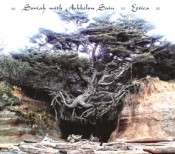 At its core, Eztica is a disc about power. Primarily, the power of the voice. Throughout the disc, Soriah alternately shouts invocations to the heavens (“Iix”), shakes the pillars of the earth with the soul-resonating guttural beauty of Tuvan throat singing (“Eztica”), tells cautionary tales by the fire on a moonless night (“Ticochitlehua”) and intimately whispers long-hidden secrets to us (“Temicteopan”). Each carries its own potency, its own sense of ritualistic intent conveyed through the mystic, primitive cadence of the Aztec language of Nuahtl. You don’t need to know the language to feel the effect, which runs deep and pings something primal inside. Eztica is also about the power of music and its effect on the spirit. From the stirring pulse of drums and hand percussion to the electric urgency of Ashkelon Sain’s guitar as it tears through tracks like “Iix,” stirring up a heady brew of equal parts then and now, the music on Eztica is an elemental force of its own. Flutes, zither, and Tuvan guitar all add their own signatures to the sound. The energy here is perfectly modulated between high and low as the disc moves along–the aggressive “Iix” drops down into the hush of “Ticochitlehua,” then rises in the ecstatic dance of the title track, which is absolutely the highlight of the disc. It begins with soft synth chords, Soriah’s voice in an ululating prayer-call rising behind it. Drums move in, and then the throat singing enters. Once this hits, the track will simply own you. This is a perfect future-primitive kind of track, the beats sliding toward an almost club-like tempo, the rich bass of the singing melting across the low end and texturing the flow. “Ximehua” has that same kind of blend, with the added attraction of Soriah hitting the high-register throat sounds, that signature whistle-like tone arcing upwards. And thus it goes, taking the listener from exhilarating dances to spaces of simple beauty like “Chocatiuh.” Here Sain’s guitar pairs with some sort of bowed instrument as natural sounds–flowing water and the chitter of birds–frame the scene. “Omeyocan” features Soriah on flute, placed over quiet washes and a soft, echo-filled guitar line. Eztica is one of the discs that just takes you in by making you think it’s one thing–a potent, tribal-driven work–and then showing you all the sides of a wonderfully talented and thought-provoking artist. The ride is engaging, exciting and empowering. At the same time it can be calming and cleansing. And it does these things in perfectly balanced measure.
 Hypnagogue Music Reviews