
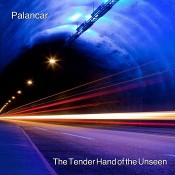
 Whenever I listen to Palancar’s music, I am struck by the thought that composer Darrell Burgan must be a very contemplative, complex guy. His music certainly reflects this, always bringing a balanced blend of quiet and unease, soul-calming lightness and spirit-shaking darkness. His latest release, The Tender Hand of the Unseen, gives us more of that mix in a set of tracks that loop perfectly for a very deep listen. Burgan notes that the work is meant to reflect “the redemptive and instructive value of pain, as explained in Kahlil Gibran’s poem ‘The Prophet'” and that, due to losing much of the original data in a disc crash, what’s represented here are a set of intermediate mixes. Having listened to the disc a number of times before learning that second tidbit, I have to say that for intermediate mixes they’re quite complete. There’s certainly no lack of emotional connection when you’re adrift on the warm currents of “Sacred Tears” or when the edged shadows of “Seasons of Your Heart” begin to press in on you in the form of subdued, gnashing drones and the wayward clatter of tinny bells. (More than once I have found myself holding my breath in the middle of this, an autonomous reaction to the atmosphere Burgan has crafted.) Burgan’s sense of balance, following Gibran’s equation, shows itself well in “Bitter Potion.” This track starts as another teeth-clencher, rising up on torturously slow and dark drones punched with a clash of metallic/electronic sound like the fall of a whip. Half way through its 10 minutes it melts into a quieter space that retains sonic burrs at the edges. After enduring the first half, which is a very visceral stretch, the relief of release as Burgan stretches out his sounds is downright tactile. And when Burgan turns his intentions to the more meditative side of things, Tender Hand becomes a salve of calmness and deep ambient builds. The title track is a warm whisper of sound, long pads and high, falling chords blending with easy grace, This is a genuinely stirring, soul-touching piece of music, one of those works that reaches into you and nudges something loose. Warning: introspection may follow. An excellent release from Palancar; he hits his theme perfectly and leaves the listener needing to go through the experience again.
Available from Buddhist on Fire.
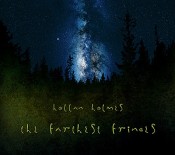 Hollan Holmes follows his debut release, A Distant Light, with a sophomore effort that shuttles listeners out to the deepest reaches of space to take in large, bold celestial panoramas. The starshine vistas Holmes crafts all have the ring of spacemusic/ambient familiarity to them–he wears his influences proudly on his sleeve–but The Farthest Fringes also shows the artist advancing his technique beyond what he accomplished in his debut and taking confidence in his own voice. The disc moves between beat-free flows built in large, arcing pads and Berlin-style riffs that sparkle with old-school charm. “The Great Unknown” exhibits strong ties to Tangerine Dream in its low-end-driven, narrative feel and rich sequencer bounce. Holmes maintains a nice sense of tension throughout. The same goes for “The Sentinel,” which has such a great back-then feel I almost miss the crackle of vinyl. An urgent sequencer message Morse-Codes itself in the backdrop as Holmes switches the melodic voice between calm string-like sounds and an edgier, roughened tone that warbles with dramatic vibrato. A pulse-pounder, plain and true–especially for us analog fans. The title track highlights Holmes’ quieter hand, a patient grip on the tiller as he steers the listener through his hushed soundfields. There is a genuine sense of distance and dimension. Angel-choir voices hold long chords as you pass, growing ever more a part of the sound. “Aeon” tends toward the same feel, the sort of track that brings your breathing in line as it courses over you in warm, slow pulses. Here the sound is more directly with you; it’s around you as opposed to you moving through it, and that helps effect its sense of intimacy. “Earthshine” brings the disc to a close on pads built from a vocal sample and a long, low-end drone. Classic meditative ambient, heartfelt and inspiring. You may want to sit in stillness as this piece hushes to an end; the journey overall creates a space in your head for just such contemplation, however brief.
 Offerings from the Ethereal Live netlabel fill a very interesting niche in the ambient/electronic realm: everything they put out is, as the name denotes, a live set. Many of these releases are straight from the board with little post-production, giving that interesting mix that live electronic music thrives on, that middle ground where pre-set pads and patches meet the in-the-moment spirit of improv. Symatic Star, aka Simon Walsh, presents two long live tracks on his first solo release, The Distance. The ride here moves from space-borne synth drifts and Berlin-esque excursions into the more experimental side of knob-twiddling, and Walsh pilots it all admirably. The first track, “Voyage to the Heliosphere,” is the more straightforward of the two, a familiar deep-space ride on drone-powered engines out in the void between the darkly shining stars. Just short of the midpoint, Walsh changes tone and guides the flow into grimmer, more minimalist structures. There’s a dead-ship feel to this passage, the sense of some hulking space-freighter and its unfortunately fated crew drifting out of radio contact. And this is where we stay for a good long stretch, hunkered down in this shadow-shrouded meditative state, listening to the hull vibrate and feeling the air run out just a touch with every new breath. It is pure atmosphere, perfectly executed. Walsh knows how to work the minimalism, drawing notes out and often keeping his layers shallow for full effect. The second track, “Beyond the Heliosphere,” is the more out-there of the pair, a stretch of modulation adjusting, knob-twisting sound sculpture that maintains an ominous overtone throughout. Of the two, this one feels a touch more spontaneous, new sounds birthing out of the mire at odd points and sliding back down, everything adding to the sense that All Is Not Well. All the choices speak to Walsh’s confidence at the controls. A rich abstract piece painted in a wide array of electronic colors, The Distance is a strong live performance, a work that’s a pleasure to go back into to take in all of the artist’s nuances.
 Oh, Michael Valentine West, how you love to challenge me. How you love to say, “Here, Mr. Hypnagogue, try describing this one.” So this time you show up as Lower Third, bearing the questionable gift of Hiromi Restraint, and once again, as you did when you wore your Twiggy & the K-Mesons outfit, leave me all wrapped up in your anything-but-normal ideas of electronic music. Why am I fascinated by the vocoder in “Quite Possibly You” and the way you match it up with that sparse, sort of menacing backdrop, the one that plops like lead raindrops? Why do I smile and bob my head at the simplistic chipset construct of “Hello Spaceman” even after you start tangling it up with a mess of other sounds? Why do I sit through “Atomic Drag Coefficient,” listening to the indecipherable computer voice and the sci-fi theremin warble, waiting for you to break it out–and not minding it a bit when you don’t because there was something in the way you built tension in the thing and a depth that made it interesting. You lead me on with “The Boy in the Paper Clothes,” that piano sounding like that old Primitive Radio Gods track, that metronomic beat, and everything pulled just a little back into the distance to make it interesting. You hammer away at me with the pure sonic assault you call “A Hole in Fabric of Time,” just flinging out every sound you’ve got en masse, anchoring it all with a simple bass riff and coyly playing an uncomplicated melodic line over it. Sometimes I understand why you make me crazy, though. “Automatic Death by Radio Jazz”? Really? Just drill into my skull next time. And that last thing? Can’t listen to it. Instant headache.
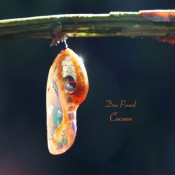 I didn’t expect, when I first started up Dan Pound’s new release, Cocoon, that I’d find myself coursing along alternate currents of hushed and chilled ambient, Native American-influenced meditations, old-school sequencer runs and smiling grooves that gave a quick nod to, of all things, Enigma. But all these elements are here and they come together in a virtually effortless flow. I have to admit that at first listen I was slightly put off by Pound’s occasional use of dense synth drumbeats that felt a little too “techno”–or, more accurately, too dull of a sound given everything else at play. Over repeat listens, however, they seemed to slot themselves somewhat more comfortably into place in the overall experience and I got what I typically get from Pound: a great ride that I come back to frequently. The title track begins the disc with gurgles and sighs, the mix of bubbling sequencer over long pads. Pound rides the dynamics across the piece’s 15-minute stretch, interweaving light string sounds in quieter moments, emboldening the pads to a grumbling thickness, adding gentle nature sounds and, in the closing two minutes or so, dropping in a beat (again, the bass surprisingly heavy in comparison). The next two tracks, “Starting to Change” and “Life Stages,” work in the Native American flute. In “Starting…” it”s paired simply against a club-ish backbeat. In the longer “Life Stages,” it’s befriended by a laid-back lounge feel and accented with chanting vocals. “Life Stages” is another of the long tracks here, so a shift is expected. It comes halfway in when Pound dismisses the beat for a calm stretch. When it returns–heavier–it brings along a bass pulse and twinkling electronics. (Cue your embedded Enigma memories.) A final shift comes in the last three minutes as shadows fall and Pound takes to the didgeridoo. Murky drifts, chanting vocals and the throaty, echoing curl of the didge distinctly change the feeling, “Transmutate” is a cloying undulation of sound, a bit of hold-your-breath darkness that is Pound at his most abstract. It ushers the listener into the last pair of tracks where the tone is definitely easier. “Emerge” is the old-school tribute here, an uptempo sequencer ride that lays down a cool base over which Pound floats more flute. (In spots the two seem a touch less harmonious, but it passes.) It’s a great choice coming out of “Transmutate,” this track instantly proving lighter, the effect amplified by the comparison. The disc closes with the cleansing, joyful,12-minute-long “Release.” Sweeping, classic ambient washes start it off, calm pads and windy rushes. A whistling melody arcs high overhead. Strong spacemusic overtones run through this one. Sit quietly in the closing minutes and let Pound’s structures carve themselves around you, the sound simplifying and silencing. Truly the best track here.
 I last reviewed Christopher Alvarado in his
  Now and then when I’m writing a review, I’ll Google to see what other people have had to say about a disc. Not that I’m looking to plagiarize, of course, but just to see how others perceive the music. Looking at reviews of Tapage’s new release, Overgrown, I came across this line at
  Threnody for Collapsing Suns starts out in an arc of ominous, borderline-industrial drones, and if you weren’t familiar with Michael Page’s work as Sky Burial, you might figure that this dark ambient outing would, like its kin, continue on in this vein. But no. About 14 minutes into the opening track, “Return to the Peripheries,” a strident old-school analogue pulse shoulders its way into the dronework and now there’s a shot of rhythm arguing with the bold washes behind it. Toward the end of the disc, the bounce rises and lightens without giving up its intense geometry, fading back out toward the end of the track to make way for a fresh change of tone. This Tangerine Dream-like moment is brought to you courtesy of page’s always-evolving Sky Burial identity, and it deftly turns Threnody into not-just-another dark ambient disc. Don’t get me wrong–there’s plenty of dark here. “The Cadence of Collapse” opens with pounding drums that would inspire an Orcish legion to war, and “Refractions from the Rift” thrums and thuds with a marked industrial edge. But “Cadence” filters its way down into a perfect twiddle-and-wash spacemusic composition that rings with older-electronic echoes. The softness stands perfectly against the potency of the opening few minutes. Page sends the sounds orbiting around the listener’s head, creating an almost synaesthetic visual as your brain follows it around. “Refractions” ushers itself in with metallic, heavily echoed clattering and a galloping sequencer rhythm. The noise thickens, your pulse rising with the density, and then Page throttles back. There’s still an industrial timbre to the atmosphere, but now it’s like you’re looking at it from a distance rather than passing through its harsh, churning center. As the voyage continues away, the sound takes a more ambient tone, but shot through with infrequent metallic grinds and a high whine, like some lost radio signal. Within each of Threnody for Collapsing Sun‘s three long pieces (23, 16 and 13 minutes), Page creates distinct movements–changes of tone or intent that glide logically one to next. Each one is thus a nicely complete piece in itself while also a working part of the overall. Page runs the listener out to the edges of dark ambient and dangles them over the precipice without dropping them. You get a taste of darkness, but then given respite. The balance is perfectly modulated. One of my favorite releases so far from Sky Burial.
 Self-described “classical punk composers” A Journey Down the Well present a four-part suite that combines a chamber music sensibility, a touch of deconstructionist thought, and field recordings for How Little Can Be The Orchestra, a disc that wants me to like it more than I do. Taner Torun and cellist Ipek Zeynep Kadioglu lay down beautiful, classically inspired works that are quiet, thoughtful and intimate in their simplicity, then layer on the field recordings, and this is where they lose me. While the first track, “How,” remains true to the chamber-music idea, the next track, “Little,” opens with two minutes of nothing but field. Two minutes and then it simply cuts out entirely. It doesn’t augment the track, it doesn’t create a counterpoint, it just plays for two minutes and stops. Then the music begins, another quite nice bit of piano and cello, Kadioglu’s notes quivering off the strings. Conversely, in “Can Be,” the two sides of the equation blend. Rowdy sounds of a sporting victory–cheers, car horns, shouts–get a contrary accompaniment of slow, almost morose strings, and it works perfectly. What doesn’t work at all for me is the brain-assailing mewling of kittens in “The Orchestra.” After a minute-long setup of string and piano, in come the kittens. As Torun and Kadioglu meter out a hesitantly paced dirge, the kittens whine like nails on a chalkboard. From an idea standpoint, I get it. Contrast. From a listening standpoint, I stop listening. When A Journey Down the Well aren’t over-muddling the sound, How Little Can Be The Orchestra is a pleasing, if short, listen that nudges ambient and neo-classical together in a quite intriguing. I listen to more from them as long as their next recording is kitten-free.
 Miles Tones, the first new release from General Fuzz since 2008, should come with a disclaimer that listening to it may cause euphoria and widespread outbreaks of generally feeling pretty good. Employing side musicians on guitar, strings, trumpet and more, James Kirsch douses his listeners with a deep blend of New Age, electronic jazz and post-rock that hits and sticks, track after downright pleasant track. It’s got the laid-back ease of lounge, but shot through with a strong emotional honesty that’s a major part of its allure. “First Steps” makes for a fine introduction. Twinkling glockenspiel keys like a child’s music box start it off. Acoustic guitar and a sharp tattoo on snare ease in, setting the stage for soaring, wordless vocals from Audio Angel. (She reappears on “Return Value” like a funkier, grittier sister to Clare Torry from Pink Floyd’s “Great Gig in the Sky.”) A piano bass line that to my ears comes away like a slight homage to Pachebel’s Canon rounds out the sound. From there it just gets tight, happy and cool. Latch onto those three words for the remainder of this disc because that’s what you’re getting. Hit “The Jam” and you’ll be courted by Ryan Avery’s lush violin work before Josh Clark of Tea Leaf Green steps in to light up the room with a hot guitar solo. JP Cutler and Emiel Stopler add more guitar into the mix. This may be my favorite track here. Kirsch lays down a snappy glitch-style beat for his musicians to work with, and they run with it. (One of his preferred working styles is to put forth a structure and let his guests riff over it as they will.) “The Gorge” heads for the jazz side of the street, electric piano playing off bubbly sequencer as Phoebe Jevotvic Alexander lays in vocals. “Slow March” is an intensely emotional piece. It feels like the slow arrival of something positive in the wake of a hard decision. There are undertones of sadness, amplified by Avery’s strings and Jessie Ivry’s cello playing a gorgeous duet, but Peter Medland’s trumpet arrives in smiling counterpoint, singing a silky line and growing consistently jazzier as the track moves along. An amazing track.
 Hypnagogue Music Reviews