
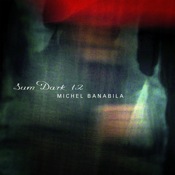
 Sum Dark 12, from prolific electronic musician Michel Banabila, consists of four original, standalone tracks and one long live track, performed at the Summer Darkness 2012 Festival, that incorporates elements from the first four. If this recipe sounds interesting to you, you are correct. This is a ride you’ll be taking more than once, and you’ll be taking it with the volume turned up and the bass cranked. The first four pieces are diverse and plenty strong on their own. “Crowds” comes in on a spring-loaded beat, then ramps up its density and intensity. There’s a certain tribal feel to the rhythm, paired off with industrial undertones. Throat-sung notes snarl under the beat, and then Banabila slides in a growing chorus of the titiular crowd sounds and suddenly we’re in mid-ritual and working toward a frenzy. The build here is superb, and when Banabila drops a little house beat into the middle of this epic swirl of sound, it just amplifies the existing cool. Banabila shifts gears with “Eyes of the Witness,” giving us a set of minimalist elements wrapping themselves around a glitchy beat. A snaky melody adds tension. “Sum Dark 12” follows, an expressionistic mix of wandering sounds–static, church bells, electric crackle, vocal samples, bass drones, and more, cooked together into a mind-grabbing mist. Banabila keeps it on the subdued side, letting the pure atmospheric elements do the work. After the three tracks that precede it, “The Empire in Transition” comes as a bit of a surprise–a spacey and soft ambient piece that moves gently across its five-minute span. There’s none of the grit and barbed edges of its fellows, just a surprisingly calming flow.
The live track is a 22-minute affair that, as you might expect once you know its genesis, rolls through several tonal changes as it progresses. It opens with the dark/tribal elements from “Crowds,” layering in and building up. Minimal elements take their turn as this early stage charges urgently along, taking firm hold. The build sneaks up on you until suddenly you’re back in the middle of that chanting, ritual-crazed mob and lost in the proto-tribal thrum. Banabila switches tone a little less than halfway in, picking up a bass ‘n’ drum feel, maintaining the deep groove but cleaning out the sound. Again he drives the thing forward on a big, pulsing, won’t-let-go beat and starts layering in his source sonics. This is seriously sweet EDM with just enough of a shadowy edge, and my favorite section of the piece. At the 15-minute mark we dive into the “Sum Dark 12” sound-set and get bare and experimental for a bit. As the track winds downs, the swirling animal call of didgeridoo blends with the churning industro-tronics and fades, slowly, to nothing.
Sum Dark 12 ranges from interesting to exhilarating, and once it has you in its grip, it has no intention of letting go. Each of the original pieces are full and engaging on their own, and the dark chemistry that creates the live set is inspired, perfectly managed, and utterly immersive. This is a great release from Michel Banabila, one you must hear.
Available from Michel Banabila’s web site.
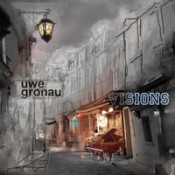 If you don’t get an immediate jolt of feel-good in the midst of “Night on the Roof,” the opening track from Uwe Gronau’s new release, Visions, then a) this might not be the disc for you and b) you might be dead. In fact, the majority of the 20 tracks here, which Gronau offers up as soundtracks to a movie in your head, are upbeat pieces of pop-song length, equal parts New Age and contemporary instrumental, and they’re catchy. Pete Sayers’ guitar on “Under the Pont Neuf” rings with a folksy flair before Gronau beat-drops it with magnificently weighty synth chords–and yet the undertone keeps its simple charm. “Old Man in the Rain” takes a similar tack, but with Gronau’s lyrical piano and the sound of rainfall. For pure uplift, head to “A Passion Play.” Gronau pushes huge keyboard runs out of his Hammond B3 while supporting it with whistling flute tones and raw guitar lines carved out of his Virus synth. The tracks just roars with a soulful feel–I keep going back into it! “Summer in the City” also has energy to spare. Gronau’s piano here is light yet potent, a melodic base he pumps with speedy synth lines. It may put some listeners in mind of (for example) John Tesh, but that’s not a bad thing. It’s another song shot through with true joy and it just revels in its happiness. Some Visions tracks work in a jazz feel–Gronau cites Joe Zwainul and Weather Report as early influences. Matthias Keidel’s sax on “Through the Backyard Window” pairs off Gronau’s electric piano and synth backdrops to give it a perfect smooth-jazz/fusion tone. Again, if you don’t find yourself caught up in this, tapping your toes and feeling it, seek professional help. “Oasis” presents itself simply but effectively with a small-combo feel. Hand percussion (synthesized) and rimshots make a backdrop for electric piano.
 On his new two-disc release, Computerchemist (aka Dave Pearson) tries an interesting strategy. He gave drummer Zsolt Galántai sets of time signatures to follow, then had Galántai improvise what were essentially long solos. Pearson then went back in and, in tried-and-true Computerchemist fashion, attacked them with the dual weapons of progressive rock and Berlin school concepts. The outcome is a long stretch of fiery, flaring, feel-good tunes that will have you turning up the volume. I will gladly confess to being a huge shill for Pearson’s guitar playing. It’s inspired and passionate and howls with a classic rock ‘n’ roll lack of restraint. These discs give plenty of that, particularly the second. “Strangeness in 13” kicks off that disc with Pearson grinding out soulful solos while a piano slyly offers up whispers of the beginning of Tubular Bells. This leads straight into “Goodbye, Moszkva Tér,” which is essentially Pearson and Galántai strapping you into a chair and pumping a constant stream of high-grade art-rock adrenalin straight into your veins. Then the man gets downright aggressive with his axe, strangling screaming banshee wails out of it for “Floor Zero.” Meaty keyboard chords fill in the background. On the first disc, Pearson hits the guitar mark when he revisits an old track in “Landform 2012.” This is a perfect blend of guitar and sequencer, Pearson holding long, soaring notes heavy on the reverb. Pure, gorgeous Berlin. “Zsoltimatic” is another nice guitar track with a bluesy edge.
 As the title suggests, Peter DiPhillips’ Mystic River Reflections is an introspective set of synth-based pieces, ranging from lightly pulsing songs to extremely deep drifts. It’s a short ride, just over 45 minutes, and there’s barely a bump in it. DiPhillips offers up a set of sonic vistas painted in hushed tones and crafted with real depth and dimension. On the driftier side of things are “Whiteface Mountain” and “Plum Island Moonrise.” The first is washed through with a long, cold sigh of wind, the sound of it rushing up-slope, whispering its way against a quietly stated, slow-moving chant. The feel is genuinely reverent and spiritual, its minimal nature giving it a simple potency. “Plum Island Moonrise” is one of my favorite tracks here, a very calm wash of sound with a slight romantic tinge to it. It’s only because I enjoy it so much that I find myself slightly disappointed with the way it ends–it just feels like it gets cut off before it finishes saying what it has to say. Up to that point, it’s superb. Then there’s the title track which glistens appropriately, wavering watery tones flecked with high, twinkling notes like sunlight on waves, and a breath-easing sense. DiPhillips’ pads here rise up boldly and pass like cloud shadows. He touches on the darker side, too. “Ogunquit Beach” opens feeling a bit tempest-tossed, wind-swept and a little aggressive. The sounds clatter and clash like the dull thud of storm-tossed rocks. DiPhillips pares this one back mid-track to a lonely sigh of pads, the stormier parts having passed over but still in view. He then takes you into the murky and haunted surroundings of “The Sunken Forest.” The chitter of electronic bugs fills the space immediately and intermittently. Drones rise and fall, and a punchy melody with a kalimba-type tone catches hold of you. A very atmospheric track. In among all that, “Montauk Point” and “Blue Mountain Lake” offer somewhat more uptempo rides with their own cool personality. “Montauk Point” comes at you with a bouncing, rising three-note pattern that drops off to make room for shadowy drone structures, only to come back still humming its simple ditty. “Blue Mountain Lake” feels like a mildly deconstructed lounge piece, its glitchy rhythm and smooth chords finding themselves a bit displaced, again working in uncertain concert with hissing underlays. The more I listen to Mystic River Reflections, the more I find to listen to. A great looper that stands up to deep scrutiny. Nice work from Peter DiPhillips.
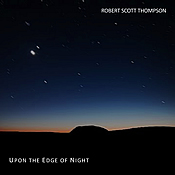 Let me say from the outset that Upon the Edge of Night, the latest release from prolific electro-acoustic composer Robert Scott Thompson, is one of those albums that brings to mind the old quote, “Writing about music is like dancing about architecture.” It’s not a release that will benefit from a written review; it needs to be given a deep, focused listen. While I don’t do “Best Of” lists, I would have to say that this easily stands out for me among the releases I’ve listened to this year. Across 13 tracks, Thompson touches on classic ambient drifts, neo-classical structures, and light sequencer music, all with equal grace and mastery. This is my first exposure to Thompson’s music, and I’m amazed at what I’ve been missing. Upon the Edge of Night is actually a collection of pieces “culled from a large number of studio sessions” for three upcoming releases–which makes 2013 a very promising year for listeners. It also accounts in part for the diversity at work here. Thompson opens the disc with the very soft ambient tones of “Strange Lines and Distances.” The piece has a lush, warm sound, punctuated with quietly repeating piano notes. Then, having spent 16 minutes convincing you you’re in a very good ambient disc, he greets you with “Glass is the Enemy of the Secret,” an almost playful little tune on the edge of electronic chamber music. It reminds me in spots of a slightly tamer Roedelius. And the changes continue from there, all the transitions smoothly made. He again takes the listener deep into a dream-like realm with the gorgeous flow of “The Misty Place.” Organic touches and a distinct progression of sound mark the journey here. There’s also a rich sense of emotion, admittedly on the melancholy side, that connects and draws you in. The slow piano of “Far Side of the Sky” is paired off with long string pads, Thompson letting the space between notes and the fading resonance have their say in the story. The twilight-hued “In Situ” is a borderline drone piece, sizable pads moving in a slowly advancing line. Another track that just takes hold of your mind and holds it still while Thompson works on it. “Variation Reveals” is like a pastorale on piano, flute, and strings, a straightforward, classically oriented piece. “Pale Fire” closes the disc with energetic sequencer constructs and interruptive sound manipulation. Spacey and a little odd…I like it.
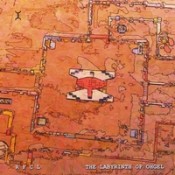 JC Mendizabal and his crew are back to put sound through the wringer and shape it to their liking on the latest Radio Free Clear Light offering, The Labyrinth of Ohgel. Eclectic is the name of the game here. Each of the 14 “chambers,” which are based on “
 While Darker is dark, it’s not as dark as the name might imply. This is not grinding, crushing dark ambient, but it is without a doubt an hour spent fully cloaked in dense shadow. Phobos (aka David Thompson) escorts the listener through four long-form works, managing to create atmospheres that are equally as mind-salving as they are lightly unnerving. This is very much a headphone listen because you’ll want to soak up all the small details as Thompson pulls you inexorably down and in. The path starts early on in the half-hour-long “Seance,” with Thompson’s void-born drones welling up to surround you. This is not isolationist ambient per se; rather, it takes on the feel of willful dissociation as the sound drapes over you, alternating between thick, growling pads and the occasional distant howl of rising wind, and you agree to leave yourself behind. The amorphous, constantly folding washes of dark continue through “Descend” and “Hell’s Gate,” at which point Thompson opts to unleash a little discomfort on you. You’ve passed through his veil of shadow, slipped between worlds, and your reward is a gnashing, edge-of-industrial snarl of sound, the darkest space you’ll encounter on Darker. As the track moves forward, the sound tempers toward a softer edge without quite leaving the unnerving sense behind. It’s meant to deposit you into the last part of the journey, “Decomposing Lust.” As befits a well-planned excursion, Thompson arcs the sound upward toward the light here, his deeper sounds rising in tone and feel, stopping just short of the ever-popular angelic choir pads–but still coming off soft and warm enough to relieve forty minutes of sonic tension. Don’t get too comfy, though–in the closing moments there’s just enough dissonance slipped in to leave you with a touch of worry.
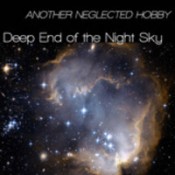 Recording as Another Neglected Hobby, musician Mark Cotton sets out on his newest release to create “a soundtrack to use while watching the movement of the stars and planets across Earth’s night sky.” For your stargazing pleasure he offers the hour-and-a-quarter long Deep End of the Night Sky, an excellent long-form piece that shifts through several compatible identities as it moves along. Even with these shifts, Cotton never ventures into a sound-zone that disturbs the simple pleasure of listening and letting your mind’s eye create planetarium-quality starscapes. (And, yes, when New England weather allows it again, I will listen to this out on the deck while stargazing.) The moves and changes are organic and sensible. By way of illustrating the diversity at work here, I’ll tell you that one recent day I set this to loop in my office, then went about my day. It was interesting to note, each time I came back into the room, what tone this piece had taken on. At one point I entered a space that was cold and a little ominous, filled with low-end tones; on another visit, I was in a much warmer, calm floating space, immediately soothing. Cotton’s style is to launch far-stretching pads and let them slowly fade, the resonant sounds meshing easily with the newer formations as they rise. There’s a sort of easy complexity at work; you understand, in listening, that Cotton is manipulating and moving a lot of sound, but it all flows together without so much as a bump. This is also what allows those shifts to occur so smoothly. Deep End… is a big piece of work, packing a real sense of vastness and celestial beauty. Cotton spins his tale with practiced patience and a real ear for harmony. This is most certainly a disc to loop, as the journey melds end-to-end with ease and it’s likely you won’t want it to end.
 CR Hougaard tries to show us “the charm in the weird and scary” on his new release, Aethereal, using synthesizer, guitars, and effects pedals “altered by an old tape recorder.” He manages to get the weird and scary part down, but finding charm in this mix of noise will be a matter of individual taste. If you’re not amenable to noise, you may be put off by the clatter and screech of the 15-minute opener, “Eine: Reise ans Ende des Verstandes.” To his credit, Hougaard creates a distinct atmosphere, loaded to the brim with grim uncertainty and a touch of claustrophobia. But it’s a long ride to take and a lot of sonic debris to get through–again, if you’re not among those who appreciate the heavily experimental stuff. I find myself skimming through the first several tracks until I come to the other long piece here, “Liftoff.” It’s quieter than its predecessors, falling somewhere between drone and drift, but Hougaard works in some dissonance to give it an edge. As the track progresses, the sound begins to decay under additional elements and processing, the textures on the perimeter much rougher while he maintains much of the comparatively simple aspects of what’s come before. This, I’d assume, is the power of liftoff, and it’s well done. The later tracks are more spacey than the earlier ones, the mix of drone and drift without the heavy hand on the noise. “Pacific” is a great example of what Hougaard can craft that’s more along the lines of straightforward ambient. Long pads stretch out under a white-noise hiss, the two elements trading prominence.
 Hypnagogue Music Reviews