The story behind the creation of BioSonic and Second Nature, the collaborative and thematically linked albums from Steve Roach and Robert Logan, is the stuff of young-ambient-musician dreams. Logan, a Roach fan since the age of 13 whose own work is profoundly inspired by him, began corresponding with Roach about 15 years ago. In his initial contact, he included a CD of his own music. Roach says that he found Logan’s music to be “…already emoting at a very high level that seemed well beyond his years.” The two began on some intercontinental collaboration—Logan in England, Roach in the American southwest—the results of which are expressed in these two works.
 As much of a Roach fan as I am, if you just sat me down and hit play on BioSonic, I would not have identified it as his work. The mechanistic clicks, whirs, and gurgles, like some robotic boot-up coming on line, instantly grab my attention but definitely do not shout “Steve Roach.” As it transposes itself into a pleasantly plodding rhythm and the air fills with a dizzying array of sounds, I find that it wouldn’t matter who was at the controls—it’s easy to hear from early on that this will be a good ride. After that first track, I pick up more of Roach’s work seeping into the deep mix. Chugging percussive tones and a feeling of electronic velocity on “OmniGen” bring up memories of Trance Spirit as Roach and Logan thicken and intensify a storm-swirl of sound. The wall they create is fantastically dense, and the way it unloads into the quieter environs of “Ecdysis Activation” has a sense of release to it. It may come as no surprise to Roach listeners that the shifts in tempo and tone here are absolutely fluid and organic. It’s pure flow, no pun intended, weaving from the gallop of “Primal Confluence” (where the Trance Spirit connection is even stronger) to the slow, humid churn of “Erososphere” and back up into the more energized playfulness of “The Biomechinoid Liefcycle Revealed.” That track is an ear-tickling mass of analog chirp and twitter, tiny sounds filling your head in swarms. While this whole album is a blast with headphones, this is the track that warrants putting them on in the first place. The title track follows, keeping the throttle jammed open while the duo pull an endless batch of fresh, odd sounds out of their gear and send them ricocheting around the space. Highly infectious.
Second Nature sits on the other end of the spectrum, four quiet tracks that stretch  calmly outward. The title track and “Mystic Drift” are longer than the other two, given half an hour and 22 minutes, respectively, to course past. Unlike the long-distance relationship that ideated BioSonic, this was created with the artists in the studio together for the first time, finding an ideal meeting point of concept and technique. While Roach handles the electronic atmospheres, Logan takes to the grand piano and sets thoughtful notes floating. The piano is at its most forward in “Shadowspeak,” something of a nocturne played out slowly, its resonant notes forming chords in the background. On “Mystic Drift,” the song slows further, a distant dream-element calling out in a widening wash of warm ambient textures. Roach’s work on this track is remarkably soft, a head-soothing blend of tones that completely remove the listener to a very pleasant elsewhere. The title track is similar in structure and equally immersive. Touches of tension slip in at times with short-of-dissonant tones that raise up lightly in the flow, but the listener remains well within the sound for this lush half-hour ride.
These are two superb releases, and their difference in approach makes them that much more interesting. I enjoy the strong vibrancy and velocity of BioSonic and its hard, metallic edges. And I enjoy Second Nature for its slow beauty and the way it works its emotive magic at low volumes. Second Nature is bound to get a lot of looping play as listeners just allow it to fill their space. I had not realized (literally until getting to this point in my review and doing some digging) that Robert Logan formerly recorded as Sense Project—I believe I reviewed his release, The Sublime, back when it was released in 2008, and I have played his work on my podcast. I do not recall being as moved by that album as I am by these, but needless to say, Mr. Logan has my full attention now. These are must-hear albums.
Available from Projekt: BioSonic. Second Nature.

 Set the volume low and prepare to drift off as you listen to, or rather, get surrounded by, The Great Schizm’s For the Ancient Ones. In four tracks of increasing length, the last being 25 minutes long, Anthony Bloxham sticks to a trusted formula of long, rise-and-fall pads in overlapping layers. His tones skew toward the warm and soft, with plenty of earthy low-end notes for that kind of in-your-soul reverberation. It’s quiet and contemplative, with spots where it rises up a little without ever challenging the hush of its own flow. After a number of listens, I find I enjoy For the Ancient Ones more the less attention I give it. Bloxham’s very good at conveying feeling through the manipulation of his tones and drones, and the quietness of it all is effectively soothing. It’s just that the delivery of it lacks some variation. That being said, I think that lack tends to work in its favor at low volume or as a background listen. This is the kind of stuff that will slowly fill your space and change the mood by slowing everything down; that’s when it’s at its best for me. Dedicating focus and really listening for an hour? Less so. For intensive listening, these tracks fare better individually. I’ve played them on my podcast and probably will again, because they do stand on their own quite well when blended with other things. I have always appreciated the sort of minimalist approach that’s at play in these pieces, but even minimalist pieces can vary. If you’re looking for deep ambient or low-volume music for sleeping or meditating, definitely give this a listen.
 Here’s one that taps me right in my jazz-loving spot, and is probably a bit far over the jazz border for me to review. But if your instrumental-music appreciation runs to small, guitar-fronted combos, Things Left Unsaid from Samurau is something you need to hear. Guitarist Michele Sanna, bassist Matteo Muntoni, and drummer Alessandro Garau lay down eight catchy tracks that range from quietly thoughtful to vibrantly energetic, and keep it absolutely engaging the whole time. Sanna is a guitar chameleon, taking his tunes from the silky glide of classic jazz to sparking, dirty blues riffs in a snap—and he nails both sides of the equation. Take “Killer Wave,” for instance. Its front end is dressed for cocktail hour, coming in as a gentle melody full of softly swept chords and dexterous note-picking. About halfway through, there’s a half-step toward blues and the guitar gets a little more smoky. At the end, Sanna plays with cutouts to flash us messages in gritty Morse Code. And the changeover makes total sense. I must say that I really enjoy when Sanna gets his blues on. “Freezing Frog/Strange Blues” makes me wait for it, opening with what almost feels like an improv in a funky time signature, all three players working off each other around the central motif. Each pass is punctuated with thick low-end notes. The combo moves through a slow, quiet passage and the guitar starts to speak in blues tongues. Muntoni helps lead the way by walking his bass down and Sanna picks up from there. And, man, the first raw licks of pure blues give me chills. Any jazz fan knows that the rhythm section is the backbone of a small combo, and Muntoni and Garau do exactly what they are supposed to do: lay down the bedrock and keep it solid. Muntoni’s opening riff on “Things Left Unsaid” sets a great tone, slow and walking and ready for Sanna’s tremolo-washed guitar. This track features floating, flying, smooth-jazz sax from Gavino Murgia. It’s a joyful noise, bright and sharp and breathtaking. It’s particularly effective since it’s the only spot on the album that’s not just two guitar and drums. There are songs here that don’t need to switch tone to be enjoyable, of course. “Dangerous Squares” is just a solid block of small-combo work, with Sanna running his jazz scales in crisp, hollow-body tones. A great sense of fun runs through it, the feeling that the trio are just digging the moment. “Sevilla” is a casual samba as sweet as a rum punch. I like Garau’s fills here as he finds small spots to pop in a little flair to match Sanna’s playful up-and-down-the-neck leads.
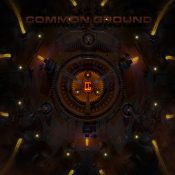 Collaboration is a way of life in the ambient world, and I like it that way. Bringing talent together for the first time creates fresh chemistry, new explorations, and re-imagined definitions of the craft. So it is with Common Ground, the trio of Bill Olien and Gary Johnson from Resonant Drift and spacemusic composer Hollan Holmes, with ambient legend Robert Rich handling the mastering. The initial liftoff is from a grounded standpoint, opening with nature sounds. But it’s not long before we leave that behind for broader, deeper places. To be honest, the first couple of minutes of this track, Many Voices,” don’t do much for me, between the chirping and the straightforward pads. Then the warm, round tone of fretless bass slips in and nudges my attention. Sequencer work—I presume it’s Holmes’—begins to percolate in the middle of the flow, and now I’m hooked. The piece works back down to its starting point, and I find I’m more okay with it at this stage. That blend of pads and rhythms also drives “Ancient Whispers.” This piece will pull in some Steve Roach reference points, with understated tribal drumming counting off time as Johnson leaks out sighing guitar chords a la Streams & Currents. The trio keep this one dialed down in tone; its smooth waveforms ease into your system. When these gentlemen shift into more beatless zones, the drift is blissful. The stretch formed by “The Apollo Frequency” and “Edge of Tranquility” is filled with warmth and dimension and a feel that seems more driven by Holmes’ ambient sensibilities than Olien’s and Johnson’s. Of course, it’s the collaborative effort of all three, and what we enjoy here is pure and correct chemistry, so I really don’t care who’s at the helm. I’m just along for the calm ride. “Apollo” offers up some changes in tone that nudge toward being too sharp, but the skilled hands at the controls lay off just enough that they instead accent the drama of the passage. “Tempest Rising” opens in the same soft space as “Edge…”, but true to its name, begins to ramp up in intensity a few minutes in. This is another spot where solid sequencer work takes the lead and laces in a cool old-school sense. The closing track, “The Ties That Bind,” takes an interesting approach of building up a stretch of pads, very full and gentle, then letting them fade down to virtually nothing. A pause, and then the next wave rises slowly. Small sounds tick and ping like light chimes in the background, and the feel overall is simply meditative. A nice way to end this hour-long run.
 Smoky, guitar-based ambient curls around you on Christopher Alvarado ‘s Drifting Through Kingdoms. As with much of Alvarado’s work, the voyage leads through some shadowy spots, but he guides us from a lighter area and work our way in. I get swept up in the first two tracks, “Realm of Reflection” and “Borderlands,” and I don’t notice the changeover from one to the next. “Realm…” is where the guitar is at its most obvious, picked against rising pads. It’s swallowed into the blend on “Borderlands,” which has a nice, large and classic feel to it. From there, the dissonance begins to set in, and the tone glides toward a darker attitude. This is where Alvarado begins to lose me a bit, and once the album moves into the piece “Aquae,” I feel like the road has diverged a little too far. Here, Alvarado tries to shoehorn some chanting/hymnal voices over his pads and drifts, and the result is the sense that someone pushed the wrong button at the wrong time. Like two different pieces are fighting for attention, and neither wins. “Dulcet” redeems things a bit with the metallic texture of the guitars pinging of the dark pads, but there’s something to the thinness of the sound that becomes too noticeable for me. “Petra” puts me back into that immersed space I enjoyed at the beginning. Swirls of dark sound and rich low drones intertwine, and a whispery tone that runs through much the album underscores it all. Alvarado puts a good edge on this one, including the subtle use of a haunting vocal sample that slides into the mix, makes you aware of its presence, and then eases back away. This is the album’s longest offering, at 11 minutes, and it makes great use of the time. My only other quibble is the use of a distracting hiss that comes and goes on “Delicacy Above the Lambent.” It’s a little too there, and it sounds less like an element in the song and more like one ear suddenly unclogged while I was listening. It took me out of the album because I wondered if something was wrong.
 In A Land of One Color is one of those albums I wish I liked more than I do because much of the work is quite good, but it’s also a little inconsistent. When it manages to pull me in, I really enjoy the ride. “Desire’s Last Plateau,” for example, works with a simple blend of bright, honest guitar picked and slid slowly over hushed pads. Small-kit drums, lightly played, pop a slice of jazzy percussion behind it. “Early Calm,” which follows, also catches me. There’s more slide guitar, long draws of it set against matching chords and a glimmer of wind chimes. But since it’s only 1:11 long, it’s gone before I can fully fall in. This release also has several places where the endings of songs feel a little arbitrary. “Coldlake” starts strong with a sort of dialed-down post-rock feel (and more of those chimes). A cool background textures gurgles quietly to deepen the space and then, short of 90 seconds in, it just goes away. “Stormwatch” also decides to leave the room at an odd spot, but at least it’s been given three and a half minutes to get there. But getting back to the good stuff, “Icelight” is perhaps the best track here. It builds quietly in bright, welcoming tones, then adds the shine of guitar and the warm sound of fretless bass. It’s an effortless flow that feels pleasantly longer than its actual run time. “Elusive Path” owes a slight debt of allegiance to Steven Halpern. The crystalline tones of the electric piano here are immediately recognizable, and I quite like the use of pauses on this piece, and the twirling phrases that spin off around the keys.
 Bill Vencil, his guitar, and some wind come together to create drone-based soundscapes and quiet songs on Atmosphere, his 2015 release as Chords of Orion. The album shows a few different faces, all based in guitar, and Vencil handles the shifts nicely. Things change up enough to keep us listening while never going too far afield. The album opens in a fairly dark space with the solids drones of the title track. The sounds here are gritty and mildly unnerving, piled on each other and distorted. At the end, Vencil smooths it all out and leaves us with a long, high, clean note that fades off and deposits us in the twittering field recordings of “The Birds Are Your Parishioners.” Things get softer here, and that changeover carries nicely through the next couple of tracks. “Silence of the Seas” is classic big-pad ambient, with Vencil easing notes off the guitar and setting them into a rise-and-fade framework. It’s beautiful and calming. “Broken Proverbs and Torn Sentences,” takes us over to Vencil’s acoustic side. The warm, folksy feel of fingerstyle gets augmented with a light, swishing sound and almost unnoticeable accompaniment in the background. Nice texturing, while leaving the focus on the guitar. On “Both Tears and the Sea Are Salty Water,” the sounds get big again. Vencil draws loud wahs from his guitar, hitting points of near-feedback (and then actual feedback) and riding the edge of dissonance. It’s got a kind of slow-motion aggression to it, a strong in-your-face quality as the thickness of the sound increases—and then just drops off to leave you still feeling its potency. There are places on Atmosphere, I am told, where an acoustic guitar was set down in the open air and the wind was allowed to have its way with the strings and the sound. Where and how Vencil has worked this in, I can’t say, which I guess is a good thing—it becomes another element in a very pleasant mix of sounds and we don’t need to let the novelty of the idea get in the way.
 From its first warm, lush pads to its final touching notes, Altus’ Komorebi is an album bound to find its place alongside all of your top quiet-time and meditation albums. Once again, Mike Carss holds the tonal keys to unlock your innermost thoughts and feelings, and he gives you a full, immersive hour to get in touch with them. A review isn’t really going to do it justice. I can tell you that I distinctly feel something stirring when I’m deep in the middle of “Wander” and”Touch,” and that on any number of listens there have been places where I quite literally stop everything that I’m doing because some sound, some moment within each of these pieces has found its connection and pulled me out of what suddenly seem like far lesser concerns when all that matters right then is to listen. Aptly titled tracks like “Hypnotize” and “Slow Breath” do exactly what is required of them, and all of them together spin a quiet space around you in skeins of quite indescribable beauty. In theory, anyone could take a set of chords, hold them and release them, and let them cross and fade; but it takes a hand like Carss’ to add the almost intangible weight of real emotion to them—because there’s your difference. There’s the thing that we take hold of, and there’s the thing that lets us make an album like Komorebi more ours. We feel it, we find our own meaning in the rise and fall, we decide if those chords are sad or thoughtful or hopeful. This is the effect Komorebi has as it glides past. Warm, deep, with touches of space, and emotion to spare, it’s a release that showcases why Altus is one of the absolute best artists producing ambient right now. Get this, and get deep into it immediately.
 So there I am, moments after hitting play on Alessio Premoli’s Even Silence Has Gone, and I’m thinking to myself what a great acoustic guitar album this is going to be. On the opening track, “Barefoot in the Morning,” the playing is soulful and honest, the guitar lines so clean. And then like a giant flaming fist from space, this massive symphonic post-rock thing slams into the room and floors me. Hello, Alessio, you have my attention now. On his Bandcamp page, Premoli notes that the 10 songs here blend “…all that I’ve got involved with in the last two /three years (post rock, stoner, ambient, folk…)” and he delivers on that. Sometime, like “Barefoot…”, he mixes them together in cool, often unexpected ways. Then you drop into the ensemble of his acoustic guitar, sweet cello from Giulia Libertini, and gentle flute from Marco Miceli on “Hoarfrost” and you’ve landed in a spot-on early-Windham-Hill vibe. Take that setup, let it ride for a few minutes, and then lace in out of the clear blue sky, some big, shiny Spanish-style horns from Riccardo Feroce and that would be “Untitled #1.” The first time I listened to it, I literally said, “Cool” out loud when the trumpets dropped in. A favorite. Aggressive solo guitar with a flamenco pedigree is featured on “Painted Desert.” Here Premoli assails his strings with such vehemence that I kept waiting to hear one snap. But it’s compelling in its power. “Old Tjikko” takes us in the other direction, a folk-style piece that plays out patiently and lets the reverb of the guitar hum and fade. It segues neatly into “Another Place,” a beautiful post-rock song with vocals. Premoli folds the members of his ensemble smoothly into the mix, building off the genuine feel of the acoustic and working it up into a larger thing built on nice distorted guitar and a chorus of voices. The solo on this track catches my breath—it’s got fire and feeling to spare.
 In the many months that Twilight Archive’s Mood Chain has been sitting in my music library waiting for me to get around to reviewing it, I have lost track of how many times a piece from it has come up in shuffle and absolutely hooked me. Kicking off with vibrato Fender Rhodes electric piano tones and smoky trumpet, “Sense Making Stops” (bonus points for the killer title) instantly grabs my attention. It says, “Hi, we’re going to mix jazz and ambient, and it’s going to absolutely infiltrate your soul, so get ready.” Then it laces in chopped vocal snips and a tempo shift, and I’m all in. The core of Twilight Archive is
  Hypnagogue Music Reviews