Ombient & Chuck van Zyl, Space Patrol

omb_spaceStraight out of the heart of Philadelphia’s Berlin School-loving electronic music scene, here come Ombient (aka Mike Hunter) and Chuck van Zyl, with three long, majestic-in-their-analog-glory pieces on Space Patrol. For me as a listener, this doesn’t have to be anything other than what it is: a classically cool hour of bouncing, intersecting sequencer lines, spring-loaded bass tones, and all manner of nostalgic knob-invoked electrosound. Hunter and van Zyl land squarely in my old-school wheelhouse, and I am oh so very content to coast through the cosmos with them. “Space Cruiser” is exactly that, a 26-minute coast that opens with the high melodic tones of a Mellotron flute to establish the piece’s base before the sequencers kick in like the comfortable pulse of the star-drive. Familiarity takes over, and that pulse, those lines, these elements we’ve heard before and which are raised here in homage, act like gravity upon your body—you will move to it, however slight. van Zyl’s synth leads are fluid and calm, little zero-g drifts full of grace. As we enter into “The Zone” the duo take us into strange, uncharted regions filled with wayward sounds, dark drones, and scattered sonic detritus. Church bells (maybe repurposed from the Ministry of Inside Things track “Grateful”?), applause, clattering sounds, voices—all this spins past as we drift through a space that feels nicely improvised. (These tracks come from live performances.) It seems like Hunter and van Zyl knew they would spin us into this place, and then challenged each other to pull the strangest possible tones and thoughts from their gear. It’s pure atmosphere, of the Twilight Zone variety. There is a sense of passage to this track, with the end of it sliding us into the closing piece and a return to brighter analog thoughts. “Outland” has energy to spare, doled out in shiny lines and spirals of Jarre-esque twitter. And, of course, it closes ever-so-smoothly by bringing us back to the high tones that kicked off the ride, which means (again, of course!) that Space Patrol loops back on itself virtually unnoticed to keep the ride going as long as you like.

It’s no surprise that I enjoy Space Patrol a whole lot. I’m an old-school electronic fan, have enjoyed van Zyl’s work both solo and as part of Ministry of Inside Things, and became familiar with Hunter’s work when I saw him perform live at the electro-music.com gathering. This is the stuff I’ve loved for years, perfectly rebuilt into something that makes me need to turn up the volume when I listen. It’s solid Berlin and an excellent paean to the range of the analog synth. This will absolutely resonate with knob-heads like myself, and will please anyone who like good, straight-up electronic spacemusic. Buckle in, take off.

Available from the Ombient web site.

Sote, Arrhytmia

sote_arrTruth in advertising. On Arryhtmia, Sote (aka Ata Sote Ebtekar) largely dispenses with paltry concerns like rhythm and standard percussion and lets some kind of algorithm-based compositional wizardry take the helm. While I can’t say I particularly care for the outcome, there are some interesting ideas at work, and now and then it catches my ear rather than shoving me away. Ebtekar maintains the traditional tunings of the music of his native Iran, but rams it through his electronics to create forceful things that fly toward your head at high velocity. The overarching idea seems to be to begin with a batch of noises tangling with one another, squibs and squawks of electro-sound, then push them together into a more cohesive pattern. The pieces each eventually take on their own thumping character, and all are fairly aggressive. The wobbly junkyard clatter of “Pep” gets more in your face as it goes along, its core sounds almost comical in they way they squish and bounce. The effect is heightened by runs like a muted xylophone mated with chipset. “Lacuna” stacks harsh metallic banging on deep bass riffs, and everything works into one of the more outrightly rhythmic pieces on the release. Other tracks more or less follow suit, looking to find that place where aggression meets beat or lack thereof.

Arrythmia is not an easy listen, and not something I’d hurry back to, but at the same time the more I listened to it—and that was very mood-dependent—I began to hear what Ebtekar is doing. It doesn’t mean I like it, but it means there’s a point of entry for the open-minded listener. Those who appreciate noise and the experimental approach will uncover more meaning here.

Available at Record Label Records.

Kristoffer Oustad, Filth Haven

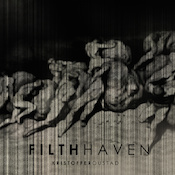
oustad_filthAny time I feel myself connecting with a dark ambient album, I begin to wonder if it’s time for therapy. What is it about some of this stuff that manages to hook into that grim and hidden corner of Who I Am and makes me feel like I’m welcome here? And why? Filth Haven from Kristoffer Oustad is one of those albums. It may be because this is not a crushingly heavy, drone-based bit of darkness that I find an easier entry point into it, but there’s no doubting that the overall tone is weighty and absolutely coated in shadow—and I am oddly at ease here. Okay, not at ease per se, but from the first booming chords of “Elberton 1979,” that resonant force locks in and surrounds me and I’m in a place I don’t think I’ll mind. Oustad takes an odd monument called the Georiga Guidestones as his source of inspiration, and when your inspiration is an “American Stonehenge” that’s over 237,000 pounds of granite in total, your sound is understandably dense and loaded with mystery. Oustad, however, doesn’t just pile on the potency and call it a day. “Anti-Clockwise Rotation” lightens the load somewhat, and takes some energy from a kinetic sequencer line tapping out some Morse Code urgency over vocal pads. “Row Me Over” is grim, but even as we’re presented with the uncomfortable creaking of a weakening boat, there’s a kind of edge-of-lightness tone to the flow. Darkness comes in tracks like “Traveller,” one of my preferred pieces here. Didgeridoo tones snake outward from the beginning. This sound always feels like a dark-spirit calling to me, and it grabs me straight away. Between its from-the-pit drone and high, falling notes, the track works its way into a smooth hypnotic lull with just enough shadow to keep you on edge. Oustad sets that course, then drops out the ridge and sets the listener drifting in a mistier, disconnected place. The switch is perfect. “Liquidator” is aggressive and pulsing, bring the big tones back in concussive waves. The sound gets nicely dense here, pushing right up to the border of truly dark ambient style. As the track progresses, the expectation of when the next pulse comes in actually becomes a bit suspenseful.

Filth Haven speeds by in under an hour, and it loops quite nicely. Trust me on this—I have taken this dark and lovely ride many times over. Oustad controls the emotional content with a sure hand, and never feels the need to bury the listener under a cairn of sound. The atmosphere, the mystery, the sense of unknowing, is what this album is all about. Lights out, headphones on. It’s time to get in touch with your own grim corners. An excellent dark release.

Available from Malignant Records.

Dave Seidel, Imaginary Harmony

seidel_imagI know I’m out of my musical league when the first sentence of an album’s description gets my head spinning. Composer Dave Seidel tells us that “Imaginary Harmony takes as its raw material a 25-note-per-octave ‘scale’ built by octave-reducing the set of harmonics used by La Monte Young in his 1990 sine wave installation ‘The Prime Time Twins in The Ranges 576 to 448; 288 to 224; 144 to 112; 72 to 56; 36 to 28; with The Range Limits 576, 448, 288, 224, 144, 56 and 28.'” It actually gets headier from there, and quite mathy. Seidel offers two tracks of identical length (9’22”) built as generative compositions in CSound, a computer music computational language. For me, unfortunately, it’s a bit like listening to a test pattern. I hear the very slight shifts of tone in these long drones, but to my ears they are glacial and I feel like I’m just listening to sets of one long tone at a time. Seidel further notes that because of the generative nature of the composition and the fact that the chords “generated are selected by a randomized process,” any real-time performance of this piece will differ. Having listened to these two tracks, I feel it would take a keener ear than mine, or perhaps just a more heavily experimental mindset, to appreciate what is at play here.

Available from Mystery Bear.

Cosmic Mind Warp, Subconscious

cmw_sub

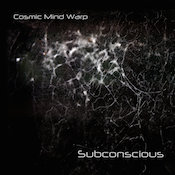
Don the headphones. Cosmic Mind Warp’s Subconscious is one of those albums you want injected directly into your noggin. Packing plenty of trippy aural chemistry and honoring 90s IDM with its share of spoken drop-ins, it gets right to the job of swirling around in there, splashing every corner with sound. Thumpy beats, crispy electronics, and a darkly cool sense readily balance out long deep-breath stretches. Getting lost in here is easy, beginning with the sparse and slightly haunted atmosphere of “Norwegian Whispers.” String sounds and field recordings wind their way through some darkened imaginary copse at pre-dawn, and every creak and crack heightens your senses. But the sonic fog here is thick and slow-moving, wrapping it all in a bit of mystery. “No Thoughts Existing in Your Head” takes its cue from your favorite lounge tune, with sexy bass and a lax pace doled out in long pads. “Alpha State of Mind” is slow and dreamy in a heavily medicated kind of way. Hymnal chords get pulled and twisted over a tapping beat. “Song of Slow” is a splendidly graceful ambient track, a surprising dose of calm in the midst of the more active tracks around it. And there are some comparatively uptempo pieces here. “Through Our Eyes” has the chug and churn of a low-level industrial track crossed with a hint of early OMD. “Future Possibilities” gives us bouncy bass figures, more vocal drops, and notes that rise up on bubbles of reverse echo.

I’ve enjoyed how varied Subconscious is without ever drastically changing its tone. I get a little sidetracked during “Thunder & Reeling,” which is just a bit too tangled, urgent and experimental for me, but it’s a forgivable offense because it’s quickly forgotten. For the rest of the album, there’s a thoughtfulness to the way the pieces slide together. Nothing jolts you from your slow descent into a pleasantly hypnotic state. There’s enough texture and gentle changeover, though, to pique your listening here and there. It’s the occasional nudge that leads to a “hmm” moment. This also means that you’ll probably hear something new on each listen. Most of the 15 cuts here are quick, clocking in around two to four minutes. Sometimes that can be a recipe for trying to do too much. Not here. Here it’s just layering on more spirals, more hush, and more interest. A smooth, cool, and trippy ride from Cosmic Mind Warp. Pop in for a listen. Don’t be surprised if you stay.

Available at Bandcamp.

Dave Preston, In These Storms

preston_stormsOne guy, his guitar, a bunch of effects, and a whole lot of soul. That’s the equation behind In These Storms. Looping and layering his way into bright, uptempo post-rock melodies, Dave Preston follows the roadmap he first laid out on Be and Soundtrack for Motion. I feel I have to note up front that through the many times I have listened to and enjoyed this album, both in repeated review listens and in shuffled listens to my entire review queue, I’ve found that I enjoy it slightly more as an element that pops up to shine in a mix. Preston exhibits a masterful hand in building each song; it’s just that, for me, in a straight-through listen, the way each rises via repeating phrases becomes almost too expected. Taken on their own, however, every piece here has its own fresh character, its own message, and is fully engaging in its own way. Preston modulates his energy as he goes. “Fire” is about the highest-velocity track here, with a guitar that sounds like a hybrid of The Edge and David Gilmour (think “Run Like Hell”). Big power chords augment the bridge, and a galloping phrase rushes across the low strings. A steady bass drum beat intensifies “The Circle Around the Sphere.” The song’s central phrase has its own sense of urgency. Underneath, countering the push toward power, is a downplayed ambient swirl. And while we’re talking about catchy tracks and their beats, let’s listen to “Hologram.” A shuffling house beat snaps over a speedy arpeggio before mutated chords softly empower the melody. Listen closely to pick up some excellent textural work. The closing track, “Unity,” has a lot of the same sensibility. With a beat played on what sounds like a goblet drum, a pair of guitar loops share the lead. The sound is sunshine-bright and rich with harmony. On the quieter, more reflective side, “A Cared For Memory” sings a sweet ballad with an assist from a lovely vocal sample. Preston defaults to soft, sweeping chords here and lets their smooth resonance carry the feeling. “An Old Connection” skews more to the ambient side of things. Kicking off with the well-remembered sound of a dial-up modem reaching out to find the interwebs, this piece shimmers its way along. Reverse-echo notes and warbling chords chart the path, with a very subtle shaker sound keeping time in the undercurrent.

As I said, I do prefer these pieces individually—or along with a few of their compatriots—but that is not to say that this isn’t a good album. It’s very good, and when you add it to your library, these songs are going to jump up and shine. I have been a Dave Preston fan since he first impressed me with Be, and I’ve been waiting five years for him to follow up on Soundtrack… This album was quite definitely worth the wait, and it’s one that will keep a favored position in my own library. Beautiful songs, expert playing, seamless construction, and—like I said at the start—a whole lot of big, honest soul. Add this one to your collection now.

Available from Dave Preston’s web site.

Peter Kater, Love

kater_lovePeter Kater has not released an album of solo piano music in over a decade—which is not to say he hasn’t been playing solo piano. In the liner notes for Love, Kater says that the pieces on the album came together over a three-year period in “‘the heat’ of the moment.”  There are five improvisational pieces and seven compositions (the last track is “an improvisation on a composition”), all of which are just a candle and a wine glass away from inspiring heady romance. I am of two minds about this album. There’s no doubt that as far as New Age-style piano albums go, this is a winner. Kater plays with fluid passion, and every piece here overflows with several greeting card stores’ worth of genuine emotion. “Two of Us” literally stopped me in my tracks the first time I heard it. I am a number of listens in to this album and I have to admit that it can still move me to the edge of tears. “Keep Loving You” revels in quiet trills and overall takes a sotto voce approach without losing its soul-impact. Even when it swells, like so many tracks here do, it’s in a restrained way. It’s like listening to it start to get its reserve up to say something important, then sigh and go back to ruminating. “Mystery” puts me in mind of a nocturne. Kater’s left-hand runs here are gorgeous, and there is a passage around the 3:20 mark where things get very quiet except for twinkling riffs on the high end of the keyboard, and it’s a beautiful little moment. “Passion,” the track that is an improv on a composed piece, throws in the added pleasure and surprise of suddenly grabbing hold of a jazz vibe. Maybe Kater wanted to let us know that he’s got a little kick to go with the outpouring of love. Love can be fun, after all, right? It’s not all heaving breasts and pounding tickers. Those are the moments I enjoy most on Love, the pieces that show restraint. I enjoy them because they don’t swell and sweep off into the kind of too-big, ideal-of-romance notions that fill everything up with splendid runs up and down the keys. That’s the other part of my mindset regarding this album. There are places where things get a bit sugary for me, but I recognize that it’s very much in keeping with the New Age piano motif. (“Safe Haven” and “Intimacy” are the ones that stand out in my mind.) I also find that, as a listener rather than a reviewer, I’ve usually enjoyed this album more when it’s working as background—at dinner, or just left to play as I go about my business. There, I notice those grander pieces less, and still the pure emotion of Kater’s work firmly takes hold. It’s a very good end-of-day release, preferably when your end of day involves wine and candles. New Age piano fans need to hear this. The quality and beauty of all of Kater’s work is a well-known quantity and this return to the simple beauty of solo piano will surely please his existing fans while making new ones.

Available from CD Baby.

Soundchaser, Inside the World Machine

cereb_machineNot to start a review by calling out a peeve of mine, but: When your album jumps in sounding like a bad edit, there had better be something there that makes me forget about it. Inside the World Machine from Soundchaser kicks me right in the peeve at the start of its hour-plus run before settling into a industrial dronespace that does its best to help me forget about that gaffe. (As always, said gaffe may be quite on purpose and is only a gaffe to my ears.) What follows is a workable exercise in drone, a long beatless drift that maintains a hissing base and a fairly dark tone while it slowly morphs its tonal shape. Artist George De Bruin skillfully handles the piling up and breaking down of layers of sound as he goes along, and in doing creates a balance of truly gritty, harsh industrial textures and less dense, somewhat more floaty passages—there’s never an actual calm moment here, just places where the sound is less assaultive. That being said, I never find myself being compelled to listen, and although I know I’m listening to drone, I kept wanting something interruptive to happen, some shift to something bigger or even more sparse. Either direction would suffice. De Bruin’s work does take on the hypnotic quality we expect from drone, but for me just lacks for those attention-retaining moments. There is a second, “melodic” mix of the track which does much of the same, but with a distinctly brighter tone. (It also fades in more gracefully than the first.)

Those who appreciate drone more than I may find more going on here. I think there’s good work going on, but it’s not squarely in my noise wheelhouse.

Available from Cerebral Audio.

Haiku Salut, Etch and Etch Deep

haiku_etch“Baroque-Pop-Folktronic-Neo-Classical-Something-Or-Other,” huh? Yeah, I suppose once I get to the squeezebox sea-shanty that pops up in “Bleak and Beautiful (All Things)” I can roll with that. And it’s just the start of a whole set of charming sounds that wander into Etch and Etch Deep from trio Haiku Salut. Chimes and warbly electronics mix with thumping beats and little frenzies of glitch, all to support the warmth of the acoustic instruments at the core of it all. The words that jump to front-of-mind here are fun and nice, along with I think I’ll listen to that again.Every track here is rock-solid and has something new to offer. That accordion sound, matched with a drumbeat that falls somewhere between military and D&B outtakes, creates the mix of power and pause on “Skip to the End.” “The No-Colour of Rain and Dust,” one of my favorite tracks, opens as a thoughtful solo piano piece. Light taps of glitch snap in as accompaniment. It reaches a bridge, and then beautifully oscillating synth tones come in to play. The shift in tones has a very hands-on-knob feel to it; it honestly feels like an immediate response to where the piano goes. This is the one that hooked me for good. “Hearts Not Parts”* is a massive dose of feel-good. It charges in on drums and a pulsing accordion line—or is that a harmonica? I don’t care, I love it! Wordless, cooing vocals lace their way through. I confess to having done a bit of chair-dancing when this comes on. Give it 90 seconds or so and you’ll be treated to a nice drop where the three work in small moments with small sounds, and give the space great texture and detail, You know the other side of the drop is coming, the part where it cranks back up, and when it hits, it’s rewarding. And in case it sounds a bit light on power, the vicious drumming that closes out “Things Were Happening And They Were Strange” covers that, too.

There’s a crazy amount of stuff to love on Etch and Etch Deep. The trio, who I can only find reference to as “Louise, Gemma, and Sophie,” have an incredible chemistry, a love of musical play, and crazy talent. And I don’t do this often, but in trying to learn more about them I came across this video of a cut from their live show where they have 20 vintage lamps rigged to turn on and off, flicker and fade according to the music. It’s not that they have a light show that impresses me; it’s the light sources themselves. I am now jealous of people who’ve gotten to see this live. I’m in love with Etch and Etch Deep. It’s an amazing set of electro-acoustic pieces with the focus on the acoustic and a solid grounding in electronics. Give it some extra volume, fire it up, and don’t be afraid to chair dance. I think Louise, Gemma, and Sophie would prefer it that way.

Available from Bandcamp.

Chords of Orion, Souls

chords_soulsLayers of floating ambient guitar are waiting to caress your noggin on Souls, the new release from Chords of Orion (aka Bill Vencil). The overall feel is light and quiet as Vencil slowly coaxes long strands of overlapping tone out of his guitar and effects. Each expression is fairly short, with 11 tracks in an hour, but they float together without any real bumpa, giving the overall impression of a long, single listen. Vencil blends the more ambient work with pieces built around more distinguishable sounds, making for a dynamic mix. But it’s the pieces that sigh and yawn in light rise-and-fall cadences that are the draw for me. On these, Vencil takes a melody and pulls it out to  graceful lengths and infuses them with melancholy. Tracks like “In Heaven, It Is Always Autumn” (which is a fantastic title), “Ruler of the Night” and “The Distance Between God and the Creature” show this style off really well. Vencil also throws in some nice treatments as well. “Ruler…” glides from ear to ear; the notes in “Distance…”waver with tremolo and skirt over the top of what sounds like field recordings of water. “Dismiss Your Servant In Peace” plays with long-held tones bordering on feedback laid against a virtually unmoving bass drone beneath it. The contrast is excellent, and it feels like you can hear Vencil literally wringing the notes out for all they’re worth.

At times, Souls can feel like it’s shackled with a bit of sameness. After repeated listens, however, I’d say it can instead be considered to lend to that sense of this being a mostly continuous flow. It doesn’t get old, thanks to a lot of very good small detail work, but it’s come up in my mind more than once. Even so, Souls is a pleasure, and works very well tucked into a larger mix. Vencil’s playing is beautiful. His focus on letting the resonant sounds that arise from his delay effects fade and cross to create fresh, lingering sounds is perfectly executed. Check this one out.

Available from Bandcamp.