
Projekt Records has re-released a pair of early Steve Roach works, Day Out of Time and Stormwarning. Covering two very distinct periods of Roach’s style, the first makes for a superb reconsideration of his desert ambient work, while the second dives back into the Klaus Schulze-inspired, rapid-fire analog energy that marked his earliest albums.
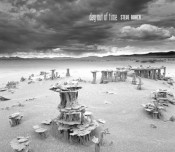 Day Out of Time was created as a soundtrack for the Steve Lazur film “Time of the Earth.” The pieces picked to accompany Lazur’s mosaic of time-lapse images of the stark and startling beauty of the American desert were taken from various existing releases, along with some new (at the time of the original release) material. It all comes together in a classic Roach desert/tribal meld, full of shadowy whispers, desert-night field recordings, snarling didge and spirit-grabbing percussion. The disc certainly adds a dimension to Lazur’s film–not being a film critic, I’ll withhold comment–but is also a great listen on its own. While the tracks contain a lot of common threads that run through thjs chapter of Roach’s style book, it’s a well-modulated collection. When the feel is out in the open, as in “This Life” and the fantastic, drum-driven and drone-underscored “True West,” it’s vast and spacious. When it goes underground, as with “Walking Upright,” one of my personal favorite tracks from Early Man, it’s pleasantly dark and mysterious, the atmospheres absolutely dripping with detail. For anyone not familiar with this arc of Roach’s career, Day Out of Time is an excellent primer. For existing fans, it’s a new way to revisit these superbly carved landscapes.
 Stormwarning captures three early live performances, from 1985, 1987, and 1991. Culling structures from three of his earliest albums, Traveler, Now, and Empetus, in these concerts Roach essentially built a full studio set-up on stage and took off on deep sequencer excursions. The three tracks are live and straight to tape, with no overdubs, no backing tapes, and no post-production remixing. This is Roach on the fly and very much hands-on with his analog-only gear, manipulating the flight and flow as he goes. “Day One” opens with a quiet set of ambient chords reminiscent of (though pre-dating) sounds on Dreamtime Return. Out of nowhere, sharp clarion-call notes mark a shift, and the sequencers kick in. The dense weave of notes–on all three tracks–is astounding not just in its complexity, but also in how Roach drops out and picks up different sets to alter the complexion of the thing across a track. “Day Two” shares a similar structure with the first track, but here the opening feeling is grimmer and more shadow-choked. Rippling bass notes threaten over distant clattering sounds and a rising electronic wind. The sequencer lifts off from the midst of the mix, a potent dose of light and energy pulling away from that darkness. Roach fires off a Berlin School-style melody over the sequencer bounce. There’s a great spot where Roach is absolutely thrusters-at-full, exploding across the space at near-light speed, then slams on the brakes and shifts the tempo down innumerable notches without missing a step. Here comes the hyperbole: it’s literally breathtaking. “Day Three” is from a concert in Germany six years after “Day One.” A misty wash solidifies slowly into the sequencer pulse here, and again there are very distinct echoes of Dreamtime, which had by then been released. While the sequencer holds the low rhythmic end, we get the twanging notes and subtle percussion of that landmark disc, covered in flowing ambient pads.The percussion gets heavier and more tribal as the track goes on. “Day Three” seems somehow more full of life than its counterparts, or simply bigger. It’s less given over to the high-speed demonstrations than to spreading out the sounds and exploring the difference between pulse and flow. It may also be that the Roach here is on the cusp of shifting styles, the precursor to the Roach we hear on the Journey of One CD. Thinking along those lines, “Day Three” is a nexus of styles, and a perfect way to showcase the artist’s progression while also showing the through-line back to his beginnings. Stormwarning is an absolute overdose for analog lovers, a synapse-blistering ride that requires that you play it loud.
Both discs are available from Projekt.
 From the opening moments of his new release, The Deception of Reality, ambient artist Numina creates a true sense of spaciousness, of a vast and immeasurable place that collects and holds sound, and then proceeds to immerse you in it. This disc is filled with big, rich pads that draw long arcs across the sky, their vapor trail remnants crossing and playing off each other. The strata run very deep here, and superbly dense, paired in places with a sense of melody pulled out to the distances, to create phrases that reveal themselves over time. The disc opens in tenuous territory with “The Illusion Transmission.” Dark curls of sound, moaning vocal samples, and a persistent bass drone lay the foundation. The movement is languid and dream-like, but the dream is dark and brooding. With his usual finesse, Numina slowly tweaks that feeling, and by mid-track the mood has lightened and lifted. The change is so subtle that you likely won’t notice it until you feel it–and that’s testament to the effect of the music. The shortest offering here is over nine minutes long, so Numina is giving himself ample room to stretch out what’s he’s got to say, and cover a lot of sonic and emotional ground. It’s a seamless flow; the “tracks” are just index points marking time along the journey, because you will, in fact, become lost in it. Each track also has its own distinct sensibility, and the movement through them feels sensible and solid. Light and buoyant notes sing across much of “Our Elegant Experience,” perfectly airy against the thick wash behind them. As the track rolls along, Numina changes the texture of this repeating pattern, keeping it from going stale. This simple mantra of notes marks waypoints in the depths of a very mesmerizing flow. “In Cerulean Haze” takes another extended bass drone as it launching point, then widens out into broad ambient drifts, quiet and calming and quite affecting. “Empire of Nothing,” the longest track, carries on that meditative flow, but adds a more distinct touch of melody in glittering high notes. A slowly rising and falling waveform threads its way through the track like a breath. It ends with a rush of synth wind that takes us into the final track, “Translunary Return.” The character here is one of slight melancholy, borne on that wind (which packs a nice classic electronic music feel) and more vocal pads singing in a soft chorale. Once again, the layering is splendid; you can listen to it build here quite well, new elements dovetailing into the mix as the piece progresses.
 Complex Silence is an ongoing curated series of drone-based ambient works, each by a different artist. The stated mission is to have them “explore the depths of long-form ambient music composed entirely of extremely subtle changes, dissonant harmonies, stretched-out harmonics, abstract tone washes, layers of mystical atmospheres, or field recordings…” This 23rd edition is Philip Wilkerson’s fourth contribution, the others being numbers 1, 5 and 15, and it offers a somewhat different Wilkinson than some of his listeners may be used to. And this is a good thing for two reasons. First is that it’s beneficial to any artist to challenge themselves to follow new pathways, to break from their comfort zone and chart a new mode of expression. Second, and specific to Wilkerson this time out, it’s work that was born out of a period of conflict and pain in his life. It’s always good to get that crap out, however you get it out. To our benefit, he has gotten it out with some deep, introspective drones that move, like healing, from relative darkness to a place that’s lighter and uplifting. The long drone form gives the listener plenty of time to internalize this movement and the emotional journey that’s being charted. It’s one of the good things about quality drone-work–there’s not a lot to distract the listener from the layering at play and the tonal colors being put forth. Wilkerson starts in a space that’s pensive but reasonably light, a pleasant ambient drift. Late in the track, the tone begins to turn colder on a rising synth wind. As the second track begins, things darken. The atmosphere becomes weightier. The feel bends toward the isolationist ambient side of things, with its distinct tinge of loneliness. This is a wonderful stretch of lulling drone that calmly opens a space in your mind and lets Wilkerson’s intentions drip in. From here, beginning, appropriately, with “Sunward,” Wilkerson starts the redemptive leg of the journey. From the start the tone glimmers; big, arcing pads take over and spiral upward. This, the shortest piece here, moves us into the very lovely “As Lost As You’ll Find,” a 23-minute opus of floating ambient. This comes much more in line with the kind of optimistic, healing ambient Wilkerson is known for, and it’s as gorgeous as anything he’s done. There’s a subtle feel of constant upward movement, and of reconciliation with the darkness through which we’ve passed. The disc closes with “While Silence Sings,” another thoughtful prayer of sound. Gently hissing noise, like rainfall, whispers in the back over light pad structures as Wilkerson eases us toward the end.
 Listening to the new Silentaria release, What’s Real?, I kept asking myself if I’d enjoy it at all if I hadn’t come of musical age in the heart of the synth-pop era. The disc hangs on a very tenuous balancing act. On one side is that sense of retro cool, heavy on the nostalgia and the sort of just-finding-our-way feel of the first noodlings of synth-pop. (Think “Just Can’t Get Enough” and compare that to later Depeche…). The other side is a sound that comes off like it’s trying too hard to get it done without having all the tools it needs. My enjoyment sways depending on how far it leans to one side or the other. When Silentaria (aka Rixa White) hits it, he lays down a blend that calls to mind the good, sequencer-based electronica coming out of the Netherlands and early 80s synth-pop. (If you don’t catch a whiff of Ultravox here and there, you’re not quite listening.) I get a guilty-pleasure vibe from the surging pulse of “Vital Doubts.” It’s partly cinematic New Age, partly a New Romantic-style pop tune from the 80s. (Hello, Classix Nouveaux.) “Real Fantasia” is airy and somewhat quaint, a dance of electronic energy. “Consciousness” coasts along with a strictly-by-the-textbook EDM feel. The problem is that the really catchy tracks are few and far between, and the slavish adherence to influence gets wearisome. In addition, there are spots where the mix can be a bit dull and tinny. (“Oceans of Illusion” suffers from this.) But nothing truly stands out, and the album can’t shake its clear do-it-yourself pedigree. Looking over the artist’s web site, it’s clear that White has put a lot of thought and energy into creating his “Man in the Mask” persona. He posts extensive “here’s what you’re supposed to be hearing” notes on his tracks, and offers at length his own musical philosophies and his background. It’s a bit ego-centric for the quality of what’s offered. This is now my second encounter with the music of Silentaria, and I would suggest that channeling some of this energy into a stronger refinement of his work to start with would be helpful overall. Too much focus on the intangibles, and not enough focus on what listeners hear. The talent is there.
 The self-titled debut from the duo of Erik Tokle and David J. Dowling greets the listener with a thin, airy wash of sound that slowly but surely folds itself into the most vaporous, stripped down version of post-rock yet, an ennui-lacquered sigh of looped guitar that wraps itself around your head to leave you feeling like it’s 3 in the morning and you’re not sure why you woke up, or if you even did. Once you realize that you’re following along to the very subtle beat running underneath “Neucleotidal,” and that in your head you’re quite liking its lengthened pop-song structure, you’re pretty much owned, and Tokle and Dowling will have their aural way with you for the rest of the disc. The guitar sounds range from ethereal washes to slowly plucked and echoing notes, from light drops of sound to long chordal exhalations, and all of it serves a purpose. They may hate to have me say it, but this is a pretty record. It’s got heart that simply oozes out of it, a vulnerable human side that wants you to just be there to listen, it’s got something it needs to say. And it’s not all moody introspect; “The Golden Mean” comes off with an optimistic slant, between the glittering, high-register drones and the dose of rock guitar that states itself underneath late in the track. The pair play with a bit of glitch/microsound as well, using it to lay down the beat behind “Old Ghosts.” This is a fantastically quiet track, coming in barely above a whisper, an ambient waking dream, a fading feeling you can’t shake. The longest stretch of the disc is given over to the closing track, “…And It Never Goes Out,” a thirteen-minute pensive prayer of downplayed sound, a hush that circles back around to the first track to begin again. And again. This beautifully constructed batch of post-rock ambient musings begs to left playing, the sounds just growing deeper and more communicative with each pass. Bust out the headphones. Dive into it. A strong debut that requires your attention.
 As other artists have done recently, Dan Pound reaches into his musical closet and blows the dust off 22 tracks from five earlier albums recorded between 2004 and 2006. Remixed and remastered, the pieces on this two-disc retrospective run from guttural tribal ambient to classically soft ambient flows to rhythmic New Age. Pound arranges the pieces to take the listener in and out of these various zones with a sense of narrative. It also imparts, for the new Pound listener, an understanding of the breadth of talent at work here. The first disc sets itself up as tribally themed early on, and sticks with it for much of the disc. Three tracks from the Other Worlds CD kick it off with some spot-on work, with clacking stick percussion, hollow-cave atmospheres and deep chants. The title track from Other Worlds takes it uptempo with cool sequenced beat and snaky, echoing curls of didgeridoo. Three tracks from Return follow; here the tribal feel shifts to more of a world/ethnic flavor, picking up Middle Eastern spice. It’s an interesting way to keep the listen in this sort of electro-shamanic space but to distinguish movement within the journey. The shifting in style continues until we find ourselves in the graceful New Age piano of “Elemental Traces,” the light and airy melody washing off the sandy dust of our prior excursions. Tracks from Door Beyond Time come next, exhibiting a well-balanced blend of spacious ambient and more rich tribal/shamanic vibes. “Thunder Voices” resonates with the feel of potent medicine; big drums and tribal singing fill the space. Pound opens a dark space and ushers us through it in “Beneath This World,” a slow-moving and extremely atmospheric piece that’s eerily lit, its shadows thickly populated with uncertainty. The didgeridoo work here is perfect for the worrisome place Pound is describing. Disc one closes out in fairly dark territory courtesy two ominous tracks from Return. “Last Wave” grinds along on growing percussion and weighty low-end drones, managing to get deeper and murkier as it goes. A great end to the first part.
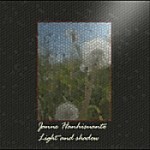 When Finnish ambient artist Janne Hanhisuanto promises you both Light and Shadow, rest assured that you will get excellent examples of both, in nicely balanced measure. In this eight-part disc, Hanhisuanto offers an always-engaging path that travels from classically spacey, “choirs of angels” ambient down through misty, murky spaces and ends with a genuinely breathtakingly beautiful piece that lands squarely in the middle. Most of the work here is pulled together in standard ambient structures–there are big, cloud-like pads that ease across the frame in their own good time, those breathy vocal sounds, twinkles of synthesizer starlight. But they’re handled well enough to not feel stagnantly typical. At the outset, a sense of easy relaxation takes hold, and it’s a pleasure just to fall into the sound. I quite like that when the shift in tone comes, it’s not a new track; rather, Hanhisuanto takes the fairly bold stroke of changing the quality of light mid-stream in one track. Right as you’ve settled in to this peaceful flow, it gets different. The darker side of the voyage is built on layers of minor chords and long bass notes that anchor the bottom. At the end of Part 5, Hanhisuanto raises the intensity with a rising, sharp wash of sound that deposits us in a calmer space (Part 6) where light clatters of percussion tint the backdrop. There’s a sense of discovery to this piece, of having come through something and taking a short respite. Part 7 continues the upward sense, though it passes through moments of uncertainty. Hanhisuanto closes Light and Shadow by bringing in a melody that courses over the return of the soft vocal pads. The earthy touch of the singular notes contrasts nicely with the intangible aspects of the drifts through which we’ve passed. There’s a reverence and a sense of hopeful relief that rises upward and delivers a real feeling of closure to the journey. I’ve enjoyed Hanhisuanto’s last few CDs since he first came to my attention, but Light and Shadow has secured its place as my favorite. Great at low volume, superb on a close listen, and ideal for long, looped listens. You must hear Light and Shadow.
 Omphalos, the new release from Peter DiPhillips starts off drawing the listener in with workable quiet-music/spacemusic intentions, but comes apart a bit toward the end with his three-part “Tranquillamente” suite. The opener, “Witchifalls Ta,” does a decent job of laying down a somber, pensive air, chords pulsing and wavering against touches of dissonance. It establishes that DiPhillips is capable of creating emotional content. He ups the ante over the next two tracks, “Nica” and “Along the Mohawk Trail.” This is the strongest stretch on the disc. “Nica” forms itself into a down-tempo floater of a piece, laced through with spacey flavors and a laid-back beat. Cool washes stream past as DiPhillips plays with layers–adding, subtracting–allwith a well-guided hand. “Along the Mohawk Trail” goes darker than the rest of the work here, an amorphous gathering of sounds tied together in spots with tribal-tinged percussion. There’s a full journey here, and DiPhillips glides easily through its stages. The percussion comes and goes at the right time; the deepest parts of it fill with moving shadow, a little cave-exploration foreboding. (Things get very interesting, and a little hypnotic, some time around the 7-minute mark.) Throughout, the synth washes are thick and loaded with atmosphere. A very good ride. “Monk’s Bella Vue” twists its component sounds into a tight drone with neatly understated hints of sacred music. And then we get to the “Tranquillamente” pieces. I feel like they suffer from coming after such strong pieces because they feel less polished. The hesitant (on purpose, one assumes) structuring of the first piece and the relatively thin layering of sound comes off as a sort of amateurish noodling on a synth. The apparent lack of confidence and the sense of waiting for the piece to become something more wears quickly. The second part somewhat sheds that sense, but the pairing of bouncing chime tones over long chords can feel sort of wayward. The third piece works to salvage the suite; it’s more of a lulling ambient work with DiPhillips modulating the sound. Problem is, by this point my attention has been more or less lost. On top of this, although I am neither audiophile nor sound engineer, the sound on Omphalos seems muddy at times–and I’ve listened to it straight from CD as well as in an mp3 format.
 I think you can only say to yourself, “What the hell?” so many times in a single listen before you have to accept that you’re just not digging it. Such is the case with the plunderphonic pile of oddness that is Lost Weight’s Immune to Jewels. There are interesting spots, but not many, in this collection of work dating from 1995 to 2011. “Thing King” takes a couple of elements, one of which sounds like one note on harmonica, throws in a clangy power chord, adds a scream, then ramps up the amplitude and stretches the whole thing into a thick, barbed-wire-coated drone that fades just before you completely feel like murdering it. “Opposite of Occam’s Razor” is the best thing here, which may not be saying much, as it pulls Black Sabbath’s “War Pigs” into sound-morsels and re-arranges them. It almost becomes an a cappella hymnal in spots. Beyond that it’s a series of mid-air collisions between sources and odd pairings of existing pieces that quickly becomes a series of punches to your brain. The whole plunderphonic idea seems to have fallen by the wayside in recent years, and a listen to Immune to Jewels would suggest maybe that’s a good thing. If you like noise, experimental approaches, and wildly non-linear composition, have a listen.
 Nothing remains in shadow for long. It’s the nature of shadow. It’s not darkness, it’s variances of shifting light, a constant movement of states. And so it is with Shadow District, the first collaboration between Chapman stick/8-string guitar artist Har and ambient craftsman Altus. Between the title and the ominous, clattering start of the first track, it would be easy to quickly dismiss this as a dark–or reasonably dark–ambient release. But that’s barely scratching the surface. Yes, “Descent to Street Level” is moody and grim, with death-march drums (actually Har banging on his Chapman stick, then processing the sound), a plodding rhythm, and occasional wails that sound like they were recorded in a sewer tunnel. But then the light changes and a rather unexpected piano takes the forefront for “Abandoned Playground” and the tone becomes a sort of nostalgic, almost tear-jerking melancholy. This is a slow ballad played out in musical imagery, our mental camera pulling inexorably back and away as the tune works its way to its last sad note and thicker clouds coat the sky for “Borough of Shadows.” This, along with its followup, “Victims of a System,” dwells well within ambient territory, spooled out in slow-motion churns of pads and tones. “Borough…” is the darker of the two, a bit on the claustropobic side. “Victims…” eases off slightly, its scope widening and lightening, the pads feeling broader and brighter but still wrapped in a quietly pensive fog. Working through another shift, Har’s guitar takes center stage for “Burning While They Watched” and carries into “Along the Shattered Waterfront.” Again, the pairing of tracks come in a sort of dark-to-light variance; “…Waterfront” works its way down to a quiet, drone-like drift as Har gently tosses a repeating phrase into the darkening air. The closer, “Betrayal at Twilight” bring us back around to a somewhat more worrisome space. The tones feel sharper, the narrative more tenuous, the atmosphere far less certain. And then in the middle of it comes Har’s echoing guitar work, like a gleam of post-rock light briefly splitting the clouds.
 Hypnagogue Music Reviews